I am a stickler for a plan. Type A. Enneagram Type 3. Call it what you will. My closet is color-coded and sleeve-organized. I leave the house every morning with beds made and dishes washed. I never get behind on laundry.
My son blames all of this on my birthplace. “Oh, mom,” he whines, “You just think you have to always do the right thing because you are southern.” And while he is partly right, some of it is just how I was born. I like order, not chaos. I like rules; they make me feel safe.
If I’m honest, I really just want my classroom to look like my closet or my bookshelves. I want everything where it should be, every student at their desk, no loud noises, every surface clean and organized. Does classroom disorder spark joy? Nope…throw it out! But, at the same time, I want to be a good teacher, responsive to student needs, on top of current research about what works best in the classroom. I want to say yes, when I can and as often as I can.
And to top it all off, I can be hyper-sensitive to teachers around me. Are they judging me because students are silent reading on a couch? What do they think about the volume in my classroom. And will I get in trouble for letting kids use their phones to listen to music in class?
How do I do all of this without needing anti-anxiety meds?
My overarching question this year is about personalization.
The Personal Interest Projects (or PIP’s) that we started last year ARE engaging students. I just gave a survey late this fall, and almost ¾ of students are enjoying PIP’s. Students are enjoying getting a say in what they learn and how they spend their time each week
This year, my fellow teachers even immediately suggested putting aside time specifically for PIP’s! So now that I’m getting favorable results and seeing teacher buy-in, I’m turning my attention to other aspects of my teaching. When the Learning Lab first met together in August, I was blown away by what other teachers were doing, how they were working personalization into not just a separate time but their everyday classroom time. I then refined my inquiry question, asking, “How can I give students a completely independent learning experience through PIP’s and then have students use those same skills to give them personalized learning in the humanities classroom?”
To think about it in another way, where can I say yes?
Where can I take away some pre existing boundaries or rules in order to allow students to have choice and hopefully be more engaged?
I started with silent reading time. I received a PTO grant to buy new books and some camp chairs, so students could spread out with choice books. I have let students listen to music on their phones while they read. Overall, it’s going well. My students beg for silent reading, because it’s a cozy time, a normal routine. The music helps them focus, and students love getting that privilege and choice. I’ve even allowed students to start listening to music and spreading out while they work on writing as well.
Just this week, a student who cried last year during silent reading time (because she “hated reading”) came into my room, beaming, because she had just finished a book on her own! Another student can’t stop reading books I recommend…he’s tearing through them!
So basically, it’s all a bright spot.
Oh but wait, then my kids started Snapchatting during silent reading. That’s right…BELLY FLOP TIME!
Listen, if you already feel like you are fighting an uphill battle letting students listen to their own music in your room, if you already feel like you are having to defend your teaching choices to your teammates, then throwing the social-media-use-in-school-monkey-wrench into the mix does not help your morale or your case.
Honestly, at first I was mad. I wanted to just cry, “Uncle,” wave the right flag, never allow phones or music in my classroom. You can’t resist snapchat during silent reading? Fine, then you’re stuck with my late 90’s, early 2000’s indie music mix!
But, no, I quickly reminded myself. This school year is the year of Yes. It’s the year of me letting go of rules that serve no purpose, choosing student’s engagement and voice over my own OCD comfort.
And so the phones stay. And the music stays. I remind myself of the Developmental Design strategy, “Assume nothing, teach everything,” and go over phone and music expectations. I reiterate the expectations every class. I take away the use of phones and music from students that aren’t following the rules.
Teachers in grades five through eight can use personalized learning plans (PLPs) to increase student agency and engagement. PLPs help students establish learning goals aligned with their interests and assess their own learning. This particularly improves essential skills that cut across disciplines.
Drawing on our research and work with 50 schools in Vermont, we show how personalized learning aligns with effective middle grades practice. We provide in-depth examples of how educators have implemented PLPs in a wide range of schools, representing different demographics and grade configurations. Grounded in experience and full of engaging examples, artifacts, and tools (generously shared with us by Vermont educators), this book builds on the emerging field of personalized learning. It connects personalized learning with the developmental needs of middle schoolers to provide a valuable resource for classroom teachers, teacher teams, school leaders, teacher educators, and others.
Advance Praise for the Book
This book blends theory with practice, weaves what we know about young adolescents and best practices in middle grades, and gives specific, detailed descriptions of every aspect needed to implement personalized learning. Personalized Learning in the Middle Grades provides theory, tools, examples, and insights to develop an exemplary middle school. As a middle grades advocate, I love how this book details how we can meet the needs of young adolescents using this practice. — Nancy Ruppert, professor and chair, Department of Education, University of North Carolina, Asheville, and past president, Association for Middle Level Education
Personalized Learning in the Middle Grades is a must-have guide for anyone wishing to implement or improve personalized learning in the school or classroom. It is chock-full of vignettes, research-based rationales, and practical how-tos that give middle level educators a clear picture of personalized learning as well as the tools and strategies needed to create a student-centered culture that fosters academic learning and personal growth in the best way possible. — Patti Kinney, National Middle Level Principal of the Year, and past president, Association for Middle Level Education
List of Chapters
Personalized Learning for Young Adolescents
Personalized Learning Plans (PLPs)
Laying the Groundwork for Personalized Learning
Launching PLPs with “The Learner Profile”
Designing Flexible Learning Pathways for Young Adolescents
Scaffolding for Equitable, Deeper Learning
PLPs and Proficiency-Based Assessment
PLPs, Goal-Setting and Student-Led Conferences
Sustaining Innovation in Your Classroom, Team or School
Supported by and for the #vted environment
We have spent the last 10 years talking to teachers and students about their amazing work. We’ve been guests in your classrooms and helped you tell your stories. We have seen what it takes to make student-centered innovative school change possible. And we are incredibly thankful to those teachers and students, without whom this book would not have been possible.
Lizzie Stockbridge, a 6th grade math teacher at Frederick H. Tuttle Middle School in South Burlington, Vermont, gives students 15 minutes every week to write an email home.
But when she started she had no idea how powerful this simple routine would turn out to be.
Unicorn stories!
Here’s a recent snippet from an email by a student who writes about “Herald the Unicorn” each week:
As you recall last weeks event’s were brutal for Herald this week though they get even worse as I must have reader advisory for this because its so scary it will make you look around and wonder if there really was something moving around in that closet, so creepy it will make you want to run away and actually do that homework that you were told to do if you choose to keep reading you have been WARNED.
John, nearly all of your sentences in this week’s submission are run-ons, but all is forgiven. Why? Because this work is simply fabulous. Foreboding, tense and yet simultaneously humorous. You are juxtaposing genres here, with touches of theater, fable, horror and, dare I suggest, even poetry.
Lizzie’s students are really engaged in this routine. They use their weekly emails to express creativity, raise red flags, reflect on academic learning, process intense events — all sorts of things.
Melding student voice & family connections
Lizzie is a first-year teacher but she recognized the importance of connecting with families. And she knew that the key was to follow the lead of students to make sure it was meaningful.
At the end of the first week of school, students hadn’t yet delved into the math curriculum. When Lizzie read the first set of emails, she found that “they were just so excited about everything that had happened. Before school, after school, how there’s sports here now, how there’s clubs, blah, blah, blah. All the different teachers that they talked to. … Once I saw how invested they were in these other things, I just rolled with it.”
That’s responsiveness. And her instinct to let her students lead planted the seeds of the good things to come.
How does it work?
There are a few simple components to Lizzie’s approach.
The gift of time: Students write for 15 minutes on Fridays. Lizzie sets a timer and students are asked to reflect on their week. Otherwise there are no constraints on topic or format. Some students use speech-to-text and some even use emojis rather than formal writing.
Email buddies: Each student has at least one “email buddy” to serve as their authentic audience. Lizzie had originally thought she would require the email to go to somebody in the home, but she quickly realized that this didn’t work for everybody. Lizzie makes sure that every student has at least one person to email. For a couple of students this meant connecting them with an external buddy who had some time on his hands: Lizzie’s father. And a few students chose to email teachers within the school with whom they have close relationships.
Responses encouraged: Lizzie periodically reminds email buddies that responding makes a big difference for students’ buy-in. When students do receive a response: “It’s clear that they’re excited about sending the emails and the parents who respond often start the email by saying, ‘I love your Friday emails. They brighten my day.’ Then I hear the kids come in and they’re like, ‘They got my email. We talked about this. We talked about that,’ which is great.
Teacher CC’d: Lizzie receives all of the emails as well. She skims them over the weekend. “I usually do it on Saturday morning and I’m just sitting there on my computer like, ‘…That’s so cute.’ Yes, it’s nice, yes.” This part is key. So many positive things flow from the fact that Lizzie takes the time to look through the emails.
8 positive impacts of weekly emails
In addition to strengthening family communication, here are eight more benefits of students writing weekly emails home.
1. Teacher student relationships
Lizzie values learning about her students. This was big part of the reason why she altered her original math-focused email plan.
When I saw how they enjoy me talking to them on Mondays being like, “Oh, how did that football game go?” Like, “What? You know I played football? You read my email!” Which is really cool. Instead if I’m like, “How did ratios go last week in Math?” They’re like, “I don’t want to talk to you about this.” That was my major switch.
As a former math teacher, I was always jealous of ELA teachers who learned so much from students’ writing. The weekly emails do this for Lizzie.
2. Curricular relevance
Lizzie uses what she learns to directly support math learning as well.
It makes teaching math so much easier to me. Because if I notice the kids not getting it, I can make connections. “Okay, I know that you have watched Spiderman this past weekend because I saw it in your email.” And so I’m like, “Okay, what if Spiderman needed to save someone and they needed – what do they need to make the suit? …when I ask them to create their own problems, they can easily do it and they connect it to things that are going on outside of the class. Where I feel like last year if I ever ask my students to create anything, it would just be surface level class pencils to markers, but now, I feel like they know that they can talk to me about everything that’s going on because they know that I read it.
3. Crisis prevention & support
In several cases, Lizzie has come across information that was helpful to her team mates for supporting a student.
It helps in other classes, I noticed, because I found some emails, some red flag emails, and I immediately just contact the team or I contact whoever needs to be contacted. Also, for kids who shut down in class, they don’t tell us anything but then they’ll email about it. It’s nice to see that I can see what they’re thinking without them having to verbally tell me.
In one case a student noted that “my teachers hate me.” Lizzie notified her teammates and they talked to the student about it. The positive change was immediate. “She’s like a completely different kid. She comes in all bubbly and says hello to us every day now.” Listening is a powerful strategy and the emails give students another venue for voice.
4. Students connecting with their families
Lizzie was hoping that students and families would talk about school more at home due to the Friday emails. Her action research suggests a moderate shift based on parent survey responses.
Lizzie did see some interesting exchanges however:
A lot of students think ahead to their weekend. …they often talk about what they hoped to happen in the weekend. They send a list home of things that they want to happen. … It’s something they usually send an ask home of, “Can we eat popcorn while we watch our movie?” Or, “Can we watch this movie instead of that movie? Could we go outside? Can we go sledding? Could we…” It varies, but they are usually sending a list and then asking something of the people they send their emails to.
Kids getting a jumpstart on weekend negotiations suggests that they saw this as a legitimate communication tool for the stuff they care about.
5. Student learn life skills
Lizzie was amazed at how little her 6th graders knew about the tech skills related to emailing. Students needed to learn how to use Outlook, how to create a signature, how to enter email addresses, and how to access responses.
It became apparent several months into the school year that she had forgot one important aspect. A parent pleaded, “Can you please teach them how to reply?” Students had been creating new emails each week. Contributing to an ongoing threaded conversation is certainly a 21st Century life skill!
6. Student reflection
Lizzie framed the emails as a form of reflection:
I do call it an email reflection, and so now when they hear the word reflection, I think that they are correlating the, “Okay, now I have to process what I have done.” I don’t know if it’s true in all cases, but I’ve noticed that whenever I say reflection to them, they know exactly what’s expected of them.
In some cases students were focusing their reflection on academic learning. In many cases they were just thinking through the day-to-day tribulations of young adolescence.
I’m thinking that it’s a way for them to process what has happened to them this week, and if that is school related or if that’s something outside of school, that’s up to them, but taking that time to think about what they have done for the week or what they have done for the hour is really important.
In a school-wide survey, Lizzie’s team received positive responses relative to other teams. Parents were impressed with the family communication and students were enthusiastic about reflection. Lizzie and her team mates consider the Friday emails to be an important contributor to the encouraging feedback.
7. Kids like it
If Lizzie has to skip a Friday, she gets a lot of push back from students. Students sometimes finish their emails in study hall. And students have sent their Friday email when they were sick or traveling.
Some students have gotten really creative. One student created the idea of “Girl Power Industries,” where her weekly learning is framed as world-changing. And if you check out a typical email from her then you might believe that this girl is indeed likely to change the world!
8. Families like it
Lizzie has received good feedback from families as well.
This comment on the survey seems to capture the parental gratitude:
And Lizzie has felt the difference in her interactions with families.
Parents are constantly reaching out to me. Every week, I at least have five parents reaching out to me. It can be simple things, concerns, or just check-ins … When I see parents and introduce myself. They’re like, “Oh no, we know who you are.” Immediately they’re like, “Yes. We know you. You’re the math teacher. We know exactly who you are. We hear about you and see your emails,” which is really cool.
It’s so important to be seen and to be known. For teachers, for students, and for their families. Sometimes the simplest routines can help us be human.
Action Research
Please check out the screencast below to see Lizzie’s presentation at the Middle Grades Conference on her approach, her action research, and her findings.
How could you empower students to reflect via email?
Students in Courtney Elliott’s class work on a Mystery Skype with a class in Wisconsin to demonstrate communication skills and content knowledge of the U.S regions.
Inquiry question about personalized learning: How might personalization through self-reflection, self-assessment, and flexible grouping and scheduling across grades 3 and 4 at Proctor Elementary School positively impact student engagement and achievement?
Bright Spot: Some days I feel like I am a rock star educator; other days I feel like a complete mess. And through this journey I am learning that it is not only possible but okay to be both.
This journey over the last three years to a student-centered, fully differentiated classroom has been quite the ride. It started with project based learning and a creative group of 4th and 5th graders and has led to here, where we are now with a group of fourth graders who are learning so many life skills through this model.
This leads us to the bright spots… those days when I feel like a rockstar educator. These moments come from my students and their ability to work in ways that I could never have dreamed of when they first walked through that fourth grade door in September. This year we have focused on helping our third and fourth graders to make choices about what they need to be successful in their learning through helping them to evaluate where they are and what they need.
This model ties in well with the idea of universal design: the idea that all children can be successful in the general education classroom by providing access points for every child’s entry into the grade level curriculum no matter where they are. Simply stated, meeting each child where he or she is at this point in their learning.
Last year, my class was visited by representatives from an inclusive classroom program. Turns out we were selected with two other schools in Vermont to serve as an inclusion model. This fall, my classroom was chosen as a model for inclusive design. This has been my passion since I started teaching and this was a bright spot in my journey. That this student-centered model, where third and fourth grade share students based on need and proficiency skills, has helped to foster and create an inclusive classroom for all students.
Belly Flop: Now for that belly flop or that dilemma that I feel like I am facing moving forward…those days I feel like a hot mess educator. Those days I go home wondering if in the long run I am failing my students.
What happens when eventually these students are placed in classrooms that fit the more traditional boxes?
What happens when the only access point for them in the classroom is a one size fits all curriculum for all students?
I worry about if what I am doing is best preparing my students. I worry that if having them work at their own level at the skill and not teaching to a program will hurt them in the long run. For example, will allowing students to make choices to guide their own learning affect them in a traditional classroom setting because they will not be able to be at their pace?Yes, on their benchmark assessments they may move from a first grade math level to a third grade math level but what happens when they are expected to complete a fifth grade math curriculum? I worry about if by allowing them to make choices in the classroom based on need they are not learning what they will need to prepare for future endeavors in education.
So in conclusion, I feel like I am in a place of limbo with my classroom environment and pedagogy. I know in my heart that this learning is right for my kids. I see the progress in the benchmark data and their joy and engagement with learning on a daily basis. For example, Corey and I have had several conversations with students around their learning and what helps them learn best.
The data collected from these meetings or check ins is that they enjoy choice and setting goals. They feel comfortable working at their own pace and seeing where they are in their learning of the skill through the use of checklists and rubrics. They like to feel empowered and like they are in charge.
Corey and I hope to create a student engagement survey after break to further highlight what the students have said in these classroom discussions. Still, I have those days where I just wonder that once they leave my classroom and continue on their educational journey that I have made the road harder for them in some way. It’s a lot to think about, but aIl I know is my heart tells me that I am doing the right thing. I just need to remember that.
Many of us doing proficiency work in the state see it as a means of ensuring equitable access for all students. A proficiency-based learning environment asks the learning community to partner together. The goal: to make certain all learners meet clearly articulated targets for success.
And, the VT Agency of Education agrees. As articulated in the Proficiency-Based Learning Team’s Why is Proficiency-based learning Important? proficiency-based education is a means to reach equity for each and every student:
“A proficiency-based education system benefits all by allowing students to progress at their own pace and creating the space and time to do so. Students are given sufficient time to finish assignments and meet learning targets. Educators respond to individual learning needs by providing timely, differentiated feedback and support. If students do not initially meet expectations for proficiency, they are given additional opportunities to demonstrate proficiency without penalty. Those who progress quickly might dig deeper into the content or move onto learning new concepts. Students eligible for special education services are expected to meet the same requirements as their nondisabled peers in an accommodated and/or modified manner. Proficiency-based learning must exist in a learning environment that fosters strong social and emotional development and encourages high achievement for each and every learner.”
Special education implications: shifts in practice
Let’s look at how one Vermont special educator embraces proficiency-based teaching and learning.
Meet Angela Spencer, a special educator at Lamoille Union Middle School in Hyde Park, VT. Spencer describes the shifts in practice needed to support students’ growth in a proficiency-based system.
Key ideas in shifting practice for equity
In the past, much of Spencer’s work with students occurred in silos during intervention time. She says students feel more integral, like they are part of the school now.
A key benefit: “utilizing the transferable skills and their habits of work scores to develop life skills goals and behavior goals because before they were all so accuracy based. I can come to class and sit for 80% of the time might now be I can come to class and be a participant following a habit of work. Or, getting a job would be a transferable skill so now we have more of those we can play with to make those goals.”
With proficiency-based teaching, Spencer is now able to use teacher-created rubrics. And these rubrics support calibration during progress-monitoring.
Spencer shares how she and the classroom teachers on her team work to create learning targets and scales that meet individual learners’ needs and mark growth. They do so by backing out targets for instruction and assessment. She concludes that proficiency-based teaching and learning “finally gets to the point of what individualized plans were, making it about what the individual students needs.” This work took her there.
Sara Crum, Champlain Valley Union High School
Learn more about what Spencer describes in the video about backing out targets with this blog post from Sarah Crum, special educator at CVUHS.Standards Based Learning and Special Education on the CVULearns blog (excerpted below):
“Again, this type of modification requires taking the classroom target and backing it out by articulating the two, the one and below. Then, like using a ruler, the teacher assesses the student on a different set of 1-4, but using the same targets and skills so that the ultimate goal is to get back on the classroom targets.”
–Shifted Scale: Backing Out Targets for Instruction & Assessment
Supporting all learners through targeted professional development
Remember the VT AOE article Why is Proficiency-Based Learning Important? I referred to earlier? In it, the authors make explicit that special education students are “expected to meet the same requirements as their nondisabled peers in an accommodated and/or modified manner.” The National Center for Disabilities agrees. “CBE allows students to demonstrate mastery of competencies in many ways, and by allowing such broad differentiation, it has the potential to increase access of students with learning and attention issues to the general education curriculum.”
Our Vermont context
Among the 10 National Center for Learning Disabilities recommendations is “general and special education teachers must have on-going CBE professional development.” Here in Vermont, the recently passed Act 173 can be a means to help us meet this goal. Act 173 aims to enhance the effectiveness, availability, and equity of services provided to students who require additional support. It also changes the distribution of special education funding in our state in order to do so.
This year, the VT AOE will work with the Act 173 Advisory Group. Together they will develop a state-wide, coordinated professional learning plan for anticipated stakeholder groups. The Instructional Strand supports supervisory unions by providing instructional staff, including general education and special education teachers, professional development. The goal: to adopt best practices to meet the needs of all learners.
“Teachers provide multiple pathways for students to demonstrate mastery. In many classrooms it’s difficult to tell the special education classrooms apart from the regular education classrooms, especially at the younger levels. There is student responsibility and accountability, students are grouped and regrouped according to skills that need to be targeted and learning is celebrated.”
Welcome back to #vted Reads! Now, I recorded this episode back in September out in San Antonio, at the School Reform Initiative’s Fall 2018 meeting. Author Terra Lynch was kind enough to chat with me about her book for the podcast between sessions. Recording spaces were kind of hard to come by at the conference, so we did our best to find a place without ceilings that were too high, or too echoey, or filled with other participants. We did our best, and hope you enjoy this powerful conversation about protocols, and how you can use them with students in creating democratic classroom situations. Sidenote: Emily Hoyler has written an amazing introduction to protocols, if you’d like a refresher.
Now, on with the show.
Jeanie: I’m Jeanie Phillips and welcome to #vted Reads! We’re here to talk books for educators, by educators, and with educators. Today, I’m in San Antonio for the School Reform Initiative’s Fall Meeting. This annual conference is focused on creating brave spaces to surface inequity and examine our biases and assumptions so that we can ensure our teaching practices help all students learn. I’m here with Terra Lynch. We’ll be talking about her book, Protocols in the Classroom. She’s written this book with co-authors; David Allen, Tina Blythe and Alan Dichter. Terra is not just an author, she’s also an educator who has a wealth of experience in using protocols with students.
Thanks for joining me, Terra. Tell us a little bit about who you are and what you do.
Terra:Hi. Thanks for having me. My name is Terra Lynch. I am a learning specialist. I’m a teacher and I’m a dyslexic advocate. And I’m also an author now.
Jeanie:Congratulations on your book. It just came out a month or so ago?
Terra:It came out at the end of the summer, yes.
Jeanie:Excellent. It was perfect timing for me because I teach Collaborative Practices. I teach people how to use protocols.
We often encourage people to use protocols with students. This book is really a roadmap for that.
Students reading articles on what modern day employers are looking for in their new hires, and using the three levels of text protocol from SRI to guide and deepen their understandings and connections. @RTS_VT#grcsu#vted @JPhillipsVT pic.twitter.com/DGJ16dgE7A
Terra:That’s good to hear. Another hat that I wear is working with teachers and coaching, so often what comes up when I’m working with adults is “that sounds like I can use in the classroom.” Over time, during the debrief, I add a step and do uses. What are some uses with adults? What are some uses with children? That led to, why don’t we have a book about using protocols in the classroom?
Jeanie:Excellent. I’m really glad that it exists. I’ve pointed a lot of people to it.
I want to start the conversation by just asking why? Why bother with protocols with students?
Terra:Okay, great question. I was thinking: is it the same answer as using protocols with adults? And to a certain extent it is. It’s a way to focus the conversation. It’s a way to frame ideas to be using time efficiently. To help children with expressive of language. I find that having the ordered steps and the clarity of the formatting even, can help students who might otherwise struggle to know what the expectations are for time, for their role. What’s coming next? How long might this take? I find it sort of provides a scaffold for kids in the classroom. It also builds a lot of habits that they can use in other areas of life. That’s a nice part about using protocols with kids.
Jeanie:Let’s just back up for a minute. For people who aren’t familiar with protocols, when we say protocol, what do you mean, specifically?
Terra:Not a straitjacket. *laughs* I think there’s a real misunderstanding that a protocol is a series of steps that you must do for the sake of the protocol. For me, it’s really not so much about the steps as much as the group that you’re working with. How might this particular protocol — or way of talking about an idea, or discussing an idea, or delving into different ideas — how might this series of steps provide support for a class, and for individuals of the class to not only improve their own learning and understanding of something, but be part of the group and push the group’s thinking as well?
Jeanie:What I’m hearing is that protocols are structures that support learning, but also that protocols are their own learning.
Terra:Yes.
Protocols and student agency
Jeanie:That learning to do the protocol also teaches you these other skills around communication and collaboration that you wouldn’t get at without that structure.
Terra:Yes. Actually, as you say that, it also makes me think about the importance of the debrief, and ways that protocols are learning structures and they’re flexible. I think that the debrief is a key piece of that. The individual who speaks in the debrief and those who listen to each other are able to then change next time how things went [based on] the particular needs of that group. I think that’s really the beauty of using protocols with kids. It gives them agency to make decisions about how things are going to run in the classroom.
Jeanie:I love that. We’re going to talk more about the debrief later. I know you teach in Texas (where we are now), but the audience for this podcast is Vermont educators. A lot of Vermont educators are familiar with using protocols for staff meetings or in professional learning communities.
You’re giving us some good reasons to use them with students. One of the connections I see is with Vermont’s transferable skills? Which is our version of 21st century skills. I wonder if you want to talk a little bit about those kinds of skills like communication, clear and effective communication we call it, or collaboration or problem solving. How you think protocols connect with what we used to think of as “soft skills”.
Terra: Yes, I’d love to. That actually reminds me of some research that I did for a children’s museum and the focus on STEAM. The idea of STEAM being Science, Technology, Engineering, Art, and Math and how important 21st-century skills are to pull them together. You can be a great engineer, but without the ability to be a flexible thinker, to be open to new ideas, to be open to feedback, to give feedback to others, to work within a group to get a process done, you can’t really be a successful engineer. And that’s true of all those different silos within the STEAM term.
What’s great about protocols is that the process itself does allow students to practice all of those different skills.
It can be pretty explicit. In elementary school for sure, but even in middle and high school, I’ve used sentence starters to help students begin to use feedback phrases or to ask for further clarification because that doesn’t always come naturally. Then, you can get stuck if you’re not able to ask for what you need or ask for more information to further understand the problem.
Jeanie: For me, thinking about the context in which I work, a lot of times we feel really confident in the content areas that we teach. We don’t feel as confident in how do we teach these 21st-century skills or transferable skills.
And this feels like a great toolbox through which you can teach these portable, transportable skills that cross disciplines and cross out into the real world.
Terra:
Sometimes framed as “the four C’s” — collaboration, communication, critical thinking and creativity — these skills are increasingly recognized as essential for success in school, college, the workplace, and society. Such skills are the stock-in-trade of protocols, which push students to articulate their thinking, listen carefully to the ideas of others, and work collaboratively to address key questions and challenges.
They foster students understanding the key aspects of collaborations such as presenting their work to peers, asking thoughtful questions of others, providing feedback to one another, etcetera.
Yes, that quote is similar to what we are talking about. I really love the quote at the end by Emily Rossi:
Once students are familiar with the protocol, they feel confident about how to run the discussion, what frees them up to be bold in what they choose to contribute.
That idea of students running the classroom, owning the classroom, is so powerful.
It is something that protocols really help with. And the idea of being bold. I just think that’s what I wanted my students to be bold, whether it’s in their content, in their thinking, or in advocacy for themselves or for the people around them.
Jeanie:I love that. I also think about how the best artists are creative within constraints. Protocols are a really great construction that allow you to do deep thinking because of the constraints.
Terra:Yes, I agree that having constraints can be liberating because you don’t have to worry, think, or spend energy about what might be coming next. I keep talking about the debrief, but the debrief too can help with equilibrium where sometimes we do need to loosen the constraints a little bit because of the topic or experience with the group or a lot of other reasons.
Choosing a protocol
Jeanie:Yes. The second part of the book, the second section I think, you get into the section called, “Getting Going.” You start with choosing a protocol which is, as somebody who works with adults, a really challenging process. You organize your protocols around these two categories that I found really useful and thoughtful. One is purposes and one is habits. I wonder if you wanted to talk us through your thinking in terms of organizing protocols that way.
Purposes
Terra:Sure. The idea of purpose is probably something familiar to the people who are listening. Since anything you do in the classroom, the more clear your purpose, the more clearly you articulate to your students the why, the more buy-in I think you tend to get. Then, I know that for me as a planner, I tend to over-plan. I can go in 500 directions, but to have that clear purpose stated helps provide the constraints that I need to stay focused and get what I need done.
Jeanie:What are some of the purposes that these protocols address?
Terra:My favorite one is to build community, which to me is one of the most important pieces of being in the classroom with students. How to be a good listener is another purpose. Not just in a sense of listening and repeating but listening to understand the perspectives of others. Again, to me, to be an individual in this group classroom is sort of an organic family kind of situation. It’s really important to understand the perspectives of others, to know they exist and then to move deeper into appreciation or to move to a point of trust that you can disagree. Or push back. That’s another one of the important purposes.
Then going back to the idea of self-advocacy and agency in students too, protocols, you may choose to help students speak up, use their voice in different ways, develop expressive language. Those are all really important for the classroom and beyond.
As a teacher, when I’m thinking about content, I’m also thinking about the group dynamics or the group needs. When I’m thinking about how I’m going to bring some content in and have students process it, I will also have a lens of looking at it in terms of:
“What does this particular class need to practice, or even to show off about? What can they show that they’ve learned in terms of somebody’s habits as well?”
Jeanie:You’ve addressed purposes. You’ve unpacked that for us. Now, unpack that word habits.
…and Habits
Terra:Yes, habits. We went back and forth about whether we should call them habits or skills or what were they? But habits are the idea of something that you practice to get better at. To become less forced and more routine, more natural. Those habits are baked into the protocols not necessarily explicitly. We wanted to pull them out, thinking of teachers in classrooms in mind, just for the very reason that they are transferable. They can be used across classrooms.
I guess in my dreamy world of dreams, students are using protocols in various classrooms so that they can also instinctively see, this works in science and in English.
Maybe they’ll find themselves in another situation during the school day where they might use some of the habits like,
“Could you tell me more about what you mean by that saying?“
Yes, habits are certainly throughout adult life, too, we’re just always using them, so we are always fine-tuning them.
Jeanie:Nice. Could you name some of those habits more specifically?
Terra:Yes, I can. I think I talked earlier for one of the purposes of understanding other’s perspectives. That’s one of the habits that comes up in Compass Points and Fears and Hopes. Let’s see. Listening, we also talked about. There are a couple of protocol-like activities I love for that one, too, involving using names. Even just having kids call on each other when there are multiple answers and calling them by name. I think it’s just such a wonderful way to acknowledge and listen to others. You have to pay attention who said what, who hasn’t.Listening is one.
Making connections
One thing that I think of when planning is, how much is lower order thinking? How much is higher order thinking and how do we get students to move from that factual receive information, give information back? How do we move them up to comparing, contrasting, analyzing? Those are some habits also that are part of protocols and also certainly transferable.
Moving to complex understandings.
One protocol that didn’t make it in here, that I love, is Atlas Looking at Data, which maybe some of your teachers will be familiar with. It’s one of my personal favorites. What I like about is it helps people move from factual to more complex understanding.
I was able to use it after we have put in the draft with some of my Spanish students. It’s just so cool to see them analyze. They asked each other questions about likes and dislikes of sports in Spanish. Then, to see them do their analysis of those “si’s and no’s” was pretty cool. Hear their various interpretations.
Jeanie:Yes, that’s really where the learning is, right? When you can take it up to those steps. Just having a tool that helps you do that, right? Because that’s hard work.
Terra:It is. Yes, I think it’s hard to break down just conceptually for a teacher. To relay that information and help students grasp it can be hard too, so having it laid out sure does help.
Jeanie:Choosing a protocol is part of the battle, but for a lot for us, especially when we’re new to facilitating protocols, that‘s tricky business.
It can feel really risky as a teacher to step into a space where you’re making space for students.
You have a section in here that I really appreciate for that. It outlines some clear steps and tips for facilitation.
I just want to hear from your own perspective with running protocols with students, some good suggestions for people who are new to facilitating protocols with students.
Terra:Sure. I think we have numbers in our favor in classrooms, where we’ve got 180 days with students. When we’re working with teachers, we don’t usually get that much time. So I think in some way, students can be more forgiving because we have more chances to work with them. Keeping in mind that, there’s not usually just one protocol that will fit the situation, but there’s a variety that will give you feedback or information that’s useful.
You may find at the end that something else could have worked better perhaps, but for the most part, I try to stay away from just choosing the one protocol. I know that many of them will work. Going back to that purpose, which one of these fits most with the purpose. It doesn’t have to be a perfect fit.
Tips for facilitating protocols
Terra:One mistake that I made with a gallery walk with sixth graders was that I wasn’t specific enough in how I requested they provide feedback. There was a round of very vague and sixth grade-ish terminology on the posters that students had made. That was a learning experience for and me and the students. I need to be more clear which in teaching I can always be more clear. I tried to frame the questions at the end so the students could see the value of giving more specific feedback rather than generic kind of goofy feedback.
The tip is to be really clear. When it doesn’t work, think about the questions that you can ask that might help the students understand why you would do it differently next time.
Jeanie:What I’m hearing is that it’s okay to be transparent in your facilitation and say,
“Oh, I didn’t really do a good job of that. What might I do differently next time?”
Solicit their feedback.
Soliciting student feedback
Terra:I think that’s great. One that I use a lot, again, because I think giving clear directions is tricky especially at the end a day of teaching. There are a couple of students in particular who are great at clarifying questions. Then I’ll say,
“I think I’m being clear with this, but can you ask me some clarifying questions so I make sure… so that I can make it even clearer.”
Or, if it starts going in a wonky direction, I can say,
“Okay, wait a minute. I don’t think I was clear enough. Who can help me articulate this?”
I love asking the students for help. Yes, and being transparent… I mean, why not?
Jeanie:That reminds me that, I think this is true for adults, and I know it’s true for students as well, that first time you do a protocol, you hate it. It’s like a brand new pair of hiking boots. It chafes, it’s uncomfortable.
You have to really do a protocol or do protocols a couple of times before you start to see the value.
One of the things that I do when I facilitate with people who are new to protocols, is just to own that at the beginning. This is going to feel uncomfortable. You’re going to notice that it’s uncomfortable sometimes. I want you to notice that and think about how did the discomfort or the structure that felt uncomfortable serve our learning?
Terra:Right, I agree. We were keep coming back to the debrief and the importance of the debrief. Setting expectations at the beginning to why we’re doing this and why it might feel uncomfortable, but then coming to the end and seeing how uncomfortable were they or were they not. That process of setting up and finishing is a super important one for sure. And definitely helps with kids adapting to protocols.
Sometimes… I’m trying to think… I think sometimes I get more pushback from adults than from kids using protocols. Sometimes I will use different names to warm them up and then explain what the protocol is. So there’s another little tip or trick. *laughs*
Jeanie:Don’t call it a protocol. I really appreciate that you keep coming back to the debrief. I think it’s the easiest part to skip. Yet, it’s really the richest space for learning. For learning how the structures supported you or didn’t support you and how you might do it differently, but also for like, what helps us learn.
It’s a great way to be metacognitive.
Terra:Yeah. I totally agree. That timing piece is something that I think teachers feel more constrained by in a classroom than in professional development because we really have just that set number of minutes. Sometimes in PD you can go over by five minutes. But yes, I think there’s a certain mathematical quality also to doing protocols in the classroom. Which also comes with practice, where you think about how much time you actually have. Think about changing the timing based on what you have. And then, knowing which parts need to be a little bit longer than the others. Rather than just dividing them equally into three minutes segments, that kind of thing.
Also, in the midst, if being transparent with the students, to say,
“Our time is up for this section, but I hear so much deep conversation that I’d like to extend this and pull back on the next step”
but I really try not to take it from the debrief. However, I do have a couple of tricks for time there. I’ll use the individual whiteboards and have kids write their debrief? Then, I just take a picture of everybody’s on their way out and share it that way, rather than doing a go-round. That can be a quicker way. Or, they can email me. So doing a written debrief can save some time when you’re really squeezed, but you know you can’t sacrifice the debrief. But the beauty of that is then you have the words for the students to look at next time you meet and do some analysis of, or use as a segue-way to the next part.
Jeanie:That’s great. I was going to ask you, do you circle back to those the next day or the next time you have kids. It sounds like you do.
Terra:Yes. The other reason that I use the debrief in sort of circling back and tracking it is that: not every protocol is everyone going to like to the same degree. And that’s okay. The purpose is not everyone is going to love it each time of time.
Everybody brings different strength and weaknesses to it.
Sometimes, it’s going to be easy peasy, you’re going to love it. Other times, it’s going to be harder, but we’re all as a group moving and working together. We do it in different ways.
Jeanie:Learning is often uncomfortable.
YES! Being in a (genuine) state of learning is uncomfortable.
Instructors need to support their students in feeling discomfort rather than looking down upon them or trying to alleviate it.
Jeanie:Protocols are places where learning happen.
Terra:That’s true. I’m going to read a quote from page 30.
Protocols are thought-demanding exercises, requiring habits of behavior and thinking skills that may pose challenges for students. Some of those habits and skills include:
Articulating ideas out loud
Speaking within time constraints
Staying focused and resisting digressions
Following a sequence of steps in a disciplined way
Formulating questions
Listening attentively
Understanding others perspectives.
As I read down the list, I think of the role of learning specialist.
That’s one of the things that I do in working with kids with dyslexia, with ADHD, with other brain-based differences. What I was saying earlier, protocols offer a lot for those students. I was thinking of “speaking within time constraints,” “staying focused and resisting digressions,” “following a sequence of steps.” These are some of the habits and skills that everyone benefits from, but I think it especially supports some of those students. I was thinking of some of my English language learners with the first bullet, “articulating ideas aloud.” Not just English language learners, but it can be intimidating to speak to a group.
That’s where some of the protocol like activities come in handy.
Where first you’re speaking to one person or maybe a triad before speaking to a whole group, but through repetition and practice and habit and scaffolding, the kids become comfortable speaking to the whole group.
Jeanie:Before we move into that, I just want to say that these habits and skills, the way that protocols demand of us these things, these are not just hard for students. These are really hard for adults as well in schools. I just really appreciate how clearly you all unpacked that.
This whole chapter is about developing buy-in. I would really love for you to walk through some of the exercises that help students practice the skills they need in order to participate well in protocols, but that they’re smaller exercises. These are really great differentiation strategies. And I’d just love to hear you unpack a few of them.
Terra:Absolutely. I’m going to start with Postcards on page 33. What I love about this is, it’s very flexible. It can be used at the start of the class to get kids predicting, it can be used at the end as a sum-up.
An excerpt from page 33 of the book describing the Postcards activity. Click or tap to enlarge.
I love having a toolkit that’s flexible.
What I also like about Postcards is the visual element which is such a great way to get buy-in for a response from a student as opposed to text, which sometimes provides buy-in. Postcards can be used with texts as well.
Jeanie:Can you tell us what it looks like?
Terra:Sure. What it looks like is, you have a set of images. I sometimes have them thematicallybased, based on what we’re talking about in class. Or sometimes if my purpose is more about figurative language or more about building community, I’ll use this beautiful set of postcards from Magnum Photography. They are large format. There are beautiful colors. They represent people of different ages and different groupings all over the world.
I’ll spread those out on the table or on the desk and have students do a little quiet think time. Which is always helpful, I think, and come up with some kind of, it can be a connection, a question. I actually used them recently for students to practice weather, in my Spanish class.
An entryway into conversation
They had a chance to think about what they’re going to say. Then they turn to a partner and said, “hace frio” or whatever the particular phrase was. That’s like a really quick and easy use of postcards that gives students something to talk about. Kind of entryway into conversation. It gets them talking to the person next to them, and listening to the person next to them. That’s one way that you can use postcards.
Jeanie:That’s interesting. I love to use images. I love to use them as metaphors, but I don’t use postcards. I’ve made my own cards from National Geographic magazines. That’s a really cheap way. Rubber cement, National Geographic magazines, and index cards is a really cheap way to make some images that you can use in lots of different contexts.
Terra:Yes. I’m chuckling because I have a stack of old magazines that my students use for collages, but they’re going a little out of hand, so I went through and pulled out some of the more striking images. And they’re on my desk to cut and put on construction paper to use in the classroom.
Jeanie:Folks, as a librarian, I will just say, check your libraries. They usually some have some old issues of National Geographic.
Terra:I hope that they’re willing to part with?
Jeanie:They’re often willing to part with. Check your school libraries, your public libraries and look around. See if you can get some of those.
Terra:Yes. That makes me think of my incredible library in Austin, Texas. My public library, they’ve got a great Spanish language selection of magazines. I will take pictures of them to use in class. I’ve just thought, oh, the next time at postcards, maybe I’ll use something from an advertisement from a magazine. It’s got more text because my students are ready to discuss more text, so… thanks. *laughs*
Jeanie:Let’s unpack one more exercise that gets people ready for protocols.
Terra:Okay.
Jeanie:Gets students ready I should say for protocols.
Terra:I’m debating between Turn and Talk, or Pair Share, and Warm and Cool, but since we’ve already talked about postcards and treated it as a turn and talk. Of course, you can do it as a whole group. It’s super flexible that way, but I think I’m going to go to Warm and Cool.
Warm and Cool
The way that this prepares students for protocols is giving them practice and feedback. In a couple of ways, starting with warm feedback and moving to cool, so that the person is more willing to hear the cool. It as a strategy or a habit that kids can use.
Jeanie:Warm feedback meaning things that are positive, things that are good in a piece or in the work. Cool feedback: areas for improvement?
Terra:Yes, thank you for that, for clarifying. Sometimes I will frame the debrief in terms of warm and cool, the debrief from the class. Not necessarily from a protocol, to have them used to using those terms and framing feedback. Our school does a debrief at the end of every class, across the board. That’s one way to get the students practicing with warm and cool feedback. Sometimes it’s about me and my lesson plans, sometimes it’s about the other students. It can be safer to talk about me versus a peer, but they get to a point where they’re happy to talk about a peer and/or themselves and how well they felt they did in the class.
This is another one of those multi-purpose, short, but meaningful ways to get students used to more complex and more multi-step kinds of protocols.
When giving feedback becomes more part of their day, then we can help them break down some of their questioning about the piece to get to that feedback and have them also use the feedback and then show where their evidence is. Then, that also can become a pre-writing activity. Making a statement using evidence is such an important piece. Just a simple warm and cool feedback, whether it’s to me about the class, to a peer about some of their work, or about their own reflection on work are all great ways to help them get into some of the longer protocols.
Protocols and proficiency-based education
Jeanie:This really intrigues me. As we think about transferable skills in Vermont, several of them involve revision and iteration. Self-direction and perseverance ask kids to think about how they might get better over time. Collaboration asks us to give and receive feedback. Thinking about us moving towards a proficiency-based or competency-based system where we’re really asking kids to be able to take feedback from a teacher, for teachers to really think about the feedback for growth that they’re giving to students. As students really think about their learning as a growth process.
Warm and Cool feedback feels like a really great skill for kids as we transform our learning to a proficiency-based system. As we transform our system towards a proficiency or competency-based system.
Terra:Yes, absolutely because you have to be specific. You have to point out the specific competencies, so the student knows where they are, where they move from and where they’re heading to. So that there is specific feedback versus, “Hey, great job!”
Jeanie:If you’re able to give really specific feedback, you might be more able to receive it.
Terra:Yes. Also, there’s an idea that I don’t know that we mentioned earlier, but of flexible thinking. The importance of flexible thinking.
Jeanie:Say more about that.
Terra:Some of the students I work with really see the world in black and white binary. The world doesn’t usually work out that way. So, helping students think more broadly about the world around them. Some of that comes in with listening to the perspectives of others.
But, being a flexible thinker, like being open to another’s idea in order to change your idea or change what you’re doing, is an important habit and skill. Certainly for work with other people, but even if you’re working on your own, there are some things that happen that you don’t have control over, so you have to change what you’re doing.
Think about students who struggle with executive function. If they’ve made a plan and it doesn’t go as planned, they might just give up or feel overwhelmed. Having that flexible thinking, it’s like,
“Okay, this is what happened, what am I going to do to continue on to my goal.”
So, it can be again, coming from someone else, “Hey, you forgot to include the poster in this project.” Like, “Oh, class is next period, what am I going to do? How am I going to think this out?” Or even in a planning stage, thinking about different ways to achieve a goal. I think those are all flexible thinking pieces. If someone gives you feedback, valuable feedback, you’ve got to be able to internalize it and then make a change based on it.
Jeanie:Yes. The more we can practice that, the better, right? Because we need students taking feedback from teachers but also from each other.
Terra:Yes, for sure.
Jeanie: And we do that in the world. That’s another transferable skill. You shared some examples — and I just think your examples are so valuable. I really want you just to tell another story about a protocol in action, in a classroom, maybe in the middle grades. A lot of the protocols in this book are really familiar to me, but one that is new to me is the Fears and Hopes protocol. Could you give me just a snapshot of what that looks like in the classroom?
Fears and Hopes
Terra:Sure. Last year, I started mid-year in a Spanish class. The first thing I did was Fears and Hopes. Anytime you follow another teacher, it can be a little tricky. I wanted to make the way smoother for myself and for the students by allowing them to articulate their fears about me as a teacher and the change. It’s really about change, I think. To tell me some of their hopes so that I can then help to allay their fears and fulfill their hopes.
Reviewing my 6th graders’ hopes for class. I totally agree! (Hopes not shown include free bitcoin, early dismissals, and parties every week.) pic.twitter.com/FkKsJNjFFE
What came up really is that the students were worried that I was going to be mean, strict, give too much homework. What they hoped is that I would be fun. That I would allow them to keep the sticker system that they had had. Which I really wasn’t interested in keeping, but in seeing their hopes, seeing the patterns around the sticker system, made me realize, this is really important to them. I’m going to maintain it as part of this transition.
I knew I was going to be mean and strict, but to allow them to surface that fear, I could acknowledge where that might be coming from and I could let them know, I probably won’t be mean and strict. It hasn’t really been part of my teaching persona so far. Then, they are able to see it. That also was a really great way to lead to norms.
Based on their hopes for the class, that it would be fun, that we’d have the sticker system. We’d make food. They created the class norms. One of my favorite ones was my boy named Fin, who said,
“Have fun! But be mature.”
Which for a sixth grader… it’s a bit of a challenge. Each class had their own norms. They’re a little bit different, though there are similar patterns in the classes that I took over about their fears and hopes. This also, I brought in before end of year assessments too. Like, what are they really worried about? Which one’s going to say, “It’s not even going to be on the test. Don’t worry.” Which ones tell me, “All right, we need to spend time focusing.” That’s it. Those are two examples of using Fears and Hopes recently in the classroom.
Jeanie:I love those as ways to really surface the unsaid things in the classroom, to make space for kids to say them and feel heard.
I think that feeling “heard” is such a powerful thing.
I’ll give an example. And this protocol is not in the book, but it’s one of my favorites to use with students: affinity mapping. At a time when my students… maybe it was early spring. They were starting to disengage. Instead of clamping down, we took a whole class and we affinity mapped:
“What does engaged learning look like?”
They had their little sticky notes. And we organized them into groups, into clusters. We could think about what could they do to make our learning more engaging and what could I do? One of the things that came up was field trips. Great! Let’s figure out how we can — in a way that is relevant to the work we’re doing together — organize some trips outside of school that would make it more engaging for them. Some of it was on me and some of it was on them, but they co-constructed it. It really made a huge difference.
Students from 6 Two Rivers schools affinity map the TRSU vision statement @GMUHSlibrary pic.twitter.com/1rBqcN7XgG
— Michael Eppolito (@MichaelEppolito) May 28, 2015
Terra:That’s cool. That actually reminds me just in terms of the inquiry process, I had some students affinity mapping. One particular student really had trouble making the categories. She had really broad categories. I saw patterns coming in underneath them and some of the other kids did. It raised the question for me like, “What’s keeping the student from seeing these smaller categories?” And so that became part of my process as a teacher to understanding the student.
Jeanie:I love that. That leads right to the next thing I want to really discuss. Which is, you’ve got this whole chapter on getting better with protocols. We have talked about the debrief a lot. Which is one great way to get better at protocols, but I love this section. I haven’t really heard people dealing with this before. I feel like this is new thinking for me about how you document the learning when you’re doing a protocol. How protocols can be used as a way to document learning. I’d love to hear what this looks like in practice.
Documenting learning
Terra:Yes. This is one that I’m working on as well. There’s an educator whose blog I follow. Angela Stockman, who is just incredible about documenting learning.
Yes! Cell phones can be a tool that helps learners AND teachers sustain their JOY and their PASSION for learning. When we document the learning journey, we notice so much we wouldn't have otherwise. It increases our curiosity. It's interesting, engaging stuff. https://t.co/dCecEwaHkT
— Angela Stockman (she/her) (@AngelaStockman) March 23, 2018
I’m actually really trying to work on this one because I take a lot of photographs.
Luckily, phones allow us to do that pretty easily. And in my particular school, the kids have access to laptops. We can document a lot through typing and sharing via Google Drive.
This is something I’m trying to figure out how to do more long-term. Certainly, we have posters on the walls that we refer to. I mentioned norms as one of them. At the beginning of this past year, I did Compass Points with my students. I hadn’t met them before, so to understand our different class dynamics. Those are still hung and sometimes we refer to those. There’s the idea of leaving a footprint in the classroom environment, so that you can refer to it, reflect on it, and go back to in that way, but I’m really trying to find out more ways document digitally. Have it be useful and not just stored somewhere in your Google Drive.
That one, I’m still working on. I think blogging might be part of it, having the students blog as well.
Jeanie:I love a text rendering protocol. It’s a great protocol that ends up with some charted phrases and words that can be really useful to return to that are important say in a text. I also really love charting questions. A lot of protocols ask us to take around and ask questions. Those can be really meaty things to return to again and again. They are sort of essential questions that we can return to and say, “Have we answered this? Do we have new thinking around this question?” Posting those around the classroom too.
Terra:Absolutely. But then, I think there’s a point where the documentation, the wall can be overwhelming and over-stimulating. Then, I think that’s part of… I share classrooms. That’s also part of the balance, those are some the constraints of sharing classrooms. Only having some part of the wall. Then, also when to retire things and how? Do we do to with a celebration? Do I just put it in the recycling? Does it go into portfolios? Those are some of the questions too, in terms of learning.
Protocols and Personalized Learning Plans (PLPs)
Jeanie:That raises for me, this idea of whole class documentation and individual documentation. In Vermont, we’re really focused on personalized learning plans or portfolios for students. It seems to me like, some of the debrief material and some of the images that kids might want to take pictures of — either their postcards or the phrases from a text rendering as evidence — and then, reflect on that in the debrief online.
Terra:Yes, I agree and adding to that, going back to the norms! I think during the debrief, having students reflect on the norms and look at key points over time because they do grow so much over the year. It’s really important to acknowledge that growth and that hard work in the building of habits.
Jeanie:Or how you’ve become a better listener. Or how you’ve become better at giving warm and cool feedback. Or the ways in which you are more analytical because of your experience with the steps of the protocol.
Terra:Absolutely. Even volume of response. There are so many ways to look at growth and that digital tools allow us to go back and keep learning.
Jeanie:That makes me think that doing a protocol multiple times with a group is a really rich place too, to notice, how do we get better at it? Doing that, Save the Last Word for Me, say, with different texts over time. Part of the debrief is,
“How are we better at this than we used to be?”
Terra:Yes, I love that idea. I do love, Save the Last Word for Me. I just love that idea of building, taking a text and building upon it. And I guess what I appreciate is not just, “I’m reading this and I’m interpreting it and I’m good to go”, but the value add of others reflecting back, the value of others thought about it.
Again, it goes back to that idea of protocols. They help the individual learner but also help the group. Anything about repetition or any multiple ways to look at a text, I always appreciate. Especially for my struggling readers.
Jeanie:That leads me to this next section in your book. Where you talk about the relationships between protocols and other structures. In Vermont, we have these wonderful students at Harwood Union High School who teach other students how to engage in Harkness or Socratic seminars, which I just so admire.
I saw them present recently at the Rowland Conference and I was so impressed with their skill at teaching teachers and students to use those structures. I wonder if you wanted to say anything about how protocols are complementary to these other student voice structures that we see in schools.
Terra:Yes. I think that section came up as part of our ongoing discussion, what is and isn’t a protocol?
Some of the schools that I work with in New York City are using restorative practices. Part of the discussion, while there are some similarities in terms of the group, in terms of voice, in terms of expectations for the purpose of coming together, but that’s part of a much bigger program.
I think that most of my experience is really with protocols themselves. I don’t have that much to add, but I certainly learned with the other authors more about different things kids are doing.
Jeanie:These structures, it seems to me are really like… it’s not an either/or. The way we use protocols can completely help kids get better at Harkness discussions or Socratic seminars. Kids who are engaging in Harkness discussions and Socratic seminars are going to find a real affinity with protocols.
Terra:Yes. I think that question of what is and what isn’t, that kind of definition… it’s not that one is better than the other, just they’re different ways to approach. The more we can allow the students to reflect on that and see the different ways that they can move a group. I want to see these students teaching teachers. I love it.
Students as facilitators
Jeanie:I have deep appreciation in this book for the way that you structure how you can move students to the facilitator role in protocols. We’re not going to talk further about that, but I love that it’s in here. That as you gain experience as a class, moving students to the center of that process.
Terra:Yes. I’m a big Harry Wong fan, and that whole idea of the students doing the work is where the learning is, and the students should be tired not the teacher. I think that idea of decentralizing the work, the learning, to the students is what it supposed to be about.
“In an effective classroom students should not only know what they are doing, they should also know why and how.” -Harry K. Wong
What an empowering feeling it is to be a twelve-year-old or an eight-year-old or a sixteen-year-old running a 45-minute class, and hearing in that debrief the growth that you are a part of.
Jeanie:Terra, thank you so much for taking the time in this busy conference to talk to me about this fabulous book. To talk to our listeners about what it looks like to use protocols in the classroom with students. Thank you.
Terra:Thank you for having me. Thanks for the opportunity to talk about books.
I’m Jeanie Phillips, and this has been an episode of #vted Reads, talking about what Vermont’s educators and students are reading. Thank you to Terra Lynch for appearing on the show and talking with me about Protocols in the Classroom. If you’re looking for a copy of Protocols in the Classroom, check your local library. To find out more about #vted Reads, including past episodes, upcoming guests and reads, and a whole lot more, you can visit vtedreads.tarrantinstitute.org. Follow us on Twitter and Instagram at @vtedreads. This podcast is a project of the Tarrant Institute for Innovative Education at the University of Vermont.
Please note: neither I nor the Tarrant Institute received compensation monetary or otherwise from the author for her appearance on this show.
How can you tell the difference between projects and project-based learning?
Turns out, even though they both might involve snazzy projects, they are quite different. Let’s take a look at how. This post is based on research of PBL resources (listed below) and classroom experience. Okay, PBL? PBJ? Let’s dig in.
Here are some guiding questions to consider when pondering if you have a project, or project-based learning approach.
Project-based learning final product at Cabot School: evidence of learning, research, reflection, growth, creativity during the project.
Is the project at the end of the unit, after all the “real learning” as happened?
Those at the Buck Institute, now known as PBLWorks, have coined this “dessert” learning. As in, after the main course, enjoy a delightful and fun dessert! It doesn’t really mean anything, you’ve done the hard work of memorizing content. But with project-based learning, the project is the main course. Students themselves are co-constructing learning while they are researching, collaborating and creating their projects. It is this experience that matters, and reflecting upon it, that is where the learning is.
This isn’t meaning to say that you might need to do some pre-teaching to get students ready for the inquiry involved in project-based learning. That is often something that needs to be done. But projects can often be a teacher led and created hands-on activity at the end of the unit that is very much content and lecture driven.
Is the project student-led, or teacher led?
This is a continuum of course, with varying levels of student and teacher directed experiences. Hopefully, project-based learning should be moving toward the student centered end of the continuum, with scaffolding, support and guidance from the teacher.
Even if the teacher came up with the guiding or essential question based on standards or proficiencies, the how and what parts can be led by students.
Check out this newly created PBL continuum and ponder, how can I move toward more the student centered end to increase motivation, engagement, and self-direction?
Are all of the end projects the same?
One way to tell a project from PBL is that in projects, the end projects are all the same. There is a checklist, and a predetermined product, and all students are doing just that. These can be incredible fun and meaningful for students, but they aren’t project-based learning.
Project-based learning creates more student choice, and likely more motivation, because of that. Students can often decide the end product, and if not, they are having student choice in the content and design of the project. Students will find more meaning and purpose if they are in charge of large aspects of the project. That doesn’t mean you can’t meet proficiencies, or assessment goals. It means that students need to be in the driver’s seat for a large part of the project and that needs to be designed into it from the beginning. And the more teachers do this, the more choice they usually end up trusting their students with.
Who is the project for?
Student designed (on the 3D printer) coaster from Cabot School as part of the oceans PBL unit. Sold to families and profits sent to an ocean non-profit.
Another way to know the difference between PBL and projects is the audience. Is the project for an audience of one, the teacher? Or is it for a community group, parents and school board members, who can give feedback and support and lend purpose to the work? This is critical. Students need to feel that their work matters. Authentic audiences throughout PBL experiences, and at the end in a culminating event, prepare our students for civic engagement and connect them deeply with communities, while providing motivation and purpose in their work.
Is the experience individual and on a computer screen?
There are some very exciting new technologies out there that help students create and craft projects (can you say book creator?). But PBL is a collaborative effort between students, teachers, and community partners. Learning should happen in dialogue, planning, creating, getting feedback and reflection. These activities simply can’t take place entirely in a 1:1 computing situation. Students can use technology to extend and enrich aspects of PBL, but it can’t be a solitary endeavor.
Is the experience is the same for all students, or can students stretch and grow from where they are?
We know that students come to use at varying levels of readiness, skills and learning preferences. How can we value each students’ strengths and help them learn and grow in PBL?
It is not same-ness, as in, all students reading the same thing at the same time and completing the same tasks in the same way. PBL experiences allow for students to gather materials and resources that work for them, to engage in material in a way that uses their strengths but also stretches their learning and skills. This might mean your introvert plans out a call to a community partner by writing a script, and works up to making the call herself. Or, she is the emailer for the group instead. It might mean that some students need direct instruction in the budget process for the school when crafting a proposal for a new playground. Students will present needs that the teacher can then fill with the many tools teachers have. And this is different for all kids.
Is the teacher close in, or sitting back?
It is a common misconception that when you do PBL, teachers can go grade papers at their desk and relax a little, thinking, the hard work is over! The truth is with PBL teachers get a little closer to students in their groups and depending on their needs. Teachers are often facilitating, modeling, direct teaching, giving feedback, and helping kids coordinate with community partners. This is true PBL, when the teacher is a co-learning and facilitator, and project management assistant. In projects, since it is mostly laid out for students, teachers might be able to feel more removed.
Inquiry Question:How might personalization through self-reflection, self-assessment, and flexible grouping and scheduling across grades 3 and 4 at Proctor Elementary School positively impact student engagement and achievement?
After our overnight retreat with my Learning Lab colleagues and some discussion about the fear of sharing our work when it doesn’t produce the results we hoped for, I did a lot of reflecting. I started thinking about my own practice with my students and how I spend the first six weeks the whole year preaching to them about growth mindset. I started wondering, how many of us talk to our students, or dare I suggest lecture them, on the importance of those moments of mistake or failure? How many of use make sure our students know that without those mistakes, learning would never happen? How many of us ask our students to share with the class the mistakes they have made because those mistakes are so incredibly awesome that the entire class benefits from them?
If you are anything like me, you are excitedly waving your hand in the air, perhaps bouncing out of your seat because you do all of that and perhaps more. Why do we do this? Because our students’ mistakes are often the most important part of their learning. Mistakes in my classroom are what run our lessons and drive conversations and collaboration. Now, how many of us, as educators, put our mistakes out there for other educators to learn from? If you are anything like me, you have quickly put your hand down and are avoiding any and all eye contact with other people.
I think the consensus around the school building is that I have it all figured out. From the outside looking in, my classroom looks great. I am constantly researching and finding new ideas and my students are always willing to jump in and try it out. I get to go to some great conferences that focus on all those buzzwords in education right now. I am presenting at district in-services and conferences around the state with my amazing 4th grade partner. Like I said, it looks great.
The reality is much different, though not a bad different. It takes an incredible amount of work for it to look like my students and I have it all figured out. The truth is, I have failed so many times in what I have done before I have found one thing that works. And sometimes, it never works. So why do my colleagues have this false picture of what goes on in my room? I think the answer is because I, like all of us, want to put my best work out there for the world to see. I want people to see my successes, my breakthroughs, my ‘aha’ moments.
I don’t fully put myself out there, but I think that needs to change. The world needs to see the messy, the oops moments, the moment I have my head in my hands wondering where it all went wrong because it happens. Boy, does it happen.
Belly FlopsEpic Fails
We call them epic fails in 3rd and 4th grade. Why? Because our failures are what drive our learning. Learning can’t happen without them. And of course, any time you decide something is epic, it is just that much more awesome and important. I want my students to know that their failures are something to be proud of because they will learn from them.
I changed the setup to my Ss self assessment and self reflection rubric in math thinking it would be easier for them and make more sense. It just confused them and I had to tell them where to place themselves on the rubric #bellyflopfriday
My journey of student-centered learning and personalization started last year before I joined Learning Lab. Throughout this journey, I have epically failed so many times, I can’t count. It would not be uncommon for you to walk into my classroom and find my class sitting in a circle problem solving where we went wrong. I will tell you though, that 3rd graders are incredible problem solvers and our epic fails usually lead to some sort of amazing breakthrough.
My goal this year has been to create a system that allows my students to self assess, self reflect, and then drive their instruction through Choice Menus based on their assessment and reflection. The problem is that 3rd graders don’t know how to reflect. No problem. I created incredibly clear and specific rubrics for them to use while reflecting on their assessments. Most of the students are able to successfully use the rubrics, but when it comes time to choose their level of learning for their Choice Menu, they have no idea if they are a Seeker (beginning), Explorer (approaching), Trailblazer (meeting), or Guide (exceeding).
There seems to be this disconnect between assessments, reflection, and driving their learning. I have wondered if I am expecting too much of them. They are 3rd graders after all and I am expecting them to do what middle school teachers expect?
3rd grade student completing a self assessment on multi-digit addition.
Bright Spots
I decided that I was not expecting too much of my students. They are 3rd graders after all and they are capable of so many incredible things.
The first half of the year was spent trying to figure out where I went wrong with the assessments, the reflections, and the Choice Boards. And okay, it turns out I was expecting too much of them because I expected them to fill out their self reflection and REMEMBER from day to day what level they were performing at. Honestly, I am not sure I could remember if I was in their shoes.
I needed to find a way to help them connect their assessments and reflections to the actual work that they needed to do to progress through their learning. It turns out that the solution was simple. I created badges for my students, tangible badges that they could proudly display and remind them of where they are working.
Seeker (beginning) badge that students can attach to their pencil pouch so they know what they should be working to accomplish.
This has probably been the most positive and engaging thing I have introduced to my students this year. They are excited about the badges. When working on rounding skills, students were on task during independent time because they wanted to trade their Seeker badge in for an Explorer badge. Students were starting to request assessments more frequently and their self reflections were an accurate representation of where they were working. One small success but it feels momentous.
Epic Fails
My first attempt at a self assessment and self reflection rubric. It needed a bit of work!
Back to the failures. One small success does not mean the year is over and I am done. So where to now? While the badging is a great way to help students connect assessments, reflection, and independent work, I cannot keep up with them. Creating this system for rounding was easy because it is a small concept in a year where so much is expected of them. I worry that I will not be able to keep up the pace of creating enough assessments for them to continually check their learning. I worry that I will not be able to find enough resources for the Choice Menus to allow them to be independent. I worry that because I am creating such a tailored experience for them, that I am not covering all the material presented in the canned program that we use, and it will affect them in the long run, especially as they get ready to take SBACs for the first time.
I also feel like I am at a stand still with our Learning Lab team. We were all gungho at the start of the year but it has since died down. Our students are not engaged in what we are doing and that bothers me. I am hoping that after the winter break, Courtney and I will be able to sit down and redesign our Tuesday lunches with our Learning Lab team and involve the students more.
Bright spots, belly flops, epic fails. Regardless of which category my work has fallen into this year, it has been beneficial for both myself and my students. I am excited to see where the year goes from here.
In this episode of #vted Reads, we talk about the 57 Bus by Dashka Slater. Based on a real-life incident, this book chronicles the experiences of two young people before and after an act of violence. We explore both perspectives of a specific crime: the victims and the perpetrators. Along the way, we learn more about gender non-conformity, the challenging reality of living with neighborhood violence, the problems with the juvenile justice system, and how to construct an amazing non-fiction story.
So glad you are joining us for this episode of #vted Reads. Let’s get to the conversation.
Jeanie: I’m Jeanie Phillips and welcome to Vermont Ed Reads. We’re here to talk books for educators, by educators, and with educators.
Today, I’m with Caitlin Classen, and we’ll be talking about The 57 Bus by Dashka Slater.
Thanks for joining me, Caitlin.
Caitlin: I’m thrilled to be joining you.
Jeanie: Tell us a little bit about who you are and what you do.
Caitlin: My name is Caitlin Classen. I am the librarian here at Albert D. Lawton Intermediate School in Essex Junction, meaning I work with about 365 sixth, seventh, and eighth-graders on a daily basis.
Jeanie: I just want to say we’re in a back room in Caitlin’s library, and it is one of the most charming middle-school libraries, or libraries in general, that I’ve ever been in. It’s really lovely here.
Caitlin: Thank you so much. It’s all kid artwork and kid-driven.
Jeanie: Yeah, it feels fantastic.
Caitlin: Thank you.
Jeanie: So The 57 Bus; we were just talking before we got started about how much we both adored this book. Usually, when I am doing a book, especially one written for young adolescents, I start with a summary. But this book is a little bit different, and so I’m going to ask you to just introduce us to the characters.
Would you start by introducing us to Sasha?
Caitlin: Yes. Both characters are super interesting and super compelling just as individual people. Sasha is very interesting to me as an educator because I learned a lot from this character.
Sasha is agender.
Basically, what that means is that Sasha does not identify as either male or female. They had originally started by identifying as genderqueer because they weren’t sure how they wanted to live their life. Sasha prefers the pronouns they or them.
It was a really interesting read because this kid is super smart and clever, and goes to these interesting schools for kids who are independent thinkers, and has these really supportive parents. I believe the dad’s a kindergarten teacher and the mom also works in education. It said as a bookkeeper at a private school. An only child.
What’s so cool about Sasha is that they dress in an interesting manner even for a big city like Oakland.
While Sasha wears a lot of bow ties and top hats and newsboy caps, they said at first it was a lot of steampunk influence. Sasha then adds the layer of putting on a skirt. The parents mentioned that they saw their child go from pretty reserved. They could blend in, pretty good at being invisible, and then made this decision, I want to say at like 15 or 16, to start dressing differently. The parents start worrying like, “What’s going to happen to our kid?” It’s a pretty progressive city, but there’s still that worry about how are people going to receive my child. I think that’s a big catalyst obviously of how we learn about the 57 Bus and the incident that occurred that afternoon.
Jeanie: You bring up so many interesting things for me, and I want to make sure our readers or our listeners know that this book is nonfiction which means even though I said the word “character,” Sasha is a real person.
Caitlin: Correct.
Jeanie: And Sasha’s parents are real people.
The introduction to Sasha in this book is such an empathy-building experience because you get to see Sasha’s journey as they figure out that they’re agender.
As they explore like, “Who am I really and what do labels mean?” Page 33 in this book, in particular, is just such a primer on the language of gender.
Caitlin: Correct it’s a whole different world. I think if you’re someone who is… I don’t want to say lucky enough to be born knowing how you identify, but in a way, it is a sense of luck that you don’t have to go through that battle of like, “Who am I, and what does this mean? How come there’s not a label for me? It’s not easy for me to fill out a census that says male, female, other.” I think that page 33 is just helpful for educators and adults everywhere, but especially if you’re working in a school because you never know what kind of kid is coming through your door.
Jeanie: I’m going to read a little bit of page 33. The title of the chapter is called, “Gender, Sex, Sexuality, Romance: Some Terms.”
Because language is evolving rapidly, and because different people have different preferences, always adopt the language individuals use about themselves even if it differs from what’s here.
That’s powerful.
Caitlin: I agree.
Jeanie: To me, that speaks of self-determination.
That as humans, we have the right to decide how we want to be referred, what we want to be called.
Caitlin: I agree. I think as educators, even though we work with children, people know who they are and how they want to be identified. It’s a very powerful page to read.
Jeanie: It continues on with terms for gender and sex, which is almost a full page. Agender is defined as:
doesn’t identify as any gender
and that’s how Sasha identifies. It continues on with terms for sexuality and terms for romantic inclination.
I really appreciate how it breaks these down to terms for gender, terms for sexuality which is different, and then terms around romantic inclination, which is also different.
It breaks them apart in ways that we don’t often do as a culture.
When we had… a couple years back, we had some transgendered students at my former school, Green Mountain Middle and High School, and it was a confusing time for faculty.
I feel like reading Sasha’s experience would have been really helpful.
Caitlin: Yes, we love, we had Outright come last year and do a training with us. We love Outright Vermont.
Jeanie: Would you talk a little bit about what that looks like?
Caitlin: Sure. I’m sorry I can’t remember who it was, but it was a wonderful woman who came and did this presentation for our faculty last year. We also have students who are transgender and who are questioning and we want to be as supportive as possible for our kids. They basically broke this down, right.
How you identify your gender is not necessarily how you’re going to identify with your sexuality, and that doesn’t necessarily correlate with who your romantic interest will be in, and just gave us the language and the safe space to have those conversations because this is a new language for a lot of educators.
I work with some people who have been in this building for almost 40 years. Things have changed a lot in the last 40 years.
Teaching yourself how to respect your students is how communities thrive.
I think we expect that respect back from them, but our kids are super open-minded. I think it’s where educators need to do a little more work to make sure that they feel like they are in a safe and inclusive space that understands who they are.
Jeanie: This is one area in particular where I feel like we can really learn from our students.
When I was at Green Mountain, it was Circle, the gay-straight alliance, that was really those kids knew so much more than I did. Having conversations with them was an education for me.
I’m thinking about What’s The Story? a couple of years ago. A group of students there created an incredible video, I think it’s called Breaking Binary, which I’ll put a link to in our transcript because that’s a really powerful student-created piece on gender and gender identity.
The other thing you touched upon that I think is really interesting is Sasha’s parents. This feels to me like a great book for parents of transgender youth or agender youth or genderqueer youth to read because Sasha’s parents really want to do the best thing.
They’re really supportive of Sasha; and yet they worry and they mess up. Later on in the book, when something happens, which we’ll get to, Sasha’s mom reverts to the old pronouns, forgets to use “they.” I just had such empathy for her.
Caitlin: I agree. She’s really trying, and I love that the mom says, “I’m trying and I still make mistakes, but I’m trying to be supportive.” I think that’s just so human. I think we want to say, “This is how you identify. Cool, you have my full support,” and you can and you are gonna make mistakes. I think it’s just owning that and being, like, catch yourself, fix it, acknowledge it, and then move on because that’s how you’re going to learn.
Jeanie: So we have Sasha. Super smart. I think Sasha is also not neurotypical.
Caitlin: Agreed.
Jeanie: I believe they’re on the spectrum.
Caitlin: I agree.
Jeanie: Sasha goes to a charter school across the city of Oakland and has this rich friend group. I mean, reading about those friends and the creative games they play and their like almost cosplay, they’re dressing up, is so fascinating. They’re such a quirky and interesting group of kids. Sasha’s got this really lovely home life and the kind of the kind of thing we want for all of our students.
Let’s now introduce Richard. Tell me a little bit about who Richard is.
Caitlin: Richard is pretty much the opposite of Sasha in most ways. Sasha came from a supportive, financially well-off area of Oakland, and Richard literally lives on the other side of the city. He comes from intense poverty and a lot of violence. This poor kid has had so much trauma in his young life; lost friends, had family members murdered, killed by gun violence in their neighborhood. Your heart breaks for this child.
Richard was born to a very young mom. I want to say she was like 15. The dad left the picture soon after, in and out of jail. This kid grew up in kind of an unstable environment.
When one of his aunts is murdered with the gunfire, the mom ends up taking in the two cousins. While his mom works, she’s working 12 or 14-hour days, they still don’t have a ton of money. This kid just kind of starts to get lost, not even in the system; just starts to get lost in general because Richard starts to skip school a lot.
I think it said Richard, when this event happened, was a junior in high school and had been to three different high schools. That’s already unsettling… and does not seem to be a bad child. I think that’s what we need to keep in mind is that they were both children.
Teenagers may seem big and scary, but they are still children.
Richard was a good kid. He took care of his little siblings and showed up when his mom needed him to show up. He even went to one of the guidance counselors at school and asked to be put in a program that helps with kids who have a lot of absences, like unexcused absences from school. Then– I can’t remember what her name was. I can look it up. It starts with a W. Basically said kids don’t really ask to be put in that program because it’s easier to put freshmen and sophomores back on the path towards being successful in high school, and Richard was already a junior when these events unfolded.
Jeanie: Kaprice runs a special program for kids as you mentioned. She really gets these kids and what they’re what they’re up against.
To be fair, Richard’s mom is really trying hard and she adores Richard. He comes from a place of love. He’s well-loved, but resources are thin.
Caitlin: Time is one of those resources that she just doesn’t have that. If you’re working 12 and 14-hour days, you just don’t have that ability to be there with your kid as much as you would like to be.
Jeanie: He has a complicated relationship with his stepdad when she remarries. There’s a lot of children in the house, and the violence that he experienced isn’t just about those around him. He experiences violence from an early age when his aunt is killed, and then a friend is killed, another friend is killed, and he is in the juvenile justice system and has no one to confide in, no one to comfort him when his good friend is killed on the streets from gun violence.
Then there’s this scene where Richard is in a store and he’s robbed.
It says, I’m on page 98,
It was the end of October, two months into Richard’s junior year. He and his cousin Gerald were on their way to Cherie’s house to kick it with her brother and they stopped in at a liquor store to get something to drink. That’s when Richard ran into a boy he knew from around the way.
A few minutes later, two guns to his head.
Gerald was walking in front, so he didn’t see what happened. But suddenly Richard wasn’t wearing his pink Nike Foamposites anymore. Richard’s face was crimson, the way it always got when he was furious.
In Oakland, it’s called getting stripped. The kid took his wallet, money, phone, shoes, coat. Gerald wanted to go back, find the kids who did it, but Richard told him to keep walking.
He’d been caught without his people, that’s all there was to say. But at least he hadn’t been killed. Rumor was that the boy who robbed him had killed people.
Caitlin: Again, still just a kid.
Richard is just a kid. I can’t imagine having gone through something like that. That’s traumatizing enough, let alone having that heaped upon all of the loss and violence he’s already experienced.
I was, in this article that I was reading, The Fire on the 57 Bus in Oakland, which is from the New York Times Magazine; it’s written by Dashka Slater, the author of the book. There was also a line about that. He kept thinking about one of those robbers and Richard knew one and had thought that was a friend of his. So he also had this layer of deep betrayal because you think you’re safe but you’re not safe.
Jeanie: I think that that lack of trust permeates Richard’s life in school as well. He’s not sure who to trust. He gets in trouble at school. He ends up getting arrested at school later on for what happens next.
School doesn’t feel like a safe place, his neighborhood doesn’t feel like a safe place. It’s almost like Richard’s always living on edge.
Caitlin: Yes, because nothing is ever safe, and I can’t imagine how that stress must impact you as you’re growing. To just always be wary and to never feel like you have a place to land that you can trust.
From that same article, Richard is a kid who also was trying to advocate for himself, like he wanted to be in Kaprice’s program. He had said to her he was falling behind in school, which is when he started skipping school because he wasn’t understanding the content that was being taught. He himself wanted to be tested for learning disabilities. It wasn’t an educator saying, “I think we need to help this kid.” It was him saying, “There’s something wrong and I’m struggling, and I need help with that,” and that’s heartbreaking.
You feel for this kid, and he does commit a terrible crime. He hurt someone, but it’s still a child and a child’s way of thinking.
That’s what this book keeps bringing back, and I think this is really beautifully told story about how these were two people in the world and that right and wrong is not black and white. It’s that human condition that we forget when we look at these punishments in our justice system too.
Jeanie: One of the things that’s been coming out in the news a lot that I thought of as I was rereading this book was about the toll that racism takes on bodies, right? Thinking about African-American women are more likely to die or experience trauma when they give birth.
Caitlin: I just read that too.
Jeanie: Similarly, Richard lives in this environment, and you had some statistics earlier about incarceration rates for African-Americans in Oakland.
Caitlin: I do. For children in Oakland.
Jeanie: For children, yes.
Richard lives in this environment where the expectation is you might be shot or put in jail. You’re more likely to be shot or put in jail than probably finish high school.
Caitlin: Which is terrifying. That statistic said,
African-American boys make up less than 30% of Oakland’s underage population but account for nearly 75% of all juvenile arrests, and each year dozens of black men and boys are murdered within the city limits.
Jeanie: Even if he doesn’t know those numbers, that’s the daily fabric of his life, and the toll that must take.
Caitlin: I can’t even begin to imagine.
Being a librarian, I feel like I’m in a unique position also with my students to build empathy and understanding through literature because this is a life that I cannot imagine. But The 57 Bus put me in that position and makes you look at the situation from both Sasha’s point of view and Richard’s point of view and their families because what happens affects so many more people than just the two people on the bus.
Jeanie: Let’s get to what happens because from the beginning of this book, you know what happens. Sasha and Richard live in two very different sections of Oakland. What happens to make their worlds collide?
Caitlin: Sasha and Richard, like you said, come from two different parts of the city, but their paths cross on the 57 Bus. Sasha takes The 57 Bus everyday -it’s part of their commute to and from school – I believe for more than an hour, commutes for more than an hour, and is really comfortable taking the bus and has done it for a long time.
What Sasha is wearing on the bus is a key component of what happens. Sasha’s wearing like a shirt with a bow tie and happens to have a white tulle skirt on.
It’s a look, but Sasha’s never had any problems before and so had been reading a copy of Anna Karenina, which I love, and had fallen asleep on the 57 Bus and was sleeping in their seat.
Then Richard gets on the bus with, I want to say it’s two or three friends, two friends, and one is his cousin, Lloyd. Lloyd had been waiting for him after school also, so when Richard was dismissed, had been kind of egging him on and they were kind of in this heightened state. These three teenage boys get on the bus, and Lloyd’s trying to flirt with this girl in the front, and they’re just being really loud and rowdy, and then they notice Sasha.
They have a lighter, and goading each other on, they’re flicking the lighter, right? Like it’s a joke.
They light the lighter once and the skirt doesn’t catch on fire, so they’re laughing and then they flick it again. Then Richard’s getting egged on to light the lighter again, and I think it’s the fourth or fifth time that it catches.
What Richard expected was that it would be like a little flare up and Sasha would pat the flames out and it would be this funny incident, but what they weren’t expecting was that tulle is a fabric that lights like a candle.
In an instant Sasha, is surrounded by like white-hot flames and wakes up screaming, “I’m on fire I’m on fire,” and the bus stops. Sasha is on fire.
I can’t even imagine the terror you must feel. You were sleeping on the bus and you wake up in pain and… gets off the bus, and two passengers help Sasha put the fire out, knocked them to the ground and put the fire out, which is traumatizing for them as well. In this time, the boys get off the bus and they take off. Sasha is left on the ground in the cold November air with burns from thighs to calves, second and third-degree burns, and is walking on the sidewalk in shock and is calling their dad, Carl, talking to their dad on the phone.
People were just horrified and devastated.
I honestly don’t think that Richard knew what was really going to happen, and that’s that connection to the teenage brain and how teenagers think and how their minds work.
It’s a really horrible incident because the part of me that’s a teacher is like, “You know you’re not supposed to play with a lighter. That’s so ridiculous and so stupid. Why would you even risk it?”But then when you hear Richard talk about the reasoning behind it, I believe him.
Jeanie: You described Sasha’s point of view really well.
One of the things I think that comes out is that Sasha’s friends are shocked because Oakland is such a queer-friendly place. This kind of thing doesn’t really happen.
Caitlin: In broad daylight. All right, so this is page 117 and it’s a chapter called Watching.
After he jumped off the bus, Richard strode away with his hands in his pockets, trying to look casual. Then he heard Sasha’s screams. He stopped, turned around, went back.
He stared at the bus, mouth open.
The bus had begun to move again. The driver, still unaware of the fire, was continuing along his route.
Richard ran after the bus. Suddenly, it lurched to the curb. Passengers spilled out, yelling and coughing. Another bus, the NL, had pulled up behind it, and after a moment, Richard turned around and climbed on. A few seconds later he got off again and walked back to where Sasha now paced the sidewalk on bare, charred legs.
He ambled past, snaking his head to stare at Sasha, then turned around and walked past Sasha again, still staring. Then Jamal and Lloyd got off the 57 and the three of them half walked, half ran to the other bus. That night, Jasmine noticed that Richard seemed sad.
“What’s wrong?” she asked.
He wouldn’t tell her.
Jeanie: Oh, that’s so powerful.
Richard has made this terrible mistake.
Caitlin: Terrible mistake.
Jeanie: He’s horrified. All the emotion of what happened, like his own guilt and his– he just doesn’t even know what to do.
Caitlin: And because I honestly don’t think he thought what happened was even a remote possibility.
Jeanie: I am a mother and I remember, when my son was young, talking to a mother whose kids were older, and she said, “Oh, you think it– it’s hard now,” like, “Mothering a toddler’s really hands on, but when they get older, it’s even harder because all this stuff is happening in their brain and you can’t access it.”
Right now, you know, “Okay, what you need is food, what you need is sleep,” but later you’re like… and so Richard, I feel for Jasmine, his mother. She can’t get in there to see what’s going on.
Caitlin: She clearly knew that something was bugging her child and he wouldn’t talk about it or didn’t have the language to talk about it.
Jeanie: Yes.
The emotional life of adolescence. We don’t give them enough credit for what they’re dealing with.
Caitlin: The world is big when you’re little.
I think people forget that teenagers are still just children, and the world is a big and scary place and it’s hard to talk about difficult subjects especially when you’re still trying to wrap your head around them.
Jeanie: I think this is a good place to talk about Dashka Slater’s way of writing this book. She’s a journalist and she’s read about this in the newspaper, this event that happened. this fire on the 57 bus, and she dug deeper. The section you were just talking about explaining what happens on the bus with the lighter, the reason that she knows all of that and is able to portray all of that is because she watches the surveillance videos that are on the bus.
Caitlin: Those videos have not only images but also sound, so she could hear what happened and how terrifying it was for not only for Sasha but for the other passengers as well.
Jeanie: Well, because she goes back and interviews passengers.
Her sources are so rich and varied. As librarians, we can totally appreciate this. She uses news reports, she goes to social media, she’s looking on Sasha’s Tumblr page, letters, all these different interviews, and then there are points at which she writes poems. She includes some really interesting perspectives as she’s writing this nonfiction book.
Caitlin: She’s an amazing writer and a beautiful researcher because this book feels complete in that sense. I feel like everyone was well-represented, and she really dives into how difficult a situation like this is because, again, things are not black and white and life is just shades of gray. But this is when, as we get further into the story and learn about the charges that Richard faces/
I think Dashka Slater did an amazing job weaving all of these different components together to give you this full story.
The chapters are so short that I think I got so carried away when I was reading it. All of a sudden, I look up and I’m like, “What time is it?” because the chapter is like, “Oh, I forgot about this person,” or, “Wait, how did this work out for this one?” and then all of a sudden you get these little two or three-page snippets of the story and it’s just fascinating.
Jeanie: Yes, I think this is a good place. We’re only halfway through the book at this point when the 57 bus fire happens because then she spent half her time before the fire really investigating who the two people are, Sasha and Richard. Then the second half of the book is what happens after, and there’s this… I didn’t think of it when I first read it, but when I was rereading, I felt like there was this foreshadowing. It’s on page 121. It feels to me now like such a foreshadowing of what’s to come. It says,
The ambulance took a long time to arrive. The police, on the other hand, came right away.
It feels like, as the story progresses, Sasha’s healing takes a long time, but boy does the justice system act fast.
Caitlin: We’re very quick to blame and assign punishments like that will fix the problem, and that’s not necessarily the case.
Jeanie: I’m not sure, we don’t want to give away the whole story to the reader, but there are some really important themes that happen through the rest of this book that I think are just rich, juicy questions to sort of dig into with teenagers or just ourselves, but especially with young people. Just thinking about a few: what makes something a hate crime? Because this is treated as a hate crime.
Caitlin: Correct, and that hate crime clause on the charges means that Richard doesn’t get to be anonymous, and the case is not kept confidential, and he could end up in an adult prison.
I think it’s so complicated and it’s so vicious in a sense, like the pursuit of justice is so bloodthirsty.
I’m of two minds on that because on the one hand, you hurt someone very severely. You caused someone, an innocent someone who was asleep on the bus, you caused severe harm to that person, but on the other hand, this is still a 16-year-old.
I think because we’re in education, we understand how the teenage mind works, and in a lot of cases, it doesn’t work the way you would hope it would.
Jeanie: It’s still developing.
Caitlin: It’s still developing and how do you–? Yes. Does Richard need to be punished? I agree. Yes, you do, but there are different ways to deal with finding justice for people. I think a key component… I don’t want to give away too much of the book because it’s so good and people should read it because it’s so good, but there’s so many levels to how Richard is treated, and how Sasha treats Richard, and how the families interact. It’s just a complicated situation, but it is a rich discussion book.
Jeanie: Well, it’s so easy.
I think Dashka Slater talks about how in the news reports the way justice is viewed is very binary. Sasha is a victim; Richard’s the perpetrator of the crime. He’s all bad; Sasha’s to be pitied. But Sasha doesn’t want pity, and Richard’s not all bad.
It’s so much more complicated, and Dashka Slater takes the time to, instead of glossing over and making it simple; bad, good, must be punished–
Caitlin: Must be pitied.
Jeanie: –must be pitied, because nobody does anything else for Sasha. Dashka Slater takes the time to really get in the tangle, get in the mess of it, and look at it from all these different lenses.
Caitlin: That’s what makes a good researcher and writer because she chooses to get in the thick of it and is objective, and this book doesn’t take sides, which I think is really so important because she’s looking at it from, “Here is what happened. Here are all the perspectives of what happened.”
Jeanie: I love that you use that word “objective.”
While she is objective, she’s also compassionate.
Caitlin: Absolutely.
Jeanie: She looks at it with this lens of compassion for everyone. Instead of objective like cold, there’s this real warmth of understanding that I think we can learn from.
Caitlin: I agree.
Jeanie: Some other questions that came up are about the juvenile justice system.
Richard has been in the juvenile justice system before, and now because he has that record and because this is called a ‘hate crime’, he’s suddenly charged as an adult even though I think he’s 15.
Caitlin: Yes, 15. I believe he’s 15 when the crime happens, the incident happens. It’s just… it’s horrifying. And the charges are huge. Like you said, the police are the first to arrive and it’s very… the justice system moves fast. He is charged with aggravated mayhem and assault with intent to cause great bodily injury. Both of those are felonies, and each come with a hate crime clause that would add an additional one to three years in state prison to his sentence. If he was convicted, Richard faced a maximum sentence of life in prison at 15 or 16 years old.
Jeanie: The juvenile justice system has already failed him. It’s part of why he’s behind in school, his time there. It’s pulled him out of his family unit and isolated him. Because he ended up in that system with friends, they were separated, so he had no one.
Caitlin: There’s a scene where he finds out where his good friend got shot and killed. He’s ina juvenile hall when that happens. Jasmine, Richard’s mom, had said she called to tell him and that he just started crying and he didn’t even hang up the phone. He just put it down, and she heard him walk away. You can’t hold your child, you can’t be there as they go through this loss. It’s brutal.
Jeanie: The other thing that happens in this story is… and we think about this in the justice system that are often asked,
“Does the perpetrator have remorse?”
Richard has so much remorse for what he’s done.
Caitlin: Oh, heaps of remorse.
Jeanie: Dashka Slater really looks at what would be different, what would happen if it was a restorative justice system. There’s this powerful investigation of how this could be different, and not just for Richard but also for Sasha and Sasha’s family. Do you want to talk about that at all?
Caitlin: I do. I think– personally, I believe in restorative justice and I think that it’s a process that can really work.
When I look at these two kids in this book, this would have been a perfect case for restorative justice process.
Restorative justice is basically acknowledging that harm was done to the community and how do you repair the harm that was done. That can look different case by case because no two situations are the same. So how do how do you repair the harm that you caused?
I think, had these two children been able to communicate, and not necessarily right away because Sasha was in the hospital for a long time, healing. Then months and months of healing after because burns are no joke and they affected everything from how you shower to how hard it is to walk.
I mean there is some anger that comes with that. I think there is a little bit of, “Why me?” But Sasha does a really beautiful job of backing out of that mindset and looking at this as truly a mature individual.
I think restorative justice would have made a big difference.
I mean you can cut this if you need to, but I think the part about the letters that Richard wrote are hugely indicative of who Richard is as a person. Richard, on his own, four days after being arrested, wrote a letter to Sasha and basically was like,
“Dear victim, please know this wasn’t my intention and I cannot believe I harmed you the way I did. It was a mistake and I didn’t intend it,”
in this beautiful letter. Then writes a second letter, and the lawyer chooses to not share those letters. The family, Sasha and Sasha’s family, do not read those letters for 14 months, and I think that is a miscarriage of justice also.
Jeanie: Richard’s already faced so much injustice in his short life.
Caitlin: Correct, and it seems like such a genuine offer, these letters, this heartfelt apology, and that’s what they are. It says, “I did this horrible thing and I accept the punishment that comes along with this. I just need you to know that I’m sorry and that this was never the intention,” and those letters weren’t shared for 14 months. As the families mentioned later in the book too, what would have been different if they had been shared earlier? And the lawyer’s rationale was they have admissions of guilt and we can’t share them. I understand that as well.
I just look at these two people in the world whose paths crossed in this unfortunate way, and what would have been different if we had taken a restorative justice angle on this? Because Richard, at sentencing, is 16. That’s just a child.
Jeanie: Recently, I went with students from The Dorset School, sixth-graders who were doing a cooking class, and they had this series of meetings with the Dismas House. Now, Dismas House has this beautiful mission. Dismas House first came to Dorset School and talked to the sixth-graders about their work, and then the sixth-graders went and cooked and shared a meal with the residents at Dismas House.
This is lodged in my heart, the mission of Dismas House. The meals are about food …but they’re also about reconciliation. Terese, the executive director, said they’re meant to reconcile these former prisoners with society because they’ve done harm, right? And so they need to reconcile. But it’s also meant to reconcile society with former prisoners because society has done harm. A society that allows some people to live in poverty is a harmful society.
I just think about Richard. It’s all focused on the harm he’s done to someone else, and there’s never any point in which society has to reconcile with Richard for the harm it’s done to him.
Caitlin: Which is heartbreaking. It’s such a painful book. It’s such a painful book because I feel helpless? Reading this book. You know, I work with middle schoolers that are 11 to 14 years old.
My 14 -year-olds, they make so many mistakes and they make a lot of bad decisions, but that doesn’t mean that they’re bad people.
I think, “Where will they be in two years and what if one of my kids ends up facing life imprisonment in a federal prison?” I just cannot even comprehend what that would do to someone and the fear you must feel. This is a case where I do not think the punishment fit the crime.
Jeanie: Yes. I feel like there’s a long road we can go down, too, about once you have an offense, once you’ve been charged with something, it’s so much easier for you to get sucked into this system endlessly and end up incarcerated for life. Most, especially young men, when they’re most likely to trip up is until they’re in their early 20s, right? If we’re just slapping on punishments, what learning gets to happen, right?
Caitlin: There you go. That’s during the development of your brain, right?
Jeanie: Yes. Through your early 20s. Yes. Okay. Too bad we’re not in charge of the justice system, Caitlin.
Caitlin: Right, we’d make some changes.
Jeanie: We totally would.
By the way, listeners, readers, just because this book hurts a little doesn’t mean you shouldn’t read it. You really should. It’s so powerful.
Caitlin: I think because of the hurt you should read it. Like we were talking before, it’s that empathy. Being a reader means you get to live so many lives and go through so many situations, and I’m so grateful for The 57 Bus because it put me in a situation that I’m still having trouble coming to terms with, and that’s a good book.
It makes you look at the world differently, and I feel like I learned lessons.
The first time I read The 57 Bus, I talked at people about it for a long time because of just how I had to process it. It’s a rich discussion book.
Jeanie: Great. Let’s talk about that some more. How might you use it with students?
Caitlin: Right now, my kids, I do a lot of word-of-mouth recommendations with them with the readers advisory. We’re always looking for ways to get them engaged in narrative nonfiction because that’s something they tend to kind of push against.
Their assumption is that nonfiction is just information, and it’s boring, and I don’t want to read it. I’ve been promoting this book because of: one, the writing style is so gripping.
You are sucked in from the first page and those short chapters. It just means the story is coming together in these little bits and pieces as you’re reading it, and you cannot stop piecing together the puzzle and what happens. It’s compulsively readable.
For my kids, they’ve been sharing it with word of mouth. So one will finish and come with a friend at the library and say, “I just finished this, but so-and-so would like to check it out.” So we just do that.
It’s not been on the shelf because we’re just passing it from hand to hand, and I think that’s a sign of a great book, fiction or not.
For them to be this invested in nonfiction and to come to me with questions and say things like, “Do you have any other books like this book?” That’s a magical book.
Jeanie: Yeah, and what book’s like this book? Oh, there are so many different questions I could ask right now. What book is like this book? The book that I thought of, and I haven’t read it yet although I read the adult version of it, is Just Mercy by Bryan Stevenson, which is a look at prisoners on death row and really about the injustices that they face. That’s one that I would recommend for a reader of this book is Just Mercy. Do you have any others?
Caitlin: Well, my first question is always,
“What about this book? What aspect of this book?” because this book has so many interesting topics and questions, and themes come up in it. I have to kind of drill down with them and say, “What in particular? Was it the justice system? Was it the LGBTQ rights aspect of things? Or was it this kind of brutal treatment of this kid?”
Both kids, really. Sasha gets attacked and Richard is basically condemned to this prison sentence.
Based on whatever really piques their interest, you can go all sorts of ways, which is the joy of being a reader because there’s so many good choices out there.
For me, when it comes to nonfiction, it made me think of… we have two books that our kids are really into right now. One is The Borden Murders, just because they’re interested in that system and what happened with Lizzie Borden. Then the other one we’re very invested in right now is Getting Away With Murder, which is the Emmett Till story. And they’ll read them and they’ll come back to me like, “Do you have any other books like this one?”
That’s when you know that you’ve got them on this interesting path, and it’s really good to stoke the fires of their own inquiry and what they’re like drawn to read about.
What makes my job so great is I have to be like, “But what’s going to keep you reading? What about this book?” When it comes to fiction… we did a bunch of book clubs in December. We had like 19 different book clubs with one of our 90-kid teams, and they were obsessed with All American Boys by Jason Reynolds and Brendan Kiely.
Jeanie: It’s a fabulous book.
Caitlin: Amazing book, an amazing book. I think it really correlates nicely with The 57 Bus, so that’s one that I’m like, “If you’re looking more for a story,” because this is nonfiction that reads like a story.
Jeanie: That really gets into the nuances too, Jason Reynolds. I think A Long Way Down.
Caitlin: A Long Way Down. The thing about All American Boys is, again, it’s told from two perspectives, so you have Quinn and you have Rashad, and you’re learning. I feel like that was very much like The 57 Bus.
Jeanie: It’s also two perspectives across difference like this book, where you have a white perspective and an African-American perspective. Yes, I would totally suggest The Hate You Give, Dear Martin, all of those books that are really about violence in a community are great.
Caitlin: *gasps* It’s Jewel Parker Rhodes, Ghost Boys, and I would say it’s very much like a middle grade The Hate You Give.
Jeanie: Great, that’s a great recommendation.
Caitlin: We have The Hate You Give and All American Boys, but Ghost Boys has really exploded with the kids, and that’s a big… it’s the same, these big ideas, these big topics.
The world can be a scary place, and the more you read about it, the more you’re able to understand your position in the world.
Jeanie: I think there’s also a lot of books about non-gender-conforming students out there that could be another avenue to point kids who are interested in that element. One of my favorites is from the Green Mountain Book Awards from a couple of years ago, Beautiful Music For Ugly Children, which is a fictional account of a transgendered young person. Or If I Was Your Girl, also a fictional account of transgender, and then George.
Caitlin:We love George.
Jeanie: Which is a little bit younger. I think George is fourth grade.
Caitlin: Yes. George, I believe, was 10, 10 years old.
Jeanie: David Levithan, a great exploration of like… it’s not that the character is gender fluid. I don’t want to go into it too much because you’ll give it away!
Caitlin: But it’s such an interesting book!
Jeanie: It’s such an interesting look at gender through fiction.
Caitlin: It is because you’re a person before you’re a gender. I think that’s something that we have to teach, that comes up a lot when you’re working with kids, is like how someone identifies is not necessarily important. Who you are as a person is what’s important.
Every Day is an interesting look at that situation because if you wake up in a different body every day, which is what A, the main character does…
Jeanie: Ooh! Don’t give it away!
Caitlin: I won’t, but I just think that’s an interesting topic to discuss with kids.
Jeanie: Yes, I really loved that book and my students loved that book. The only book I’ve been able to find written for young people about being agender or sort of gender non-conforming or gender-fluid has been Symptoms of Being Human, and I didn’t love it. I had it on my shelves in my library and I think it was an important book to have. I think one of the reasons I didn’t like it is because it was written by a cisgendered person.
George is powerful in part because it’s written by somebody who’s had that experience.
Caitlin: Yes, you need to be… I think it’s important to come from a place of authority when you are trying to teach a topic like this that is still relatively new in terms of YA and middle-grade books.
Jeanie: It’s sort of reminds me of that #OwnVoices movement.
Caitlin: Yes.
Jeanie: Yes. There’s also a book that I had in my library that I found really useful to have called This Book is Gay. It’s great because it just sort of walks you through like page 33 does about what are the different terms. It’s great primer on semantics and also gay culture, and I think that’s another great book to have on your shelf in a library. Any other books that came up for you?
Caitlin: I mean, not off the top of my head. I think your list is great, and the couple that we talked about like All American Boys, that looks amazing. And The 57 Bus. I just keep coming back to The 57 Bus was just so well done.
Dashka Slater gave us a gift when she published this book. As a middle grade educator, I’m so thankful that a book like this exists. I hope she writes more.
Jeanie: If I were still in a school, I would want to… I used to teach a unit with a colleague about the juvenile justice system, and we would read Monster. I feel like this book would be a great book to dig into with kids to help them better understand the justice system.
Caitlin: I agree. We’ve been talking about this book for like an hour, and I’m like, but I still have things I need to say. I still have themes and topics that I want to dive into, but I also think that people need to read this book.
Jeanie: And then I’m also– I think it could be used with a journalism class, anywhere where you’re doing that nonfiction writing to really explore the different ways you can tell the same story.
Caitlin: I think what we brought up before is this compassionate, objective viewpoint.
Dashka Slater did a beautiful job writing this book and bringing in all of those components like social media, and watching the footage of the actual incident, and reading the newspaper articles. That’s what learning about a topic is, it’s getting into it and looking at it from all points of view.
Jeanie: Right. Her sources are so varied. We love that as librarians.
Caitlin: I do love it.
Jeanie: I know we could keep talking about this book for days. I so appreciate you sitting down with me and sharing the story of Sasha and Richard and digging in with me.
Caitlin: Oh, thank you for having me. I could talk about this for 10 days.
Jeanie: Thanks for listening, everybody. I’m Jeanie Phillips, and this has been an episode of vted Reads, talking about what Vermont’s educators and students are reading. Thank you to Caitlin Classen for appearing on the show and talking with me about The 57 Bus. If you’re looking for a copy of The 57 Bus, check your local library. To find out more about vted Reads, including past episodes, upcoming guests, and reads and a whole lot more, you can visit vtedreads.tarrantinstitute.org. Follow us on Twitter and Instagram @vtedreads. This podcast is a project of the Tarrant Institute for Innovative Education at the University of Vermont.
Reviving Manchester’s past through oral histories & 3D printing
With support from the local historical society, 7th graders in Manchester VT set about documenting the history of individual buildings during the town’s 1910 heyday. They went on walking tours, interviewed longtime residents, dug through old historical documents and photos, produced a documentary for each building and even created 3D-printed scale models of each building, for their ongoing town map. And community members, in return, appreciated the interest these students took in the town’s history.
All of which begs the questions: What does it really mean to know your town’s history? And who knows your town’s history?
When the seventh grade team at Manchester Elementary Middle School designed this powerful place-based learning experience, students were highly engaged and motivated by the authentic task. They learned to see town elders as storytellers, keepers of Vermont’s history. They learned cartography, math for 3D printing, interviewing and video production skills. Plus they leveled up on their transferable skills by having to set up the interviews, and manage their project timelines.
But then something unusual happened. Community members became intrigued by the project. They stopped and stared at the collection of young Vermonters busily measuring buildings and shooting video interviews. And they wanted more information about the project. The dialogue expanded, until Manchester’s whole community rallied round the project, and involved themselves in supporting it. Longtime residents and newcomers alike began to see the town — and its young Vermonters — with new eyes. Local legends received validation and recognition for sharing stories of their town’s past. And the two groups, the students and the townspeople, came together in actively documenting a dormant part of Manchester’s storied past.
“These are the people in your neighborhood, in your neighborhood, in your neigh-bor-hoooood”
MEMS educators Kraig Hannum and Scott Diedrich had run the project several years ago, focusing on a different area of Manchester. They began this round by again reaching out to several local historians, including the director of the Manchester Historical Society. The director, Shawn Harrington, recommended that students focus on Manchester’s “Depot district”. At the turn of the 19th century, this neighborhood was bustling due to the railroad and businesses associated with the region’s marble industry. The Historical Society then led students on a walking tour of the district, and provided them with access to photos, maps, blueprints and other documents that could help tell the story.
No snow day at MEMS today! Students learning about the local history from Mr. Harrington & Mr. Badger pic.twitter.com/LgGZnydb8w
As students became acquainted with the town’s history, they got into groups and each focused on a particular building or structure.
One group, for example, focused on a still existing building that once housed the town’s steam laundry. It now contains a thirty year-old fixture in the town, Kilburn’s Convenience Store. Manchester resident Cynthia Kilburn opened her store and her stories to MEMS students. She showed them around the building and told them everything she knew about the steam laundry’s vivid past. Her recollections and memorabilia formed the heart of the students’ short documentary film. They combined information from her interviews with the historical society’s archive of documents to produce a heartfelt and compelling video. It was a gift to the town and its residents.
What started as inquiry using local resources became a true partnership between the people of Manchester and the seventh graders in the town. It created a connection and sense of pride between school and community. Teacher Kraig Hannum reflected,
“I’m hoping the community will see that we still value local history – that the kids are out there still learning these things. They are not just on their technology and focused on the here and now.”
Teachers on the team worked overtime to facilitate and coordinate this unit.
Scott Diedrich teaches math and science at MEMS; Kraig Hannum teaches social studies. But for the two of them, combining the disciplines for this authentic integrated unit made sense. After all, the real world doesn’t separate out your math from your history, so why would students’ schoolwork?
As students explored the buildings that made up this important historical period, they learned about scale and measurement. When students went out into the community to interview and research the history of buildings, they also used measurement tools to capture the approximate dimensions of the existing structures. In their groups, they entered the measurements into free Tinkercad software to design a scale miniature replica. Once they had the scaling correct, students used school 3D printers to create physical models of their buildings. With all of the students working together, the team recreated a largescale map of the Manchester’s Depot as it existed back in 1910. The map currently resides on one wall of Hannum’s classroom, but will soon be on display at the Manchester Community Library.
When all is said and done, this is a project about belonging.
It’s about the sense of belonging that students can feel when they learn more about their town – from its people. That students can feel like a part of that history that matters. And that there’s a sense of mutual respect and honor when we allow young Vermonters to learn and tell its town’s precious stories.
How could you engage your students in learning about their local history?
In what ways could you collaborate with your historical society?
How could 3D printing bring something to life for your students?
Be sure to check out the rest of MEMS’ hyperlocal documentaries! We can’t wait for the next installment in this vivid look at Manchester’s past.
What other ways have you helped your students dig into Vermont’s rich and fascinating past?

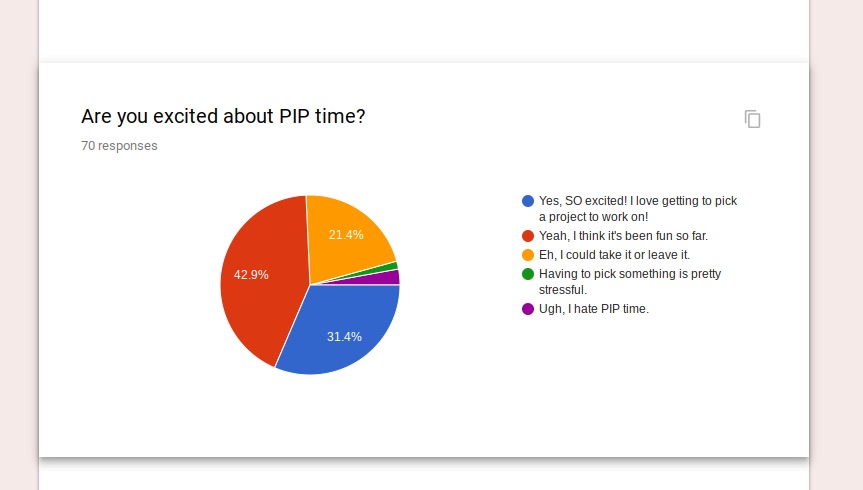
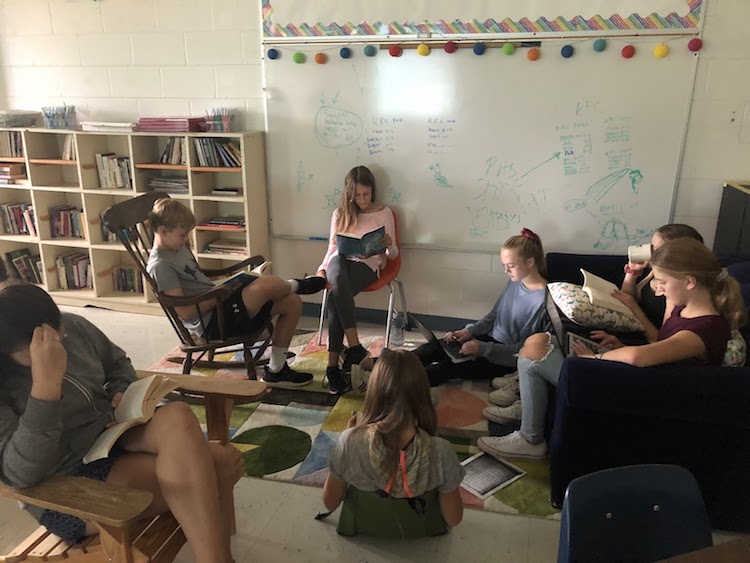

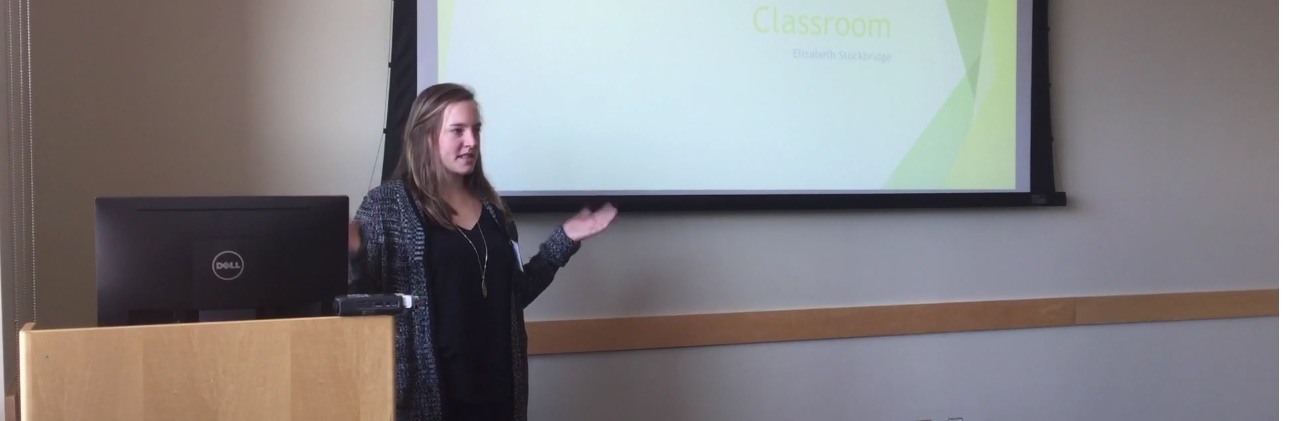

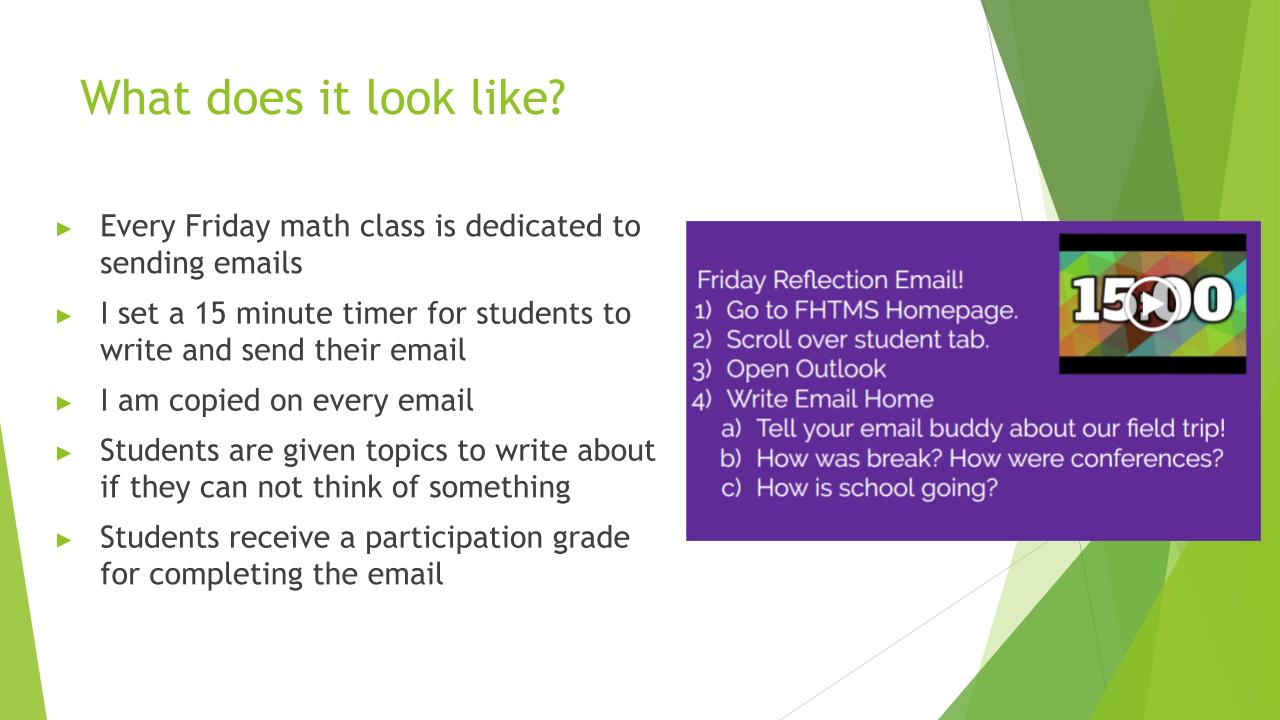
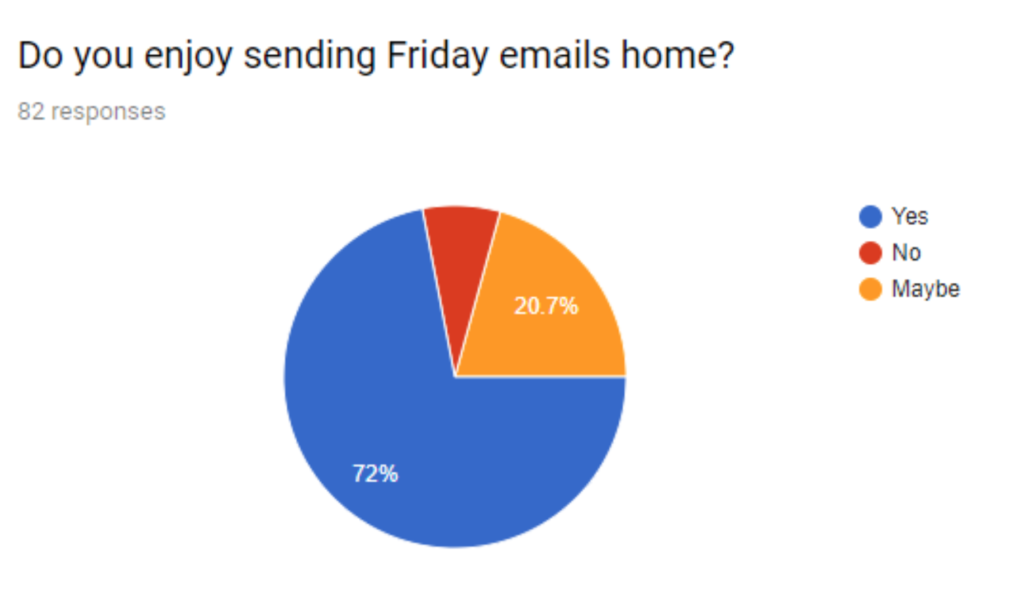
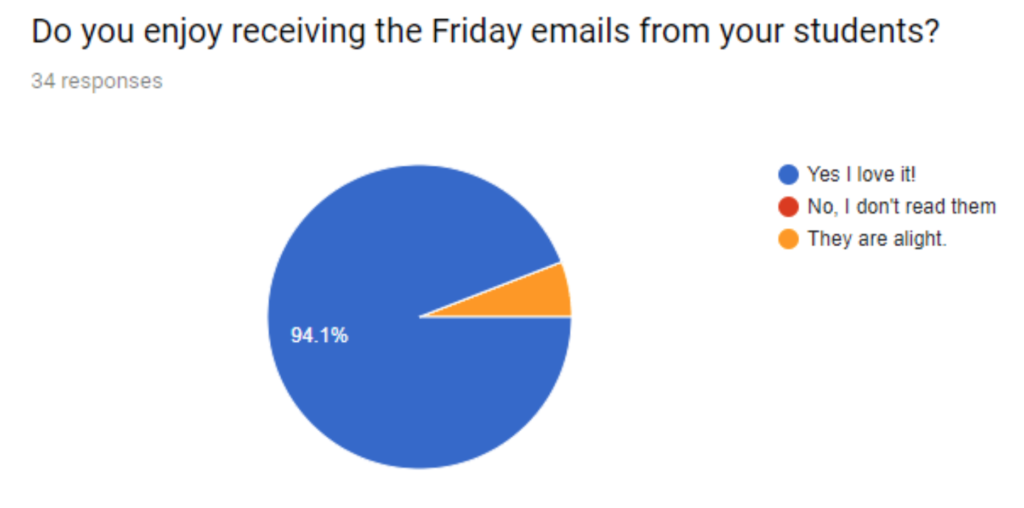 This comment on the survey seems to capture the parental gratitude:
!["Thank you so much for taking the time to create the weekly reflections with the kids. It's a wonderful glimpse into our child's week through his own words and memories. It seems harder these days to tease conversation about school out of him, this really gets the ball rolling around the dinner table. Thank you and keep them coming! [redacted]](https://tiie.w3.uvm.edu/blog/wp-content/uploads/2019/03/Screen-Shot-2019-03-11-at-1.57.58-PM-1024x123.png)
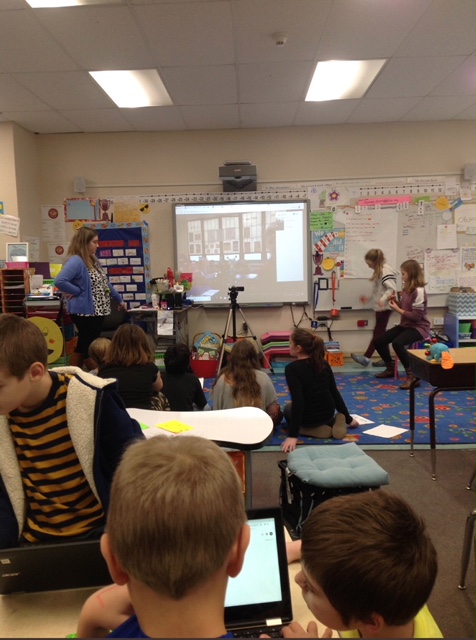
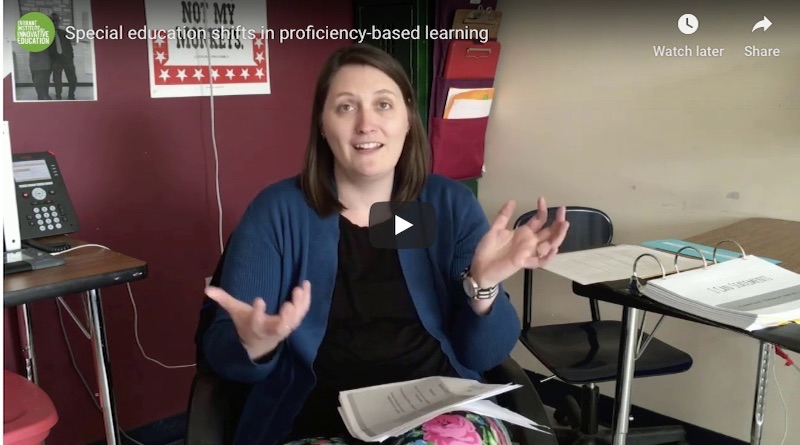
 Many of us doing proficiency work in the state see it as a means of ensuring equitable access for all students. A proficiency-based learning environment asks the learning community to partner together. The goal: to make certain all learners meet clearly articulated targets for success.
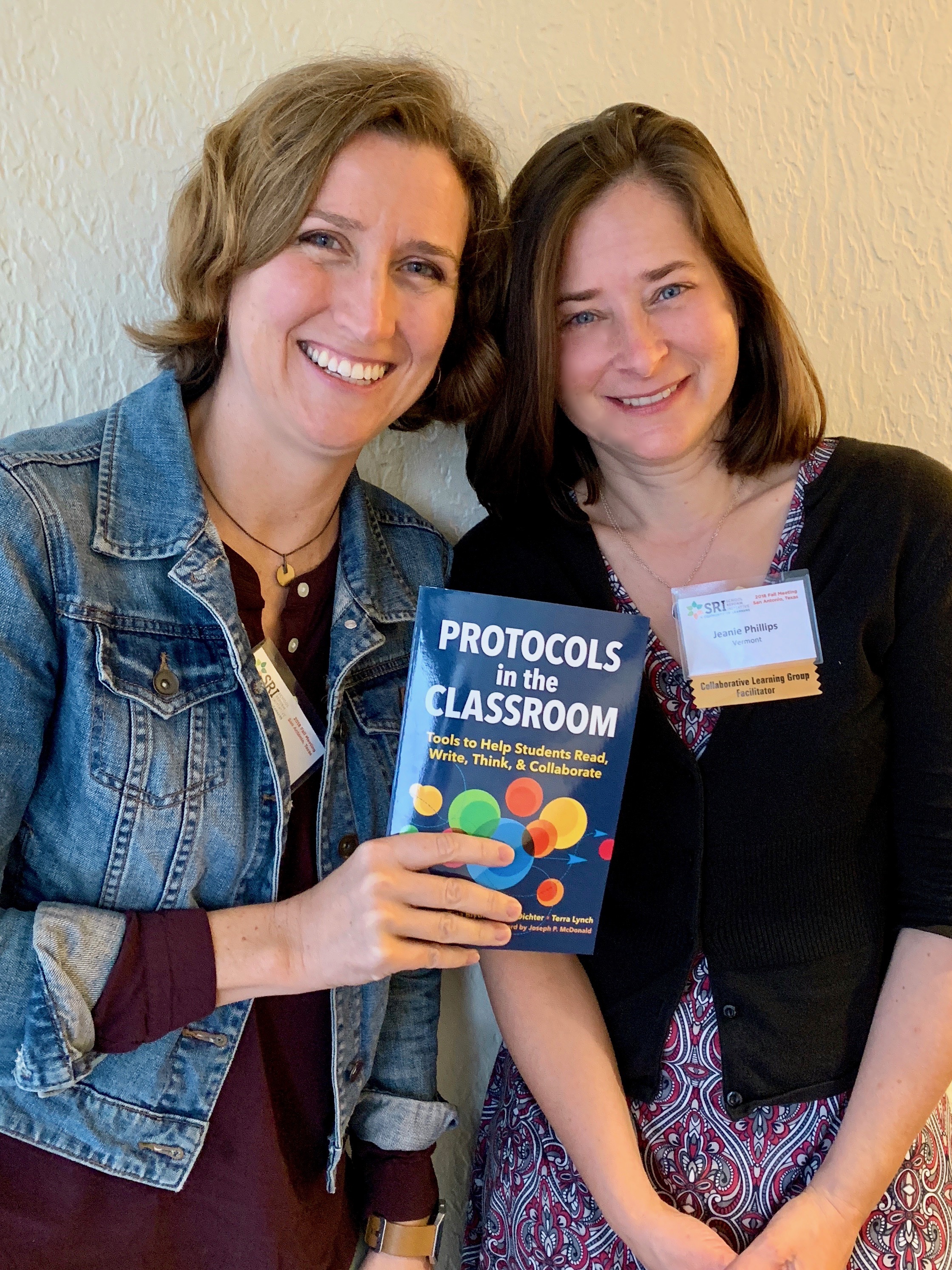
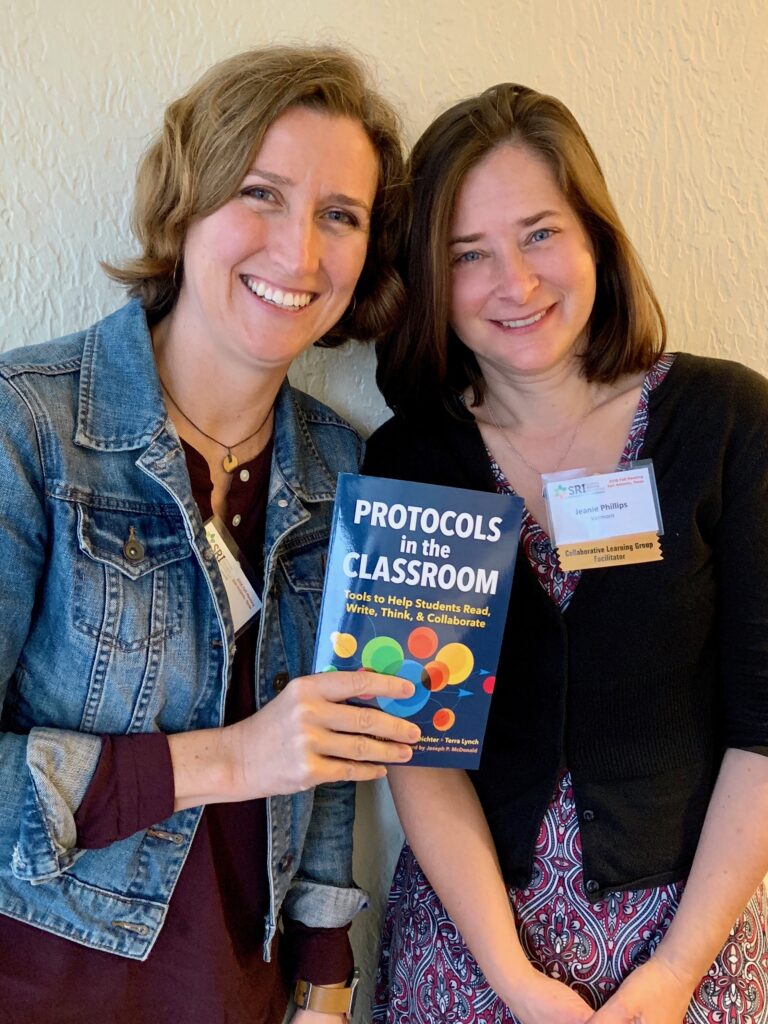


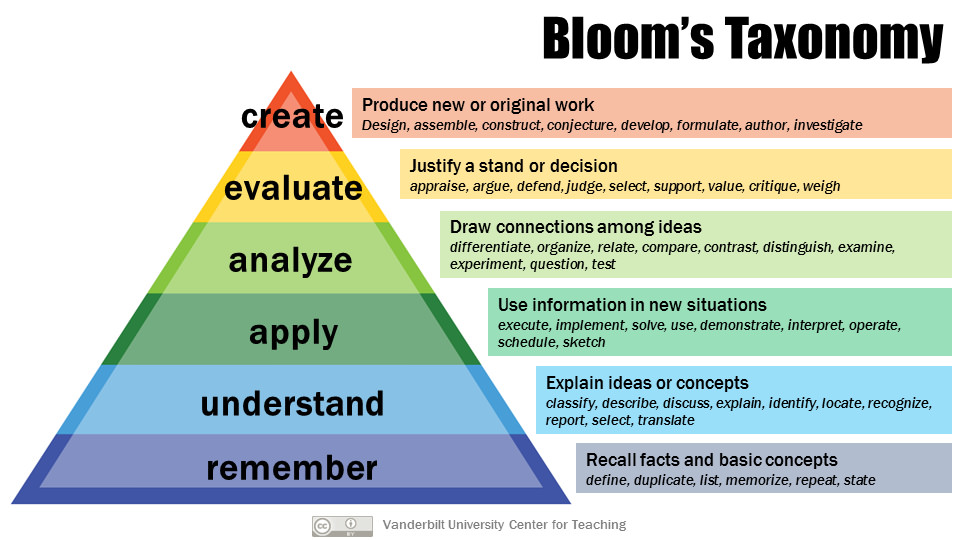
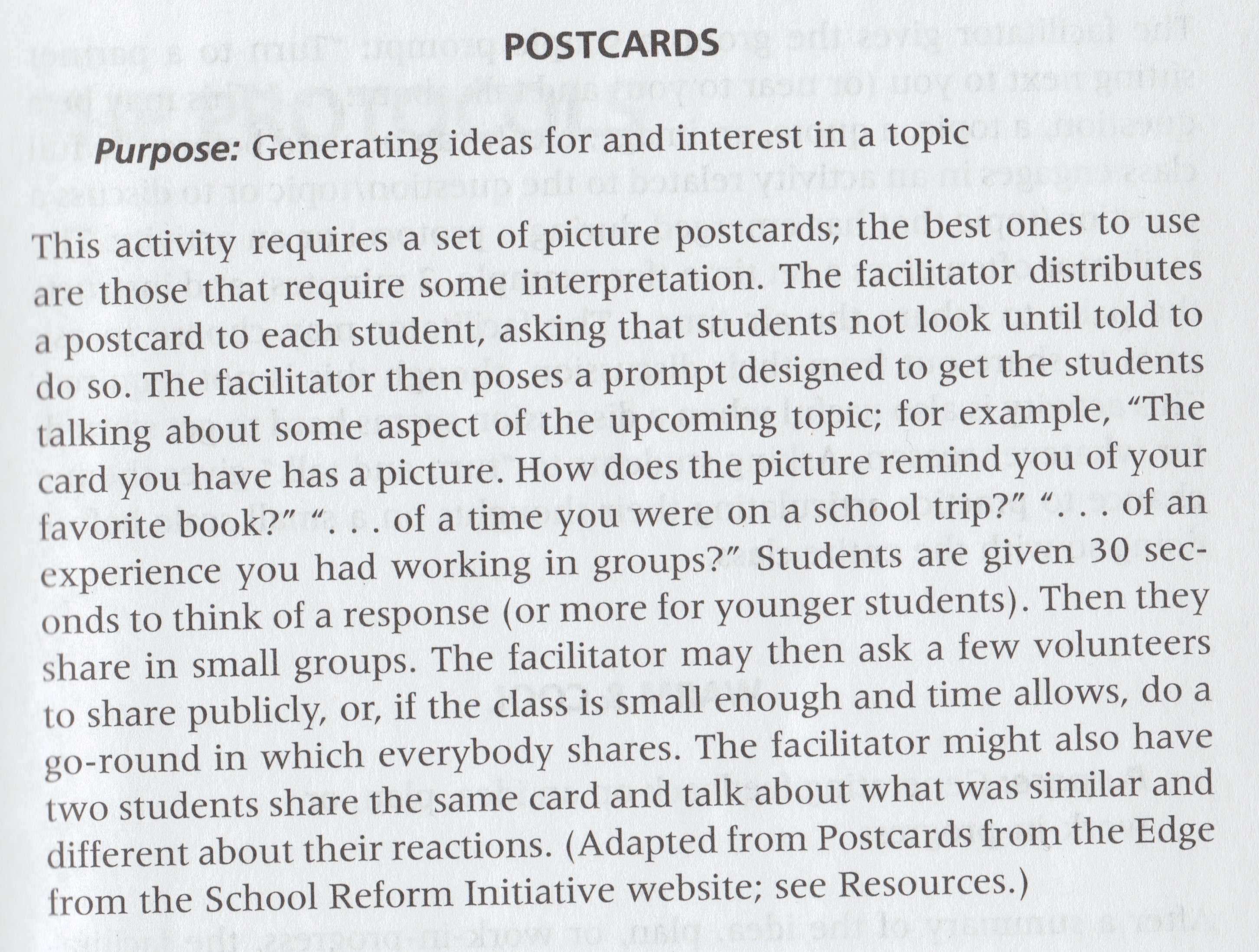
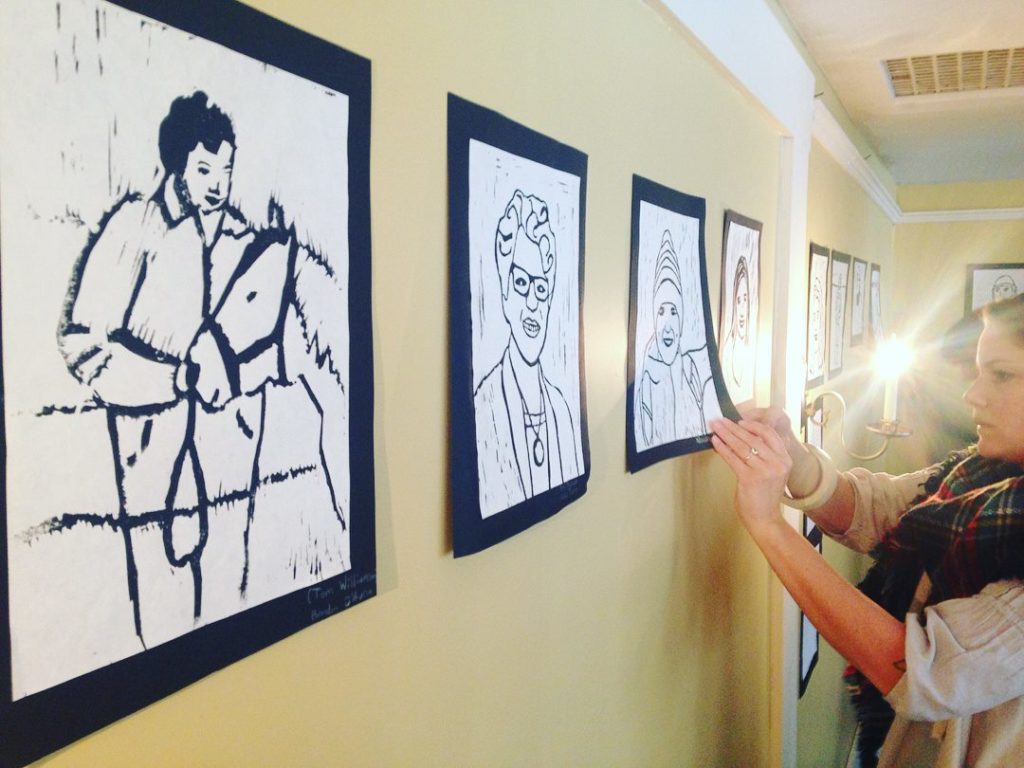
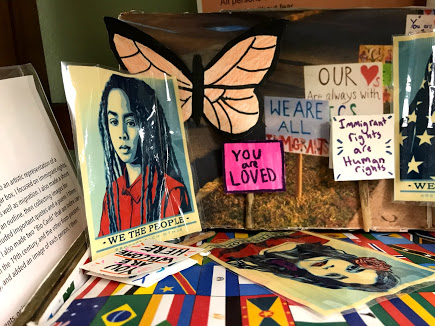
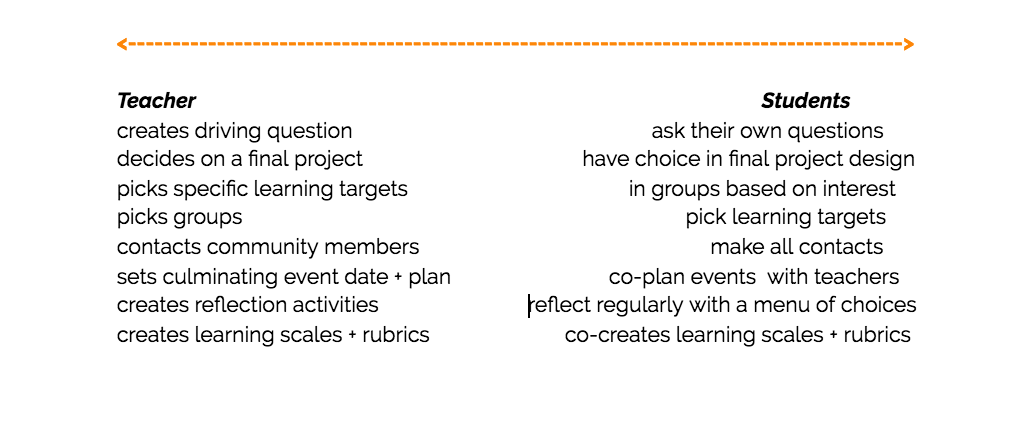
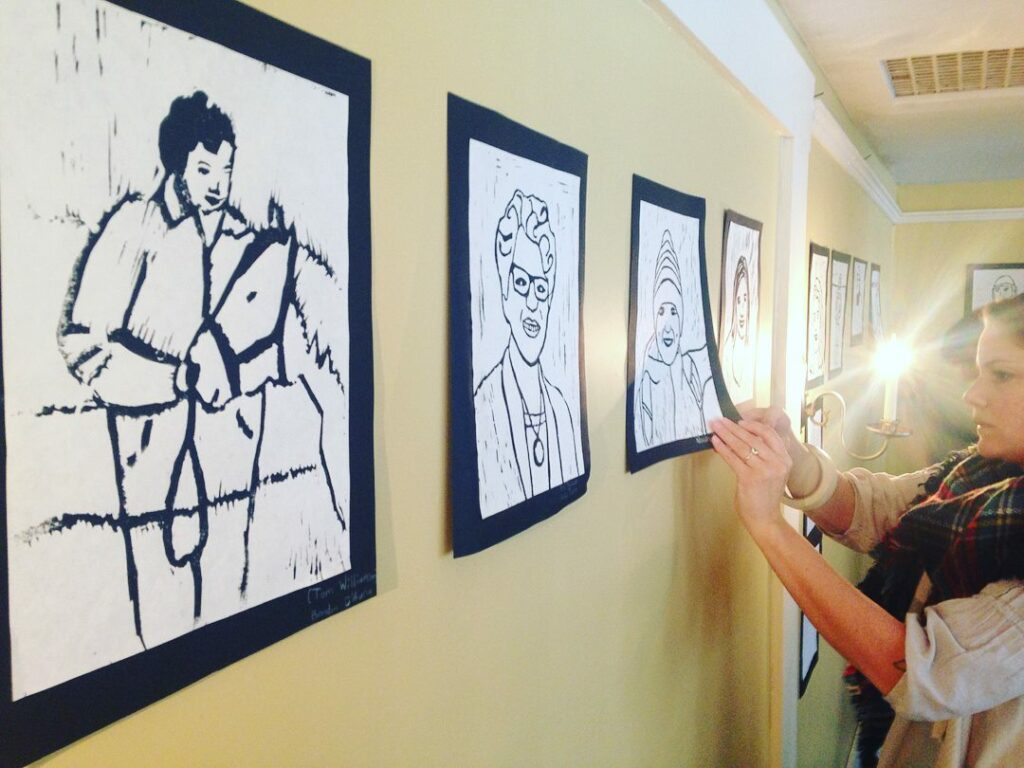
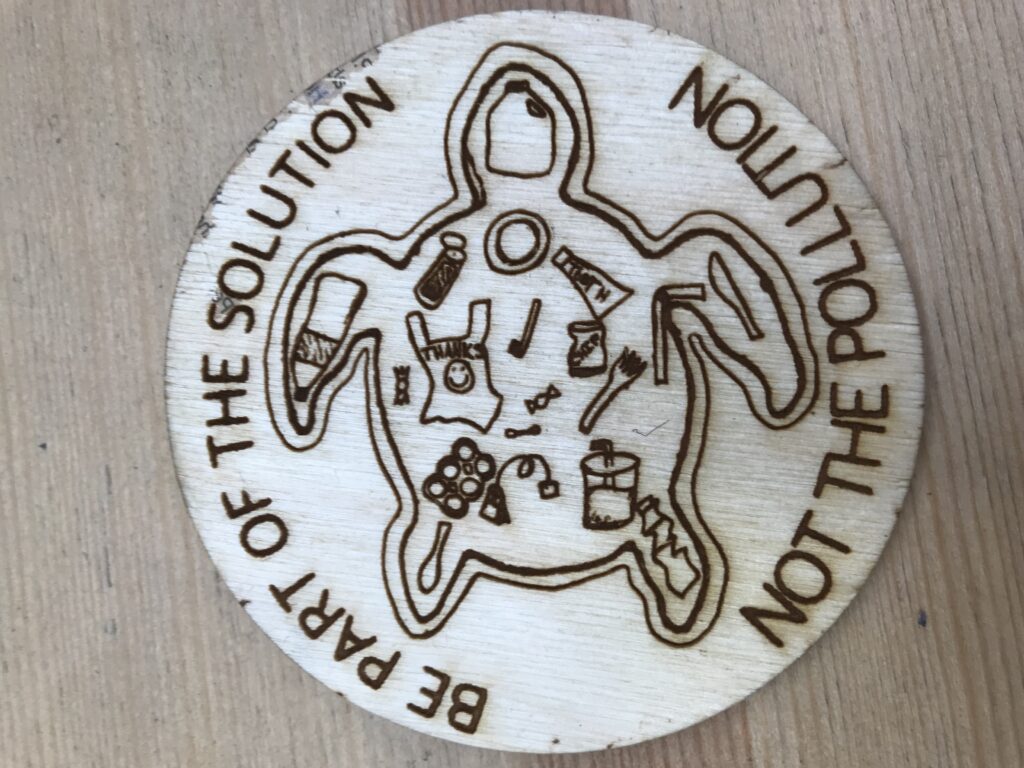
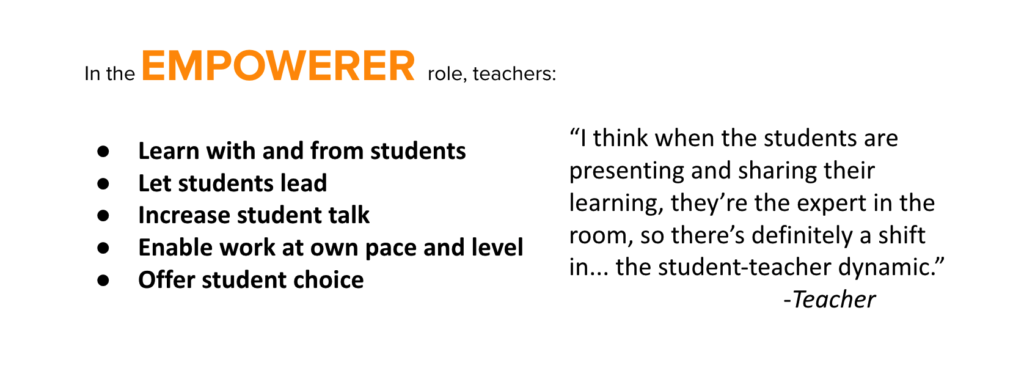 It is a common misconception that when you do PBL, teachers can go grade papers at their desk and relax a little, thinking, the hard work is over! The truth is with PBL teachers get a little closer to students in their groups and depending on their needs. Teachers are often facilitating, modeling, direct teaching, giving feedback, and helping kids coordinate with community partners. This is true PBL, when the teacher is a co-learning and facilitator, and project management assistant. In projects, since it is mostly laid out for students, teachers might be able to feel more removed.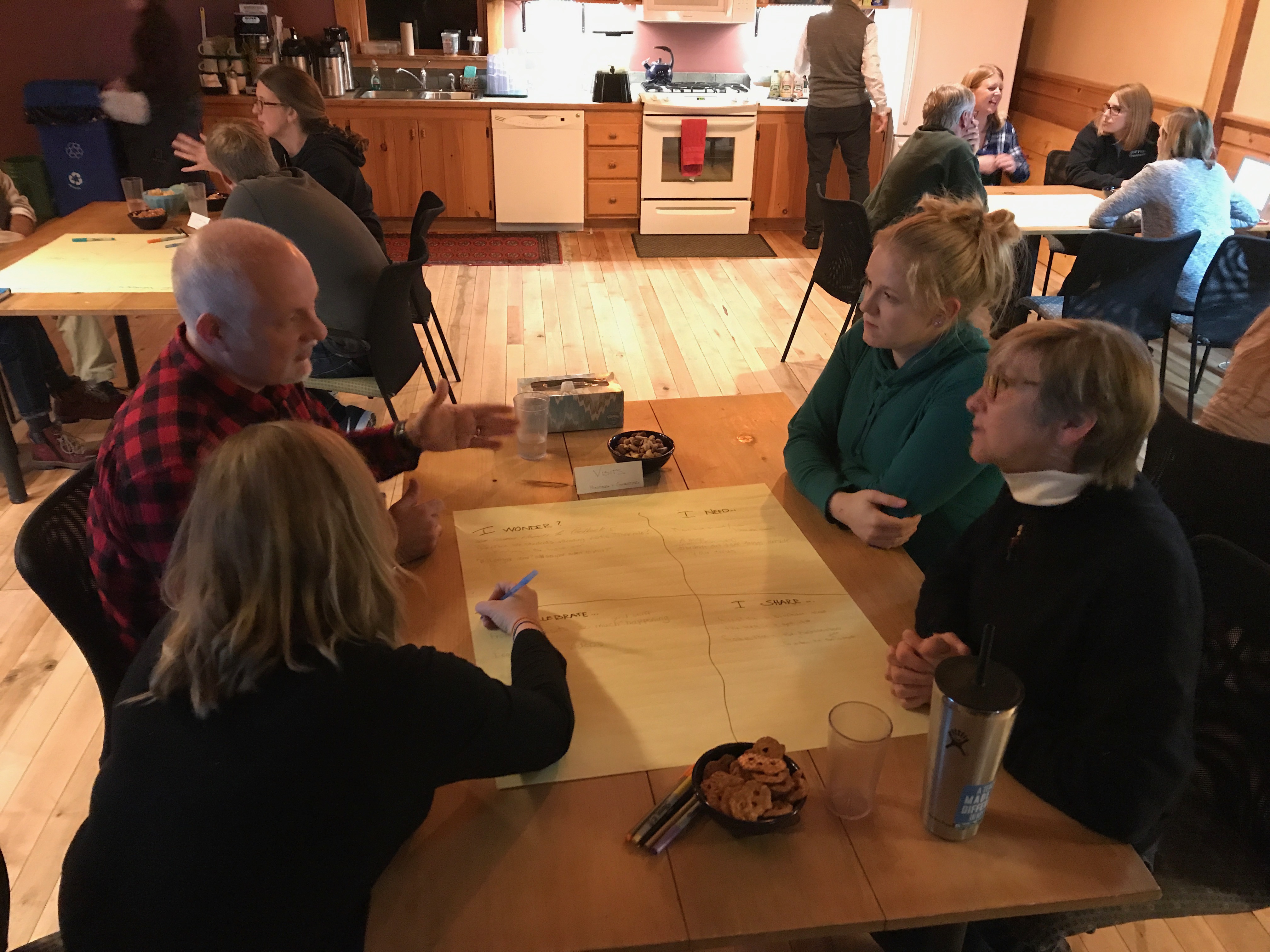
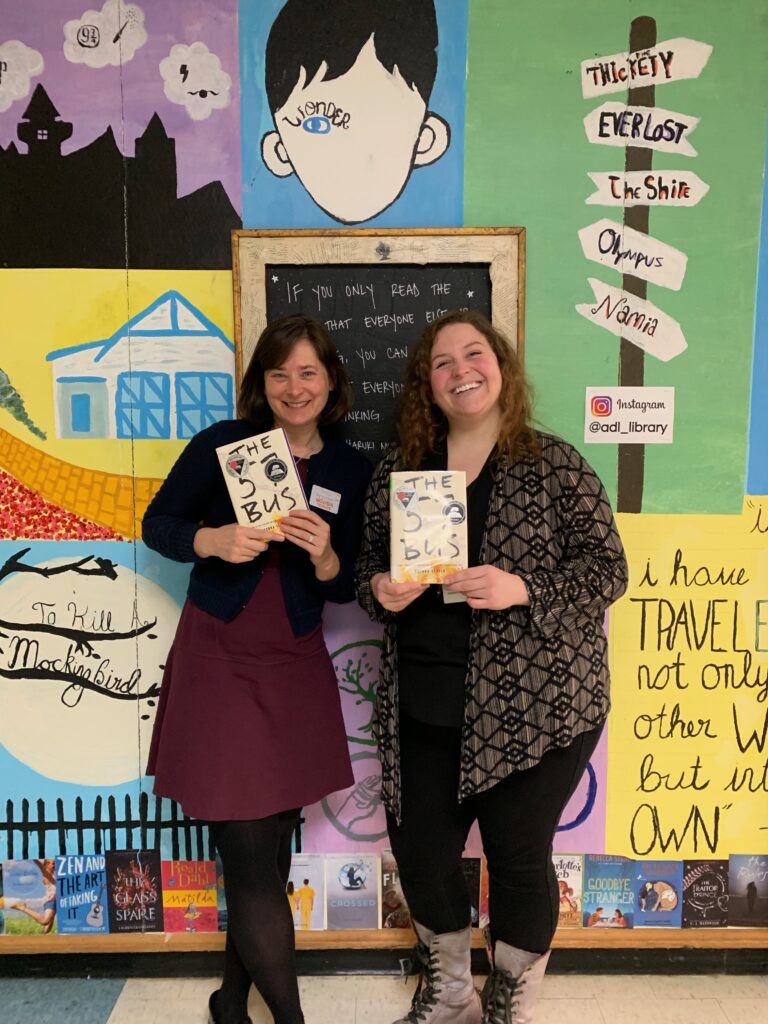


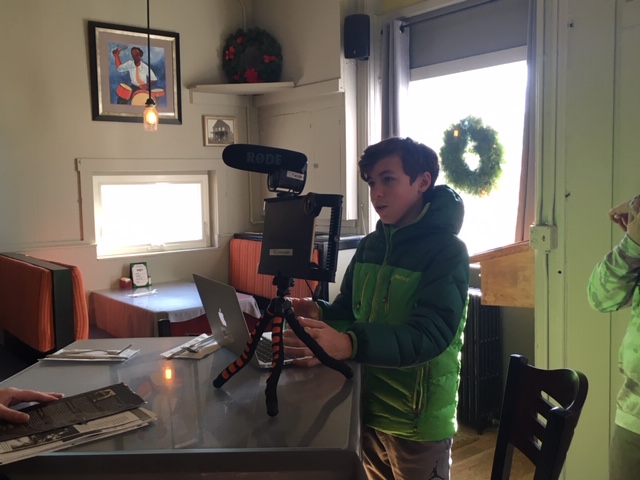
 With support from the local historical society, 7th graders in Manchester VT set about documenting the history of individual buildings during the town’s 1910 heyday. They went on walking tours, interviewed longtime residents, dug through old historical documents and photos, produced a documentary for each building and even created 3D-printed scale models of each building, for their ongoing town map. And community members, in return, appreciated the interest these students took in the town’s history.

