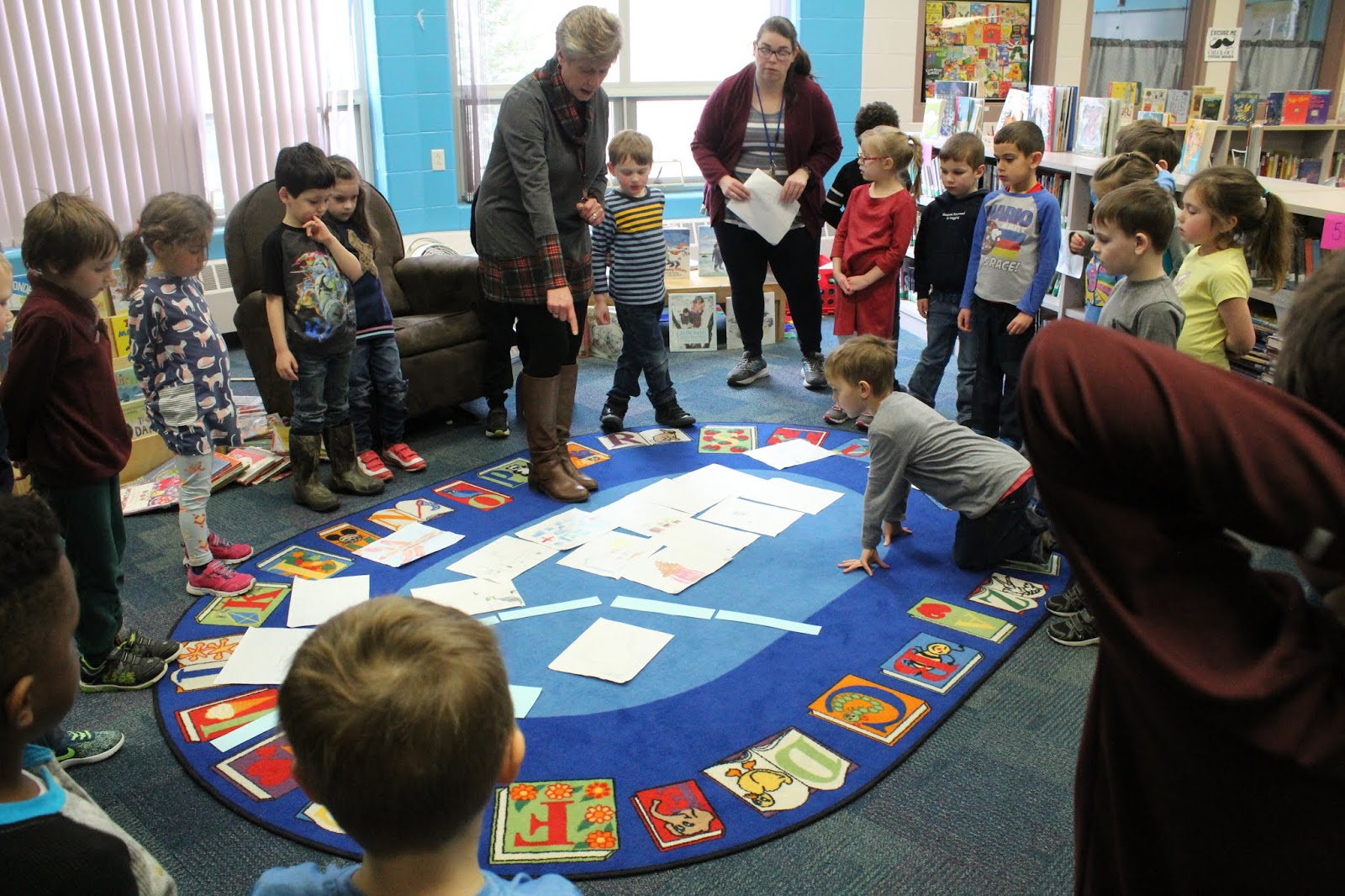
Vermont Act 46 mergers challenged communities to restructure systems. Under a mandated merger, two schools came together to build one thriving community, focused on building a healthy culture. Challenging, yes?
Through a shared, engaging advisory program, these two schools worked together to establish a culture that explicitly values:
identity development
learner self-development
community connections, and
a strong sense of belonging.
This is the story of South Royalton and Bethel schools, and how their students moved into the driver’s seat of an advisory that made space for everyone. Everyone.
Seeing back-to-school activities & personalized learning through the lens of trauma-informed classroom practices
I had a eureka! moment this summer.
We are so lucky when our critical thinking converges ideas in ways previously unrealized. It transformationally reframes our thinking. Those moments enrich ourselves and arrive with the promise that our private learning should have public relevance to make others’ lives more just, joyful, and equitable.
I want to share a recent moment of reflection, even as I just begin my learning journey at the intersection of trauma-informed classroom practices and personalized learning.
I’ve been involved in thousands of conversations with educators from dozens of schools about personalized learning, but I have never before viewed those conversations through a trauma-informed lens. And, I don’t recall anyone overtly bringing those conversations to the table.
This past summer, I was fresh off a year with middle-level educators to continue evolving our school’s approaches to Personalized Learning. One of our final accomplishments of last year was a newly redesigned Personal Expression Process to engage students and faculty in a scaffolded inquiry into self-knowledge and understanding, focused on both individual and shared identities.
In her succinct half-dozen images, she caught my attention: full-stop; she provoked educators to be critical caretakers as they consider and construct back-to-school prompts.
In an exchange with Wilkinson, she acknowledged that much of the missteps she notices are done unknowingly,
“Teachers are creative professionals who often desire to meet the many complex needs of their students without understanding the impact of some common activities.”
She also expanded on the post, explaining common missteps, why they might not work, and what to try instead.
Here is what she shared:
“Write about what you did this summer”
Why it might not work: For many reasons this question causes students to pause. The classroom is new, the teacher is new and the classroom sense of relationship and community is not yet established. Students may feel unwilling to share if they are concerned that the social hierarchy that is established if they share less than a “dream summer”. Fabrications run rampant in this activity. Students may have experienced abuse, loss of family, removal, or other primary trauma, causing them to feel hyper-focused on those negative experiences.
What to try instead: An easy substitution would be a writing assignment focused on the future, their hopes and dreams, or imaginations. Such assignments tell us a great deal about the child’s inner life without causing a fear-based reaction.
“Origin/history of your name” activities
Why it might not work:Imagine being named after your abuser. Or having been adopted or in foster care with no one to ask for an accurate history of your name. Students who have been teased for their name may also feel a particular dislike for this activity.
What to try instead: Substitution activities would depend on the curriculum goal of the activity, but might include introducing yourself to 2 other students and telling them something about yourself or name acronyms. In addition, teachers should always work to correctly pronounce student names and avoid asking for permission to call students by nicknames or other names to make it “easier”.
“Family or Personal Timelines”
Why it might not work: Children’s lives may include loss of parents, foster care, multiple removals, multiple adoptions, memories of negative events.
What to try instead: Instead, teach about timelines with more concrete options such as a timeline of a school day or year, or the timeline of a historical figure.
“Baby Picture Requests”
Why it might not work: Children may not have access to baby photos. Families may not have the time and money to print photos. Picture quality can contribute to negative classroom social hierarchies.
What to try instead: Instead, draw a picture, use baby animal pictures, or reimagine the activity.
“Family Trees”
Why it might not work:Children of single parents, adopted or foster families may have complex connections, and modern families may simply not look like the historical tree structure.
What to try instead: An alternative activity could be to share “people who care about me” that could include anyone from a parent to a neighbor, or family trees of historical figures. Find other ways to highlight examples of non-traditional family structures to ensure students are seeing positive and supportive ideas.
Asking about students’ summers, weekends, out-of-school learning, names, family timelines, and baby pictures, are prompts that on the surface seem perfectly typical to many classrooms yet are impossible to answer for some students who may be, or have been, in foster care or adopted. Additionally, when these prompts are given without choice, they push students to be vulnerable on our terms, not theirs and can trigger recollections of traumatic events, re-traumatized students who deserve nothing but our very best care.
Two things struck me when I read through Wilkinson’s post and still strike me now:
It made me realize just how common a practice it is for teachers to, with no intention of doing so, harm vulnerable children with common classroom activities. I have not talked to a single veteran teacher who has said they have not put one of these prompts in front of whole classes of students.
I was gifted a new lens to reexamine countless conversations about learning and to be more critical about future ones.
While my learning arc has just begun, and I now engage in self-work toward deeper understanding, that eureka moment has clarified this personal, working truth:
When we invite our students to consider self-knowledge and understanding, we must do so knowing that we have an immeasurable responsibility to not further marginalize and re-traumatize our most vulnerable students.
That statement seems overly obvious, but classroom upon classroom is unknowingly attempting to connect with students only to push some of them further away, further marginalizing the very students who most need positive connections.
While a few decades old, the landmark 1998 Adverse Childhood Experiences Study (ACEs) brought to light “the relationship of health risk behavior and disease in adulthood to the breadth of exposure to childhood emotional, physical, or sexual abuse, and household dysfunction during childhood,” and it provided a yardstick for just how pervasive these reported experiences are for children. ACEs found that nearly 52% of adults reported an adverse childhood experience, as outlined below, and 6.2% of adults reported at least four adverse childhood experiences:
From 2016, The Child & Adolescent Health Measurement Initiative reports that 46% of children, nationally and a similar percentage in Vermont, have experienced one or more adverse childhood experiences from the list of 9 ACEs. (CAHMI)
While it’s an imperfect correlation, we know many students are disempowered, and we need to inform our design of education with that in mind.
Applying a trauma-informed lens to personalized learning:
There are so many getting-to-know-you activities, like the ones Wilkinson shared, that educators use every year as a means for organizing student inquiry into self-knowledge and understanding. It’s an honest, yet uncritical, attempt to capture some of the “Critical Elements” of the Personal Learning Plan, such as a student’s own understanding of strengths, abilities, and skills; core principles; career assessment and/or learning styles inventory; and academic achievement.
As I reconsider potential learning opportunities to scaffold inquiry into self-knowledge, I wish to give students a choice:
to inspire creativity,
to imagine empowering hopes and dreams, and
to determine how and to what degree they allow themselves to be vulnerable.
Alex Shevrin, who works extensively in the field of trauma-informed education, has this to say about trauma and personalized learning:
“A great promise of PLP and personalized learning, in general, is that it offers students a chance to be in control of creating their own story, on their terms. So to me, the takeaway here is that, rather than providing limited choices for students that may dredge up traumatic memory or current traumatic situations, consider how students are truly given the choice to let themselves be known in the way that they want to be. It’s also worth noting that for some kids, it’s not safe to let adults or peers get to know you, and keeping a distance might be a survival mechanism.
“Similarly, some kids really struggle with the ‘strengths-based’ part of PLPs because they have a damaged self-concept and don’t know how to see themselves as a person with strengths. I think that the biggest thing for teachers is: don’t shy away from the complexity — there is no magical “trauma-informed getting to know you prompt,” it’s just about applying what we know about trauma to our classroom design. And challenge yourself to provide many options when it comes to students sharing personal things, while always giving the power to the student to choose the level of vulnerability.”
How do you approach trauma-informed personalized learning?
This one goes deep, folks. On this episode educator Corey Smith joins me to talk about The Benefits of Being an Octopus, by Ann Braden. We talk glitter and posterboard, coffee and peanut-butter smoothies, and using the Equity Literacy Framework to dismantle inequality in our systems of learning with both students AND adults. What might we — and you — miss about students’ complicated home lives? And what can we learn from gun control debates about community conversations?
Told ya. Strap in. It’s #vted Reads.
Let’s chat.
Jeanie: I’m Jeanie Phillips and welcome to #vted Reads, we’re here to talk books for educators by educators and with educators. Today I’m with Corey Smith and we’ll be talking about The Benefits of Being an Octopus by Ann Braden. Thank you for joining me, Corey. Tell us a little bit about who you are and what you do.
Corey: Sure. Thanks for having me. So, my name is Corey Smith and I work at the Greater Rutland County Supervisory Union. Up until last year, I was a classroom teacher. I had taught first grade, second grade, third grade and fourth grade with third grade being my most recent and at the end of the year I was given the opportunity to become a PBL coach. So now I get to have the opportunity to go into the schools within our district and work with the teachers to implement project-based learning, proficiency-based education, place-based learning, technology and student-centered learning. So that’s what I do now.
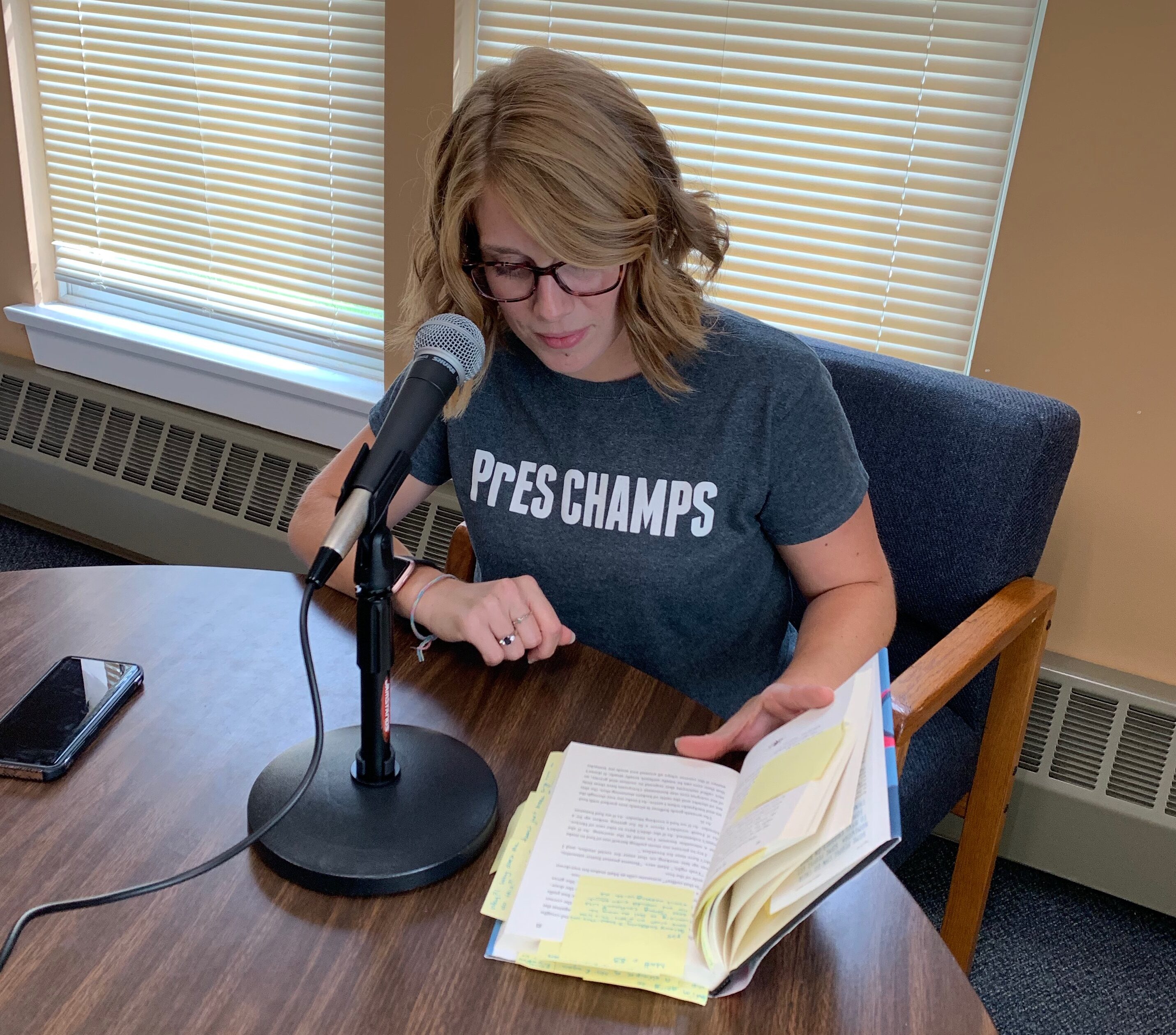
Jeanie: Excellent. We are recording in the school in which Corey was a first, second, third and fourth grade teacher, Proctor Elementary School, in Proctor VT. And I’ve got to tell you, there’s more flexible seating in this school than I’ve seen anywhere. It’s really a lovely, lovely building. Thanks for inviting me in.
Corey: Thanks for coming here.
Jeanie: So I’m going to start us off with my favorite question.
What are you reading now?
Corey: So, I am reading Harbor Me by Jacqueline Woodson right now. I have an 11 year old, sixth grader at home who has been an incredibly reluctant reader his entire life and this year’s DCF lists came out and it excited him and he has been reading nonstop, so we decided to pick out a book from the DCF list to read together. So that’s what we’re reading. We’re not too far into it yet, but I’m really excited about it so far.
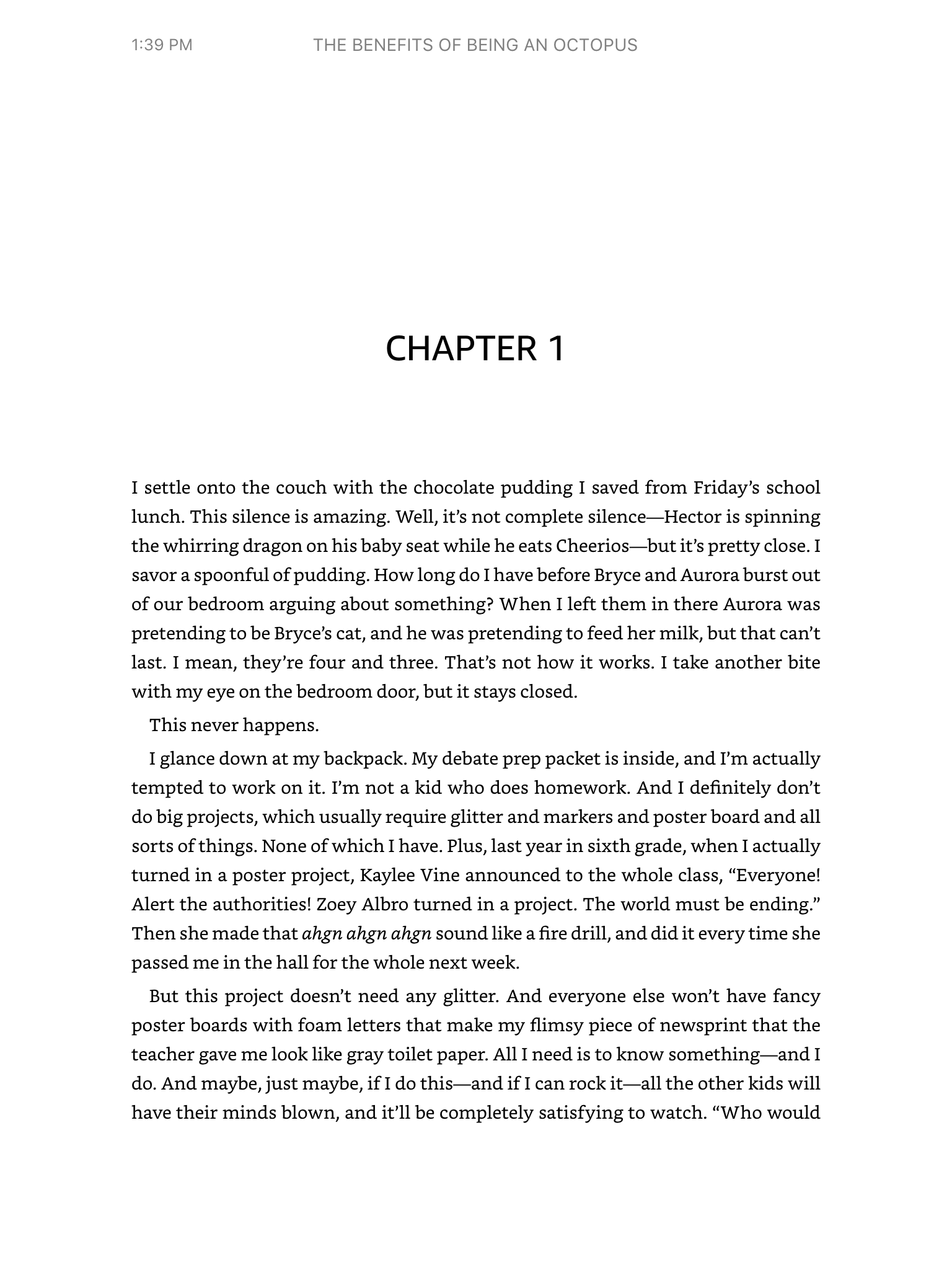
Jeanie: I really love all of Jacqueline Woodson’s books, but Harbor Me was a really special one. I think it’s a great empathy builder. So good choice for both of you. So let’s get to this book which we both adored and which Vermont educators are really loving and educators all over the country, The Benefits of Being an Octopus by Ann Braden. I wondered if you could introduce us to Zoey by reading the first few paragraphs of the book.
Jeanie: Perfect. So here we’ve got Zoey, she’s a seventh grader. She’s got a lot of responsibilities.
Corey: Zoey has two younger brothers and a younger sister. We just met Bryce and Aurora, three and four, and then she has an even younger sibling, Hector, who is around toddler age.
And Zoey is responsible for caring for these kids because her mom works.
In the afternoon, Zoey will get off the bus and she’ll meet the kids at their bus stop to pick them up to take them home. She’ll go to the pizza shop where her mom works to pick up the baby and she cares for these kids. As you get to know her, you find that a lot of what caring for the kids means is keeping them quiet. Making sure that they’re not interrupting others adults in the house.
Jeanie: Yeah. She gets them ready for school every morning. I mean, it’s hard enough to get myself ready for work! But she’s a seventh grader who gets herself ready for school *and* she gets two of these three kids ready to get onto the Head Start bus every single school day.
Corey: It’s amazing.
Jeanie: It’s a tremendous amount of responsibility and yet we could also hear the way Zoey’s teachers must see her: she owns up that she doesn’t really do projects or homework. So, I’m sure that given the lens of school, they really see her as a not-responsible person.
Corey: As I read the book, what struck me was my own teaching practice. And I really used the book to reflect upon myself as a teacher. How many times have I made quick judgements about students without really knowing who they are, what their background is, what they come to school with every day. With Zoey as the reader, she comes off as incredibly responsible, a caretaker. And yet the people at school don’t see that from her.
Jeanie: Yeah. I love that Ann Braden as an author, gives us this real appreciative lens to look at Zoey and her many strengths — and she has so many!
Corey: She does.
Jeanie: She’s a creative as a caretaker of these children. She makes up stories every single evening.
Corey: Yeah. I love the stories! The stories that she tells them are incredible.
Jeanie: Right? And yet at school she’s completely silent. But at home, she’s this incredible story-weaver. What other strengths did you notice in Zoey?
Corey: Zoey’s incredibly creative — though it comes out in ways that we might not expect, or ways that most people wouldn’t see from her. She is adaptable. I don’t know that she views herself as adaptable? But she has so many different situations within her life, so many responsibilities. And she adapts to what she needs to be for each of those people in her life. Her friend Silas, her friend Fuchsia, her siblings, her mom — we see her take on different… I don’t want to say personalities, but different *characteristics* to help her be the strong person in each of those scenarios.
I also thought she was incredibly brave for everything that she goes through.
She is a seventh grader. So that puts her at 12 or 13. And… look at everything that she’s going through! I felt like she’s the glue that holds her family together, that she’s the one who brings the family together and make sure that it functions.
Jeanie: Yes! Her mother could not do it without her, for sure. And that brings up that Zoey has a lot of obstacles in her life. There are a lot of struggles and obstacles to her success, not just in school but in general.
I wondered if we wanted to name some of those obstacles that Zoey faces.
Corey: Yeah. I feel like a lot of her strengths are also obstacles. Being the caregiver is a strength for her, but at the same time, it’s an obstacle. Because she is a seventh grader who does not get to do seventh grade things. If you look through what she had to go through to get paperwork signed to be on the debate club, it wasn’t what your typical seventh grade student would have to do.
I think another one of her struggles is her family dynamic.
Mom works quite a bit and when she comes home she has to be a caregiver, not necessarily to the children, but to her boyfriend and her boyfriend’s father. Zoey is responsible for making sure the kids are quiet so that Lenny, the stepfather, or boyfriend, doesn’t get agitated or annoyed at the kids. So, I think her family life can be a struggle.
Jeanie: Right. And her family is complicated, right? She has a father: her father is one man. The two older siblings have a different father and then Hector’s father is Lenny. And Lenny doesn’t have a lot of affection for Zoey or her two older siblings. He only has eyes for Hector and Zoey, her housing situation has been rocky… And she’s really invested in staying in this house, in this trailer because it’s clean. Because it’s tidy. Because it’s a home. But Lenny doesn’t make that easy for them. He’s got pretty strict high standards — especially given that there are toddlers. And he’s… well, he seems like a stable guy: he’s got a job, the place is tidy, the bills are mostly paid.
But he’s got other issues.
Corey: …Yeah. You hear the way that he talks to people throughout the story especially to Zoey’s mom and you hear a lot of blaming. So he does come off as being this responsible guy who provides, but at the same time he provides the home, but not the stability or the caring environment that these kids need.
Jeanie: Yeah. He undercuts Zoey’s mom a lot and she spends a lot of time wondering why her mom isn’t as strong as she remembers her. And that’s another obstacle, I think. Zoey’s concern for her mother and her mother’s wellbeing and the whole family’s wellbeing. She carries a lot.
Corey: I think at some point too, she starts to hear what Lenny is saying to her mom and she starts questioning herself and wondering if she fits those character traits that Lenny *says* her mom has, not necessarily that her mom does have.
Jeanie: Right. Yeah. There’s a lot of emotional tension in this house that Zoey has to navigate constantly.
Then there are just these like practical things, these obstacles to just belonging that Zoey carries.
Her clothes are usually not clean. She rarely has time to brush her hair or her sibling’s hair. So her appearance — at a time when appearance is everything, seventh grade — her appearance doesn’t really fit in and so she gets made fun of for the way she looks or smells. And so she’s really… doesn’t have a sense of belonging at school.
Corey: No, and because of her family struggles, she comes with assignments not done. She doesn’t participate in extracurricular activities like other kids do. So when she does, kids tend to poke fun at her.
Jeanie: Yeah. It just flies just under the radar in ways that we’re a little familiar with I think when we spend time in schools.
So, the octopus comes out having a really special meaning for Zoey.
I wondered, given the title, The Benefits Of Being An Octopus and the octopus theme runs throughout the book, if you want to talk a little bit about what the octopus represents for Zoey.
Corey: Yeah. So, Zoey brings up the octopus pretty quickly at the beginning of the book because she has this assignment that she’s thinking that she might actually complete this time. They have to debate which animal they think is the best. And so she goes on to explain the octopus and she views the octopus as this really strong creature. That it has multiple tentacles or arms, which would allow her to handle multiple tasks at a time: do her homework, pack her backpack, take care of the kids.
She talks about how the octopus can camouflage itself. So if it’s in a really nervous situation? If that were her, she could blend in, people wouldn’t necessarily notice her during those really uncomfortable times.
She at one point talks about the octopus starting out as this really small vulnerable creature and it grows into this really powerful creature. And that it sort of defies the odds in that sense. And that she wishes that that could be her, that I think she feels pretty small, maybe invisible or potentially even useless. That if she were this octopus, she could grow into this creature that is powerful and doesn’t let things bother her.
She oftentimes is listening near her mother’s bedroom to how Lenny is talking to her mother. And when she talks about going up to these spaces to do things, she’s talking about slinking along. How quiet and stealthy an octopus is, which would allow her to do what she’s doing in taking care of her family and keeping them safe? Without the challenges in her life affecting her.
Jeanie: You know, at Middle Grades Institute, Ann Braden, the author came to meet with teachers and talk about this book and I had lunch with her, with a couple other MGI folks. She, and a couple of us have this great fondness for animal names of groups of animals.
Like the one I recently came across was a group of hummingbirds is called a charm. A charm of hummingbirds.
Another one is a flamboyance of flamingos. They’re so much fun!
So I looked up what a group of octopus is called — and turns out, by the way, you guys, Zoey tells me that the plural could be octopi or octopus. So I’m choosing octopus, a group of octopus doesn’t have a name because octopus are solitary creatures. It occurs to me that Zooey is also a very solitary creature. She doesn’t really feel like she fits in anywhere.
Corey: I think she views the octopus as this big, strong creature but at the same time, a creature that’s by itself. One of the things I was thinking of as I was reading the book is she talks so much about how if she were an octopus and I think she’s more like the octopus than she ever gives herself credit for, in the ways of being solitary but also in the ways of strength.
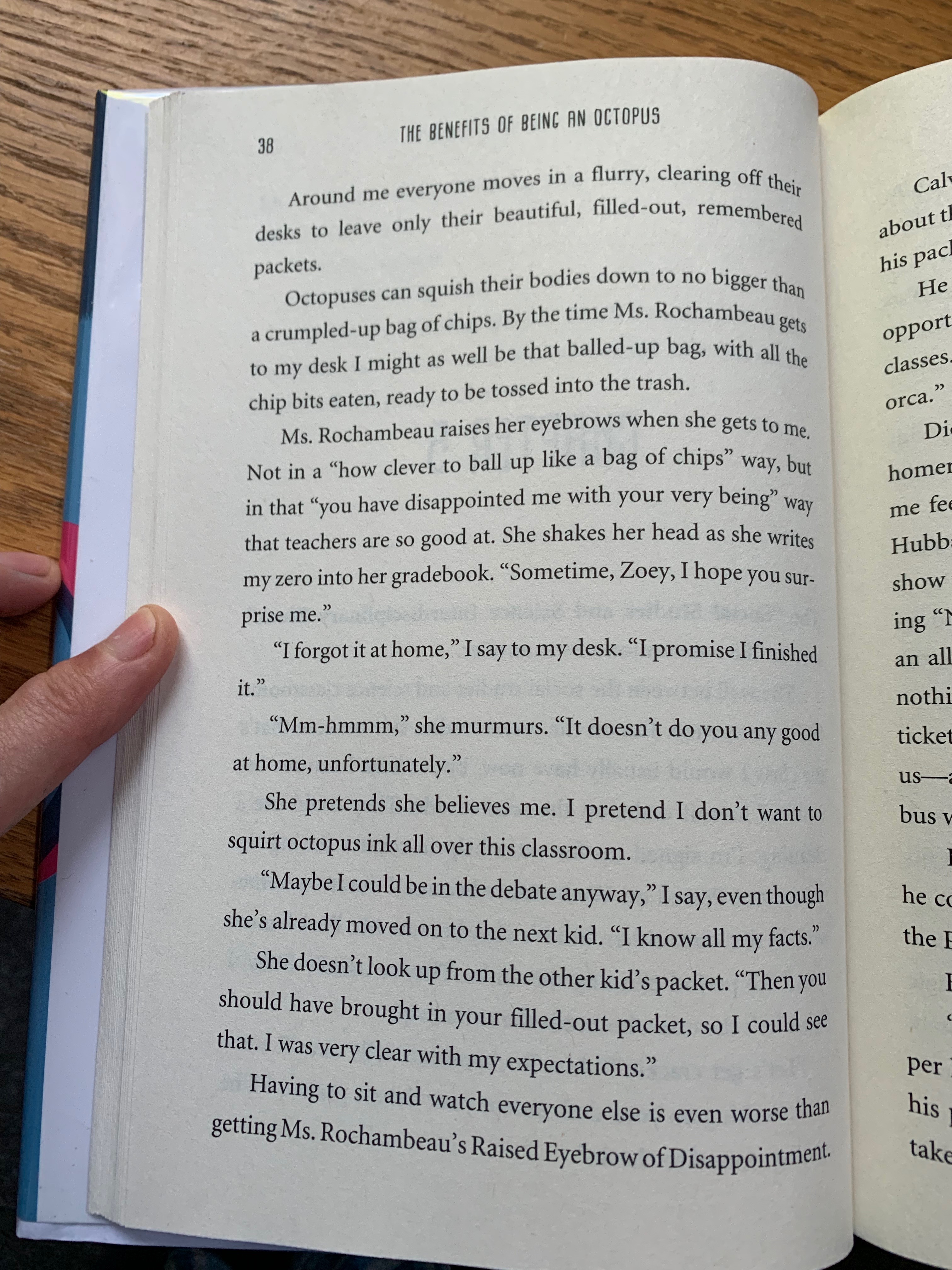
Jeanie: Yes! Yes. She has *so* many strengths. And also in the way of camouflage! She often flies under the radar at school, from her peers, and from her teachers. Except one teacher who takes a special interest in her: Ms. Rochambeau, her social studies teacher. I’m just going to pull up page 38 to do a little introducing of this teacher.
page 38, The Benefits of Being an Octopus
Phew! What are you thinking about that Corey?
Corey: Yeah, I had mixed feelings about Ms. Rochambeau! You read passages like that and oh, the emotions. You feel very frustrated. And then there are moments throughout the book where I think maybe she gets Zoey? But she goes back and forth so often that I really wonder if she really understands who Zoey is. And then I think about me and being a teacher and I wonder how many times have I done that exact thing to a student. Not intentionally, but out of frustration. So I try to see Mrs. Rochambeau’s or Miss Rochambeau’s point of view, but at the same time it’s…
You come away feeling hurt for Zoey.
Jeanie: Yeah. Yes. I think one of the things that really interests me is that while I was doing research for this episode and thinking about what we were going to talk about, I stumbled across this really interesting website. It’s called Writing Mindsets. ‘Using mentor texts to analyze how kids see schools and teachers.’
And the author of this blog has pulled a bunch of pieces from young adult and middle grades literature — including Harbor Me, by the way — to look at teachers in schools through the lens of young students and imagine what *they* see.
It really made me think about my own experience as a school librarian and the ways I might have come across in ways I didn’t intend to. It lets me reflect on that. And reflect on how much power our words and our tone and our way of being in a classroom has and in ways that we don’t intend, or realize.
And Ms. Rochambeau I think would be mortified to know what’s going on in Zoey’s mind.
Corey: Yeah. I think it goes, I think throughout the book as she’s trying to reach out to Zoey, you see those moments where she thinks she’s doing the right thing. So I think it’s very unintentional, but at the same time, sometimes she comes off as this villain.
Jeanie: I have to say what I appreciated about how Ann Braden wrote Ms. Rochambeau is that Ms. Rochambeau gets these glimpses of Zoey. She sees her in this particularly tense moment in the bus stop when things go awry and she’s picking up her siblings. So she gets to see these little windows into Zoey’s real life and the responsibility that Zoey is caring and so she becomes more empathetic.
But I also really appreciated that she didn’t rescue Zoey.
That this does not use that teacher as savior trope, that we are complicated people as educators. And that it’s not our job to save kids.
Corey: No. I don’t think it’s realistic for us. I think what she did do is she gave Zoey the stepping-off points that Zoey needed to save herself. That Zoey may not have been happy with how the whole debate club came about, but if she was never given that push. Everything that came of that — standing up for her friends, standing up for her family — never would have happened.
So, I think that she was not Zoey’s savior your by any means. But she certainly gave Zoey the tools that she needed to be her own savior.
Jeanie: Ms. Rochambeau eventually does see some real potential in Zoey, and she invites her into this after school debate club and offers her a ride to make it possible. So by no means a villain, at all, in many ways a great help in the way that teachers ALL OVER #VTED ARE, she gives Zoey these opportunities to shine in different ways.
I had a little love hate relationship with ‘Ms R.’
Corey: I did too. I didn’t know if I liked her or if I didn’t like her. I think ultimately she did the best that she could. Teachers can do so much, and we are human and have limitations as well. So, I think that she did what she needed to do with Zoey? Maybe not in a way that Zoey always was happy with? But I think in maybe a way that Zoey needed.
Jeanie: Yes, absolutely. Thank you for that analysis of Ms. R.
Let’s move on to another character. I wondered if you’d introduce us to Zoey’s neighbors, Silas on pages 28 and 29.
Let’s get a little picture of Silas.
“Maybe Silas is stealthy enough to figure out how to reconnect our electricity without the company knowing.
But it might have to be a bobcat-shaped electrical box for him to pay any attention to it. He’s going on now about what its scratch marks look like on trees. About how you have to keep your face to the wind when you’re tracking. “Whatever bobcat is out there, It’s one that knows how to hide, knows how to disappear.”
“Too bad, man.” I say.
Silas stops walking, looks at me and gives that same weird, “we’re part of an awesome conspiracy” smile. “No. Not bad at all.”
I stare at him. I picture his dad and him sitting in the front seat of their truck talking about bobcat tracks. They always seem so happy together. Like they’re on the same team.
“Hey”, I say. “Do you know where you filed that form to get help with electricity and stuff like that?”
He stops and looks at me. “I think my dad used to bring it to Family Services up on Route 14.”
“Oh yeah, thanks.”
He nods and goes back to talking about the bobcat stuff. About how snow conditions are perfect because they prefer to be able to walk on hard crusted snow, but this most recent dusting over that icy stuff, will let him pick up its tracks. On and on.
Until we reached the bus stop — it’s packed with kids older than us and who look a whole lot less grimy than I do — and he clams up like he’s never once heard of a bobcat. Because that’s Silas’s superpower: going for entire school days without talking. He’s been doing it since the fifth grade when Brendan Farley got people to place bets on how quickly Silas would start crying, so he’s really good at it by now.”
Jeanie: Silas breaks my heart a little bit! I love him.
Corey: Yeah. He goes through just as many struggles as Zoey does. Which is perhaps why they have this connection throughout the book.
Jeanie: I’ve known Silases in schools. Kids who slide under the radar, who are quiet, who don’t engage… And I don’t know. I worried about him all the time, throughout the book. He’s got such a good heart and no one can see it because he’s completely closed off. And made himself invisible. He erases himself at school. I wonder what we could do for kids like Silas in schools.
Corey: I liked his character so much? And I would worry what would happen if he didn’t have Zoey in his life someone that he could connect with because he and Zoey would always meet at the bus stop and they would always chat and — most times about hunting and bobcats. But he goes through a period in the book where he even shuts Zoey out. And you worry about him quite a bit.
Jeanie: He has a strong connection, though with his father as well. So, he’s got this home connection, but so many of the things he’s good at is tracking. And don’t show up at school. I think he is alienated from much of the content in school because it doesn’t have relevance to the rest of his life.
Corey: Yes. I think that’s something that Vermont educators are starting to understand about their students? And with the implementation of passion projects or PLPs that we’re starting to see more kids taking on content that they really like.
Jeanie: I was talking to a friend who was saying that her middle school son is really passionate about his Hunter Ed program. And that it has nothing to do with her or her husband, but that he gets there, he’s studying, he’s really engaged and it’s all this learning he’s doing outside of school in the way that Silas is doing all this learning about bobcats.
How do we get teachers to understand that so that finds a place on his learning portfolio or his PLP?
Corey: I think so often we’re so stuck in these standards. And that there’s one right way to teach standards — and certain content that goes with certain standards.
As we start exploring giving students more voice in their education, I think we’re going to start seeing more kids meeting proficiencies because it’s content that excites them. It’s stuff that they’re already doing.
I mean, how many kids are out there doing exactly what Silas is doing?
If you look at the transferable skills, how many kids could meet those transferable skills through their passion?
Jeanie: Yes. I love that.
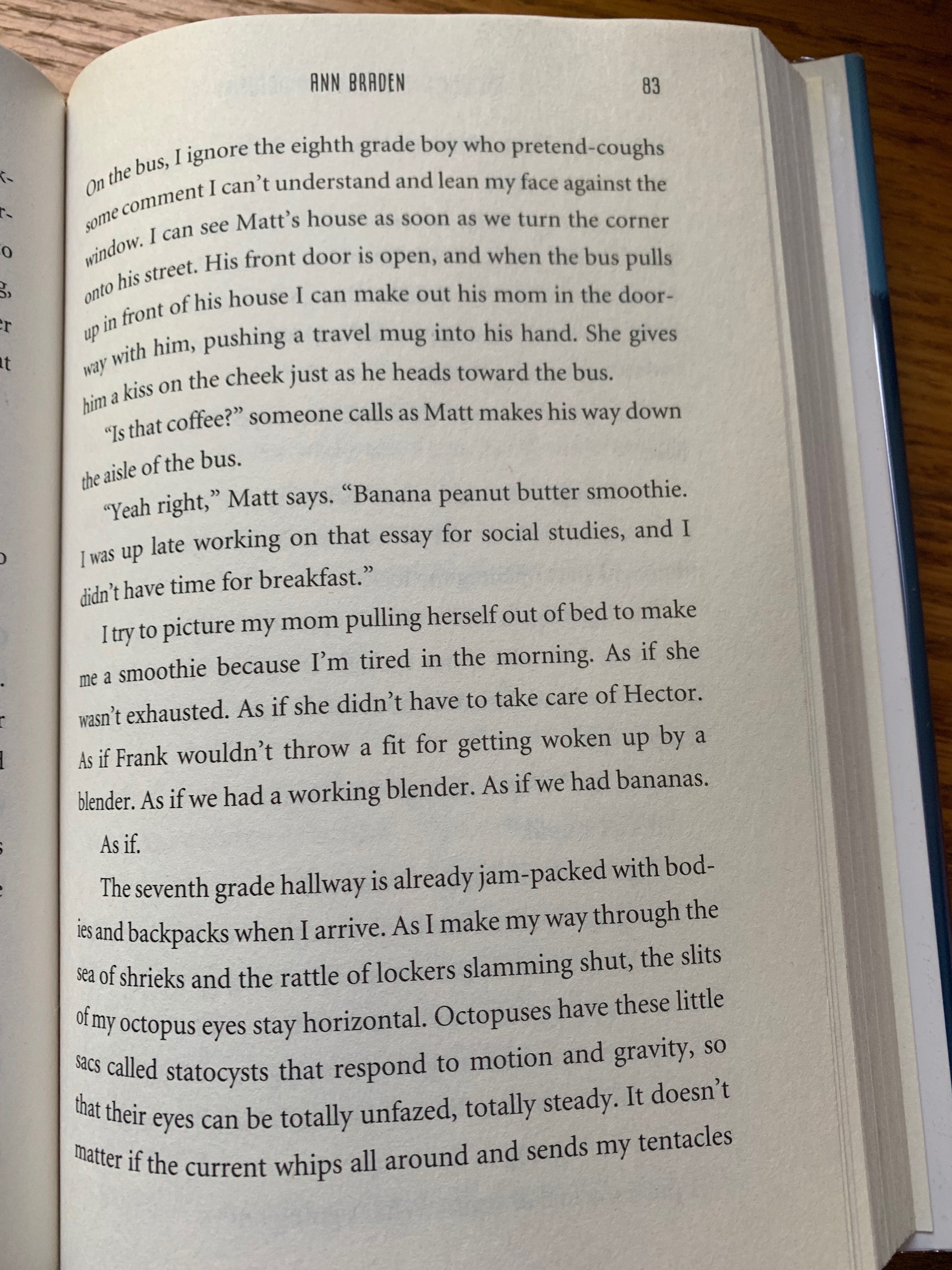
So, Silas and Zoey have a lot in common. But Zoey has one other friend at school, Fuchsia, who’s got a life that’s as complicated as hers, but there’s another classmate that she really admires, maybe in a crushy kind of way, named Matt. I think she likes him because he’s a nice kid. He works really hard at school. He gets good grades. Everybody likes Matt. I think there’s this really interesting contrast between his life and hers.
I’m going to read from page 83 to give a little sense of who Matt is, and the role he plays in Zoey’s life.
There’s just this really great tension between Zoey’s life as she becomes aware of how different other people’s lives are.
Corey: Yeah, Matt comes off as almost having the perfect life. Mom that kisses him goodbye at the door and gives him breakfast. He runs for class president. He’s part of the debate club. He comes off as seemingly perfect. I think at one point Zoey even acknowledges him and says something along the lines of, it’s not so much in a crush way, but it’s more of an admiration way. She *admires* the traits that he has.
Jeanie: Yes, and he’s kind to her, especially when she joins the debate club and shows herself to be a worthy opponent. He acknowledges her, her knowledge and her knowledge of baseball, I believe it is.
Corey: Yes.
Jeanie: So baseball or football.
Corey: Football! Because Zoey likes football. She watches that with Lenny. It’s the one time she and Lenny connect.
Jeanie: Yes, and Lenny actually shares food with her.
Corey: Yes.
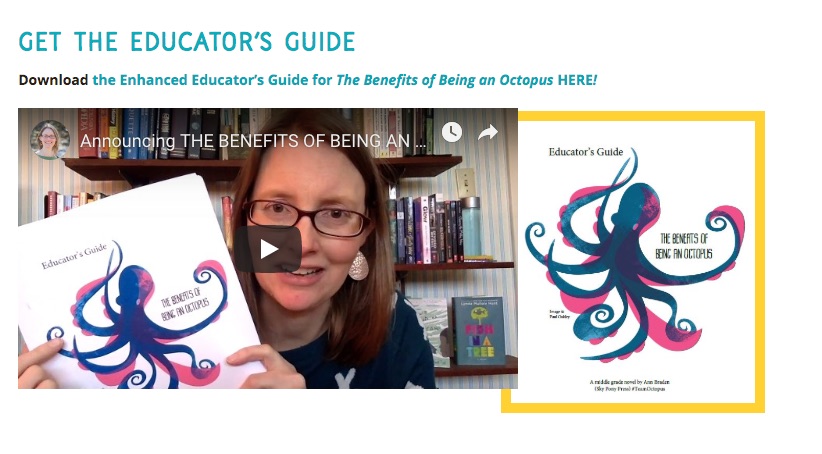
Jeanie: There’s something about that that’s really interesting to me and one of the most wonderful things about Ann Braden is, she’s a former educator, a middle school educator, social studies, I believe. She has the best teacher’s guide (.pdf) on her website for this book.
One of the things she does is there’s an activity in there about comparing Zoey’s family’s budget with Matt’s family’s budget.
It’s a great opportunity to work with students around some math, around difference, how people’s lives are different, around equity really. Thinking about the resources that are available to us, the obstacles that are in our way. I really love that and so it builds this into the novel and then also into the educator’s guide.
So, that brings me to this next question, which is:
How might you use this book in the classroom?
Corey: I’ve been thinking a lot about this. I have never been a middle grades educator, because I’ve always taught fourth-grade and under, but I think what I love so much about this book is there’s such a movement in education right now with equity. Acknowledging inequities and educating people on inequities and equities and how to approach that.
I think it’s so easy for us in little rural Vermont to say we don’t have a problem. We don’t have racial difference, or cultural differences. We all outwardly appear to be the same, but the inequity that is so common in our little schools is our socioeconomic status. And poverty. I think that this book brings that to light.
Just the differences in home lives with all of our students. And I think students need to recognize that within one another. When my son and I chose the DCF book we wanted to read together, one of the books that we had talked about was The Benefits Of Being An Octopus. I was hoping he would pick it only because I felt like it was something that he could really relate to within our own town. Students need to see what all students go through. I think that this book just paints a nice picture, whether it’s Silas or Fuchsia or Zoey or even Matt. It brings in all of those students and all of their home lives.
Jeanie: Yes. I think when we ignore the way in which difference shows up and is privileged or not in our schools, it’s an act of erasure. Because I travel around schools all the time and we have more students of color in our schools, even our small schools than we acknowledge. There’s an act of erasure when we say, “Oh, we don’t really have racism as an issue we need to deal with”, because we do actually. We have students of color in great numbers in some of our schools, and then in some of our schools that even, race impacts all of us.
Corey: It does, whether it’s viewed as big or not, the idea of “we don’t have racial problems” or “we don’t have race” *is* a problem in and of itself.
Jeanie: Exactly. And then you’re right too about how economics plays a huge role in the way that kids have access to the resources and privileges that help them exceed in school or excel in school, I should say. Or not.
I love this question from Paul Gorski that I think plays well with this book, which is:
“How has your school set up to bestow unearned privilege on some and unearned obstacles on others?”
For Zoey, a place that we can recognize right away that there’s some variation in access is the homework policy.
Whether it’s that she doesn’t have access to poster board and glitter, so she just gets newsprint, or just the *time* she has available and the help she has available to her after school hours to do that homework that is required of her.
When Ann Braden came to MGI, we looked at Zoey’s life through the Equity Literacy Framework, and thought about:
How do we first recognize those things such as homework?
And then: what might we do as a school to respond to those in some way
And then readdress. How does our policy need to change to meet the needs of students like Zoey?
How do we create and sustain equitable school environments over time?
We really use that lens to examine Zoey’s circumstances.
Corey: And I think what’s great is that we can bring students into that conversation. With a book like this, we can use that framework to have *students* have that conversation and talk about how can we make our schools better for all. Because it’s ultimately, it’s their education.
Jeanie: Yeah! How do we look at school policies or school procedures or just everyday events in school through all sorts of lenses to see who benefits and who doesn’t?
I love helping students use the equity literacy framework from a young age. Imagine the society we will be if kids can do that! In sixth and seventh and eighth grade.
So, another way to use this book is with teachers.
Corey: Yes. I think for the same reason. For me it was eye-opening because I questioned my own practice. I questioned who I am as a teacher and I questioned how I can make myself better. How can I talk to students? How can I build relationships? I’m not afraid to admit that at one point in my career I was one of those teachers who said, we don’t have a problem. I don’t have a problem, but I do, and that’s okay.
But I think it takes reading something like this for me to be like, “Huh, you know, is that me?” Then having conversations as a faculty, it’s the same thing. You use the same framework, the literacy equity framework of looking at our policies. And how do we make them more equitable for all students.
Jeanie: Yes, I’m a huge fan of adults reading middle grades and young adult novels, and picture books frankly, as a librarian. With an eye towards empathy.
How do we step into the shoes of students in general again? Because it’s hard to remember what you were like at 12. It’s hard to remember what it was like to go through the day as an eight year old or as a 15 year old.
I’m a big fan of using young adult in middle grades literature to step into the shoes of young people in general. And then whether we were raised middle-class or not, we are now as educators, middle-class. And so, being able to step into the shoes of a working class or working poor kid is huge. …I think about how much we don’t see because we’ve never experienced it.
I was raised working poor, and so this book for me was like being seen in a different way. When I was a kid all the books I read about kids were middle-class kids, and I thought that was a normal life. I thought that if only we were normal. I think Zoey has that a little bit too, like, “If only I… like everybody else.” And so this book was like an act of like, “Oh, this is normal too.” And to feel really seen.
Corey: I think it lets kids see themselves in literature.
Jeanie: Yes, and for their strengths! Like Zoey’s not somebody we pity.
Corey: No. No! She’s strong. I even was thinking throughout the whole thing that to me she would be a hero for me, because of everything that she works really hard for and accomplishes.
Jeanie: Yeah. I love the dual play that you can use this with kids and with teachers in really profound ways. When I was a school librarian, I used to have debates sometimes. Did you ever have debates in your classroom?
Corey: No. *laughs*
Jeanie: No. Maybe it’s an older thing. I think with fifth and sixth graders we used to have debates and Ann offers this other structure that comes out of her work with guns. Conversations around guns and gun control in Vermont. Which is: although we might differ in our opinions about an issue, whether it’s about guns and gun control or about something else, how do we come to common ground?
So, this idea that instead of debating each other, pitting ourselves and our opinions against each other, how do we have conversations and listen well? So that we can find that space where we agree, even though we’re not going to agree on everything. And I think that would be a profound thing to do with teachers as well as with students. Right?
Corey: I think so, too.
Jeanie: So, I highly recommend folks, I can’t recommend the educator’s guide enough.
What other books would you recommend for our listeners who are interested in this one?
Have maybe already read The Benefits of Being an Octopus and are looking for other ways to be empathetic for the student experience or the experience of poor working families.
Corey: There are a few books that have been recommended to me, but I have not yet read myself? But I’ve heard wonderful things. I know No Fixed Address, was a book that was recommended to me.
Jeanie: I just want to say I loved that book. We did a podcast on it last spring. It is a tremendously good book about a kid. He lives in Canada, but it could be a Vermont experience of a kid in housing insecurity, which is what we call it in schools, right? We don’t call it homelessness. Usually, we call it being housing-insecure. I just adored Felix, the main character in that book. It’s a great read. It’s a great companion to this book actually.
Corey: It’s on my list. And then another book that was recommended to me was Front Desk. I have not yet read that one, but I have an aunt who’s a librarian who highly recommended that one, because I was looking for books to start conversations with my 11 year old.
Jeanie:Front Desk, I haven’t read that one yet either. It’s on my list, but it’s got a highly capable young woman who helps her family–
Corey: –run the front desk of their motel, hotel, whatever it is.
Jeanie: I’m going to put some other titles on. One of my very favorite, YA books, is a little bit older is Eleanor and Park by Rainbow Rowell. Eleanor lives in poverty and really brings to light what it’s like to be a high school kid struggling with and under financial tension. I have a couple of other titles.
Any other thoughts on The Benefits of Being an Octopus? Anything we didn’t get to that you want to make sure we get to?
Corey: No, the only thing that I would say is that if there is one book that you choose to read, it should be this book. I think that it will open your eyes. I think you’ll find it to be an incredibly great read and a really reflective read.
Jeanie: Yeah. I recommend it as a read-aloud too. It’d be a great read aloud in the classroom. I know a teacher at Flood Brook is planning to read it aloud to seventh grade students this year. We had a long chat about that. And connect with Ann! She’s a busy woman because her book is on fire, but, she does do Skype visits. Check out her website for all the resources that she provides. She’s so lovely! She’s a really lovely human. It was such a pleasure to have her at the Middle Grades Institute this summer, and it’s such a pleasure to have you Corey on the podcast. Thank you so much for your enthusiasm for this book and for joining me to talk about it.
Corey: Yes. Thanks for inviting me to talk about it.
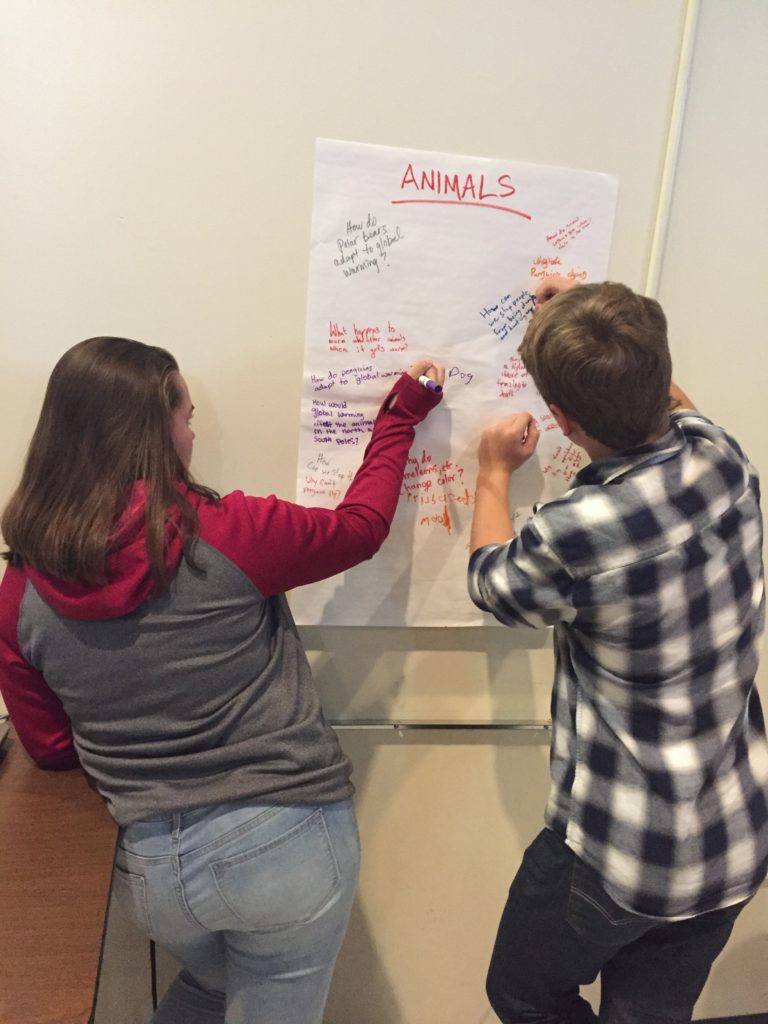
Question generation is key to inquiry, goal-setting, and negotiated curriculum. And asking the right kinds of questions pushes students further. They need to know how to ask questions that lead toward deeper learning and effective goal-setting. Meanwhile, teachers need to be skilled at asking questions in a way that leads to deeper learning *for all*.
It’s a small ask, right?
Let’s look at some strategies to help learners with this skill.
You’ll hear from former Edge students, families and other Vermont educators who experienced firsthand the transformative power of providing students with the support to choose their own pathways in learning — and what the difference is when students tackle the rest of their education, and beyond.
“You go into this multi aged team thinking, oh man, the eighth graders, they might be mean, they might just not talk to us, and then they were just so inviting and it was such a nice environment to be in. It was just like I miss it. It was really, felt like a home.”
First and foremost, we focused on building radically supportive relationships with and between students.
We wanted students to empower themselves. We wanted students to feel like they really could change the world, by making their own coursework and projects. And we wanted all of those things to have strong ties to the community.
This is the collective story of The Edge Academy told by some of my former students and their families: Chloe Lemmel-Hay, Barb Lemmel, Mitch Hay, Rebecca Stone, her son Aaron, Wren House and Lily Davis.
And I don’t think this story could be told any other way. Because effective personalized learning isn’t one student sitting alone at a computer. It’s truly a collective experience, with everyone supporting one another: peer-to-peer, youth-to-adult, students-and-community.
Everyone showed up to make The Edge work, so everyone shows up here in its story.
First, let’s talk about relationships. The Edge was *all about* relationships.
Meet Chloe Lemmel-Hay, and her parents, Barb and Mitch.
Chloe:My name is Chloe Lemmel-Hay and I was in The Edge from sixth grade to eighth grade and that was from 2009 to 2012, and I’m currently in my sophomore year at Harvard University.
Barb:I’m Barb Lemmel. I’m Chloe Lemmel-Hay’s mom and I was associated with The Edge during that time as well.
The Lemmel-Hays were there from Day One. They were there on the first day of The Edge. They remained advocates not just for their own daughter, but for all the students, and for the very idea of The Edge. And we still keep in touch.
“I really appreciated the relationships with the teachers that I had at The Edge,” says Chloe, “because I was really, really close with you. And I was really close with a lot of the teaching aids and the staff. But I always felt so comfortable just coming into the staff room! And you never made me feel like I didn’t deserve to spend time with you outside of when we were in class, and ask you questions about things that we weren’t covering in class, and have lunch with you and just do all kinds of things and that was really, really valuable. The Edge gave kids who weren’t of a specific type of place to really flourish and feel valued and make relationships with other people, and that was really special.”
That’s an important piece.
There’s a lot of generalizations about Vermont as a homogeneous population of people, but as an educator, it’s apparent everyday how diverse our population of students is.
And it was imperative that The Edge was an equitable place. A place where everyone felt valued and welcomed. Even loved. It was about everyone being comfortable enough to try new things and speak up.
Barb felt it too: “I loved feeling like Chloe was going to an educational program that I really believed in. I completely trusted the teacher team and I completely trusted the philosophy. I really believed in what you were trying to do; it totally made sense to me. I enjoyed the meetings with other parents, when we talk about kind of what our hopes and dreams were.”
She goes on to say,“The kids were a community; that’s the other thing I remember. It was how much connection there was between the students. They’re middle schoolers, right? So, sometimes it was more dramatic than others, but people really cared about each other and The Edge worked hard to nurture that.”
It’s really interesting, because in these interviews, everyone kept talking about “home” ,and “family” and “community”, and those just aren’t words you hear very often about middle school.
It was just great. You go into this multi aged team thinking, oh man, the eighth graders, they might be mean, they might just not talk to us, and then they were just so inviting and it was such a nice environment to be in. It was just like I miss it. It was really, felt like a home.
This is Raquel.
“My name’s Raquel. I go to Essex Middle School, and I was on Edge the school year of 2016-2017, during my 7th grade year. It just opened me up to a whole new world of people and it was great. It’s like: what? This is like, a thing? I didn’t know! It was amazing.”
So, Raquel came to me when she was in 7th grade, and just like she said, it was effective but she wasn’t really engaged. But she had a fire within her, for sure. Outside of school, she was an activist. She was involved in all these kinds of change movements. But inside, I don’t think anybody knew that. She was just… compliant. Or bored. She spoke up a lot, but… it was just to point out what wasn’t working for her.
During her 7th grade year, students chose issues they wanted to dive deep into, and we worked with a community artist to produce some slam poetry.
And all of a sudden, you heard Raquel’s voice.
That fire on the inside? Became an inferno when she released it. She knew who she was, and she wanted you to know now, too. Raquel was going to change the world. She had the opportunity to share her poetry at a statewide conference, as one of the keynote speakers.
Raquel had a strong voice and a strong point-of-view before the Edge, but her relationships at the Edge, her strong relationships with both the adults and students there, helped her channel that voice into one that could change others. It became a voice of change. Instead of seeing her as disruptive, we saw that fire inside her as something to be valued, and something we wanted her to feel empowered to share.
Raquel is Latina, and she fell into the same trap so many students of color experience in our schools: she was seen as disruptive because she shared her voice and her opinions. But on The Edge, we wanted her to embrace her voice. We wanted her to stand with her community in feeling supported and valued for using it.
Now, Rebecca Stone’s son Aaron was in The Edge for six years. Aaron came to us as a 3rd grader, with a set of unique abilities and talents. Erin needed freedom and support to become someone who could use that freedom effectively.
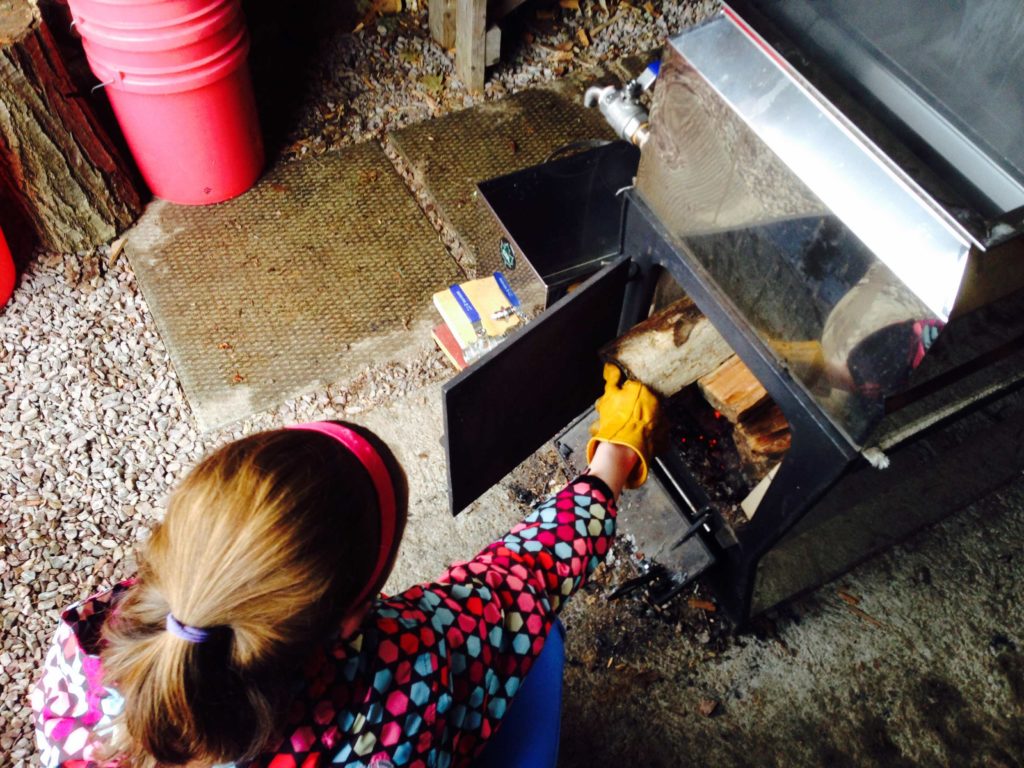
“What I miss most about it,” Rebecca says, “I guess I would say is just the kind of nurturing, and care and love that you guys showed. Yes, it was very much a family and a community, and the gatherings and the meals and the big project presentations, and all of those are things that you’re not necessarily going to get in a typical classroom environment. I think in terms of watching Aaron and knowing probably what he enjoyed most was that the year he actually got to spend building the maple sugar house, and doing the maple sugaring project was something completely different from anything he’d ever done. It introduced him to tools and you the science behind sugaring, and he really had a ball with that. It was great. Ever since then he’s more than happy to pick up a tool and help his dad on projects too.”
We used project-based learning in the most student-centered way.
Students took hands-on charge of their learning.
Students began by developing questions and concerns they had about themselves and the world. They compared notes with their peers and looked for common themes. They then turned those themes into a yearlong project.
Our requirement? Each project had to benefit the community in some way.
Wren House is currently a senior at Essex High School, and was on the Edge 2009, 2011, 2012 and 2013. “Building the sugar house was a lot of fun which is probably why I do theater now because I had that skillset. I just rejuvenated those skills and applied them to theater.I remember one year I did this map thing, this giant map of like a sustainable city. Really enjoyed doing that and realizing that if I wanted it to I could present this to a board or a state representative and be like, here is the thing that we could do. I remember Chloe put up the solar panels at the school and got grants and stuff like that. Just seeing kids my age going out and getting things done was really satisfying, really cool.”
So, it wasn’t just a sugar house.
We measured and reduced car emissions in the turnaround out front, and put solar panels on the roof of the school. We created a community garden for the town of Essex, and fruits and veggies from that garden were eaten in the school cafeteria. And we wrote stories and plays, and wrote music — all of it focused on the collective good.
For instance, every morning, there was this journalism elective. We started before the school day even began. And we learned the skills for being a journalist, and then the students looked for issues in their own community they wanted to investigate. I remember after Hurricane Irene, we traveled around the state interviewing Vermonters who’d experienced extreme flooding.
I had a student who was interested in why so much waste was being thrown away behind the local supermarket. She did a whole investigative report on food waste, rescued apples from the supermarket, and made us a pie with them.
The investigative reporting our students were doing, it became well known, and our local newspaper, The Essex Reporter, wound up running a column of these student-authored investigative pieces. It became a big deal in our town.
Remember Chloe?
“What mostly comes to mind,” she says, “is being in journalism at 7:00 AM before everyone else got to school and putting together our paper. And I had my first byline with my ‘Who wants hamburgers?’ article about e-coli. I was so excited that I got published in the Essex Reporter! And that would have only happened at The Edge.”
Mitchell:I enjoyed seeing how often Chloe would be going around with a spark in her eyes and light bulbs going off over her head, and so many projects having real world involvement and then real world repercussions. Like getting the solar array put on the roof of the school. You needed to write real letters to real people who’ve been making real things happen. Not including having Bernie Sanders come and do the Shindig with you all. That was–
Chloe:People are very impressed that I’ve had lunch with Bernie Sanders for that.
Barb:Do you remember when you did a week long lesson at the elementary school–?
Chloe:Oh my God, I totally forgot about that.
Barb:It was first graders and you had to come up with the lesson plan, blah, blah, blah. I remember you came back after the first day. You said, ‘Nothing happened the way I planned.’ I was like, well, you were teaching and they’re first graders! But you regrouped and you figured out, okay, these kids don’t get–
Mitchell:How to translate.
Barb:-anything I’m talking about, so how do I back up? That was an amazing experience for you.
Chloe:Yeah, and I remember, because I was teaching environmental science curriculum to first graders — second graders. I went in the first day and I like, had my PowerPoint, I had my plan, I was in front of the Smartboard. I had like, my teacher outfit on. And I was so ready. And I was 12, but that’s fine. But I was trying to explain climate change to them, and I was trying to explain greenhouse gases, to these six year olds and they didn’t know what a greenhouse was. I kept trying to make it more and more and more basic, then I realized they didn’t know what a greenhouse was. So I was like, well this is clearly not going to work out. Then I came back.
Barb continues: “My favorite group were, I called them The Dog Park Boys. I remember when they first said they wanted to start a dog park in Essex I was kind of like, we’re surrounded by trees, right? You want to do it, okay, whatever. They were like, because it’ll be really cool, and they were just sort of spacey about it, and I didn’t think that much about it. Then when I went back at the end of the year, they had put together. There was going to be a dog park in Essex junction and they had put it all together and the way they presented was so much more mature, so much more than just six months or nine months’ time. I saw that happen again and again and again and again.”
“The Edge also taught me how to advocate for myself,” Chloe says, “in a way that a traditional middle school setting would not have done, especially against, not against, but advocate for myself to people of power in whatever institution I was in, and it gave me a strong sense of, well, if I just keep pushing, either it’ll happen or I’ll really figure out why it’s not going to happen.I think it gives me pretty strong convictions about the values that I want to live towards throughout my life, regardless of whether I’m in school or in a career.
Finally, what was most powerful about Edge projects was the relationships they created with community partners.
Learning how to reach out through email, or even – *gasp!* – Make a Phone Call, were skills that were essential to their project work. And the response we received from the community was overwhelming! Edge students connected with farmers, artists, business owners, non-profits, town officials… The list became endless.
Raquel’s community connection, for instance, was with University of Vermont Extension and 4-H. She contacted them about exploring food systems and hunger. They put her in touch with a program that helps students learn to facilitate trainings for younger students on food systems. And, well–
“Well, I was in a program called TRY,” Raquel recalls. “It stands for Teens Reaching Youth. It was all about teaching little kids, like fourth graders. I chose to teach them about the food systems. The main concept was how the food in their lunch box got there. How we can help make that food help the environment. And we had to schedule our own appointments and choose our own classrooms where we wanted to teach. We emailed back and forth with Miss Dorthman, who teaches over at Founders [Elementary School]. We settled on a meeting time, we met with her. Then she asked us questions about the program and what we were doing, and if we needed anything from her. We explained it all to her.
Our first lesson was about… all about how the food in the lunch box got there.
It was *really* fun.
I like the TRY program because the little kids really seem to enjoy it. There was this one time where we were over-lapping into their recess time. And we felt really bad because we don’t want to overlap into their recess time, but they were really happy about it. They were like, really excited.”
One of the other keynoters, Abby, spent her time at the Edge developing a program where she up-cycled bags from a local coffee company. Working with a local designer, Abby came up with a brand new pattern for the bags, sewed them herself, then sold them to raise money for COTS, the Committee on Temporary Shelter. They’re a Burlington-based non-profit organization serving housing-insecure Vermonters.
“The base of the bag was a burlap sack,” Abby recalls, “and it was from Green Mountain Coffee they actually donated all of the bags for free and, then, the straps were like a green oilcloth and I used oilcloth because it’s super sturdy. At our annual Project Fair at the end of the year where everybody shares their projects and the parents come, and we had a booth and all the bags sold out and we made, I think about like 50 dollars, 60 dollars.”
“I think it was good because I was new to the community,” she continues, “and so I got to go to a bunch of places and meet a lot of new people who were willing to help. I was seeing that people in your community are going to support you and help you because I met a lot of professional people and they helped me with my project and influenced this.
So there you have it. That was The Edge.
We took three seemingly obvious methods — radically loving relationships with students, empowering students to take charge of their learning, and deeply involving the community in student learning — and meshed them together in a program that cultivated successful personalized learning in Vermont. These approaches were indistinguishable in action, because we saw and lived them every day at The Edge. They were, and I think still are, the heart of the work.
Students have *really* important questions about themselves and the world around them. We’re humans. And this power dynamic of teacher and student needs to shift. Truly valuing what each person’s struggling with in their questions is fundamental not just to effective personalized learning, but to being in this world together.
“My fondest memories,” says former student Lily Davis, “were probably some of the times lunch in the classroom or homework club after school, or the group projects. I feel like I really connected with some of the people and kind of wish I had that here still. If I hadn’t had that at that time I don’t know if I would have been at the place I am now. I like the close community that was built for the couple of years I was there.”
Personalized learning is really hard to get right. But when I listen to these students and their families talk about their time at The Edge… I think we did it. I think we got it absolutely right.
It’s hard for me to objectively sum up a full decade of this wild and beautiful teaching experience, so I asked our contributors to give me one word they feel sums up The Edge.
Wren House: Family.
Lily Davis: Probably… ‘outdoors’, because we spent so much time outside? Yeah.
Raquel: It was… ‘enlightening’, is the word I would use. It just opened me up to a whole new world of people, and it was just… great.
Chloe Lemmel-Hay: ‘Community’?
Barb Lemmel: ‘Grounded.’
Mitch Hay: This may be too close to ‘community’, but ‘relationships’.
Rebecca Stone: I guess my word would be ‘awesome’.
It was a gift, for me as a teacher, to have these relationships that transcend time.
I wasn’t just their 7th grade teacher. Making this has reminded me just how powerful this experience was for all of us. We were all in it together. And all these students and their families? They’ll always be a part of my journey.
This has been an episode of The 21st Century Classroom, podcast of the Tarrant Institute for Innovative Education at the University of Vermont. A huge thank you to the host and producer of this episode, Lindsey Halman, along with Chloe Lemmel-Hay, Barb Lemmel, Mitch Hay, Abby and Raquel, Rebecca Stone and her son Aaron, Wren House and Lily Davis.
If you’re reading this transcript, it’s important to note two things:
We opened and closed the audio version of this episode with music from a live performance by Yasmine Nsame & Violet Corcoran, who longtime listeners of the podcast may recognize from this very early episode. We are truly thankful for their courage and kindness.
And two, each morning we’d start our day at the Edge listening to Lady Gaga’s “Edge of Glory”; a fair-use snippet is included in the audio version of this story.
VTDigger reports that Vermont Secretary of Education Dan French said “From our standpoint, we portray districts being on a journey. Just like everyone in the world is on a journey. And we don’t see 2020 as some sort of hard and fast date.” However, regardless of a deadline, we should remain focused on centering equity as we implement personalized learning. Equity is at the heart of this state policy.
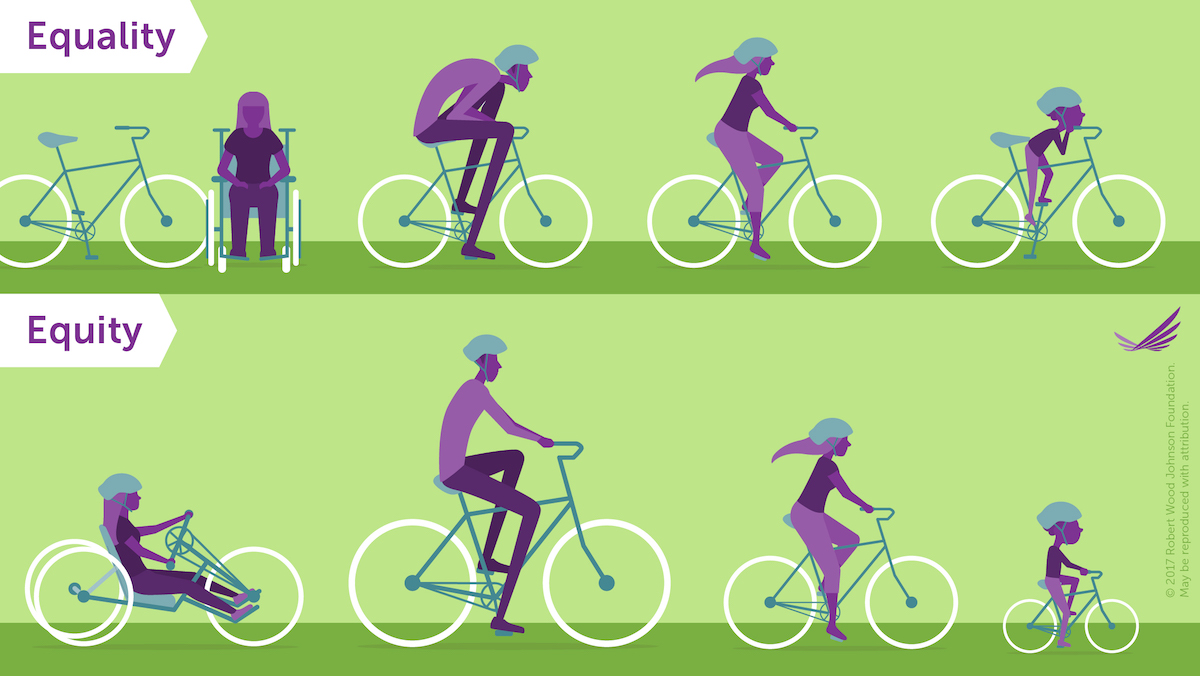
The National Equity Project defines it as “each child receives what they need to develop to their full academic and social potential.” Furthermore, they offer that moving toward it involves:
Ensuring equally high outcomes for all participants in our educational system. Removing the predictability of success. Or failures that currently correlates with any social or cultural factor.
Interrupting inequitable practices, examining biases. And creating inclusive multicultural school environments for adults and children.
Discovering and cultivating the unique gifts, talents and interests that every human possesses.
Sounds simple in theory; challenging in practice.
3 structures for centering equity
1. Equity audits
Equity audits help examine us examine gaps in opportunity. Even more, they identify solutions to addressing those gaps.
First and foremost, Teaching Tolerance recommends using the equity audits from the Mid-Atlantic Equity Consortium. You can choose the right grain-size for your work. Everything from systems level to classroom/teacher level audits. And they’re robust!
The framework encourages you to consider applying the following frames:
“The ability to Recognize even the subtlest biases and inequities.”
How are you engaging a variety of perspectives to help you recognize bias and inequity in your system?
What perspectives are missing?
“The ability to Respond skillfully and equitably to biases and inequities in the immediate term.”
What steps are you taking to respond to bias and inequity?
Who holds you accountable?
“The ability to Redress biases and inequities by understanding and addressing them at their institutional roots.”
Have you examined your policies and procedures for bias?
Who needs to be at the table to construct or revise policies so they are more likely to be bias free?
“The ability to Sustain equity efforts even in the face of discomfort or resistance.”
How do you communicate your equity efforts?
What values help you stand firm when the going gets rough?
3. Examine your own practice
The most important resource by far, on this list, is you. Don’t underestimate your own power as a change agent. Push your thinking. Stay informed. Find ways to reflect. Collect feedback, think deeply, and reach out to other educators doing the same work.
Reach out to your students. They can provide invaluable feedback on your journey.
Here are a few more resources to consider:
Equity Begins with Engagement. We all want to bring out excellence in our students. But the thing that keeps us up at night is our constant striving to do that for ALL of our students.
Using Protocols for Equity. So, maybe you’ve been using protocols at faculty meetings or professional learning community sessions. Perhaps you’ve found that they make space for all voices in conversations. Or you like how they foster collaboration as you work together to structure personalized learning plans. Know what else they can do? Support us as we have the toughest conversations of all: those focused on equity.
#vted Reads: We Got this with Kathleen Brinegar. A powerful episode of our #vted Reads podcast, where Jeanie Phillips and noted equity scholar Kathleen Brinegar work through Cornelius Minor’s book on equity in education.
Diversity audits in the library. Follow Ottauquechee’s lead and let this conversation around diversity in books springboard you into deeper conversations about diversity in all areas of your school community.
Equity connects many of Vermont’s educational initiatives. Still, we always have more work to do. So as you, your team, your school, and your district continue to make transformational change, find your leverage for greater equity. You’re the single most valuable change agent in bringing — and keeping — equity at the heart of teaching.
Morning meetings are the norm in many K-6 and K-8 schools in Vermont. They’re a great way to empower students to find their voices and build community. Now here are five ways to organize and structure morning meetings to build transferable and socio-emotional skills (and build those strong relationships that matter so much!):
Sounds corny, and tons of middle school students will groan loudly, but it works. Different seats promote students getting to know each other, expanding friendships and connections, and supporting cross-gender friendships. Yes, cross-gender friendships, 7th graders! They are doable!
True, it’s not giving students choice, but at the beginning of the year we’ve all got these butterflies about new schools, new grades, new… people. Yipes!
So let’s help everyone out at the beginning with some structure.
I used to put out popsicle sticks each morning with student names around the circle for this purpose, particularly at the beginning of the year. This also helped reduce any arguments about who gets which cushion, couch seat, or beanbag! I decide! *muahahahaha* Plus: you can support flexible seating by giving students the choice to stand, sit, flop or yoga pose it out.
2. “What’s up in the world?”
There is so much happening in our world, especially lately. It is complicated, stressful, and unnerving — especially for students. And especially for those students who might feel unsafe or targeted. Or those who have heard bits and pieces of what is happening, but are unsure what is true and why it’s all happening. Heck, half the time all this unsettling news makes *me* wonder the exact same thing.
And that is where the weekly practice of a morning meeting agenda of What’s Up in the World? can help.
Once a week in our morning meeting, we would pose that question on the whiteboard. Students would sign up for topics they wished to discuss.
In each meeting, one student would take on the role of “fact-checker”. When we weren’t sure of the details, we would check a few trusted sources to find out the facts. We didn’t assume, or discuss without reviewing the facts when we could find them. Another student would be a “definer” and look up words that folks didn’t know and read the definitions out to the class.
While discussing world events, I would keep the conversation on track and developmentally appropriate, by steering away from the close details and images of violent events. Sometimes I had to jump in and reframe or refocus, or ask a question. We relied on our norms for the class that we created together to help guide us. But what happened regularly was that students were hungry for a space to discuss world events in a safe and supported way. These conversations changed minds. Expanded perspectives. And provided a place to digest and begin to understand the world.
Need norms? Proctor School’s Courtney Elliott for the win:
I wonder how many potential misconceptions, half-truths, and partially baked biases and stereotypes about world events we uncovered in these weekly sessions. This work felt vital and important.
3. The State of the Class
Right around the time of the state of the union address one year, my students and I joked about the state of our class and giving a speech about it. And then we had an idea. What if we check in on the state of the class each week?
You know, when students say something like: another student has taken my charging cord! Or: my jacket is buried under everyone’s snow stuff! Or: I don’t like the way our class behaved with the music substitute teacher. We had to solve these problems together.
So, we added a weekly agenda item called the state of the class.
Anyone could bring an issue up about how the class was treating each other or functioning, and we would all problem solve and come up with a plan together. That way everyone was accountable to everyone else and we had time to develop solutions that everyone was in support of.
The state of the class centered in students and the their perceptions of problems and solutions, giving students a model for democracy, citizenship and action.
I’ve seen Warren Elementary School, in Warren VT, do this very powerfully, in a way that centers listening, and relationship-building, in their “Town Meetings”. When one student brought up a current need, and explained its impact on him, you could have heard a pin drop. Everyone in the room was invested in that student’s need. And THAT, people, THAT is the room we want.
4. Learning the morning message
Another way to promote learning and growth in morning meeting is: The Message. You can either have students find the errors in a morning message, or have a chart or table to review a recent skill lesson or concept that the class has learned. Often, this was formative information for me. I could tell when a class struggled to summarize a text, a math problem, or concept. Morning messages were instant feedback on emotional states, current topics, and the daily life of the class.
This is an activity for a few weeks in, but you can begin with a word puzzle on the board, a phrase in a foreign language, a rebus, or a poem made of song titles. Be creative and goofy, and your students will follow.
For schools focusing on socio-emotional learning competencies, morning messages can be a great way to explore these very concepts. Students can respond to prompt on the white board or digitally, and then read and discuss responses during morning meeting.
At the middle and high school school level, many schools are using the Circle of Power and Respect. These meetings follow a different format but have many similarities to morning meetings, and can be huge for building community.
5. Now shift it to a student-led space
Finally — this is going to take a hot minute, so maybe toss it on the to-do list — we all know where we want this work to lead. Once students learn the parts of morning meeting (greeting, agenda, sharing, game/activity) and know how to do each one in an inclusive way, they then can begin leading morning meetings. This was after lots of modeling and practice. (Think: late fall. Build those morning meeting muscles!)
Each week, we had two students lead the morning meeting. We rotated all students through this role and gave everyone a chance to lead. For some, this was hard. They might have never had a chance to lead a group, and this gave them practice and support grow their communication, citizenship, listening and leading skills. As the teacher I would support students to participate in this role, sometimes giving sentence stems or tips to students who might have needed it. This was a safe space to practice student voice and leadership for all students.
How do you structure morning meetings to empower students?
We’ve seen a ton of lovely photos from morning meeting already this year, shared on instagram or twitter, but still: we want to hear from YOU. What are your favorite go-to activities for getting morning meeting off on the right foot?
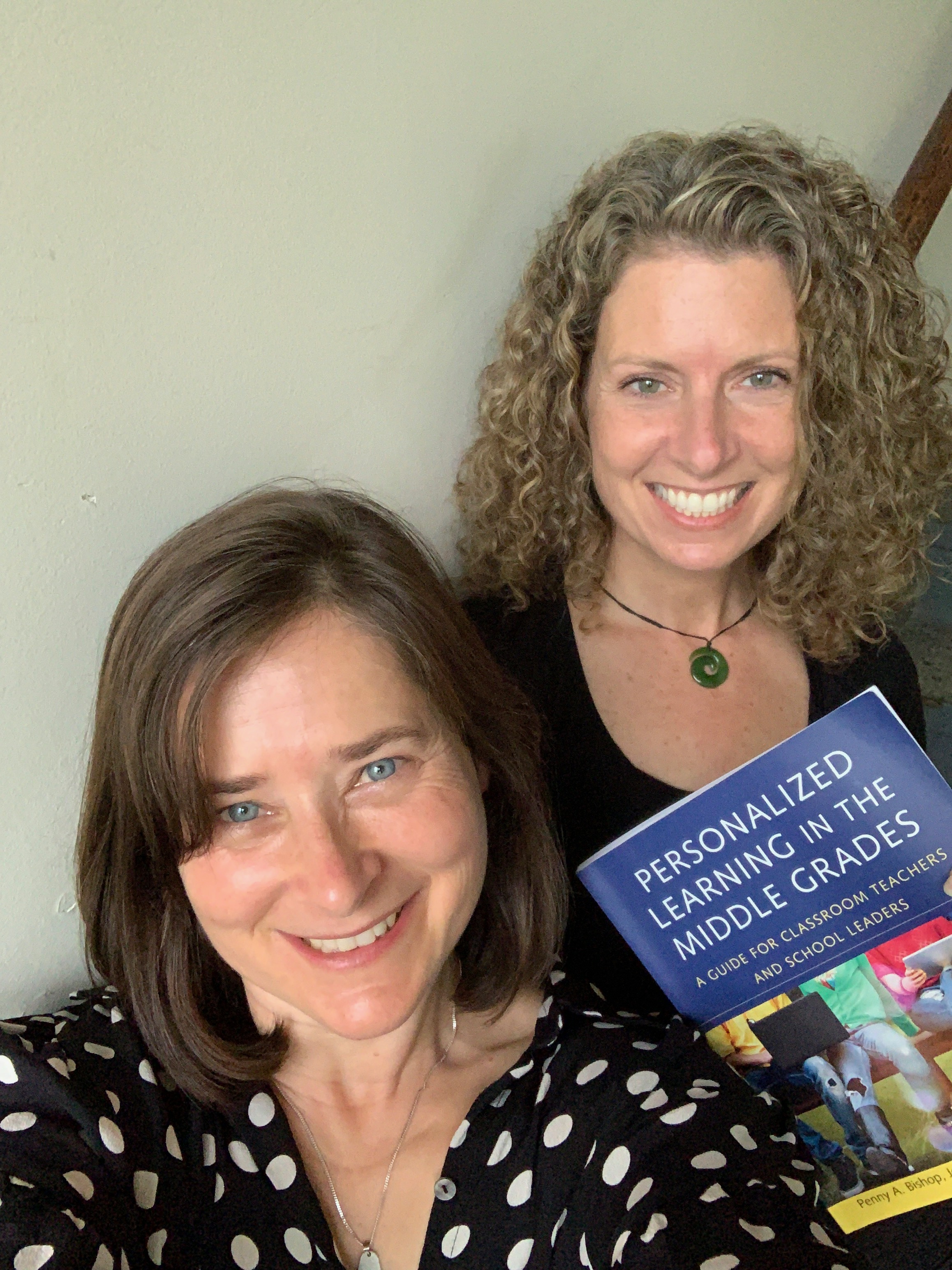
HELLO! I’m Jeanie Phillips and welcome back to vted Reads! We’re kicking off our second season of the podcast with none other than author, professor, associate dean and Vermont education LEGEND, Dr. Penny Bishop.
We’ll talk VT PLPs, the power of a compelling school example in changing classrooms practices, and how to steal all the examples from Personalized Learning in the Middle Grades, with Penny Bishop.
But before we get to the episode I just wanted to say thank you to everyone who’s listened to us so far, everyone who’s sent messages and tweets of support and love. We love you all right back, and are so excited that you want to talk books by Vermont educator, for Vermont educators…
You know the rest.
It’s vted Reads time. Welcome back.
Let’s chat.
Jeanie: I’m Jeanie Phillips and welcome to #VTed Reads. We’re here to talk books for educators, by educators, and with educators. Today I’m with Penny Bishop, and we’ll be talking about Personalized Learning in the Middle Grades: A Guide for Classroom Teachers and School Leaders by Penny Bishop, John Downs, and Katy Farber. Thank you for joining me, Penny.
Penny: My pleasure.
Jeanie: Tell me a little bit about who you are and what you do.
Penny: Well I am a professor and an associate dean at the University of Vermont, and in the College of Education and Social Services. I’m also founding director of the Tarrant Institute for Innovative Education.
Jeanie: Thank you. I’m so delighted to talk to you about this book. I’m going to start with a softball. What book is on your bedside table right now?
Penny: Well, there are probably 12 actually, and there’s a bit of toppling action going on at the moment.The one I’m reading is by Annie Proulx and it’s Barkskins. I don’t know if you’ve read it or not, but it’s an amazing tale of over 300 years. How immigrants came to New France and the landscape, and how landscape and people change over time. I’m really enjoying it.
Jeanie: Oh, I’m so glad. I’ll look forward to talking to you about it when you’re done.
So, let’s talk about this book, Personalized Learning in the Middle Grades. You really start the book, you and John and Katy, by defining personalized learning. I wondered if you could put your definition in a nutshell for us.
Defining “personalized learning”
Penny: Happy to! So, I think the foundation, for me anyway and the foundation for the book, is: believing in the capacity of youth to do great things.
In order to do those great things, we need to enable them, invite them to have more say, more ownership, more agency in what they do and how they learn. The way that we have conceived of personalization in the book is to think about it in terms of three pillars.
The first pillar is knowing students well.
We use a personalized learning plan as a way, as one mechanism, one way to do that, to get to know students well, and then using what we know about students. That first pillar leads to the second, which is flexible pathways or creating authentic opportunities for learning. The third would be a proficiency-based assessments, so valuing what students learn. Using those three things in conjunction is essentially what we talk about in the book.
Jeanie: What I noticed when I was reading through, especially that first portion where you’re defining it so well, is that you take Vermont’s Act 77 and put it in context and into practice in a way that makes it visible for people. You take this abstract concept and really make it visible.
Penny: I feel really fortunate to be working in a state where we have Act 77 because I think it’s given educators license to do a lot of developmentally and culturally responsive work, the kinds of work that teachers know is right, and now we have permission to do it.
So it’s a very exciting time.
Jeanie: One of the tools you use in the book to really take this framework, the three pillars framework and the legislative framework, and make it visible, make it practical, is vignettes. You share stories of personalized learning in action throughout the book. I wanted to just ask where these stories come from because they’re so compelling.
Penny: Thanks. Well, the vignettes that begin the chapters are compilations, so they are not stories of one specific learner but rather they are representations of a number of learners we’ve interacted with across many of our partner schools and across Vermont.
Katy Farber, one of my coauthors, has an amazing ability to bring those stories together. She was the primary author of most of those, but they were the result of the stories that we were bringing from a variety of schools and students.
The personalization and action vignettes that are within chapters, however, are specific to schools and to students and families and educators. In those instances, those are named.
Jeanie: Penny, would you mind sharing one of the chapter beginning vignettes with us, one of your favorites?
Penny: I’d be happy to. I think I’ll read from the very first one, which just tells the story of Miles.
Page 1 of Personalized Learning in the Middle Grades. Click or tap to enlarge.
Jeanie: I think Miles’ story goes on doesn’t it?
Penny: It does go on. It’s a long one.
Jeanie: I love it though because it illuminates all of the things you mentioned in your definition of personalized learning. So, in that short vignette, I saw a student agency. I saw how Miles had agency over his own learning. I heard about his flexible pathways. And I saw instances of authentic assessment, where he was going to give a presentation to the school board. All of those things, those terms, those jargony terms we throw around had meaning in that vignette, became really crystal clear to me about how they could look in a classroom.
Penny: I’m glad you enjoyed it. It was a lot of fun. A lot of fun to put together.
Miles is just one of a bunch of composites in the book that I think bring to life the great things that young people are capable of.
Jeanie: Thank you for sharing that, Penny. The way that, in using these vignettes, you’re able to unpack the shifting roles of both students and teachers in a personalized learning environment. You see Ms. Phillip’s role and you see Miles’s role and the other students’ and… it’s different than we think of education from our childhoods, from our own childhoods.
Penny: It’s quite different isn’t it? It’s interesting, I was just doing some writing this morning about this notion that personalized learning may render teachers obsolete. That if you’re looking at things that are highly digital and that sort of version of pace based personalization that so many people equate personalized learning with, that there’s been this backlash around people fighting back against Summit Learning and this idea that we don’t have access to teachers and kids are teaching themselves.
What we’ve found, certainly what’s represented in the book and what we’ve also found in our research, is that teachers are needed more than ever.
That so much of this work is about relationships. So much of it is about helping students find those pathways, scouting out ahead of them for resources if they’re human or digital or otherwise. So yes, we do talk in the book about the fact that when you position students or help them position themselves as drivers of their own learning, it necessarily means new roles for teachers as well.
We’ve conceived of several different roles for teachers in personalized learning environments.
Some of them are similar to roles that teachers already embodied daily, but others are a little bit more unique.
Teacher as Scout
So, for example, when we talk about teacher as scout, we really are talking about, if we’re in a personalized learning setting where students are pursuing, say, 15, 20 different interests in the classroom, how do you stay ahead of students? How do you equip them with enough community mentors? How do you help them find access to the types of curriculum they need? It’s a very different thing than identifying leveled text sets, for example.
Teacher as Scaffolder and Assessor
Similarly, we’ve identified scaffolder or the different types of assessment that teachers are engaged in. The need for even more formative and regular assessment than we’ve done in the past. The importance of building community and so on. So, yes, there are a number of ways that we’re rethinking teacher roles, as well as some teacher dispositions. To have a greater capacity for tolerating a little bit of chaos, for example. Not always having things planned out ahead of time, not having one’s ducks in the row. That’s not always super comfortable for everyone.
Jeanie: I think as a former school librarian and always school librarian, I think that role of scout feels really comfortable to me because a lot of times my role with students K to 12 was to say,
“Well, I don’t know the answer to that, but let’s find out together.”
I love that role because you’re thinking about where each student is heading, or small groups of students are heading, and you’re forecasting ahead, what are they going to need, what resources. The other thing I love about it is that you don’t have to know everything. You just have to know to get them what they need to know. There’s something really interesting to me about that role.
Penny: That’s come out a lot in the research that we’ve done on teacher roles and dispositions. It’s really been about being comfortable with not knowing and being upfront about not knowing. That’s, again, not in everyone’s nature to feel comfortable with that, but it does seem increasingly important to be able to be upfront with kids about it and to say,
“Hey, we’re going to learn this together, and in fact, I might be learning from you.”
That’s a very powerful shift, and it’s an exciting one.
Jeanie: Yes. Do you want to talk about the parallel shifts in student roles that go along with these shifts in teacher roles?
Penny: Yes, thanks. It’s interesting because on page 38, we have a diagram that shows how those things interact between the teacher and the learner.
Page 38 of Personalized Learning in the Middle Grades. Click or tap to enlarge.
Students as drivers of their learning
Penny: So if you think about the student as now the driver of their education, of their learning, they need to now be doing a number of things they weren’t doing before, or they may have been doing in a number of classrooms. I don’t want to simply dismiss the great things that have been happening in Vermont classrooms for a really long time, because we are very fortunate to be in a state filled with great educators.
But some of the distinctions that we’re seeing are, for example, even this idea of learning at one’s own pace. So needing to be conscious of, as a learner, one, what my pace is, how I manage that pace, how I set goals, how I project manage.
All of those things are more important in a self-directed, kind of personalized learning environment than they have been in a more teacher-directed one.
So those are pieces. *Actually* keeping up with one’s learner profile. So thinking about what’s important for me to know, how do I change over time, how does that change what my goals are? Monitoring that.
Using data is another thing, so helping students have access to their own data and thinking about that data strategically, and what it means for their learning, and how they can move forward. Those are all relatively new roles for a lot of learning environments anyway. Yes, those are a few.
Jeanie: What’s occurring to me as I hear you talk about this and as I read the book too, is often in education we think about various initiatives. We’re always talking about initiative fatigue and how it’s another thing we have to do. One of the beautiful things about this book is that it weaves together these things as a whole and shows you what the big picture looks like where these things aren’t separate things.
Thinking about proficiency, flexible pathways, and PLPs in particular, and how those weave together to form a whole learning experience.
But I’m also thinking about these roles, how it layers in really deeply and meaningfully what we think of as the transferable skills: self-direction and communication being two that feel really important to this work.
And metacognition and reflection. Like if you’re thinking about “who am I now? What’s it mean for me to be a learner?” Those are deeply woven in. Even knowing students well means understanding trauma-informed practice. So, it’s not about separate initiatives, but how we create a cohesive whole to create the educational system our learners deserve.
Penny: *laughs* I really wish you’d written the conclusion because I think that’s exactly it. It’s really about thinking about this work as a cohesive whole.
I think one thing that we’ve learned over time since 2013 when Act 77 was passed, is that we really need to implement it as a whole.
If you take any one piece of this, if you take the PLP, we learned the hard way about the PLP. We talked a little bit about that in the book, that a lot of schools started with PLPs, which seemed like it made really good sense. It was the first deadline, if you will, that came through the legislature: all students have to have PLPs by a certain date, and so we thought: okay, yes. PLPs, goals, let’s do it.
But in fact, if you don’t have flexible pathways, meaningful ways and engaging ways for students to achieve those goals, and then you don’t honor that learning in ways that count, there’s no increased engagement.
There’s no increased learning. So it really is the whole package. It is not a curriculum. It’s not a program. It really is about teaching and learning writ large.
Jeanie: Yes. In many schools that I’m familiar with, PLPs have become a dirty word with both students and teachers because they were implemented without the other two pillars.
Penny: Absolutely. In fact, we’ve seen schools rename or re-label PLPs as something entirely different just to rebrand things.
The Purpose of PLPs
Jeanie: So that takes me to page 52, a page I’ve bookmarked because I plan on using it with some schools as we rethink PLPs. It’s something that I really also appreciate about this book, which is the way that you’ve thought about not just the what, but the why. Do you want to talk a little bit about how you reframed PLPs in terms of their purpose for each stakeholder?
Page 52 of Personalized Learning in the Middle Grades. Click or tap to enlarge.
Penny: Sure. I’d love to. I think one of the things that is essential to this work is understanding why we do it. Because you’re right.
We place so many heavy expectations on educators that if we don’t have a clear sense of why, if we don’t have a clear sense of what we’re trying to accomplish, we really do fall into “initiative fatigue”. It’s so easy to see this as one more thing coming down the pike.
So, what we’ve done in this chapter in particular is to focus on purpose and to invite readers to identify their own purposes for the PLP and for adopting personalization.
Move beyond the idea that, “I live in Vermont and it’s mandated here”, or “I live in one of the 39 states where we’re moving in this direction”. It’s: what’s your central purpose? What are you trying to accomplish with this, and for what stakeholders?
So, we talk about in this chapter a little bit about what possible purposes, one might adopt it for for students, for teachers, for families, and then for invested others.
For students, for example, some of the educators we work with identify things like helping students explore their identities in a safe space.
We know that that’s an important work. We ground this book in the middle grades and in early adolescence in particular, although I do think that a lot of it is pertinent well beyond the 10 to 15-year-old. But we do know that in particular, adolescents are all about identity development and it’s a great space for that.
Other purposes include ensuring that students are well known as individuals. Or providing them with greater control over their own learning.
For teachers, they serve a number of purposes including giving them a way to manage all those idiosyncratic pathways, all these flexible pathways that students are now pursuing.
How are we documenting those? How are we keeping track of them? Also assessing a student growth? How do we do that in a meaningful way?
For families, we’ve found that they are really powerful particularly when coupled with student-led conferences.
They convey both that adolescent identity, but also growth over time, best work, what really powerful portfolios can do in a way that is even more driven by the student and can help families be even more connected to adolescents at a time when adolescents are starting to pull away.
So that’s an exciting opportunity for families maybe to learn a little bit more about their own child.
We included this other category called “invested others” because as learning becomes more personalized, and as we do find teachers acting as scouts and engaging community more in mentoring young people, we find that that category is broader and broader.
It really does take a village. So, invested others may be community members who are mentoring in this school or allowing a job shadow or simply being an online support in some way.
Community could be quite broadly defined, so it could be folks who are across the globe or it could be people in one’s own town. Purposes for them might be to discover common ground for collaboration with students as well as to convey a sense of respect for the value in the community and the knowledge of the community.
It also helps for all of us to expand notions of where learning happens.
I think across all of those stakeholders, a central purpose is also to see adolescence through an appreciative lens, which we so often adopt a deficit lens. So, that’s a big one for me.
Jeanie: Oh gosh. I have so much to say right now. There are two directions I want to take this.
I’m going to start by thinking about how I love this “invested others” category because it creates avenues for authenticity in the student work.
One of my passions is creating work that’s real for kids. Right now I’m thinking about the kids at Edmunds who did some social justice work, and there are a couple of girls who really focused on the pink tax and they have connected with the legislature and in really powerful ways with lawmakers.
We love hearing about young Vermonters who are civically engaged! Middle-school students in VT started this petition to urge the Vermont Legislature to support tax-free feminine hygiene products #Vermont#VT#TamponTax#PinkTax#VTPolihttps://t.co/cmXIJOpokX
So, thinking about what a powerful learning experience that is for them, and also how grateful I am to them as a woman in this state for getting this important message out and making change happen. This kind of PLP leverages authenticity and meaningful work for kids.
Penny: I think that’s right where the engagement resides. It’s in that meaningful work on matters of personal and social significance. That’s the engagement right there. That’s what makes all the difference.
Jeanie: That’s the learning you remember. Those are the powerful moments that really stick with you.
Penny: Absolutely.
Jeanie: Then the other side of this is:
I’ve been thinking a lot about how we are often trying to shift practice — classroom practice, school practice, teacher practice, and student practice, without shifting belief.
I think that’s where initiative fatigue comes in too. Do this new thing, administer this test. But there’s no why behind it. So, I also love that this asks us to think about belief. What do we really believe about teaching and learning, and how does that belief shift into this PLP to make it meaningful?
Penny: And what do we believe about the purpose of schools?
Jeanie: Yes. I just really appreciate the thought that goes into both sides of that. The, “Why are we doing this anyway?” Let’s spend some time on that so that the practice makes sense and we invest ourselves in it because it has something to back it up.
Penny: I agree.
Jeanie: Props for that to you guys.
Penny: Thanks. Thank you.
Jeanie: I can already see the countless ways that I’m going to use this book, but what’s your hope for how Vermont educators are going to use this book?
Penny: Well, I think first and foremost, I hope that they see the great capacity in youth. What I mentioned earlier. Students are capable of so much.
I think the pink tax work is a great example of that, that our youth are capable of real work with real outcomes, powerful work. There are so many examples of that in the book, not just from the composites but from actual teachers and students working together in really authentic ways.
I hope if nothing else, it’s inspirational in that regard because it really is the product of so many students and educators working together and working really, really hard. I hope that it may give them some clear strategies. We tried to make it as useful as possible.
Teachers are busy and it’s definitely written for the teacher audience, so we tried to make it accessible and inspirational. Each chapter provides both personalization and practice, which gives little examples of what it’s looking like, but also some ideas that people could even just steal, and put into practice the next day. I’m hopeful that it’s useful in that way as well.
I’m hoping that it will serve as a conversation starter, because it was just our best thinking at that time, and it’s been out for a few months, and certainly it’s been done for probably a year. So, it takes a while for it to come out, and so now we’re already into another place in terms of how we are imagining what the potential can be.
I’m hoping that teachers and students will help us move it forward.
So, a conversation starter.
Jeanie: Yes, I totally see the practical strategies. The two chapters that really hit home for me in terms of the like, “Oh, I could take this and run with it,” are the Laying the Groundwork for Personalized Learning chapter, about building that community. That’s a lot about teaching the skills that students need in order to be agents of their own learning, to be drivers of their own learning. I just love the Launching PLPs with the Learner Profile. You have such rich examples from excellent Vermont educators around the state and what they’re doing in practice in that chapter.
Penny: Well, it’s funny that you mentioned those two because for me, yes, chapter three that sort of sets up some infrastructure is I think a helpful one. Then the Laying the Groundwork piece.
Often we expect students to know how to be self-directed. We expect our classroom culture to support it without ever really attending to it.
So really thinking about: what is the executive functioning? How do we interact as a community? All of those pieces really need to be in place to see it done well and to help students be successful. I think if we don’t attend to those things, we risk setting them up for failure as well as ourselves. I think those pieces are really important.
Then I love that you brought up the examples that are about knowing students well, because one of my favorites there, actually, there are so many great ones. But Lori Lisai and Joseph Murphy from Lamoille Union Middle, have this incredible set of activities called the Geography of Self.
I just love so many of the things. One of them is an autobiographical map. I just love the idea of being cartographers of one’s own life.
There are so many rich examples like that. That’s just one small one, but I just found them so engaging. If I were in the classroom, those are a number of the ones that I’d want to steal right away.
Using the iceberg model of culture to discuss differences between gender expression and gender identity today (among many other aspects of self/culture/identity). Our Ss are rockin' it!
There are so many great examples in there. Then another thing that I noticed that I just… I remember seeing it on the wall when I visited there is, at Williston they use these great handouts for executive functioning skills that really lay out exactly what it looks like to be self-directed in ways that helped me as an adult.
I know these were designed for middle school kids, but I’m like, “Oh, that’s how I get started.”
Penny: Well, it helps give you language to talk about it. Right? Yes. I find all of those examples were terrific.
Jeanie: So this book, it’s really written for teachers, but I feel like it also has relevance to systems-level leaders.
I’m wondering about how you see it being used for systems change.
Penny: Well, that’s a great question. Our hope is that it will inform both that daily practice in the classroom, in and out of the classroom. We hope that a lot. But it also has implications for systems, both at the school and the district level. The supervisory union level.
I think one of the pieces that I hope people find helpful is this idea of some guiding questions. It gets back to the why are we doing it idea, but it gets even more pragmatic. I think on page 75, we offer some guiding questions for PLP design teams.
Page 75 of Personalized Learning in the Middle Grades. Click or tap to enlarge.
I think it depends on where that design is happening, but I know a lot of schools are doing that at the school or district level. We pose questions for folks to think about in terms of their purpose and their audience, and how those two things need to drive the content and the form.
Then how really explicit conversations need to be had about roles and responsibilities in relation to all of those things.
So, when we asked teachers before we wrote the book, “What would you like to see in a book about personalized learning, and in particular PLPs?” They answered with questions like:
What’s the purpose?
Who is the audience?
What should go in it?
What are the required contents?
Will all classes contribute to the PLP?
What platform will we use?
We quickly realized that it would be a very short book if we answered these questions because our book would basically be, “…It depends.”
It depends on your classroom, team, school, district, and supervisory union. Whatever your unit is, that asks and answers those questions, doesn’t it? So, those are precisely the questions to be asked, and they do inform systemic change.
My hope is that by offering some of that, we can inform infrastructure in a way that helps people find a path toward coming up with some common language and a common vision.
Jeanie: I’ve been thinking a lot about how one of the things that gets in our way as we try to reform schools or think differently about schools is a failure of imagination.
It’s hard to imagine school different than how you went to school.
It seems to me that this book fills the gap that is left by a lack of imagination in helping not just teacher see how it could look different.
Because I think teachers know how it could look differently, but administrators and school board members and other stakeholders for whom they might say, yes, we want personalized learning, but then walk in the classroom and expect the classroom to look the same.
I love this one vignette where the principal walks into the classroom and can’t see the teacher and he looks around and the kids are all doing different things.
There’s this moment in the vignette where the principal thinks, well, I know the teacher’s in here somewhere. And then he finally spots the teacher sitting on the floor in the corner working with one student. It reminds me that, as somebody who likes order, that when I’m in a classroom that’s really personalized, I always have to take a deep breath and think, “Okay, look around, what’s really happening. Yes, it’s noisy. It feels a little chaotic, but what’s really happening? Everyone’s actually on task and doing something. I’m the only one that’s uncomfortable.” I think administrators have to figure that out.
Penny: Yes. They’re not the only ones who have to figure it out, but they absolutely do. In fact, when we were speaking earlier about roles and dispositions, and I said, sometimes you have to be a little comfortable at chaos, usually it’s not chaos.
It just looks like chaos because it’s not form and order and things that we come to associate with what learning should look like, quiet compliance as opposed to active learning.
So, I agree. I appreciate that you picked up on, it’s the book’s ability to convey what could be, that idea of imagination, because that certainly was a goal. In fact, it hit home for me a few months ago when our state legislature was grappling with some pushback on proficiency-based assessment and the proficiency-based graduation requirements. Maine as a state had those, and those were… they were moved from mandated to optional.
At that same time, in Vermont there was some pushback. So, the House Ed Committee invited me to come in and testify on those. What I quickly realized as we were having a conversation in that space is that so many people just couldn’t see it.
It’s that gap between our own experience in our education and what’s happening in today’s world. We needed more examples and stories of what it looks like and what it can be.
So it is, I appreciate your putting it into the words around a failure of imagination. Or maybe the bright spark of imagination because I am hopeful that it’ll do that.
Jeanie: My understanding of Maine is that one of the findings is that while the graduation requirements changed, in places where classroom instructional practice didn’t change, things didn’t work out so well. (.pdf)
And what this book does for me is it really demonstrates how classroom practice changes.
How the mechanics of what happens for learners in the classroom is vastly different than a stand and deliver a teaching method.
Penny: I think it builds on this notion that the three pillars need to be enacted together. As opposed to really highlighting well, if we only do proficiency-based assessment, then yes, we are going to see pushback because nothing else is changing.
Jeanie: Yes. So do you imagine that this book could play a part of Vermont Education Policy? Do you think that this book could foster conversations that would help the legislature as they navigate Vermont Education Policy?
Penny: I absolutely do. I think that had it been published back when I was testifying [to the legislature about Act 77], it would have been a really useful thing actually to give to House Members. Because it not only imagines what’s possible, but it also shows what’s happening in Vermont schools right now.
I think that’s one of the things that’s most exciting to me, it is the stories of real kids and real educators working really hard on this work and doing inspiring work.
Jeanie: How do you see it as a part of a more national conversation?
Penny: Well, right now if you were to examine Every Student Succeeds Act educational plans, which every state had to file, 39 of them referenced personalized learning in some way as a priority in the vision to some extent. So, it’s very much part of the national conversation right now.
Accompanying that is this focus on competency-based, or what we call proficiency-based here in Vermont, assessment as well. So, it’s very much part of that national conversation. My colleagues and I here at the University of Vermont and at the Tarrant Institute certainly do a lot of national presentations and we write for a national and international audience, so I know that we are informing those venues. I know that a lot of people in the US are looking at Vermont right now.
We have one of the most comprehensive policies in place for personalized learning, and so we’re kind of on a national stage and with Maine having folded back on their proficiency-based graduation requirements.
People are looking at Vermont to see what’s going to happen next, and so I’m really hopeful that these stories will show what’s possible.
Jeanie: Yes, I hope so too. Have you gotten any feedback on the book from educational leaders or practitioners yet?
Penny: We have, actually. I’m delighted to say that we’ve gotten some really great feedback. It seems to be being received well, so I’m optimistic about that. We’ve had a number of folks shoot us emails to say, “Wow, it’s really great. Thanks so much. This is helpful. I’m going to use it in this way or I’m going to use it as a whole school read next year for our faculty. I’m having folks use it in this way.” So we’ve definitely gotten some nice reviews and some emails, so thanks for asking about that.
Jeanie: I do wish I had a time machine and that we could shoot this book back to when I started my job here at the Tarrant Institute! It certainly would’ve been helpful for me. And it also feels like really personal because it celebrates Vermont schools, and you’ve referenced that many times.
It feels like a real celebration of teaching and learning in Vermont.
As I read through the book, I just delighted in the number of teachers who get a shout out for their hard work, the number of students featured, the presence of both student and teacher voices. Do you have any messages for the Vermont Education Community?
Penny: Yes, a few. There are a lot of shout outs, and there were so many more shout outs we could’ve given.
So that’s sort of a hard thing is that there’s a page limit. Turns out, they won’t let you publish a thousand-page book! We have thousands of pages worth of great stories in Vermont to tell.
I also would like to say that we sent a copy of the book to all schools that have grades five through eight, or students ages 10 to 14 or 15 across the state.
If you’re listening to this, there’s a really good chance that there’s a copy kicking around your school right now.
(Ask your principal about it.)
The final message I would want to say is that, as you know, Jeanie, we do present nationally a fair amount. So, we talk a lot with educators from other states. Inevitably, when I come back to Vermont after having gone to national conferences, I come back with a renewed appreciation for the depth of care and sensitivity and dedication that our educators have for this work and for our youth.
We are so fortunate to be in Vermont, and Vermont educators are doing incredible work.
I just feel really lucky to be here. Sometimes I think people don’t always get a chance to leave and then come back to appreciate anew what a great education system we have here. I just kind of wanted to name that.
Jeanie: Well, I just want to name that the book feels much like when we talked about the reciprocity between the teacher roles and the student roles. This book feels like a gift of reciprocity. It feels like you all and we all as the Tarrant Institute learn so much from our partners in Vermont schools. From the partner educators we work with. From the students at those schools. And from the conversations we get to have with Vermont teachers and educators across the state.
You wove that learning and created something new out of it that teachers can then learn from. There’s something about the way that you synthesize all those experiences into this rich work that everybody can learn something new from. I just have deep appreciation for. Yet you still are constantly giving shout outs to all these great schools and teachers and students.
Penny:
Hopefully, it shows a bit of the enormous gratitude we feel toward educators and students because they’ve given us a ton.
Jeanie: Yes. Any other thoughts, Penny, about Personalized Learning in the Middle Grades?
Penny: Well, I’d just like to thank you for inviting me to talk with you today. I really have enjoyed it.
Jeanie: It’s a pleasure. It’s always a pleasure to talk to you, Penny Bishop.
I’m Jeanie Phillips and this has been an episode of #vted Reads, talking about what Vermont educators and students are reading. Thank you so much to Penny Bishop for appearing on the show, and talking with me about Personalized Learning in the Middle Grades. If you’re looking for a copy of Personalized Learning in the Middle Grades, check your school or your local library.
To find out more about #vted Reads, including past episodes, upcoming guests and reads, and a whole lot more, you can visit vtedreads.tarrantinstitute.org. Follow us on Twitter and Instagram at @vtedreads. This podcast is a project of the Tarrant Institute for Innovative Education at the University of Vermont.