#vted Reads: The End of Average

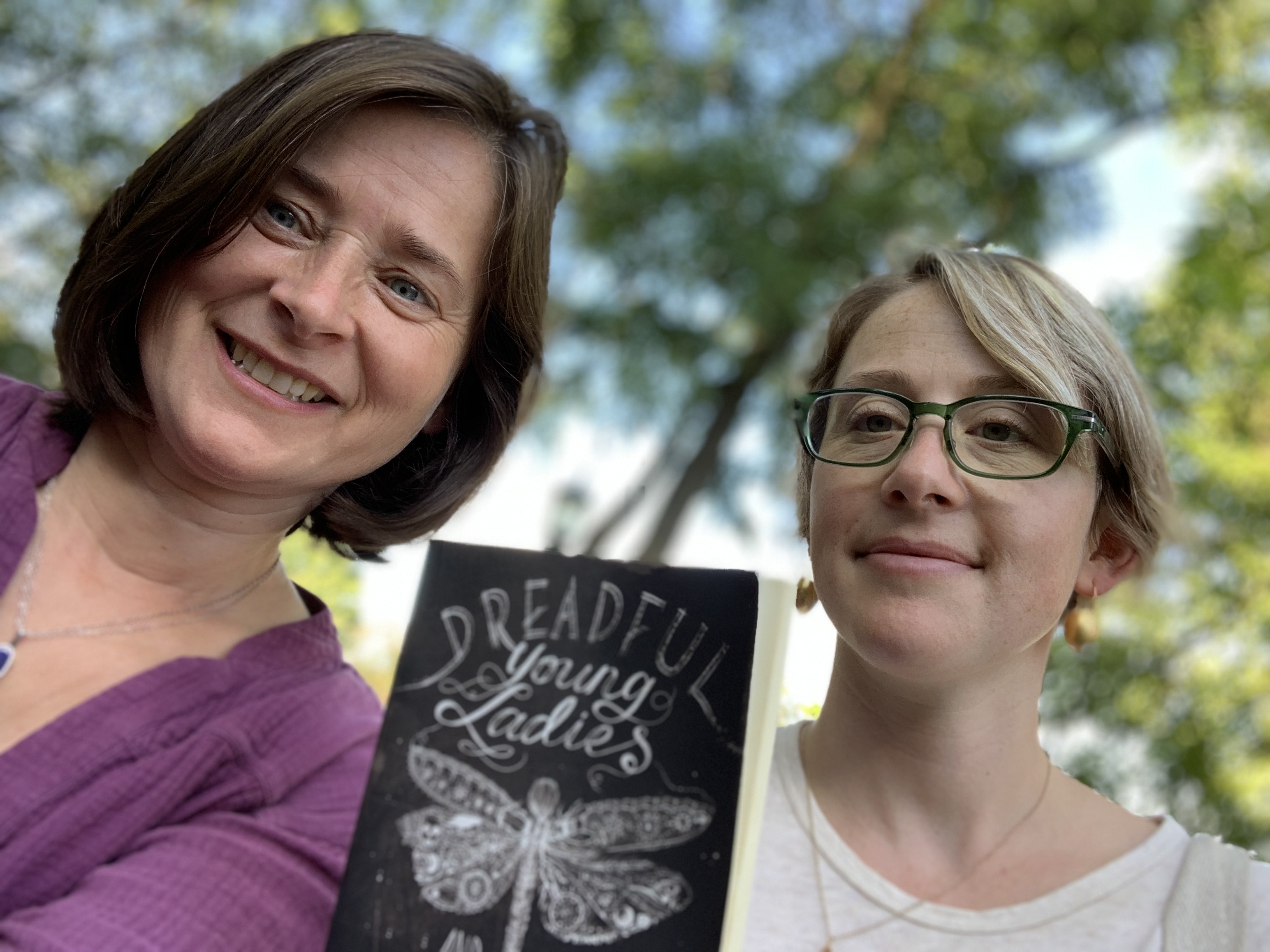
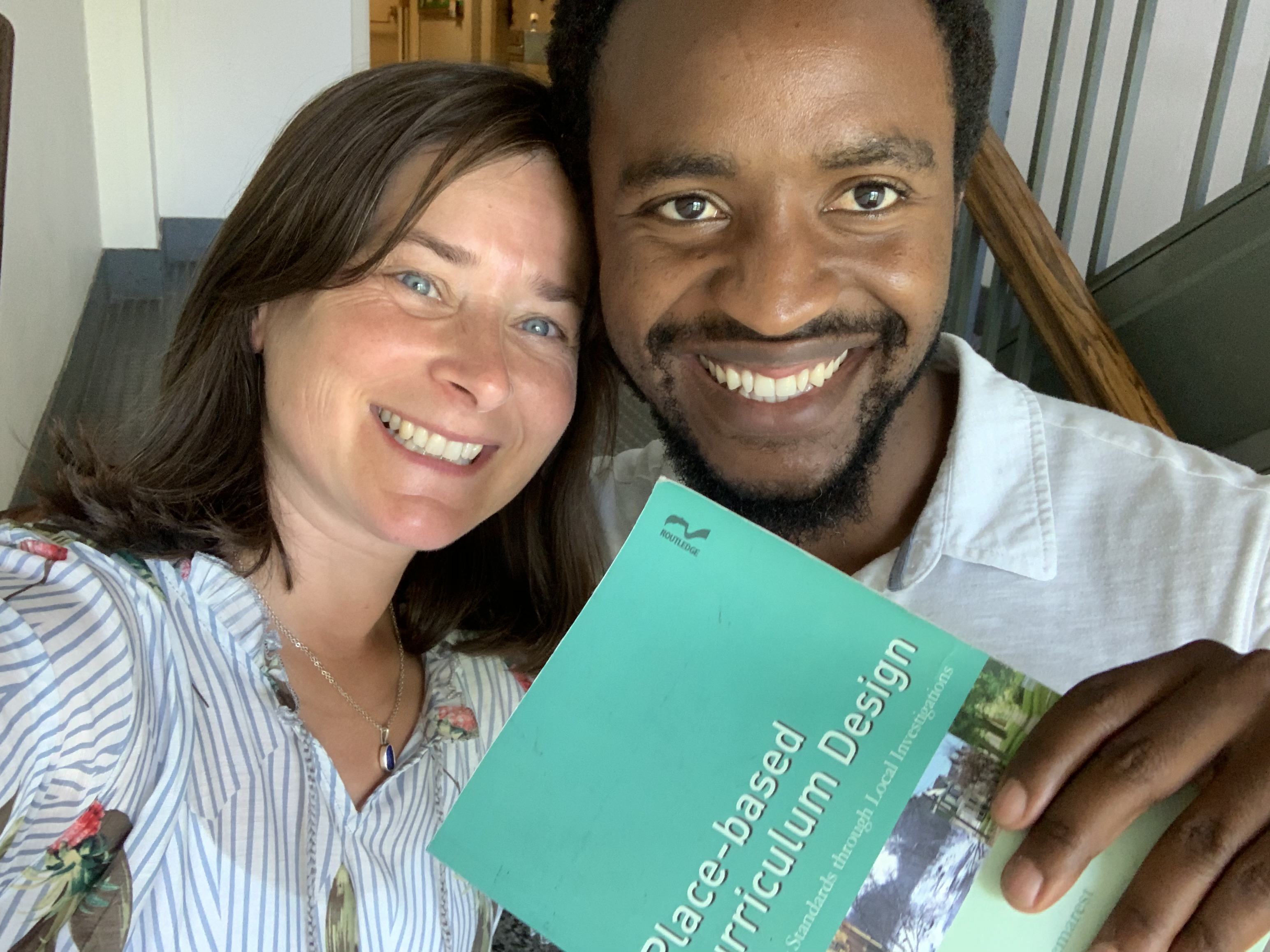
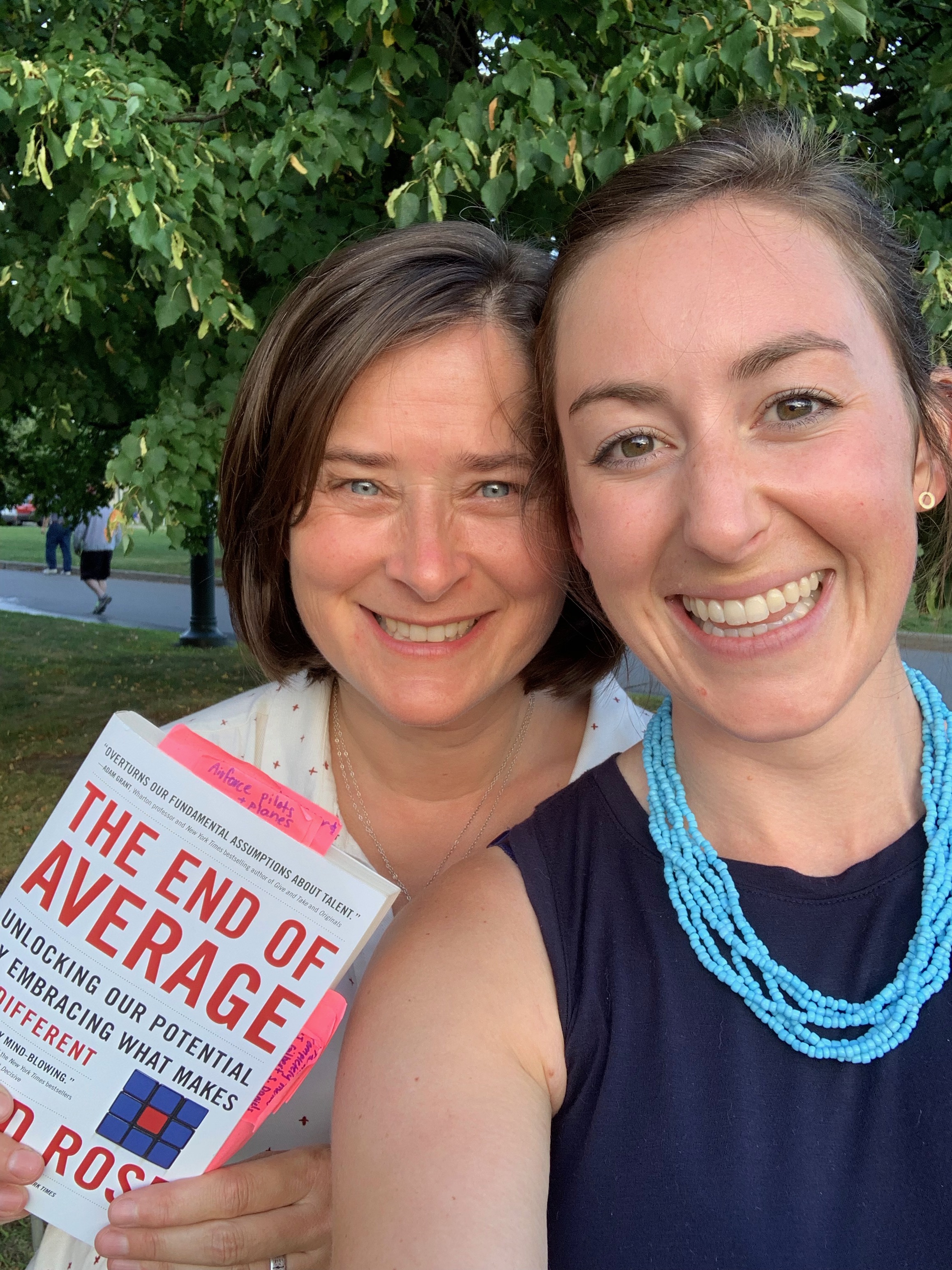
The End of Average by Todd Rose. With Jeanie Phillips (l) and Emily Gilmore (r)

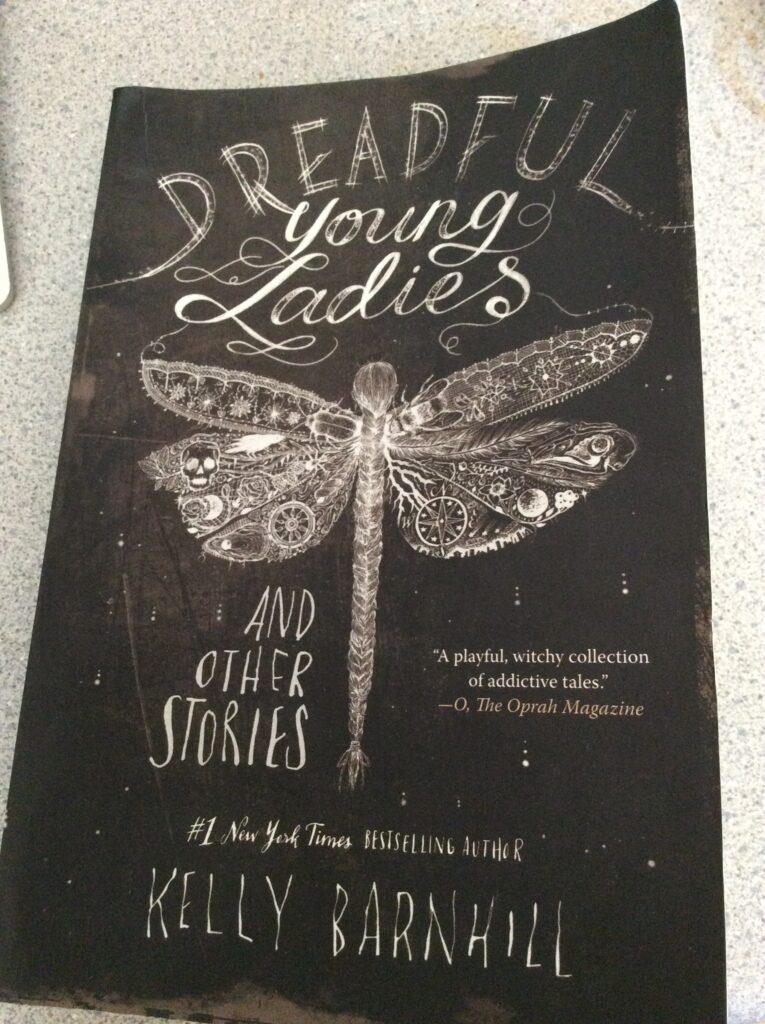
Today on the show, we’re going to talk about The End of Average: How to Succeed in a World That Values Sameness, by Todd Rose. We’ll be joined by Emily Gilmore, who teaches world history at South Burlington High School, in South Burlington Vermont.

But first, a few words of background for today’s show.

In case you haven’t spent quality time with the spectacular wrongness of Industrial Revolution philosophers, it will help to know the following:

Frederick Winslow Taylor was a 19th century industrial engineer who spent a lot of time during thinking about how to improve the efficiency of factories. He wanted to get more product out of workers, faster. And when psychologist Edward Thorndike came along and read Taylor’s ideas? His own thoughts naturally turned to — where else? — school. When not avidly playing tennis, Thorndike spent his time trying to figure out how to make schools work more like factories.

Frankly, both of them needed flinging in a pond.

But that brings us to Todd Rose, a high school dropout who now runs one of Harvard’s most prestigious thinking departments. Rose has some ideas that would have made Taylor and Thorndike’s hair curl, but that just might explain why proficiency-based learning is so important to keep pursuing in Vermont schools. 

This is Vermont Ed Reads, books with educators, for educators and by educators.

Let’s chat.

Jeanie: I’m Jeanie Phillips and welcome to Vermont Ed Reads. We’re here to talk books for educators by educators and with educators. Today, I’m with Emily Gilmore, and we’ll be talking about The End of Average: How We Succeed in a World That Values Sameness, by Todd Rose. Thanks for joining me, Emily. Tell us a little bit about who you are and what you do.

Emily: I’m so excited to be here! My name is Emily Gilmore and I am a social studies teacher at South Burlington High School, and a Rowland Fellow. I spent two specific years really diving into proficiency and personalized learning. So I’m really excited to talk more about the End of Average because it’s just the most validating book I think I’ve ever read in my whole life.

Jeanie: Excellent. I’m so looking forward to this conversation! I have so many post-it notes in this book. Tell me, what are you reading now?

Emily: Yes. So I am reading There There by Tommy Orange. And I picked it up when I was in Michigan, and sitting on the beach reading about the peoples who inhabited the land originally? Their stories now in modern day are just heartbreaking and so powerful. I just can’t stop reading it and I’m like slowing down, so I can really sit in it. And really feel all of the feelings that come from it.

Jeanie: Yeah, that’s a really powerful book. I love that book. Tommy Orange is indigenous himself, Native American himself. And then he’s writing about urban Indians. Urban Native Americans in Oakland, California. That book was *really* powerful.

Emily: Even the prologue is so incredible. Every educator should read at the very least those first 10-15 pages, going into the history and why the book is so important for everyone to read.

Jeanie: Yeah. I found those pages hard.

Emily: Yes, very…. Like, that was so engaging for me to then really get into the characters too.

Jeanie: Yeah, it’s a great book, great recommendation. So this one, I saw that you tweeted about one day on Twitter and reached out to you right away and said, “Let’s talk about it on the podcast!” And you gave an enthusiastic yay. I found this book to be so enlightening!

My number one takeaway I think was right away at the beginning of the book. The book is divided into three sections. And it illuminated one that we all hold without really thinking about it, or why we hold it. That is what Rose calls “averagarianism”. Is that what he calls it?

I found it so fascinating. And it’s that everything in our contemporary lives is ruled by averages.

How we look at testing in schools, how we place kids in schools, the way we give grades in schools, right? How we think about healthcare and our medical lives, are all about averages. The average blood pressure, the average cholesterol level, the average…

Emily: The size of your foot when you’re born! How long you are. How wide you are.

Jeanie: Right, and the way doctors look at the milestones you hit as a young child, and whether you’re in what percentile. And then in our workplaces, the way we’re evaluated for our jobs, the way we do our jobs, is all impacted by this concept of average. I just want to talk a little bit about the way that Rose lays out how that came to be.

So let’s introduce Quetelet.

Emily: Oh, *Quetelet*. This whole part was really, I think, the most enlightening for me because I spent so much time in college really learning about ideology and sociology. I took a course that was The Sociology of Ideology and Religion, that ended up being focused on really the evolution of communism, but also cults. And also really had an emphasis on eugenics. So this was for me like, oh my gosh, I can’t believe Quetelet was really at the center to spark what became such a key part in really modern history.

Jeanie: He was an astronomer who — for a bunch of reasons — didn’t have the access to his telescope. In astronomy I’ve learned this concept where because people measure the distance between stars or planets with time, and the times that they had weren’t always accurate, they average them. So at the same time that his telescope became inaccessible to him, all of this social data was suddenly available.

Emily: Yep, and he became *obsessed*.

Jeanie: And Quetelet started looking at this social data, which was like, some of it was like measurements of soldiers or like the ages when people died, and he started applying these concepts that he used in astronomy on social data. He determines that being average is ideal and any disparity from average is a flaw. Which is fascinating. Because that’s not how we think about it!

And what was really interesting, what Todd Rose I think is really interesting points out, is that even when you set up an average, like they do it with the average soldier or the average pilot, the average woman — nobody even comes close to the average when you do all those measurements or all those things, right? Nobody, actually. Most people have more disparity from the average than they do likeness. Like more than half.

Emily: Right! And there are actual competitions to see if there was the most average person. Which sounds like the most boring competition of all.

Jeanie: Right.

Emily: Are you going to file your nails before you go? How do you know what exactly you need? Are you going to stand up straight? Anyways, it’s mind blowing that those were those things that people focused on and valued was being the most 50% possible.

Jeanie: All because of Quetelet.

Emily: Right.
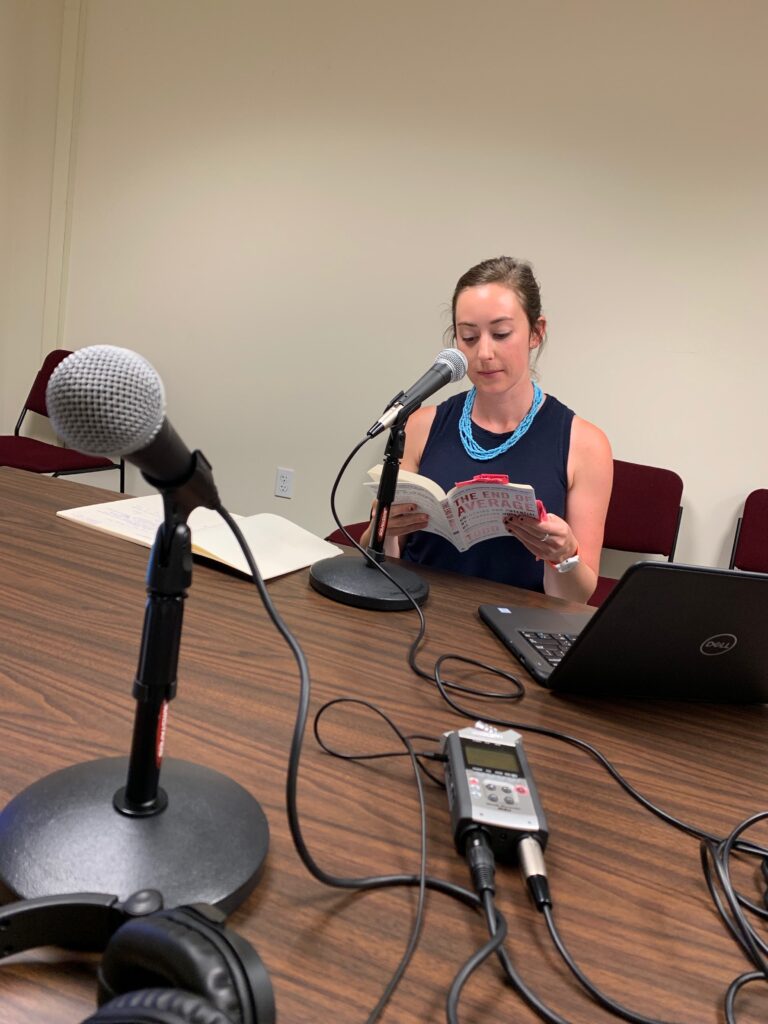
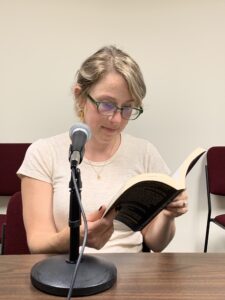
Emily Gilmore, a pale-skinned woman with brown hair pulled back in a loose bun, sits in front of a microphone at a table.

Jeanie: But then some time goes by and we meet — *dun dun dun-dun!* — the villain of our story, Galton.

Emily: Yeah, Sir Francis Galton. What an interesting fellow. So he saw Quetelet was I think learning from him at the time and saw that Quetelet was comparing people to the average. So Galton says, “I think you’re better or worse than the average. If you’re above average, you’re better. And if you’re below average, you’re worse.”

Jeanie: He’s related to Darwin, right? He’s a cousin of Darwin.

Emily: Right.

Jeanie: And the founder of Social Darwinism I believe. And he’s an upper-class Brit and he has this notion that if you’re good at one thing, you must be good at all things and that these below-average folks bring society down.

Emily: The “imbeciles”.

Jeanie: Yes, these terms! Like he makes this whole scale of humanity: “imbeciles” all the way up to “the eminent”, “the uncertain”. And as this is the case all the time, Galton defines himself as eminent, of course. Above average.

Emily: Of course, but Queen Victoria is also an eminent. And I thought: she might be the only female [eminant]. Which I would like to look more into.

Jeanie: Right! So, Galton starts looking at standard deviation. Average is only average. And he’s the first person that gets us as a society looking at social data and thinking about being above average or below average. Which really gains a foothold, first in work through Taylor — who focuses on standardization of work to meet the average. But then through standardized testing, IQs, Thorndyke and his standardized tests and his notions, and so I wondered if you wanted to talk a little bit about that.

Emily: Yeah, absolutely. I think Taylor really stands out to me as somebody who, during the Industrial Revolution or post-Industrial Revolution, the whole Western society is trying to figure out how to do things bigger and better and faster and more efficient. For cheap. And that’s where Taylor really makes a huge shift in the whole dynamics of Western society. A shift of “we should have people who are not physically doing the work, but telling people how to do the work”.

Which I think everybody listening and not listening has probably felt: “I’m doing something and the person above me may or may not know what I’m actually doing”. You can thank Taylor for that.

Jeanie: Right. Also humans as cogs. You do the job and that’s it. Someone has decided what the most efficient, best way to do it is.

Emily: Yeah.

Jeanie: There’s no room for innovation. This is like, factory model, where you do the same thing over and over again.

Emily: Yeah, there’s a great quote that I found, hold on one second. So in 1918, so at the end of World War I, Taylor says, “the most important idea should be that of serving the man who is over you his way, not yours.” It’s on page 47 from my book.

Jeanie: Talk about disenfranchisement! And what’s really interesting is that education followed suit.

So Edward Thorndyke who apparently was a very efficient man, who did a lot quickly, was also one of the creators of standardized tests. And he believed, and this is a quote from page 53,

Thorndyke believed that schools should clear a path for talented students to proceed to college and then onward into jobs where their superior abilities could be put to use leading the country. The bulk of students, whose talents Thorndyke assumed would hover around the average, could go straight from high school graduation or even earlier into their jobs as Taylorist workers in the industrial economy. As to the slow learning students? Well Thorndyke thought we should probably stop spending resources on them as soon as possible.

I wonder in what ways schools still produce these results even if they don’t intend to.

Emily: Absolutely. This is also putting it into context, which Rose does, is in 1900, two percent of Americans were graduating from college.

So that is a massive– it’s a massive growth that we’ve seen in the United States, which Rose also talks about not taking that for granted. Like, yes, Thorndyke and Taylor had huge impacts on America, and without that, many people would be in totally different places. And yet those really, really negative consequences are still things that we’re trying to unpack today. Especially the worth of serving those who deserve it, those who are skilled. What does that mean? Who is actually being served then?

When he’s writing this, women didn’t have the right to vote. The Civil Rights Act had not been passed. So we’re looking at such a small section of America, and it’s post World War I. We haven’t seen the Great Depression yet. We haven’t seen World War II. The world is so vastly different that it’s fascinating to think about what this landscape looked like, that he was really talking to.

Jeanie: Right. It’s also a really narrow definition of talent? Who gets to define what talent is and what it isn’t. I worry that it’s really a double whammy for some students. Not only are they not given the resources they need to thrive in our world, they’re also stripped of their own talents because they’re not recognized.

Emily: Yeah, absolutely.

Jeanie: I remember being– I’m a bit older than you. I remember taking standardized tests in the 2nd or 3rd grade. On paper. With bubble sheets! And crying when they got too hard for me because it was progressive, you kept going. I believe they had the name Thorndyke on them. I have this pretty solid memory of the name Thorndyke from my elementary school years. So his tests stuck around, right? Like that model stays with us today through NWEA and SATs and ACTs and all of the standard aspects, all the standardized tests that are norm-referenced. That they’re referenced against an average.

Emily: Right, and even in conversations today with students about when you should sign up for the SAT? Recommendations are being made that you should be taking the SAT when more students are taking the SAT because your chance of being above average is greater because more students are taking the test. That is *absurd*. Especially for students that are saving money, their own money to take the tests when they should be, first of all, not having to spend their own money and not having to pay for a test that is not giving valid results.

Jeanie: Right, because that still only measures certain kinds of talent, right, reading, writing, math. The ACT is a little bit broader, but that’s still a very narrow notion of what talent means.

Emily: Right.

Jeanie: I was also listening to Radiolab. They did a series called G, which was all about IQ tests.
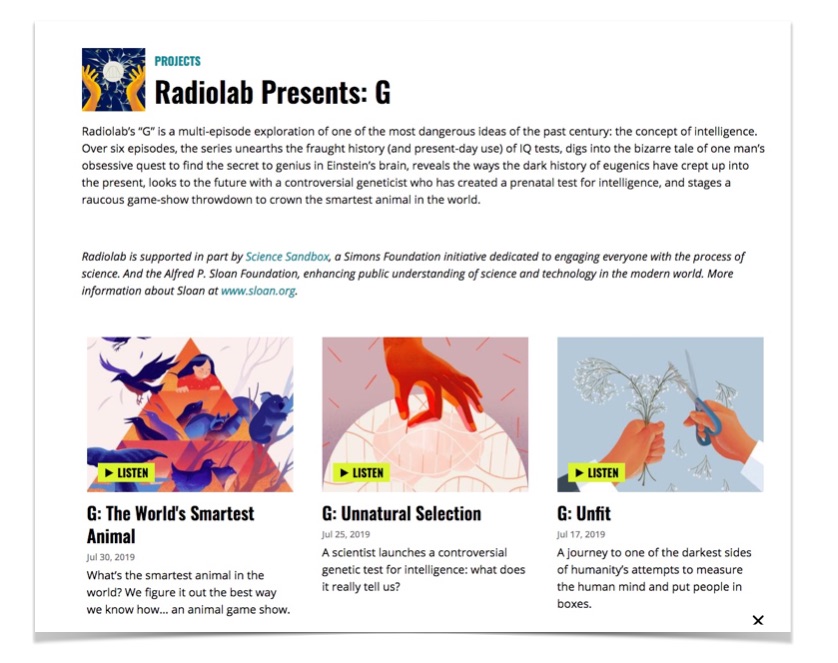
The End of Average Radiolab G screenshot

So, as I was reading this book and learning about the ties of standard deviation and average and standardization and norm-reference tests to the eugenics movement? I was also learning about the IQ test and its link to the eugenics movement. And Galton’s language, which sounds very like the eugenics movement, and just feeling like: *ugh*. This grief or this, I guess, rage. That we still use these tools that were used to strip people of their humanity. These tools that were linked to genocide, and to all sorts of horrors are still in our toolbox.

Emily: Right, the forced sterilization that’s still happening today because of ideas that are centuries old and have been proven to be fairly irrelevant.

Jeanie: That gets us to this fascinating part of the book called the Ergodic Bait and Switch. Do you know what I’m talking about? This was thrilling to me on page 62 of the book. Because it’s not just that they were old, they were wrong!

Emily: Right?

Jeanie: “Molenaar recognized that the fatal flaw of averagerianism was its paradoxical assumption that you could understand individuals by ignoring their individuality. He gave a name to this error, the ergodic switch. The term is drawn from a branch of mathematics that grew out of the very first scientific debate about the relationship between groups and individuals, a field known as ergodic theory. If we wish to understand exactly why our schools, businesses and human sciences have all fallen prey to a misguided way of thinking, then we must learn a little about how the ergodic switch works.”

And he proceeds to tell us in this chapter about how the math is wrong. The math we’ve used for centuries? Is wrong.

Emily: It makes sense! *laughs*

When any person talks about their experiences. Even my mother talking about how her three daughters were born on their due dates and how that’s bizarre. Then why have a due date? When you’re measuring and you’re seeing the development of children over time — and he gets into this later in the book — about learning to crawl versus learning to walk and how babies will do that at different times and at different rates? We see it every day. But we’re told something different and somehow we still believe what we’re not seeing.

Jeanie: Yet parents worry over those developmental milestones, and we’ll talk more about that later, and the science that’s debunked them as useful. So the thing I really love that Todd Rose, the point he makes again and again in this book is that: averages just don’t work. Not just don’t they work for everyone, that they’re outliers? But for anyone. There are a ton of anecdotes in the book about how nobody’s really average. I don’t know if there’s one you want to share or if there’s something from your classroom that you’ve noticed.

Emily: First of all, what stands out to me is right after reading the book, I listened to Todd Rose, his interview with Dax Shepard on Dax Shepard’s Armchair Experts, which I love. They both talk about individuality versus individualism and that the focus is really on individuality, the individual person. And they spend a lot of time talking about Todd Rose’s experience and his own educational career, and how, when he was in high school, he failed out. And yet now he’s a professor at Harvard. Very well renowned and is running the Mind, Brain & Education program. Is just phenomenal, and you would never know that he was somebody who failed out of high school.

Jeanie: All of his teachers are in shock that he’s in Harvard. They’re all going, “How the heck did that happen?”

Emily: Right? Exactly! The individual has different needs. And his dad saw that and so his dad was really able to help him. That was when he really became that teacher figure, that one to really intervene and say this, this is why you haven’t been successful yet.

Jeanie: I love that this book comes out of Rose’s own lived experience.

Emily: Yes.

Jeanie: Right. Like his passion for this comes out of his own lived experience as somebody who went back to college and with kids who struggled. Who had to find a different path.

Emily: Yeah and I think, from the other articles that I’ve read in the interviews, he really is so drawn on trying to prove himself wrong and he keeps finding more and more evidence as to why the End of Average is constantly a necessary piece of life.

We need to get rid of the average because we’re all individuals. We love ourselves. And we want to love our potential. As teachers, that’s what I want to see every day.

That’s my goal at the end of the day is for each student to feel like they know themselves a little bit better.

Jeanie: A lot of his stories wrap again and again around this idea of pilots. And building a standard, average-sized cockpit for pilots. And it fitting no one. So there were a lot of errors and unnecessary crashes, because it fit no one.

Then he tells this great story. I almost don’t want to tell it because if you read the book, you should totally read this book. I’m not even going to tell it. Because it’s so great when you realize more about the specific pilot who does this amazing thing.

But when they design for average, no one wins. Like I said, it’s failure for everyone. I think about that in our schools. Because I think unfortunately because of our workloads and our class sizes and the amount of courses we teach and our little prep time? I think it can be really easy to plan for the average.

Emily: Yeah and that’s the visual that immediately comes to my head is in every professional development that has anything to do with personalization, there’s always the image of: don’t teach to the middle! And there’s the row of desks, and one student in the desks and then you have the students on the outside who are below and above. Really it’s just those different pieces of the individual that we see highlighted in that particular classroom.

Jeanie: Yeah. I love this quote that he has on page 66 about that. “Averages provide a stable, transparent and streamlined process for making decisions quickly. And in a way, we stuck with averages because of efficiency, but I just think of all we lose. And what do individual students lose in a system that’s still using norm-referenced tests and focused on how if you’re on grade level or off grade level. That’s part of averagarianism is this idea of grade level.”

Emily: Right. I think that was a really interesting concrete takeaway for me when he talks about Khan Academy and the beauty of Khan Academy, and how it can really meet students where they are. He keeps coming back to this idea that speed does not equal success. And that is something that keeps coming back, and it’s so powerful to really sit and seep in. It doesn’t matter how fast it takes. He gives a great anecdote about driving and he says: “A driver’s license does not record how many times you failed the written driving an exam or the age when you finally obtained it. As long as you pass the driving exam, you are allowed to drive.”

Jeanie: Right. I think we in schools privilege fast processors.

Emily: Oh, absolutely.

Jeanie: All the time.

Emily: It’s easier.

Jeanie: I am a fast processor. And school really worked for me because I’m a fast processor, and I don’t just mean like wait time. I think a lot of teachers try with wait time, but the fast processors, the kids who get it quickly, maybe not deeply but get it quickly, are really rewarded in our school systems.

Emily: I think that looks different too. I have a lot of students in my classes that look visually like they’re understanding what’s happening. Right, if you’re quiet, she’ll move on. She won’t ask any questions.

Jeanie: Yeah.

Emily: That doesn’t mean learning’s happening.

Jeanie: Right. We have a lot of kids who slip through the cracks that way, right?

Emily: Right.

Jeanie: Yeah. Now this book is just *full* of research, and he delves into this idea of pace later on in the book. He mentions an experiment where students are learning probability theory, this math. And they do a control group that learns at a fixed pace. They learn the same material at a very fixed pace. And then they have a self-paced group and they can learn it however long it takes them. At the end when they do the test, 20% of the fixed-paced group achieved mastery and they have defined mastery in a particular way, but 90% of the self-paced group did.

Universal Design Learning in the Middle School Math Classroom

And that data really blew me away. How can we go with fixed pace when that’s the difference, right? So providing varied pacing is challenging in public schools. I get it. It’s really hard.

Emily: Yeah.

Jeanie: I think we have to shift our paradigm of what school looks like in order to make really widely varied pacing work? But it seems really worth it!

Emily: You’re right, the evidence is right in front of us. *laughs* Over and over again.

Jeanie: Ninety percent achieve mastery, and this is statistics! This is not three digit addition. This is statistics. So I’m wondering, have you experimented with pacing in your classroom?

Emily: I’ve definitely used more and more as the years have gone on with really self-driven summative assessments. That really has been a game changer.

Today was the first day going back into the school building for actual work. Going back and thinking about: what are my goals for my students this year with the new crop of 9th graders? And looking at their pictures from 8th grade knowing that they had yet to experience that school year — because we get those little pictures from the incoming students — and going back and then thinking about: what was the experience, the reaction of my students from last year, my 9th graders leaving their 9th grade experience?

Seeing some of the still 8th grade pictures because they didn’t get their school pictures updated and thinking about the growth that happened when you don’t assign them a topic. That, for me? Is a small jump into the self-paced.

A lot of the work that we’re doing in the world history classroom is removing those immediate definitions and terms that went along with the old, very Eurocentric curriculum that I learned when I was in high school. And really opening it up to look beyond things that you know.

So when we’re learning about forms of government, we’re going to look at pivotal shifts in forms of government, so you need to be able to show me:

  • What was one form of government?
  • Who was trying to change it, and why?
  • And now what’s the new form of government if there was a successful change?
  • Or what was the form of government that they wanted in the attempt to overthrow the status quo?

And through that, students were looking at everything from what was happening in Venezuela to what was happening in Mexico. I’m sure there’ll be a lot looking at what’s happening in Hong Kong right now. And students were looking at 500 years ago to what was happening in modern day and they’re having these conversations together. Comparing what’s happening with democracy and how democracy looks in so many different ways.

But they had weeks to work on it in class. And so some students were working on the first step of the project up until the final day because that was what was most interesting to them. It didn’t mean that they weren’t interested in analyzing the pivotal shifts and the different forms of government. They were like, “But what is this government? It’s so complex.”

And that to me was more valuable than having them jump through the five steps that I had put together to eventually look in deep analysis — which I’m realizing is more of like a college project.

But by having those really varied opportunities for students, they’re able to choose how they’re using their time each day.

Jeanie: So it sounds to me like you are using pacing and voice and choice in really powerful ways. One of the things I hear from teachers a lot is, “But how do you manage all of that? How do you manage so many kids on so many different topics?” I hear that you have this overarching topic and on different paces, so I’m asking you: how does Emily Gilmore manage this?

Emily: *laughs* It takes a lot of control actually, to let go of the old curriculum.

When I first started working at the school I’m at right now, I had had a totally different teaching experience and a totally different upbringing through the education system than what I was experiencing in my first year teaching. I was looking at this really, *really* Eurocentric, very confusing curriculum that went from the Renaissance to the Berlin conference in Africa.

So you went from “Germany doesn’t exist” to “Germany’s imperializing a country and committing genocide”. So what happens there?

That was very confusing and felt like a lot and very stressful. Every day I was walking into school, how am I going to teach the enlightenment? World War I’s really important. How do I teach the Industrial Revolution? Those things aren’t there. How do you make those connections?

The next two years I started to really think about: that’s okay. I can introduce it and I can give anecdotes, but the bigger idea is that students care about what they’re learning in world history. They’re in 9th grade.

I can’t tell you how many — particularly, it just so happens to always be this group of 49 to 70 white men — who are reading Civil War books and World War II and are all: “You’re a history teacher? Now what are you teaching about the Civil War? What are you teaching about World War II? Have you learned about these different battles in World War I?”

I’m like: “Hm. Mm-hmm.”

I have no reason to teach my kids the specific battles of World War I as 14 year olds! They need to learn about the world around them. And that there are different people. And that different people are good and that they are interesting. Your experience is different than the person sitting next to you. We’re going to build empathy and understanding of that first. And that, to me, is world history.

Jeanie: So do you find that your kids are more invested because they have this choice of pace, product, and topic?

Emily: I think it takes a lot at the beginning of the year? And that’s really the biggest source of anxiety? Is a lot of students unlearning the passive form of education that they are mostly accustomed to.

And that’s not saying that all of their learning experiences by any means, but a lot of insecurities really bubble up.

Especially 14 year olds who are right at the cusp of figuring out who they are and what they’re interested in and worrying about,

“If I say I’m really interested in the French Revolution, is the person next to me going to make fun of me?”

That is a really tough spot. And so that is really the focus of the beginning of our 9th grade experience. It’s like who are you? Everyone’s going to be vulnerable together. And we’re going to build trust. We’re going to build an environment that’s inclusive.

And from there the students really begin to think about, oh so when she gives us choice, it’s not overwhelming.

Jeanie: This is perfect. I was going to have to say, let’s get back to the book, even though Emily’s classroom is way more interesting. But actually what you’re talking about? Directly applies to the book. Which is: Rose introduces this idea — and I’m sure he’s not the only one to use it — called the jaggedness principle. This idea that two people who have the same IQ? Can have vastly different sorts of talents and skills, or strengths and weaknesses within an IQ test. That they’re not the same, even though they both have the same number. So I’m wondering about how you use this idea of the jaggedness principle to really help students get to know themselves? And for you to get to know students and know them well, as learners and as humans?
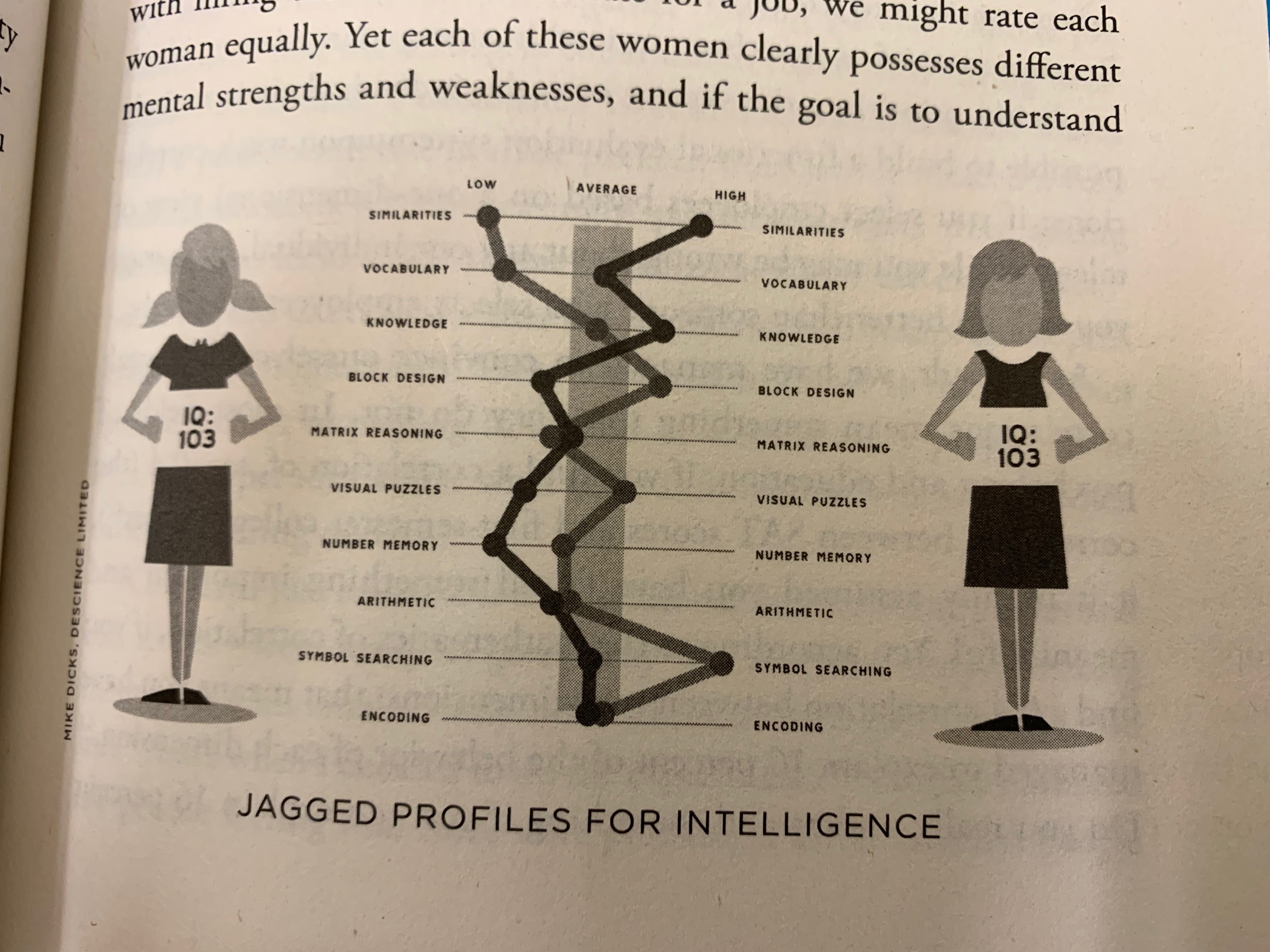
Jagged profiles for intelligence from page 89 of The End of Average
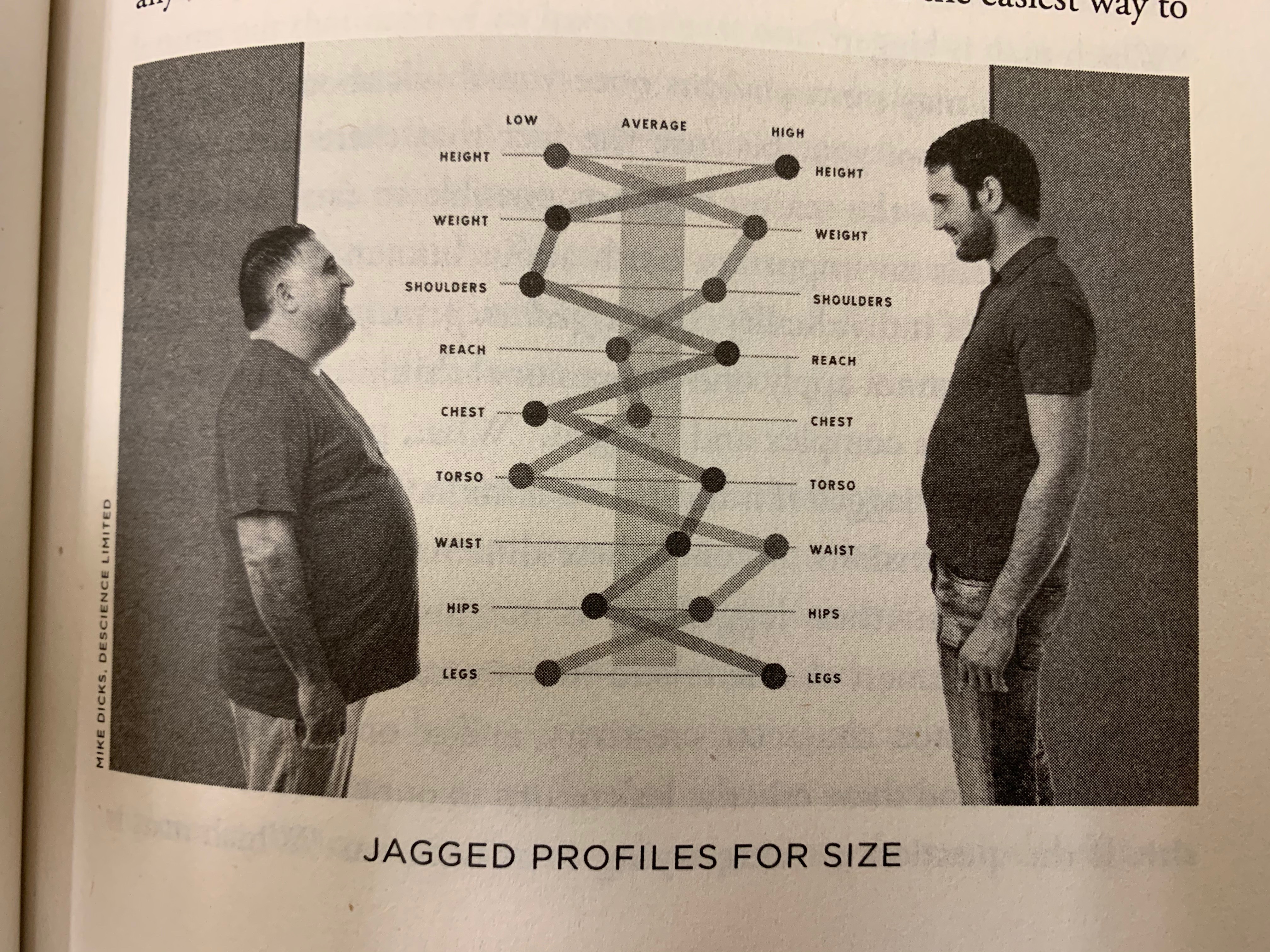
Jagged profiles for size from page 81 of The End of Average

Emily: What really stood out to me is thinking about personality tests and the jaggedness principle. It’s just something that I really continued to come back to as I kept reading about. And eventually he does make that connection. That people are complex and that, in its own right, is important. And that is what teachers see in their students. I think that for me is the part that I have embraced the most. And I now I’m getting back into, okay, so how do I take the complex identity and teach them the world history curriculum that I’m required to by law? That’s like trying to make that work.

But the personality tests keep coming in from me. When I was in high school and taking psychology, we took the Myers Briggs personality test. And I was INFJ. It was INFJ is the least common personality type. I was like, “Oh, that’s so cool.” Jerry Seinfeld, you’re an INFJ!” and as I’ve grown up–

Jeanie: I’m so unique! *laughs*

Emily: I’m so unique! I’m in a percentage of people who are also INFJ! *laughs*

The really important part is the first part of INFJ, it’s I, it’s introverted. In high school I felt very, very introverted. I knew I wanted to be a teacher and I would sit back in class totally silent and just absorb. And then as soon as I entered college and was studying teaching, I was like, “Oh, I’ve got to have a self-talk. I can’t actually be an introvert.”

And it gets to that idea that your personality actually it changes in different situations. Which jaggedness principle then connects to all these different ideas that he pulls in with Bloom and lots of fabulous people.

Jeanie: I just think if we could really help our students begin to understand their own jaggedness, their strengths, their places of challenge or places for growth? We could really transform their lives.

Emily: Absolutely. Absolutely. And I think that also builds that compassion that when you see students who are maybe struggling with a creative project, because it’s called a “creative project” and a student previously hasn’t seen themselves as creative. I remember that feeling when I was in high school where you had options for your summative assessment. It was your final project. and it was a test. You could take the multiple choice test. You could do a book report. I remember one teacher always wanted us to make a rap. Or you could do something creative and you’d have to talk to the teacher. And I was like, “Oh, essays sounds great to me.”

Jeanie: Rapping is hard. I am older than you because nobody ever gave me the option in high school of making a rap. I remember we could write a play, maybe.

When you’re good at school, it can be easy to say, “Oh, I’m not doing the creative thing. I’ll take multiple choice test please, thank you very much.” I think it can get really frustrating for students when we ask them to step out of those comfort zones, especially those kids who are good at doing school.

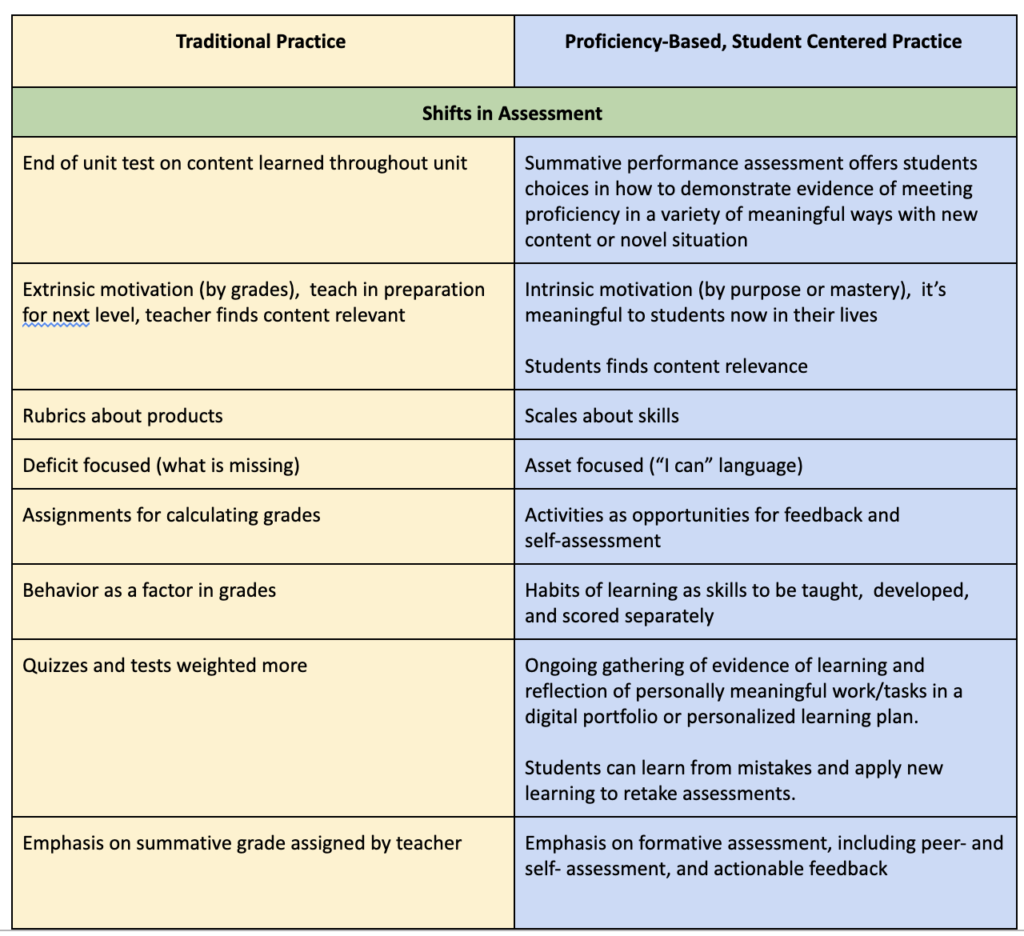
This is where proficiency-based education really frees us up, right? Because the criteria is the same but you can demonstrate it in so many ways.

And that leads us to the next principle that Todd Rose outlines, which is the pathways principle.

I think this is so relatable to Act 77 and to our work in schools right now. The kind of things we’re still figuring out. He’s suggesting that, like it or not, whether we want this to be the case or not, we all take different paths as we learn and grow. He gives countless of examples of different ways people learn to read. Different ways science shows us, research shows us, different ways that people learn to crawl or walk. That we all develop differently. That there’s no such thing as a single ladder of development. There are many different pathways or webs. So I’m just curious. I think that we’re still on the cusp of figuring out flexible pathways for students. One way I hear you doing it is saying, here’s the learning, here’s the big thing. Find what interests you and apply it to that.

Emily: Yeah, and the more that you learn about your students too. That’s been the greatest takeaway for me, is that I feel this deeper sense of love. And the environment is so much more positive, when you see students sitting at their desks or walking around the room looking at other people working and you don’t see anybody judging one another and they’re asking questions like, “Hey, where did you find that?” or, “I read this really good article, but it actually, it connects more to your project. Do you want me to send it to you?”

Jeanie: I was in your classroom once last spring, and it was such a calm and focused place when I was in there! So I’m going to share a quote, another quote from Rose that I really loved from page 129 because I think it’s really relevant to what we’re talking about, and we’d almost forgotten about him.

Emily: Oh no.

Jeanie: And The End of Average! We got so interested in what we were talking about.

“The fact that there is not a single normal pathway for any type of human development, biological, mental, moral or professional, forms the basis of the third principle of individuality, the pathway principle. In all aspects of our lives and for any given goal, there are many equally valid ways to reach the same outcome. And second, the particular pathway that is obstacle for you depends on your own individuality.”

I feel like this needs to become the heart of schooling.

Emily: Absolutely.

Jeanie: There’s no one way. There’s no one valid way. And I think he goes on to say that talent lies in all the different paths. I was really inspired by that. It makes me so happy about the flexible pathways portion of Act 77.  And thinking about how we can help more students be successful by broadening the scope of pathways available to them.

Emily: I think it even comes down to what “successful” looks like and feels like. Because that’s so tied to this idea of success according to Thorndyke might look different than success according to Galton. And success according to you and I! That is so important to really unpack. Success for whom and where and how do you achieve that, again, comes back to those pathways. But success is so I think tied to a certain set of values that we see in society.

I see the hinge of the status quo of what we’re working towards, really in Vermont of: we want all of our students to be successful.

And I think also the caveat there is whatever success looks like for them and feels like for them. Not what I think is successful for a certain student or their family or whatnot. But how that student is defining for themselves. I think that’s such the central piece of what we are really talking about is how do we get students to really have that metacognition of: what does it look like and feel like when *I’m* feeling successful? How can I bottle that up and take that with me for the rest of my life?

Jeanie: What you’re saying reminds me that– and I think Rose would agree — we’ve got a really narrow notion of what success looks like in schooling. So if you’re good at math, reading and writing, you’re a success.

Emily: And athletics.

Jeanie: Yes, but academically, we have this notion that math, reading and writing are the pinnacle, right? So if you take calculus, you are one of the smartest kids in the school, and we fall back on Galton and we assume that if you’re good at calculus, you’re good at everything else, right? You’re just smart.

And I just really think, not just because it’s the right thing to do for individuals but also because our economy is demanding it of us, that we need to broaden our notion of the many ways there are to be successful and talented in this world, of the many ways in which there are to thrive. Back to that podcast, the Radiolab G podcast. One of the hosts on there points out that in Darwin’s world, in true Darwinism, variability is a strength. In the standardized world, variability, doing things differently, being an outlier is not a strength. You have to succeed in these ways, in these categories instead of really appreciating the full broad spectrum, the broad ecosystem that is humanity.

Jeanie: Just reading this book made me realize, made me think about how a lot of teachers I know are really struggling with implementing proficiency based education because they’re like, “Kids don’t want it. They want to go back to the way things were.” Part of that’s comfort, right? Like just give me the quiz, right? Don’t make me *really* demonstrate anything, just give me the quiz.

But part of it is I think that our whole world is set up in this way that demands conformity and sort of asks us to compare ourselves with each other.

And when we start shifting schooling to be more about:

  • Who are you?
  • What’s the right path for you?
  • How do you access learning in the way that’s best for you?

We’re not just fighting against years of schooling that didn’t ask that, we’re fighting against a whole world that doesn’t ask that of kids. It’s countercultural in a way.

Emily: So what happens when we’re seeing how proficiencies work naturally in the classroom? And fit so many of the good practices that  teachers have? Just like you were saying, students may say that they don’t know what it is and they don’t understand it and whatever, but if you take that out of the conversation and you just let the students learn and you’re using that language? They get it eventually. And they move on. They’re adapting to everything. Everything is new for them, and that’s life for all of us is the next step is always new.

Throughout the whole book, Rose keeps bringing up that; with all of these examples, there’s groups of people who are being hurt in the process. And that’s the greatest risk of all: by not doing anything, we’re hurting more people than we are helping.

Jeanie: We’re under-serving some and over-serving others.

Emily: Right, but we’re over-serving so few. And we’re under-serving *so* many.

Jeanie: Right, and disenfranchising them from their own sort of learning. Their own ability to learn.

Emily: Right.

Jeanie: And the way they think of themselves as learners. We have a lot of power.

Emily: We do. It’s overwhelming!

Jeanie: It is. But we have a lot of power to do good, to help students find themselves and feel good about themselves and cultivate their own awareness of their jaggedness so that they can navigate their learning well into the future.

Emily: Yeah.

Jeanie: I am just starting the doctoral program here at UVM, and I feel like, “Oh, I know myself as a learner so well, now.” I’m sure there are challenges ahead, but I wish I knew myself as well as I do now when I was an undergrad.

Emily: Yeah, or even in high school. I just think like, “Oh, the stories I could tell myself. And my friends, whisper in their ears: you won’t believe what you’re doing in 10 years. Stop doing that.”

Jeanie: Are there resources that you use to help students get to know themselves or that you use to get to know students better?

Emily: We keep trying new things each year and I think especially with the more and more resources that Teaching Tolerance is putting out around identity and social justice and really making sure that the work that we’re doing is productive and not harmful? Has really helped me be reflective in getting to know you activities. Because so many of them are alienating to so many of our students.

That’s really been an important learning process for me of how to best learn about our students.

I would say that’s definitely been the most useful of how can we really set up the learning processes for our students. So I start the year off with my identity iceberg. What do you know? What can you make assumptions about? Then what’s below the surface? What are the things that you need to learn about me in order to really understand who I am? So that’s some of the work that we do at the beginning of the year, and it’s amazing. It’s *amazing*.

How can educators learn about social identity?

Jeanie: I’m also just thinking about how equity work is such a natural fit here because it’s about celebrating difference and honoring difference. And noticing difference. And isn’t that what we want for our students? For them to understand their own difference. In order to make the most of it.

Emily: Right.

Jeanie: In order to develop their talents, to know where their gifts are.

Emily: And to love themselves.

Jeanie: They all come with gifts! And we need their gifts in this world. We need *all* of the gifts we can get in this world. We need all of the genius we can get in this world. There’s so much to do.

Rose ends with these recommendations really for higher-ed, and I just thought, “Oh, we at Vermont are so ahead of the game!” Because he starts with the idea that there are three concepts to transform education. One is to grant credentials, and not diplomas. This idea that you get credentialed because you demonstrate a competency or proficiency at skills which I think we’re sort of using that competency based approach even if we’re not giving kids specific credentials.

Emily: Although some schools around the state are using credentialing and they’re really powerful.

Jeanie: And micro-badging, right?

Emily: Right, absolutely.

Jeanie: Micro-credentialing and badging, and so… I just combined those two, micro-credentialing and badging. You’re right, they are. Do you have any examples you’d like to share?

Emily: I think about the work that Jen Kravitz and Erica Walstrom and Marsha Castle did at Rowland with their STEM and their global studies badging credentials. I’ll come up with the right term eventually, but their programming is fantastic. Where students are really choosing a path that’s interesting to them while maintaining the curriculum that is in place at the school, but they’re navigating it through a particular lens and field of interest.

Jeanie: Then the second concept is to replace grades with competency. So we’re beginning that work. I think a lot of people are really navigating the hard road of getting rid of letter grades and moving towards a competency-based system. Not easy.

Emily: Not easy and lots of learning and self-reflection I think is the really big takeaway in this process.

Jeanie: It requires a lot of educating parents.

Emily: Yes.

Jeanie: Yes, your kid will still get into college.

Emily: Right.

Jeanie: Yes, they’re still a good student even if they don’t have straight As.

Emily: Right.

Jeanie: They’re still a good learner. And the grading system we have is not ideal anyway. It doesn’t really tell us anything. So scrapping it for one that actually defines what they’re proficient at seems worthwhile to me even though the road is hard.

Emily: Yeah, and I think there’s more meat behind it too. Now students have products to prove their proficiencies rather than maybe some conversations with teachers to bump up grades.

Jeanie: Yeah, evidence.

Emily: You’re right, evidence.

Jeanie: Evidence of learning.

Emily: Yeah.

Jeanie: Right. Then the final principle is to let students determine their educational pathway. I think we’re still on the road with this one. We’re still figuring this one out.

Emily: Yeah. I think there’s definitely more and more options available pre-K through 12. Then it’s that jump from, well, what does undergrad need for the application process and what will they accept and how will they compare the applicants to one another?

Jeanie: Yeah. Well, I think these things going hand in hand. You need to be able to define proficiency to have a competency- or proficiency-based system in order to create flexible pathways that lead to the same credentialing, if you will. The skills are really important. It’s not that we’re saying throw those out and let kids wander around wherever. They’re still aiming towards that learning goal. We’ve defined it such that kids can get there in a lot of different ways at different paces. They can demonstrate that in different ways. The core skill, the core learning is the same, but the pathway is different. And those things are interdependent. And! Dependent on knowing students well and helping them know themselves well. And helping them communicate their identities as well to the adults who are there to coach them and provide them the opportunities they need.

Emily: Absolutely. In the long term that makes our world more successful as we have individuals who are aware of their behaviors and the impact of their behaviors and have real confidence in their abilities to move the work forward. Whatever that work may be.

Jeanie: Yeah because we don’t need any cogs in machines right now. We really need creative people who are able to use their talents, whatever they are.

Emily: And to continue to adapt to do that as well.

Jeanie: Yeah. I am *so* grateful to you for introducing me to this book. I think I just saw you tweet about it and was like, if Emily’s reading it, it must be good! Because I enjoyed every second of it. I must have 600 post-it notes in it, and we’ve just scratched the surface. Are there any other quotes you’d like to share?

Emily: Oh boy. Let me see. I will leave us with a little bit of a scare maybe. This is what we want to avoid at all costs that I think is important to leave us thinking to grapple with a little bit. This was on page 33, Sir Francis Galton, and he said, “What nature does blindly, slowly and ruthlessly, man may do providently, quickly and kindly.” How we apply that? I think is really what sets the tone from the rest.

Jeanie: Yeah. In a healthy ecosystem, lots of things flourish, right? In a healthy ecosystem, there’s diversity. We can also create diversity in our schools.

Emily: We’ll let our kids flourish.

Jeanie: Let all our kids flourish. Thank you, Emily, for all you do to help students at South Burlington flourish and thanks so much for taking the time to talk about this book with me right before school begins. I really appreciate your time and your thoughts and your many examples from your classroom.

Emily: Thank you, Jeanie, for the reset.

Educators, what are you afraid of?

what are you afraid of

This past weekend started like many others. An early morning trip to the local hardware store with coffee and daughter in hand. We were there to gather an eclectic list of items, optimistically hoping to check a few house projects off the “list.”

I’m sure you all have “a list” too.

Instead, my 8-year-old gravitated towards the Halloween section, which to be fair, took up most of the  store. So much for my house project helper. Needless to say the “list” took a back seat.

Continue reading “Educators, what are you afraid of?”

PLPs in Seesaw

PLPs in Seesaw

Seeing students for who they are and what they can do

We’re all still looking at various tools for building PLPs with our students but one thing we can all agree on is the power of PLPs to let us more clearly see our students, and learn more about them as individuals. Let’s look at two schools building PLPs and digital portfolios in Seesaw and check out how they’re using this tool to know their students better.

“Look there I am!”

“Dad, I hope you are proud of me.”

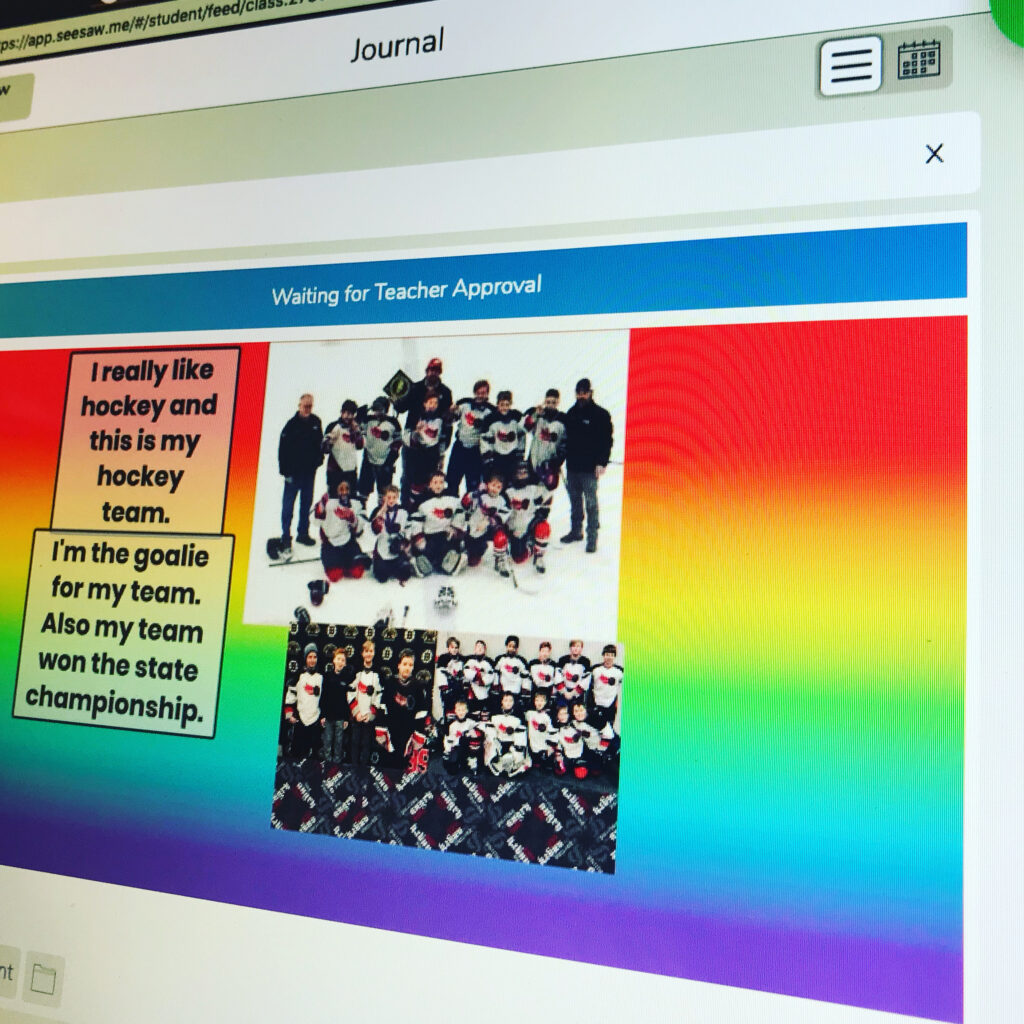
“You mean I can post a picture of my hockey team?”

There are student comments I have heard in the last two weeks, in schools I have been working in. The commonalities are stunning: students exclaiming, smiling, satisfied. They are seen, heard, and known.

Let me back up.

The research

It’s become clear to educators and researchers that seeing and valuing our students for who they are — right now, each day — has powerful effects.

Take this study about greeting students by name at the door. Simply starting each day with this has been linked to fewer disruptions and higher engagement. Which is no shock, because we know that developing relationships with students is critically important, and this is one way to support this.

Or this one about the power of having a gay/straight alliance group at your school. The Smithsonian shared a study that illustrated having a GSA at schools reduced discrimination and suicide rates for all students.

The commonality here? Students are seen, heard, respected, and valued.

While this Edutopia article discusses how teachers are making sure they know personal information to be able to connect with each students, Vermont takes it further by having students tell their own stories of their learning lives, both in and out of schools, in the PLP.

Examples from schools

Next, we focus on how schools are making students’ lives and learning visible.

Sutton School

PLPs in Seesaw

The sixth graders settled into their seats with mild curiosity. They had seen me before, but not in front of the class. On this rainy fall day, Kelly Mulligan and I were going to launch PLPs.

It felt like a big task.

We started with a slideshow with the focus of the PLP as a way to tell your story. Show who you are, inside and outside of school. I asked them to imagine something about their lives that their teachers doesn’t know. They didn’t need to share it out loud, but something important about their lives that could be shared with the teacher.

They paused, thoughtful. A few of them shared what they were thinking. Then we showed this video from Harwood Union School and asked these prompts:

Some kids shifted in their seats. They saw that their home life, their interests, often that are not celebrated in schools, could be noted, validated, and celebrated in this new format.

One students said, “Like you mean how I work on cars in the mornings with my dad?”

YES.

Or how I am the goalie of our hockey team, and we are state champions?

YES.

Or how I love to fix computers and code?

YEP.

You get the idea. The power of validation and choice spread.

Then we used Seesaw, and gave them choice. Use these tools to show us who you are. Here are a few suggestions for activities, but you can post what you think is best to describe what you love, what you do, how you learn, and who you are.

What I saw next was 100 percent engagement, and students popping up to help each other with the tools.

I heard a special educator say, “I didn’t know you were a goalie, that must be really challenging.” (Relationships! See earlier research).

Ottauquechee School

Ottauquechee School third grade team: Logan Russell, Staci McDougall, Kathy Bishop, and Erica LaFond.

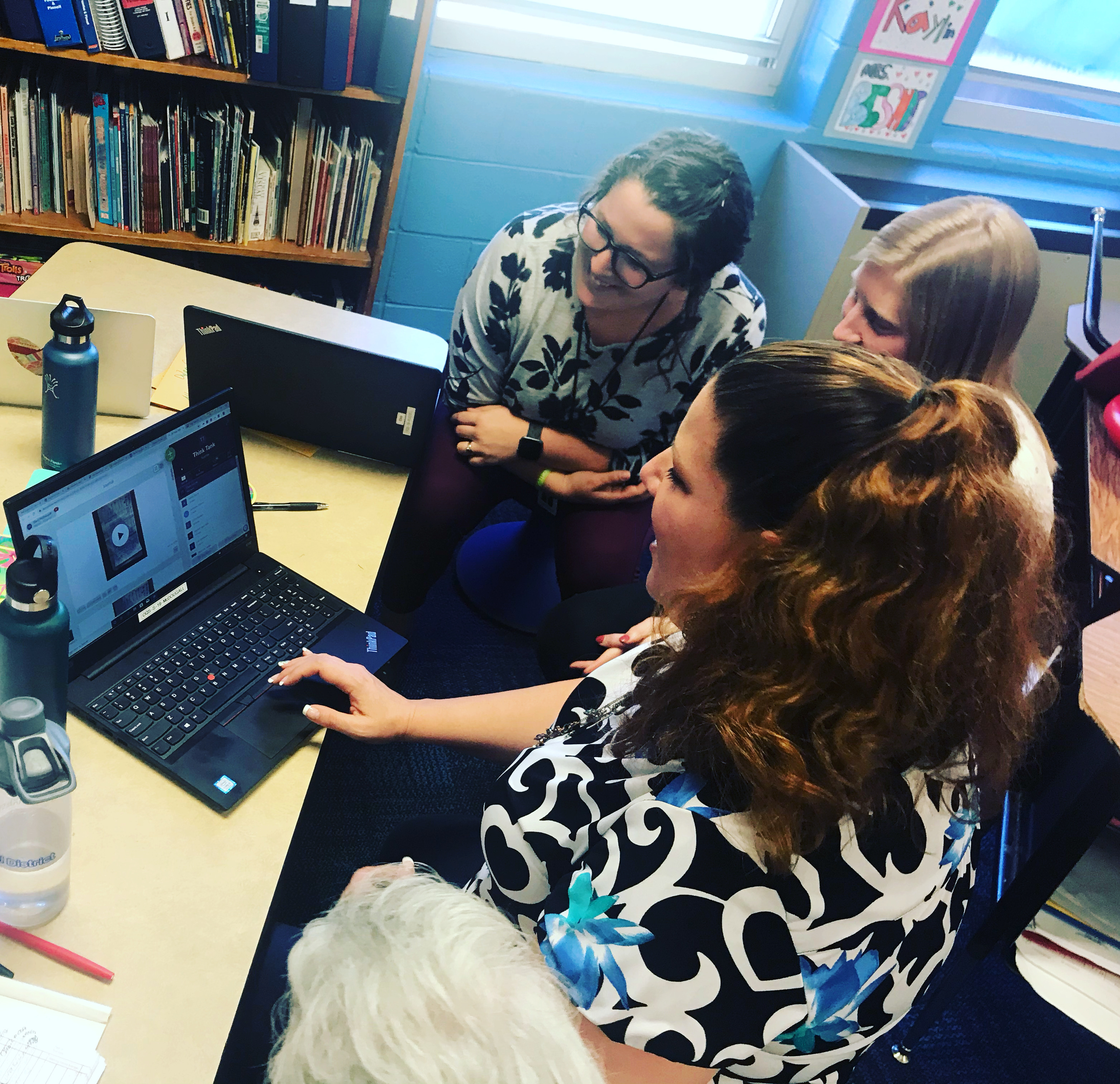
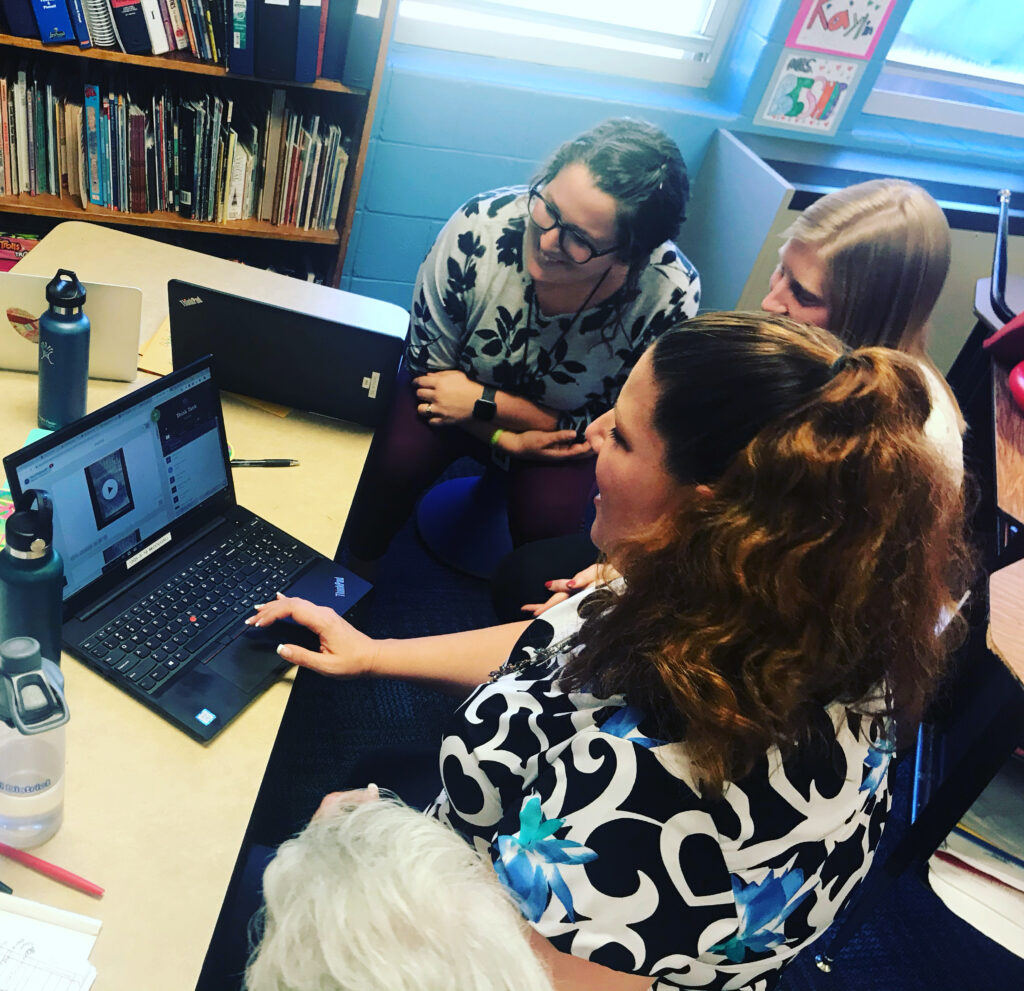
Next up, I was in a co-teaching teacher meeting of third grade teachers at Ottauquechee School. In came Staci McDougall, special educator. She was showing the rest of the team how she used Seesaw to support her students. What I saw next was incredible. She showed a video on Seesaw of a mostly non-verbal student who was engaging with math manipulatives. In the video, he exclaimed, he found numbers, he showed his thinking and work. The teachers were spellbound and teary. They hadn’t seen him this focused, or this engaged, ever. This video had been shared with his parents immediately, and now with his teachers, who see what he can do when barriers are removed.

Earlier that day, I had stopped by Staci’s room, at the exact moment I saw a student with her phone held right up to his mouth. The student said,

“Hi dad! I hope you are having a good day. I made it all day in class today and I hope you are proud of me! Love you dad.”

This was his 18th day of staying in class all day, and before this plan, he had not been able to stay in class with other students. The pride in his voice was clear, and took my breath away. I wondered, how many negative phone calls had this dad received before this? What is the power of regular positive calls and posts on a student and family that has experienced a lot of negative interactions with school?

These two uses of PLPs in Seesaw: as a behavior plan support, and as a tool to increase access and share learning with students with intensive needs, were new to me, but the ideas were not. PLPs, tied with regular family communication, are a tool to help everyone see students, make their lives visible, and are for everyone: caregivers, teachers, and community partners, and help all see students for who they are and what they can do.

Seesaw as a tool

The commonality here was that both schools were using Seesaw as a tool for digital portfolios and PLPs. The benefits of this tool are clear:

Benefits?

  • It is very easy to use, students can set it up and get going with posting in about 30 minutes or less. Students can login with their school google email tools or a QR code.
  • It is very intuitive, and looks like a social media feed, but it totally private between the student, caregivers and teachers.
  • Teachers can set up folders that students can tag their posts to to develop a PLP or portfolio organization system.
  • And students can explore developing other aspects of their portfolio as PLPs in Seesaw, such as personal and academic goals and college and career explorations.
  • Families access the portfolio through an app on their phones, so there is no need for computer access. Caregivers are notified every time their child posts something to the portfolio and can interact with the post. This creates a quick and regular feedback loop for families and reduces the need to find and return the papers (which is hard for all).
  • Use of this tool reduces barriers to the demonstration of learning. Students can pick a tool to demonstrate their reflections and learning, such as video, notes, photos, and art. Almost immediately, I saw the benefits of this. Students did not have to wrangle digital tools to increase access, they were readily available to all, just like the Universal Design for Learning  calls for.
  • To create 100 percent access to family conferences, students could rehearse for their student led conferences with the video feature of Seesaw. That way, if a family can’t attend the conference, they could at least see the presentation via video, and interact with their student through the post.

Ideas for use

Seesaw could also be used as an everything space, where students across curricular subjects learn how to document and reflect on their own learning. Then, they could curate a portfolio of work to share at student led conferences, and these could be created anywhere, in Google slides, a Google site, or other tool. You could link and access these on PLPs in Seesaw as well.

The  power of being seen, to tell your own learning story, to show who you are and what is important to you, is universal.

How can we make sure each one of our students feels seen, known, and valued?


This middle school is not a building

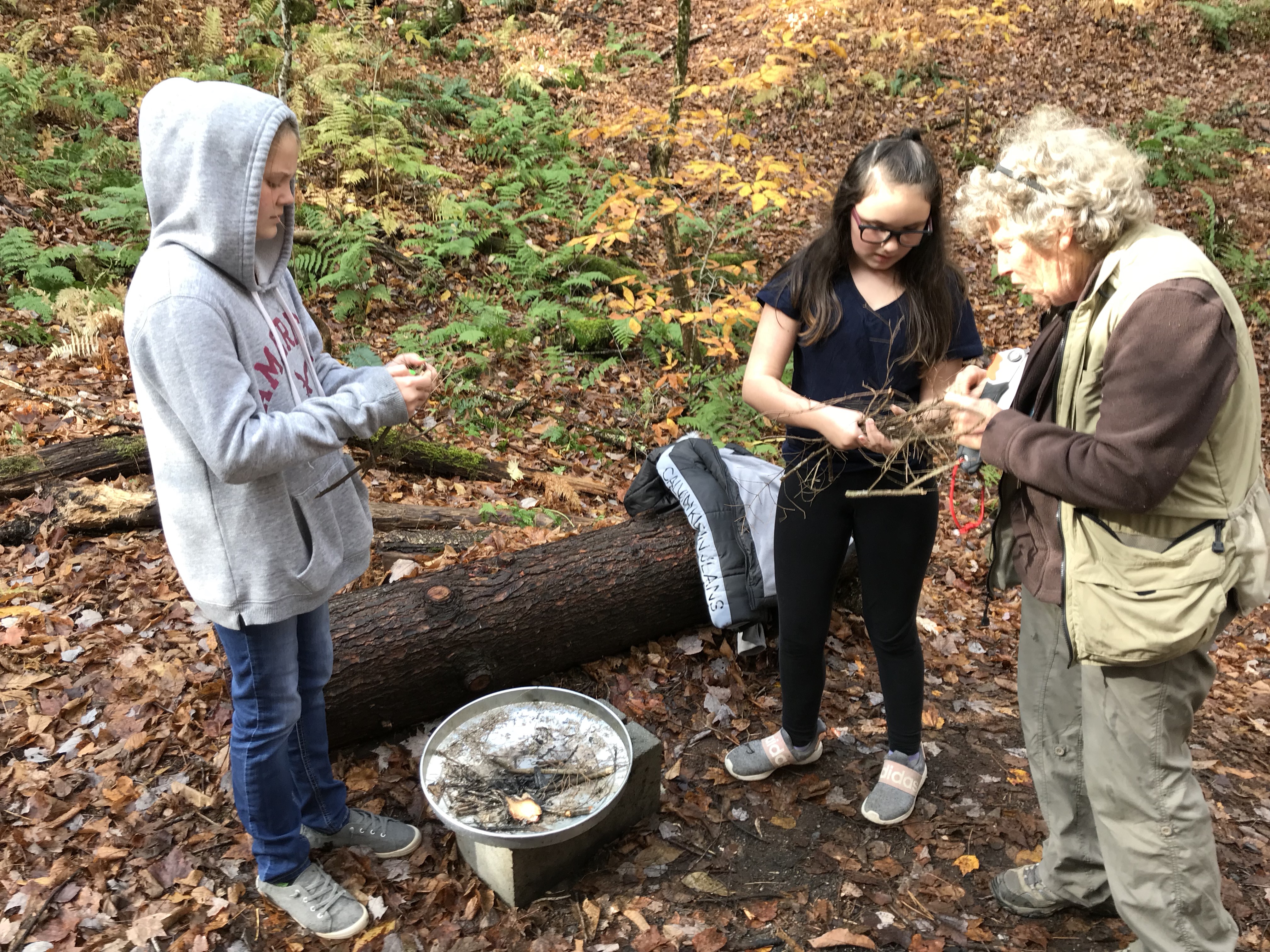
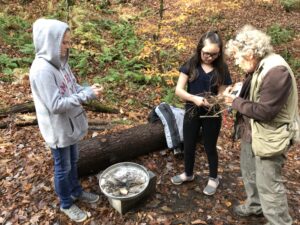
Students consult with an elder in the woods

Welcome to White River Valley’s outdoor classroom

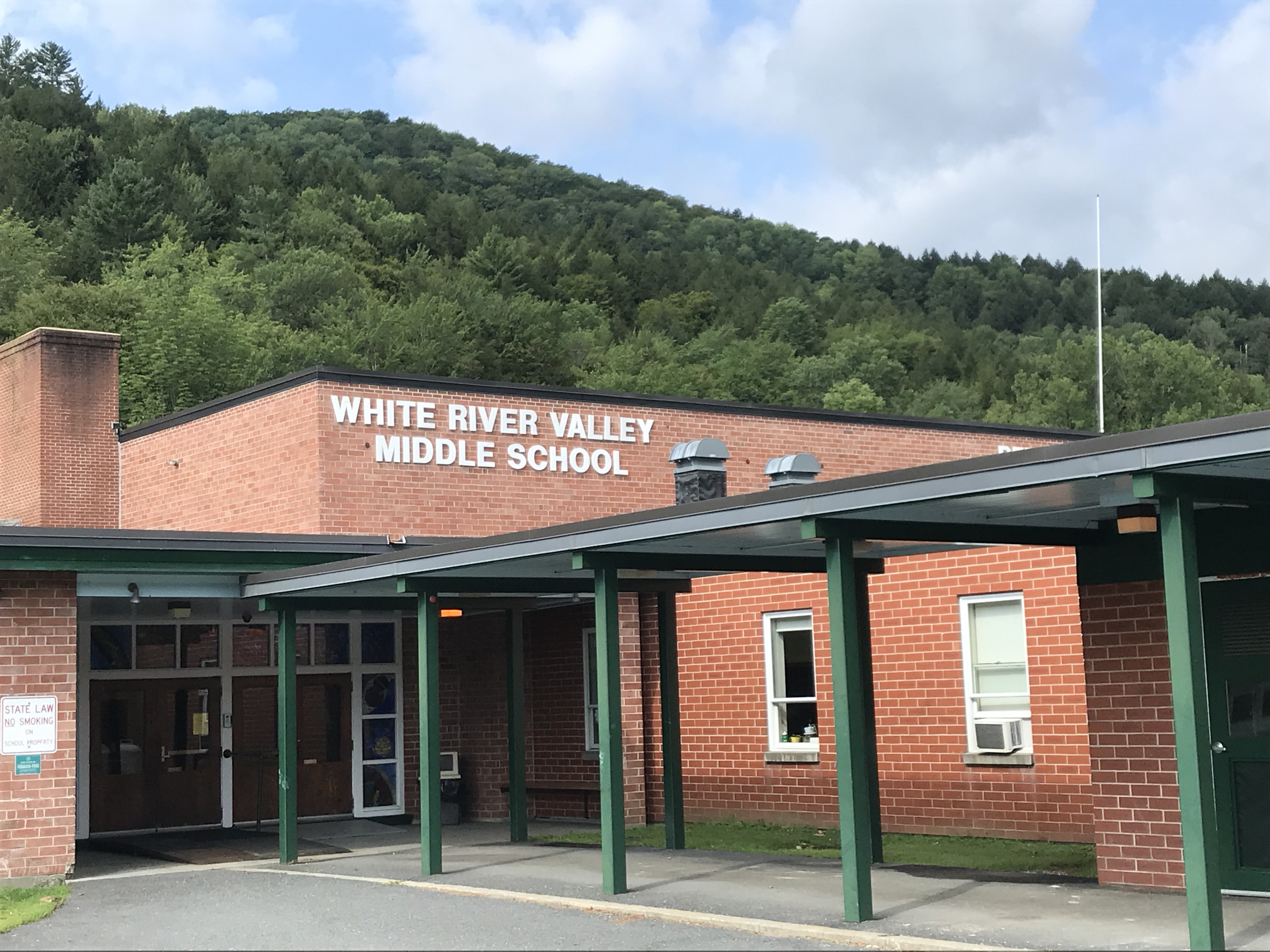
Students and faculty at Bethel Elementary and White River Valley Middle Schools firmly believe middle school is not a building. Behind the brick-and-mortar school lies an expansive wilderness classroom that provides opportunities for pre-kindergarten through eight grade to connect with the earth, environment, and each other to become lifelong stewards. And I got to see it all in action.


First visit: “Into the woods! (and home before–)”

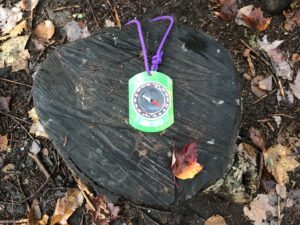
I met a group of excited students gathered in the lobby, eagerly awaiting their woods break. Bonna Wieler, outdoor education educator, arrived to hand out compasses. A quick orienteering review in the lobby and off we went.

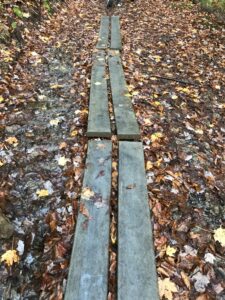
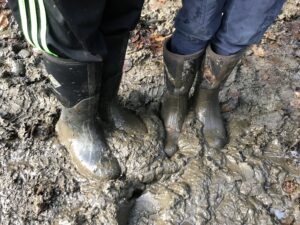
Bethel had significant rains the day before I arrived so the trail was, let’s say a little muddy. But students had already built a few bridges and worked on some erosion control in the previous days. The slick trail did not slow down anyone. With mud boots on, students sprinted effortlessly up the trail.

Our first stop? One of the campus campsites.

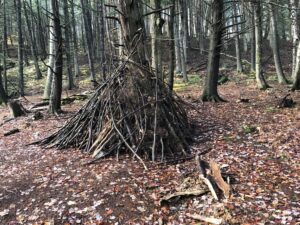
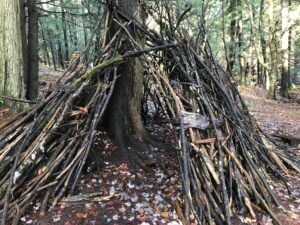
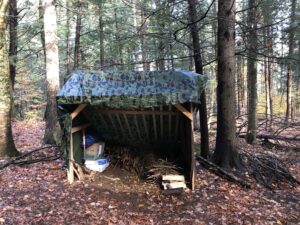
A shelter made of sticks and tarps stood prominently in an opening in the thick pine forest. “We built that!” yelled a student, pointing proudly.

Do you know where you are?

WRVMS students are mapping the boundaries and trails using emerging orienteering skills. And that was part of the task for today. “260 degrees, 31 paces,” shouted one student. Bonna nodded an acknowledgement, jotting the data in a notebook.

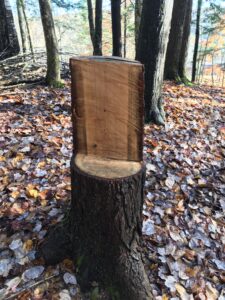
Two students became my guides. They named every type of tree by their bark alone, as the leaves are a bit scarce this time of year. They showed me all the benches students had made with hand tools out of downed logs. It seemed they knew every square inch of that space like the backs of their hands. But most noteworthy was the students’ ability to share their knowledge with confidence. I consider myself something of an outdoor enthusiast [Ed Note: Scott is, no lie, a competitive whitewater kayaker] but I could not compete with this group.

Second visit: Let there be… FIRE.

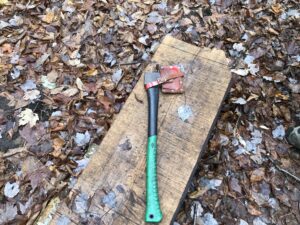
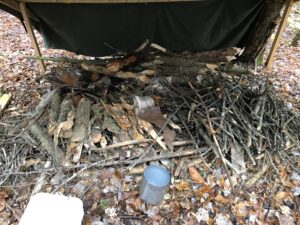
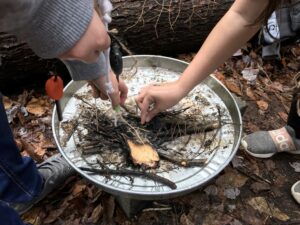
My second trip up the trail? This new group of students had a very different focus. We were there to kindle fires. Students carefully carried axes and fire-starting materials through the coolness of the morning and into the dense forest. A small shelter held dry firewood organized by size. The students had been gathering materials for days. The group all had their assignments. “We’re building the fire,” said one student, pointing. “I’ll cut wood, you crack acorns.” Over by the fire, two students were organizing their materials with surgical precision. “When it lights,” said one, pulling her hair into a ponytail,  “we need to be ready.”

Fire n’ Fluff

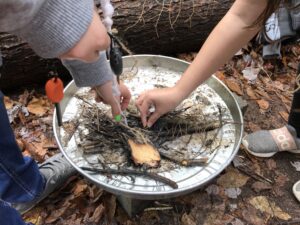
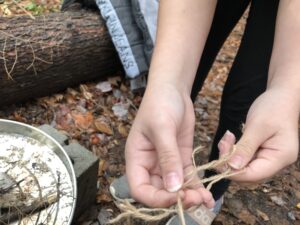
When I heard “fluff” I thought “marshmallow sandwiches”, but I admit I was hungry. Fluff, is when you take tiny strands of twine and pull them apart. Then strips of birch bark. Followed by mouse tails. Not real ones, just tiny sticks that look like tails.

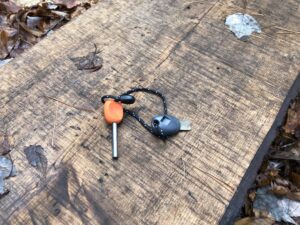
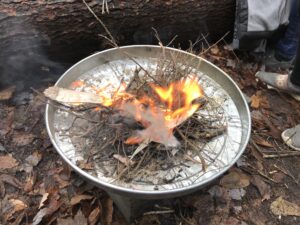
A pair of girls made a bird nest of materials. Then they grabbed the flint and striker. A few strikes later and boom: fire time. “WE DID IT!” shouted the students. Fist bumps all round. And I was impressed!

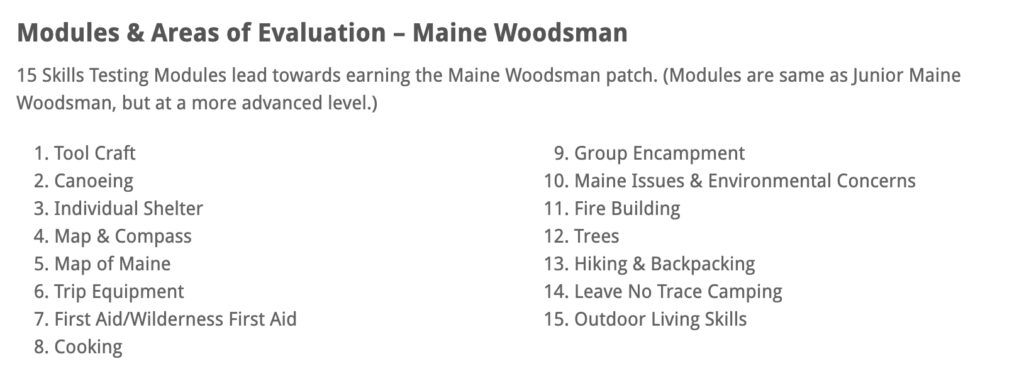
Maine Woodsman Curriculum

Much of the curriculum for these activities have been adopted from similar programs in Maine.

What contributes to the success?

Not many great things happen in isolation or by accident.

First, as mentioned earlier, the elementary school has a strong outdoor program starting in kindergarten. Kindergarten in the woods. Bethel has been using the natural environment as an extension of the school for several years. Educating Children Outdoors or E.C.O has been part of the school as well. Here’s their letter to parents. The school also partners with the North Branch Nature Center to provide training and support.

Additionally, as we all know local partnerships are essential to the health and sustainability of any programs, Bethel partners with Project Learning Tree  and the Four Winds Nature Institute.

A second factor in the success of this program is highly qualified and passionate educators. Bonna Wieler and Melissa Purdy are two such shining examples. Their experience, training, guidance and leadership are essential. Many other educators in the school have participated and have been trained as well. Trained staff is a key to sustainability.

Lastly, what happens in the woods in not in isolation to the classrooms or curriculum.

“It’s where we bring the indoor subjects into the outdoors,” says Melissa. The programs work symbiotically with benefits happening in both places. For example, Lindley (Design and Technology Educator) and Bonna also have a vision of using the resources/wood from the forests to make products in the WRVMS Shop. Keep it local!

What’s the purpose?

For a full version of the desired outcomes please see here

We will:

  • Increase confidence and self esteem
  • Build empathy and resilience
  • Connect with student’s need for movement
  • Reduce stress
  • Be an extension of the classroom
  • Promote creativity and imagination 
  • Play
  • Teach about the natural world and understanding the science involved – the way to grow good stewards of the earth, to develop attitudes and skills to preserve and care for the environment.
  • Help students gain the knowledge, skills, understanding and experience necessary to make informed decisions about our environment.
  • Facilitate connections with elders in our communities to enhance student learning and enrich elders’ lives as they share their knowledge and caring of the Upper Valley, passing on their experiences and expertise.
  • Model and teach the protection, restoration, sustainability and stewardship of the natural systems within our communities. 

Other benefits:

Here’s what students have to say as just one more testament:

“When I’m outside I feel alive”

“The outdoor setting gives me a space to breathe and just be me”

“This is where I feel I’m at my best”

“My family history goes back generations, so it is important for me to protect this for future generations”

What Orleans students want you to know about student voice

On this episode of The 21st Century Classroom:

It makes me happy to come to school every day, because I show up and I’m like, I know I’m able to do this because I changed the way it was. Like I’m happy that I feel like I’m being heard, like appreciated.

Today we’re going to listen in on a conversation between three students from Orleans Elementary School in Barton, Vermont.


I had the honor of interviewing these students in a very open-ended format that starts with the question “What do you find meaningful about school?” and lets it flow from there. These students talk about about the importance of community, the empowerment of student voice and choice, and offer some brilliant insights about how and why schools can adapt to serve the needs of so-called “troublemaker” students.

Before we start, a little bit about Orleans Elementary School.

It’s home to 125 students from kindergarten to eighth grade, with grades 5-8 considered the middle school. It’s nestled in the part of Vermont referred to as the Northeast Kingdom, within a few miles of the clear cold deep waters of Lake Willoughby. The middle school sits on the second floor of the two story building, with math taught by Shannon Laliberty, science taught by Sarah Hisman, and humanities taught by a two-person team of Andrea Gratton and Kyle Chadburn. These teachers have worked hard to move toward personalized learning practices such as project based learning and increasing student voice and choice.

Personalized learning does not mean individualized learning, though. While you are listening to the conversation, consider this question: How do students see relationships and community as keys for supporting personalized learning? 

Annabelle, an 8th grader at Orleans Elementary School.

Annabelle: I guess I can go first. The most meaningful thing to me about school is probably like, community? Because I feel like I learn better knowing that there’s people there for me? And like, who will help me if I need some help or I don’t understand something. It’s nice. Like, academics are what you’re there for, but it’s nice to have a support system and people that you know you can go to if you have trouble with something.

Braden: One of the things that I find really important is being able to work at your own level. Because you don’t want to be stuck back with things that you know how to do? But you also don’t want to be way ahead of what you know how to do.

Bianca: I think that what’s most important is like… what Annabel said? It’s that you know that there’s people that can help you when you need help or something? When you need to talk to someone or something. I feel like that’s a nice part of it, yeah.

Life: I’m hearing two different things. Help me understand it. Are they in opposition or is there a way they go together? Because Annabelle, you said ‘community’ and ‘working with other people’ — and Bianca, you said that too — but Braden, you said being able to go ahead or behind sounds like individualistic to me. Do these things not go together or what? 

Braden: They can go together. If you’re working at your own level, you may still need a little bit of help understanding something, and if you don’t want help, then you don’t need help, you can just go by yourself.

Annabelle: Yeah. I feel like it’s nice not always having someone like, *there* with you so you can be by yourself and it’s nice that you can go at your own pace. But it’s also nice to know that there’s always going to be someone there if you need to step back and get some help. Or you don’t know exactly what to do. You are an individual but there’s always someone that you know is going to be there for you if you really need it.

Bianca: I like that we can like… we can be independent and we can do stuff by ourselves? But like, there is someone that you can meet to get help from.

Life: Does ‘community’ mean something other than just getting help from somebody with your learning? Are there other ways that you see community in schools being important?

Braden: You can get support from your community, but community will also not only help you, but it’s possible that they’ll try to stop you from doing something that you want to do. Community can be good, but it can also be bad if the community you are around isn’t good.

Life: Yeah I’m gonna need an example.

Braden: I’m talking about a classroom community. You’re in a class, right? And there’s always going to be those couple of troublemakers in your class. And some people will choose to listen to them and it’ll hold them back. Because they are around a good community, they’ll hang around these people that misbehave, then they’ll start misbehaving, then that group sort of grows. And as it grows, there’s less people that will actually behave and listen.

Annabelle: I feel like it’s… another thing that’s for community in school is not just like teachers and students, it’s like students and students. I know that I don’t always need to ask a teacher a question because I know that there’s going to be like, “Oh, I know this kid’s really good at science.” So, since the teacher is busy, I’m going to ask [that student] my science question because I know he’ll help me.

And then also, I feel like teachers are part of your community because when I come into class, they ask me questions like, “Oh, how was your basketball game?” or “I heard that your brother had a concert the other day, how was that? How’s your weekend go?” And it really makes you feel like, welcomed and that they actually care about you. So that’s nice to know that they care about you. That’s community for me.

Life: Is that important for your learning? Or just for like… just feeling good about stuff? ‘Cause I was a math teacher and I definitely knew other math teachers who just say, ‘You know, math is math, and we got to know the math. We’re going to focus on the math, and I don’t necessarily have time for a lot of soft stuff and that kind of thing.’ So, are you saying that when your teachers know you and care about you, that helps you learn? 

Annabelle: Yeah. I feel like because I feel comfortable around them because they know about me and they are curious to know about me, that I feel comfortable asking them questions or telling them stuff that might be preventing me from learning? Like if I go through something that’s like really frustrating or rough, I feel like I can tell them. Because it might be stopping me from learning. Like, if my pet died and I was really upset about it, and I couldn’t focus because I was just thinking about it. I feel like I could tell them about it and they’ll be able to help me and be like, “Oh, it’s okay, we’ll just figure this out and then I’ll help you focus back on your learning.”

Braden: No matter who you are or when you walk through the door, they’ll ask you a question like, what Annabel was saying like, “How was the basketball game?” and stuff like that. I’ve seen them do it to every student.

Bianca, a 5th grader at Orleans Elementary School.

Bianca: Like, in the morning, not when we’re in class, but when we’re outside about to go in? Someone will always be like, “Hey, how was your weekend?” Or “Good morning.” It’s always just good to feel that way, get a good start of your day. 

Life: That’s cool. Are there other things that happen to help community happen other than just teachers going out of their way to check? Are there certain things within school that you feel bring you together as a community?

Annabelle: We do have Town Meeting. Which is basically when we all come together, all the middle school, and the middle school teachers. And we talk about what’s going to happen for the afternoon — because we have afternoon activities about team-building and stuff like that. And we give the teachers suggestions on what we think should change, and–

Braden: –there’s recognitions. 

Annabelle: Yeah, recognitions. We talk about recognitions where they… students and teachers can recognize you for something. So, a week or two ago, there was a kid who recognized someone else just for like holding the door open and just always being kind to them. And so they recognized that. After that, the kid steps forward and everyone claps for him and stuff like that. It’s really nice to feel like everyone can see the good things that you’re doing? And it feels nice to be noticed by everyone.

Braden: Well, also in Town Meeting, we have privilege of the floor. Basically, you go up share whatever you want. And it could be something like: can we try this out? It’s nice to have your own voice in the community as well. Because those ideas will be brought up to Miss Hastings. Then, a couple of students will go talk to her about it, and then we’ll see if it works. We’ll do our trial period, and sometimes it works and sometimes it doesn’t.

Annabelle: Like, we used to have a no-gum rule? And a lot of students talked about it, and shared how we wanted to have gum in school again. Because we thought that we were responsible enough to take care of it, and throw it away and be appropriate. So, we talked to the teachers about it, and then they said, ‘Well, get some information together, and then talk to the principal’. And so we talked to the principal, and we shared our feelings and why we thought it would be different this time? And we ended up getting a trial period, and after the trial period, we still are allowed to chew gum in the middle school now.

Life: Whoa. Seriously? That happened this year? 

Annabelle: Yeah. That happened this year.

Life: Nice. So, do you think that student voice is big here? And why is that important?

Annabelle: Student voice is definitely big here because we have changed a lot of things, because not only with Town Meeting, like our classroom, some of our classrooms upstairs, we have couches and beanbag chairs and stuff like that because the students *voiced* that comfortable seating would help us learn. So we helped design and changed all that.

It makes me happy to come to school every day, because I show up and I’m like, I know I’m able to do this because I changed the way it was. Like I’m happy that I feel like I’m being heard, like appreciated. I feel like, I come in everyday — like I’m proud the rooms changed I’m like, now everybody gets to have a good time, and sit on the beanbag chair and read because my class decided that we wanted to change this thing. It makes a better experience because of something that I said and the teachers listened. 

Our last project was about community and we designed our own spaces of how we wanted the room to be and then we picked out the materials we wanted to have. We saw what we could reuse and change? And we created a new learning space for everyone and we researched for a while for it to figure out what would work best for our class, for the rest of the class, for the rest of middle school. And like what would work best to help people learn as well, so we made sure that there were tables, so people could work and sit and there were comfortable sitting spaces where people could read or talk, discuss, kind of thing.

Braden, a 6th grader at Orleans Elementary School.

Braden: You… come to school knowing that you help changed, improved something. But what else is important about student voice is, things aren’t just going to stay the same forever. Things are going to keep changing and improving. And if things just stayed the same forever? Most people say they don’t like school because it’s boring, because they do a bunch of learning and don’t get to have fun. You really come to school to get educated. But here, you get a lot of student voice. So you shouldn’t come to school thinking, ‘Oh, I’m going to have to sit down and listen to the teachers all day.’ I get to talk to the teachers and see what I want to change, and bring it up, and if it gets changed then, yay. but if it doesn’t, I’m still fine because I know that other people can still change things in our school.

But what happens when the needs of an individual are not being met?

What happens when the official process isn’t working?

In our democracy we are supposed to leave room for public dissent and protest. What John Lewis famously calls “good trouble.” 

Life: I’m just wondering how this fits in with the troublemakers that you mentioned earlier.

Braden: The troublemakers, people are friends with them who still behave. But over time, they start actually doing what the troublemakers say, and then they are one of the troublemakers. Student voice. And the troublemakers. If one of the troublemakers tries to change something but nobody else agrees, he’ll keep trying. And he’ll keep annoying people. And they’ll keep bugging people until it gets changed. That could definitely get annoying.

Annabelle: I feel like also because we have student voice, some of that like people getting in trouble happens less often than it used to? Because I’m an older kid and I remember when we didn’t have as much choice. And there was kids that used to get in trouble every single day. Because they are a certain type of learner, like they’re a hands-on learner. And they just get talked at every single day. And so couldn’t learn and so they’d get in trouble a lot.

Now that, like, some of the kids that are troublemakers or that don’t learn the same way as others can voice their opinion? And really change how they learn so they don’t get in trouble as much because they kind of are able to understand better? Because of the way it changed. They would have been happy if that one thing was changed. And they probably wouldn’t have gotten into as much trouble.

Life: That’s so interesting. Because it seems like you two have like slightly different views on it, right? I’m wondering, Bianca, what do you think about this idea of troublemakers?

Bianca: I think that the student voice has made the troublemakers, probably who learn different, not get in so much trouble because they get to change things. They actually get to voice what they want to change. Like what Annabelle was saying, I think that they’ve gotten a lot less trouble than they would because they get to change what they want.

Life: Is this convincing you at all, Braden?

Braden: A little bit, but I still think that sometimes they just do it for the attention. So student voice may have no impact on some of the troublemakers at all because they just want attention. But yeah what they said has changed my opinion on it.

Life: Nice job. That means a lot. Not many people can actually be open and listen, and change when they got something.

Amazing, right?

Engaging in dialogue and allowing your opinion on something to change because of it?

More great modeling of what we hope for in a democracy.

This last exchange also connected with the research of Carla Shalaby. She presents it in compelling terms in her book Troublemakers: Lessons in Freedom from Young Children at School.

Her thesis, drawn from intensive observations and extensive interviews with elementary students, is that we have a lot to learn from students who don’t fit well with school. That they offer insights into how we could transform schools into more humane and democratic environments. It is a powerful and influential study that is well worth reading for educators of all grade levels and roles. At the end of her book, Shalaby adds a letter to teachers. It’s titled “On teaching love and learning freedom.” In it, she says:

“These are times to remember our power as teachers. In no other profession do people have the opportunity to literally create a parallel world – a world that is safer, fairer, freer. The four walls of your classroom can be the world we want, hope for, dream of, rather than the world we have now. It can allow children to practice the skills they need to create and to sustain a place where people are neither shunned nor labeled; a shared, public space in which every community member is treated as a free person, an invaluable person, a gifted and good and loved person.”

Annabelle: I feel like it’s kind of… it’s their job to teach us, but also, it’s our job to learn kind of. Snd if you don’t really listen to us, we’re not going to want to learn from you. Snd we’re honestly probably not going to like you. If you give us the opportunity to try feedback, we’re more likely to listen to you and… we’re more likely to respect you a lot. I respect my teachers a *ton*. Because they listen to me and they make me feel like I’m important and I’m a good human being. So I feel like I respect them a lot and they’ve really like changed my life. Because they let me… say what I think.

Braden: It’s kind of like you respect my opinion and I’ll respect you, in general, because if our opinions don’t get heard like Annabel said, we’re probably not going to like you. If everything is decided by students though, then school wouldn’t be school. It’d just be: you sit and play on phone all day.

Bianca: I think that teachers should think about it like this way: so, if you have a student voice in your school, then it’ll most likely make it easier for you when you grow up because you feel like you can put your ideas out there.

Annabelle: Also, like think of being in our spot, like how great it would feel for you if you were our age and you were able to like change something about your schooling, like if you had one thing that you want to change, and you are able to change that, that would feel really cool and really good, and they might like affect your whole experience. 

Just thank you, literally. Because, before, it was really difficult to learn, so thank you for trying. Like, even if you’re going to get there and even if you’re like you’re trying to figure it out right now? Like thank you for trying and thinking of us. Because it’s really helpful, and yeah. 


Narrator: The 21st Century Classroom is the podcast of the The Tarrant Institute for Innovative Education at the University of Vermont. This episode about student voice was produced by me, Life LeGeros. Huge thank you to Annabel, Bianca, Braden, and their teachers at Orleans Elementary School. Our theme music is “Sunset” by Meizong and Yeeflex, the Argofox release. The series producer is Audrey Homan. Thank you for listening everybody, and don’t forget to make some good trouble out there.


The powerful practice of documenting learning

documenting learning

How do we know what our students know and can do?

What, when, and how are we asking them to show us?

In recent conversations with my colleagues, we’ve been considering shifts in assessment required of us in proficiency-based education. Now, let’s explore how to put those shifts into practice.


When we consider those shifts, a theme emerges. We begin to see students involved in the assessment process in meaningful ways. Leading me to wonder: how do both students *and* teachers know a concept or skill is learned or mastered?

The power of documentation

Let’s explore one of these shifts. How might teachers create conditions for the ongoing gathering of evidence of learning in a digital portfolio or personalized learning plan?

Angela Stockman, educator and professional development provider, asks, “ How do we truly know what our students know? Dissatisfied by the potential for quantitative data alone to address that question, many of the teachers that I support have begun embracing documentation for learning.”

Among the advantages she describes, are the following:

  • Students and teachers have the opportunity to study why and how learning happens rather than merely evaluating the product of it.
  • It’s easier to weave feedback loops through the experience, increasing the likelihood that learners will reap the greatest rewards from the assessment process.
  • Capturing a wider vie]ew of learning invitees teachers and students to discover the unexpected and form hunches and theories that testing cannot inspire.

Note the active role students play here.

What might documentation look like in practice?

Special Education Functional Life Skills Teacher Kelli Ohms shares How I Use Seesaw to Create a Learning Journal in my Classroom. Documentation using Seesaw increased motivation. “Students can independently see their own progress. Now that they have several months of posts in Seesaw, they can look back and see how they are improving; they say, “look how I did today? It’s better!”.”

Ohms built student documentation of learning into classroom routines. She reports “At first, my biggest challenge was teaching my students to add items independently, but now they enjoy adding new items to their journals, and even request to post unprompted!”

Documentation as learning

Janet Hale argues the act of documenting learning is indeed a mechanism for learning. Documentation as learning focuses on the process of learning using metacognitive thinking.  “Documenting learning is a shift from the traditional documentation of learning, which focuses on the end product, to documentation for learning and documentation as learning (Making Thinking Visible by Documenting Learning).

Shifting to documentation for learning

Over in her 5th grade class, Melissa Anders Thompson values documentation as a means for students to take more ownership. Because of this, when her school adopted a “bring your own device” policy, she added new weekly classroom jobs. You guessed it. One is the Documenter.

“This summer I read, Who Owns the Learning by Alan November. In his book, he talks about the Digital Learning Farm, and how by giving student’s jobs within the classroom that are integral to the learning, they will take more ownership of their learning and become meaningful contributors to the class culture. The Documenter captures the learning happening in the room and in the school. They take pictures and videos of important learning. This is great practice for when we launch our Student Blogs.”

Documenting outside-of-school learning with digital badges and micro-credentials

Informal learning opportunities can be rich interest-driven experiences for students. Yet, that learning often goes undocumented outside of the context in which the learning occurs. In Digital badges in afterschool learning: Documenting the perspectives and experiences of students and educators authors Davis & Singh argue digital badges can increase the visibility of learning pathways in informal and out-of-school learning. This gives learners a sense of control and ownership. “As micro-credentials documenting specific skills and achievements, badges are well positioned to highlight the intermediate phases through which individuals pass as they deepen their expertise in a domain. By documenting where learners have been, badges can signal where they should go next.”

Vermont middle level educator Don Taylor uses micro-credentials to help students document progress through self-paced learning. When collaborative committee work ends, students can opt to work toward their Climate Change badge. Students earn certificates for completing levels. These certificates of progress get displayed on their PLP portfolios.


Portfolios fall short without documentation of progress

As educator Allison Zmuda says, “The simple act of having digital portfolios for your students doesn’t necessarily mean they are working. The learners need to own them and see benefits for #documenting4learning.”

And we couldn’t agree more. Learning more about documenting for learning with this excellent book A Guide to Documenting Learning: Making Thinking Visible, Meaningful, Shareable, and Amplified by Tolisano and Hale. And consider following the #documenting4learning hashtag.

How might you begin introducing documentation as a key component of your assessment practice?

How to use data to inform progress

Joel Vodell, Unsplash

Involve learners with actionable data

Wondering how to use data to inform progress for users in proficiency-based education? Assessment provides both learners and educators with data. One of CAST’s Top Ten Universal Design for Learning Tips for Assessment  is involving learners in their learning progress through assessment data:

“Communicate with learners about their progress towards the intended learning goals through formative assessment data, mastery-oriented feedback, and providing guidance for possible adjustments or new strategies that may support the intended skill. This allows learners to become active advocates and take ownership their learning.”

These questions provide an effective guide for educators:

  • Have I offered timely, goal-related feedback on the assessment?
  • Have I offered learners the opportunity to assess individual learning progress and process (for example, through regular check-ins)?
  • What about sharing options, strategies, and background knowledge needed to build the necessary skills and expertise for achieving the targeted learning goals?

How can we involve students in formative assessment so they can be empowered to take next steps?

Technology allows us to build assessment opportunities with our students. And those opportunities generate data. Students can then make informed decisions about how to move forward. Let’s look at some ways technology can help us answer the CAST questions.

Have I offered timely, goal-related feedback on the assessment?

Consider Google Forms. A form can become a self-grading quiz providing instant feedback that allows for review, reflection, and retakes.

My colleague Scott Thompson walks you through how to set up a Google Form quiz so students get both immediate feedback and resources to learn from on each answer they select.

Have I offered learners the opportunity to assess individual learning progress and process (for example, through regular check-ins)?

Padlet is a versatile tool for assessment purposes, especially when learners use the KWL template  (Know, Want to Know, Learn) to track their growth. Ask students to create a Padlet during a project or unit. Build in routine times for them to update it as a means of tracking progress.


Check out this how-to create a KWL chart video to create your own.

And, Common Sense Media provides some sound advice about how to make formative assessment more student centered.  “To unlock formative assessment’s full potential, go beyond the bar chart and get students to reflect on their own progress, areas for growth, and next steps. In the end, it’s not the quiz that counts but the thinking that happens after.”


Have I shared options, strategies, and background knowledge needed to build the necessary skills and expertise for achieving the targeted learning goals?

I’ve written about one of my favorite edtech tools Nearpod in the past. Nearpod invites learners into active participation with content. The power of this tool lies in the ability to easily include formative check-in activities in content delivery directly. And, the results are easily shared with students – data that then the class can act on. 

Want another example in practice? Consider using Nearpod to introduce peer instruction as a collaborative learning strategy so students can receive immediate feedback on developing concepts.  Interested in more?  Pedagogue Padawan offers other similar technology tools for peer instruction and peer critique . He shares his search for tools that allow sharing student responses with all students in the class.

Consider where you are on the continuum

The folks over at Ed Elements share a helpful continuum on how teachers can move toward adopting effective formative assessment and data-driven decision practices:

  • Getting Started: “Teacher uses formative assessments to check for student understanding”
  • Going Deeper: “Teacher shares data with students on a periodic basis; students review their data individually.”
  • All In: “Teacher uses data to provide immediate feedback to students; teacher and students consistently review data together to identify needs and teacher adjusts instruction accordingly.’

Teachers can harness the power of technology to generate easily shared data to help all learners grow. Want to know more? Visit our Formative Assessment Toolkit. And check out these 75 Digital Tools and Apps Teachers Can Use to Support Formative Assessment in the Classroom

#vted Reads: Dreadful Young Ladies, with Sarah Birgé

Jeanie Philips (l) and Sarah Birgé, with a copy of Dreadful Young Ladies and Other Stories, by Kelly Barnhill

Listeners: how do you talk to your students about the special love that exists between a woman and a Sasquatch? Or between an insect and a robot-powered building? And where and how do you determine which texts are appropriate to give to students?

On this episode of the podcast, I’m joined by Sarah Birgé, a lifelong Vermonter and English lit teacher in the Montpelier-Roxbury district. We’re talking about Dreadful Young Ladies and Other Stories, by author Kelly Barnhill.

We’ll share our favorite moments from Barnhill’s collection as well as other collections of stories we’ve used with students, and our love of low floors and high ceilings. Come for the mysterious love affairs, stay for the power of short stories and how they can help students find entry points for talking complex concepts and issues!

I’m Jeanie Phillips, and this is #vted Reads. Let’s chat.

Jeanie:  Thanks for joining me, Sarah. Tell us a little bit about who you are and what you do.

Sarah: Thanks, Jeanie. Glad to be here. My name is Sarah Birgé, and I’m a Vermont native. I was an English teacher for about a decade. I’ve also worked at the Agency of Education as our State English Specialist, and I’m currently an instructional coach at Montpelier-Roxbury Public Schools, and a lifelong reader. So happy to be here.

Jeanie:  I love talking to readers, and this is my favorite question to ask. What are you reading right now?

Sarah:  I thought about this on the way in, and it’s a slightly longer answer because yesterday I just finished a book called The Water Dancer by Ta-Nehisi Coates. I was lucky to get advance copy. It’s not coming out till the end of the month, which made me feel very special. It’s a crazy book that combines historical fiction and sci-fi. Strongly recommend! A very powerful book.

Then yesterday, I started a new book which is part of the Rivers of London series, which is another wonderful, fantastical detective fiction by a guy called Ben Aaronovitch, who used to write for Doctor Who. Very much having like a fantasy, sci-fi moment of my reading.

Jeanie:  Thank you. Let’s talk about this book! I don’t know that I would call it fantasy, but it’s on the ghosty side.

Sarah:  I mean some of the stories are a little sci-fi here and there. It’s definitely a genre mishmash.

Jeanie: It’s a collection of short stories with one novella at the end, full of really unconventional female characters, even the title, Dreadful Young Ladies and Other Stories clues you into that. This was a title you selected, and I’d like to know why. What do you love about this collection?

Sarah: Well, the thing that attracted me to the book was the title. I was like, “Dreadful Young Ladiesthat sounds like Victorian.” I’m like, “What’s happening?” It’s going to be interesting, and about female characters. I had actually never heard of Kelly Barnhill, who is pretty famous YA author. And I love the cover! I know you shouldn’t judge a book by it. But as soon as I started reading, I was hooked because like you said it’s unconventional female characters.

Dreadful Young Ladies, by Kelly Barnhill (cover image)

I love things that play with genre, and this is really like a lot of the stories you think you know where you’re going, and then it takes a sharp left turn. I think I read it if not in one sitting then very quickly. It’s a really engaging book.

Jeanie: Let’s talk about some of the really unconventional characters in this book. It’s hard with short stories because you don’t want to give too much away.

Sarah: I know.

Jeanie: I feel like we can give *a little* away, though. I’m going to start with one of the stories I fell for was called “Open the Door and the Light Pours Through”. It begins as letters between two characters, Angela and John. I think John is off “at war”. Angela has left the city to go to his mother or something. It’s not entirely in letters, right? Because there is a letter and then there’s what’s going for real, which is so intriguing because they are love letters and then there’s the stark contrast with reality. Shall we read a little piece of that?

Sarah: Sure.

Jeanie: It starts on page 33, but you can choose any selection from that story. I’d love to get a letter and then also what’s really happening.

Dreadful Young Ladies, by Kelly Barnhill, p.33

Jeanie: Hmm… There are so many layers to this story. I thought of it as the perfect mentor text for students to write short fiction that is letters? And then what’s really happening.

Sarah: I loved the — I think I’m going to pronounce this right — the epistolary novel. I was a big Victorian literature person in college, so I love any idea of a novel that’s letters and the reliable narrator. This took it where you have some *unreliable* narration and some reliable narration. I think it would be a really good mentor text, also, for things like point-of-view and author’s voice, and even the idea of a narrator. I could see that.

Jeanie: Meaning that in this story, we have two narrators in their letters and then we have this…

Sarah:  Like the omniscient narrator.

Jeanie: The omniscient narrator as well.

Sarah: Right.

Jeanie: Three different points of view in the story.

Sarah: Also, how do you trust the narrator? Who do you trust? When it’s letters, I think we’re so used to just generally like the omniscient narrator is pretty common in a lot of the books that we read and the kids read, but when you get a letter, you have to remember that people don’t always tell the truth.

Jeanie: It turns out John’s not entirely being faithful. Our Angela is not entirely drawn from accuracy either in her letters, right?

Sarah: Which I think you would need a kid who had either a solid understanding of narration and point-of-view and things like that, to understand the author is playing with that here. I think it would might be a challenging text for somebody who is already maybe shaky or didn’t have a grounding in some of those things. I don’t know. Or would you just let a kid jump in? Even if you didn’t know if they really understood what it meant to be a narrator?

Jeanie: Hm. Those are good questions because you could take it either way. It’s discovery, or it’s  scaffolding. It reminded me when I was a school librarian, a lot of students really love ghost stories. Many of these have that supernatural or mysterious element that a good ghost story has. It made me think of Mary Downing Hahn, who’s written so many books that kids love, that you’re like… it takes a while for the reader to figure out what’s happening. Then I also thought of Neil Gaiman’s book, The Graveyard Book .

Sarah: The Graveyard Book. It’s a graphic novel and a written novel I think, right?

Jeanie: You are probably right. I’ve only read the written novel. It was one of my very favorites and one of my students’ very favorites for a long time. But I love that it could be available in graphic novels as well.

Sarah: I think The Graveyard Book would actually be something you could use as a primary text, potentially. I think ghost stories, everyone loves that. Like, that’s what you tell around the campfire. They’re fun. And it’s also a safe way to be scared, you know? It’s scary, but it’s a book. You can put it away or you’re reading it in the daytime in the classroom with you teacher. I’m a big proponent of things like that for kids.

Jeanie: So many times I thought of that when I was reading this book. They’re not quite ghost stories, but there’s a little magical realism. And there’s a little supernatural element. There’s a little quirk, a little turn of the screw, if you will, that makes you think a little. That makes you think differently.

Sarah: I’d love to know what are Kelly Barnhill’s top ten stories that she loves, or top ten favorite authors. I don’t know if I always think that when I’m reading something, but here I was like: I wonder what ghost story she likes. What do her bookshelves look like?

Jeanie: Listener, we are going to tweet at her. We’re going to find out. We’re going to find out what Kelly Barnhill likes to read. And we’re going to talk further about her as a writer, but let’s dig into these a little more. So, another story that I found myself really smitten with was “Mrs. Sorensen and the Sasquatch”. Mrs. Sorensen becomes a widow and she takes up with this Sasquatch in town. The animals, all the animals flock to her, so she goes to church with a whole pew full of animals. And the narrator, in that case, is the minister.

Sarah: Yeah, he’s like the kindly, old priest of the church that she’s bringing these animals to.

Jeanie: And people are drawn to her and perplexed by her. And she seems to like it that way.

Sarah: As it went on, you’re talking about unconventional female characters. She’s described as very beautiful. She’s the pretty widow. She’s so talented. She smells really good. And all the men love her. Then as it goes on, she realized that some of her qualities are other-worldly. Like, she’s not just pretty. She’s not just interesting… she can talk to animals, maybe. Again, with a lot of these stories you start off and you think it’s one way, and then as it progresses, it’s another way.

But because it’s the narration of the priest, you get to see all the different range of reactions to her because some people really don’t like her. There’s these three sisters who are busybodies, and they really *dislike* her. It made me think. So I’m an animal lover. Anytime someone says they don’t like animals, you rarely hear that. To me, that’s a big red flag. The story is about the opposite of that, like what happens when you really, *really* love animals to the extent that you fall in love with the Sasquatch.

Jeanie: Right. As absurd as that sounds.

Sarah: And my favorite detail there is that the Sasquatch, he wore shirts but not pants. He’s very furry so that’s okay. And the fact that he’s not wearing pants horrifies people. That’s the kind of detail that I can see really being very funny for an older kid.

Jeanie: It felt to be a little bit like a fractured fairy tale and that it was a bit Beauty and the Beast-ish, but the beast stays a beast. She loves him for who he is. Very playful and serious at the same time. I had a hard time sometimes knowing whether I was allowed to laugh or not! And then I just did. Then there’s another story, a longer story, [“The Insect and the Astronomer: A Love Story”], where the main character is an insect who wears a waistcoat.

I guess there are two main characters in that one. And the other is an astronomer, who may or may not be alive, who builds automatons, including the whole building is an automaton.

"The Insect and the Astronomer", by Kelly Barnhill. From Dreadful Young Ladies and Other Stories

Sarah: Right. I thought that was the weirdest story in the whole collection. I think the first time I read it, I just read it purely. And I was attracted more to the other stories. Then when I reread it in preparation for this, I was thinking through that lens of: well, how would you use it with students? That’s one that I maybe wouldn’t necessarily use with students because it was so out there. It’s a love story, kind of, between a grasshopper and a maybe-robot.

That one to me, that was definitely set on an alien world, right? The other ones are in maybe a world like ours where there’s a maybe little magic or this or that, but that, the grasshopper and the astronomer was definitely an alien world. It was just — it didn’t resonate with me as much. What do you think about it?

Jeanie: I think I thought of it as a fairytale world. I think where it really hit me that it was a fairy tale is when the grasshopper is on this pilgrimage. I actually am not I thought of him as a grasshopper. Is it called just the grasshopper? The Insect.

Sarah: He’s just the Insect.

Jeanie: The Insect and the Astronomer, but he has wings. We know he has wings tucked under his waistcoat. He’s a very proper insect.

Sarah:  They described his body a lot, or hers. There was a lot of wings and the waistcoat, and how he puts clothing or an insect body.

Jeanie: The thorax, the various parts. The Insect goes on this pilgrimage to find the Astronomer. He’s feeling called to the Astronomer. The Astronomer’s calling. I guess that’s why he called it a love story to the Insect. When the Insect arrives in the town, a farmer feeds him lunch but then scatters off. “Here, you can have my lunch, but I want nothing to do with your kind,” kind of thing.

And then the Insect is taken into the house of this old couple. And it started to feel a little Hansel and Gretel-ish. I will say no more, but there was this moment of, like, “Oh, we’re in a fairy tale!” That’s when it occurred to me, “I’m in a fairy tale.” Instead of an alien world.

Sarah: I went to like, “Well, this is clearly sci-fi,” like I’m visualizing the world. You’re right, it is more of a fairy tale.

Jeanie: It’s the waistcoat, really.

Sarah: It was the waistcoat, yes. It also felt like a love story to me. I was like, “This is an unconventional love,” but in keeping with the unconventional female characters. There is a lot of unconventional love in this. I think I’d be fair to say that that’s a theme of the collection. I think that’s also great for kids because how many love stories are just a boy and a girl, and a boy and a girl, and a boy and a girl and to explode the notion of what love or what romance can be is I think good for all kids to see.

Jeanie:  I love that. A relationship between a maybe-robot astronomer and an Insect is–

Sarah:  It’s also fine.

Jeanie: — is also fine.

Sarah: Or, a woman and a Sasquatch.

Jeanie: So, let’s dig a little deeper into all of those exploded notions about the norms of being a woman. And so this story, which is early in the book, just intrigues me. I love this notion of not only exploring with kids the different ways you can be in love, through story, but also the different ways you could be male or female, through story. On page 65, the story begins, “It was easy enough to lose a child by accident. To do so on purpose turned out to be nearly impossible.”

What an intriguing beginning, right?

Not only does she want to lose a child, which flies in the face of all things we think about being womanly and motherly. And so I’m wondering what other stories or even how *that* story helps to explode or explore some assumptions that we make about gender, about humanity.

Sarah: Yeah. Well, I think that also goes back to the fractured fairy tale metaphor that you drew. Sorry, Audrey. I’m going to do that over. I think that goes back to the fractured fairy tales analogy that you drew, where there’s some women in this collection who are evil, they’re bad. They’re the witch. They’re the wicked stepmother. But then there’s women who have those powers who aren’t evil, who use them for good.

Then you have women who might not be evil *witches*, but they’re not necessarily good, or they’re not maternal and it’s an explosion of these really standard tropes that we still see all around us, all the time. And so even though if you’re going to explode those stereotypes, you’re going to get some bad women out of it. So it’s almost like this shows the whole range of the way that women can be instead of saying, “Well, this is an old evil crone, and this is young mother. This is the romantic figure.” You get everything. You get the whole range of the way that people can be, especially around motherhood. I thought that was really interesting.

Jeanie: They’re complicated, messy characters. In these really interesting ways.

Sarah:  And kids need to see that. Kids need to see characters who aren’t so black and white, or so obvious. I think even younger kids, they can grasp the nuance that like, “This person maybe made a bad decision, but they’re still an interesting character.” Even the story you reference, the woman who wants to get rid of the child, she’s not sympathetic but they do explain the rationale.

Jeanie: Right. Her sister. Her sister?

Sarah: I think this one, it’s her boyfriend’s child. And she doesn’t like the child.

Jeanie: But when she was growing up, she was babysitting her sister. Her sister, well, she was busy making out in the corner, just flew away!

Sarah: Flew away.

Jeanie: ‘Why won’t this kid just fly away? Why can’t I lose this kid?’

Sarah: I think some kids could read that and they could just talk about that. This is a character who might have had some trauma and then they made a bad decision, but they’re not totally evil. Then I think someone else could read it and they could get into the ambiguities of like, “Well, did the sister fly away? Is there really magic in the story, or is there not magic?” I love magical realism but almost more than that, I love stories where you’re not sure if there is magic or not.

Jeanie: I think… a lot readers are like me? And we want surety. What I love is that you’re letting me know one way that we could really use these stories is to explore the ambiguity, is to interpret it in all the possible ways and find all the possible… trajectories, of the story, if you will.

Sarah Birgé

Sarah: I taught primarily middle school. And I remember my students getting so frustrated when I’d show them the multiple ways you can interpret a story. And a lot of people are like, “No, there’s just– what happened? I want to know what happened. I don’t want to be unsure.” Which is in a lot of stories you’re not and that’s totally fine, but I like it when you really don’t know. To me, that’s a much harder trick as an author: to leave the reader wondering at the end.

Jeanie: Well, it certainly doubles the half-life of the story in your brain. I’ve spent a lot of time pondering the stories from this book, because so many of them are open-ended or could be interpreted — like you said about the insect and the astronomer story — either in a fairy tale world or on another planet, the science fiction setting. That leads me to ask: you’ve taught middle school. How would you use short stories in a middle school classroom, or in a high school classroom? I think so often we want kids to read novels, but what does it look like to use short stories in the classroom?

Sarah: I think you’re right that people mostly want to use novels. And I would really push people towards a mix, in part because  there’s so much to teach out there. And especially for kids who are not the speediest readers, which we all know has nothing to do with intelligence or how much you love a text. But some people read more slowly, and that’s fine. Saying, “I have to do these five books this year,” can sometimes really hamstring us.

I know that I’ve had books that I’ve taught that I’m like, “Ugh! This book is going on and on and on.” And short stories can be a great way to either supplement or sometimes replace — because I think especially sometimes stories like this, you can get the same level of text complexity. You can get the same themes. You can dig in. It’s also a lot easier to differentiate teaching with short stories? Than teaching with a novel by and large.

I’ve heard writers say that it’s much harder to write a short story, than a novel. Because you really have to pair everything down. I think they offer a lot of opportunity for play. This particular one? I would definitely be very choosy with middle schoolers and these stories. I think a lot of them, there’s some sexual content, most of it implied or off-screen, so to speak. But, you know, you want to be careful about what you’re exposing kids to. But there’s others stories in here that I would definitely teach with kids.

Some of them I might want to do that as a whole class. Something I love to do is to say to a kid, “Hey, I think you’d really like this. Will you give it a whirl?” And help kids choose texts that they might fall in love with. I think saying, “Hey, will you give this short story a whirl?” is a much easier ask for some kids. You also reference mentor text I think would be so interesting to this as part of the unit on mythology, or gender, or families, or any number of things. And just keep it in your teaching toolkit.

Jeanie: Conformity.

Sarah: Oh! That’s interesting.

Jeanie:  I want to go back a minute because you said so many things that were so interesting and I didn’t want to interrupt, but I am thinking about both differentiation and choice. I’m thinking about what might it look like to give students a range of stories to choose from, so that kids have a choice, right? Maybe they selected small groups, but maybe some kids read a story all on their own.

I’m thinking about that differentiation piece too. That we can choose stories of different interest, but also different reading levels, or different complexity, in order to plan for student readiness. And then I’m wondering about formative assessments. Thinking about it in a proficiency-based system, it’s so much quicker to read a short story and then understand if your students are identifying a theme, or able to summarize a story, or able to pick out imagery, or whatever it is you’re aiming to do with students in a shorter text so you get whether they’re getting it before you dive into a longer text.

Sarah: That’s a great point. You guys can see what I’m nodding really emphatically at all of these. The first part of what said about choice and differentiation? I think that it’s really important to remember that you want to differentiate and you want to give different levels of text complexity, and make sure that kids are reading at a comfort level.

But sometimes you come across something that you just know a kid is going to be so interested in? That it’s okay for a kid to choose something that might be out of their quote-unquote “level” because they love it. I love reading YA! I can read it a much higher level than that, but sometimes I love to read YA.

Jeanie:  Oh, me too!

Sarah:  Right?  I remember I had a Roald Dahl short story that involved cars. I had a student who was an emergent reader and he loved that story that was really not “at his level.” I think choice is so great to remember when we’re talking about differentiation. And short stories are a great way to do that. Then also like you said in the proficiency based system with formative assessments, which I’ll talk about that till the cows come home. *laughs*

You’re right. It’s much easier to say: I need to figure out if this child can identify theme. It’s possible to do that in a short story. It’s much harder to do it with longer texts.

Jeanie: Yeah. It’s a bridge. I love what you’re saying about reading levels because I do not believe in them. I think they can help us find a text that works for a kid sometimes, but we should not limit kids to their “reading level” or their… no. No.

Sarah: I almost think it’s almost more relevant outside of the English classroom because let’s say you’re in science and you need kids to understand, you know, the geology of a volcano. If they’re reading for information, they should be reading at “their level,” but everybody’s different. And if it’s a topic of interest, who cares what your reading level is?

Jeanie:  We’ll all work harder. Let’s think about some of those story collections or stories you might use with students. So, I had one that I read recently that came to mind for me, which was Black Enough: Stories of Being Young and Black in America, by Ibi Zoboi? Which is a collection of short stories by writers of color. And a lot of them are about: what does it mean to be Black? What are all the ways to be Black? I think like this book explodes some conventional thinking or some stereotypes in really interesting ways.

And there’s so many great stories in this collection! There’s one by Jason Reynolds that was so simple and lovely that I just fell head over heels for it. But just thinking about race and ethnicity through that lens of short story, I thought was really interesting. It could be a really interesting book to use with a class. On identity.

Sarah: And like we said earlier, grappling with something scary, be it a ghost story, or challenging your perceptions about race, doing it in a text is a really great way to do it. Because you can do it at your pace and you save space and you can discuss. Is Jason Reynolds also an educator? I feel like I’ve seen him on ed Twitter. Maybe he is also an author, but I recognize that name from ed Twitter.

Jeanie:  Oh my goodness. We love Jason Reynolds here at #vted Reads. He is the author of so many books. Mostly for middle grade students. Some of them also for more young adult audiences and high school audiences. He wrote Long Way Down. He was a co-author on All American Boys. He’s an African American writer extraordinaire. And a huge proponent of diverse and inclusive literature for young adults and middle grade students, and just one of my heroes. I’ve seen him speak and I just adore him.

Sarah: It’s so important. Like, I love the canon. I was an English lit major, but I’m also all for exploding the canon especially in a state that is so ethnically homogenous. Even in schools where there are no children of color, we still need to be reading diverse texts because that’s a reflection about most of the world looks like.

Jeanie: Yeah. Absolutely. What other texts might we explore in this way?

Sarah:  I’ll mention two that I wrote down. I actual referenced one of these earlier, the story about cars. Roald Dahl, everyone’s favorite creepy children’s book author, also wrote short stories for adults. I’ve taught with a couple of them. There’s a variety of collections. Some of them are definitely not appropriate for children, and maybe even some adults would be pretty weirded out by them.

He has a couple that I really like to teach in part because they have pretty complex themes. The one with cars is called “The Hitchhiker”  (.pdf) There’s no violence, no sexuality or anything like that, and the vocabulary and plot is pretty simple? But the themes are complex. I really love that it was like a low floor, high ceiling for kids. I also love “The Hitchhiker because it talks about class. If you can tell what class somebody is because of the way they speak, I thought that really resonated with a lot of our kids. He has a couple of other ones, so I’d encourage you to check out his short stories for adults. And A lot of them are very short, so you can really use them in one class period.

Jeanie:  I wonder if you could, for our listeners, for whom it might be new? Talk a little more about that concept of “low floor, high ceiling”.

Sarah: Sure. This is one of my favorite things. I say it all the time. Low floor, high ceiling — I do not know who came up with this idea but it wasn’t me — it’s the idea of arranging activities, or units, or lessons, or anything you do such that anyone can enter the lesson? But you can make it really challenging.

It’s almost like we’re not just going to differentiate, we’re going to have a full spectrum in our lessons.

A concrete example might be [“The Hitchhiker”] where most kids, even if you were a couple grade levels below in your reading, you can understand the story, which then allowed you to talk about extremely complex themes because we have brilliant kids who might struggle with reading, and a lot of the time they’re cut off from talking about the interesting stuff because they’re reading less complex texts.

I also really love teaching Shakespeare, and I’ve taught Macbeth more than any other text. That would be one where I could have kids who could watch the movie and really understand what was happening… And then discuss complex themes. The low floor easy entry point, high ceiling, it can get very complex very quickly.

Jeanie: What I love about that is that the complexity is not dependent just on decoding.

Sarah:  Exactly.

Jeanie: So I think a lot of times when we read whole novels with kids, some kids get behind. Then we’re discussing things they haven’t read yet and they can’t enter into the conversation and so even just by having a shorter text, we’re lowering the floor, right?

Sarah: Right!

Jeanie:  While we are still able to delve into that complexity.

Sarah: Yeah, you’re maintaining rigor. I don’t want to dump on novels. Like, please read novels. Read novels with your students! But consider other ways, too. Do that low floor, high ceiling. Because too often we equate reading ability and intelligence. And those two things don’t always go hand and hand. I had students who were, like I said, emergent readers who were capable of really complex, critical thought. And they should have access to those conversations.

Jeanie: Right. Decoding and comprehension are two different things. I found the audiobook support for students in reading novels to be crucial for kids who had learning disabilities that made decoding really hard for them? But they were so into audiobooks! And so when I was a school librarian, part of my role was to expand the number of audiobooks we had, so it could support student readers. And to put them on iPads and iPhones and devices so that kids had access to them.

Sarah: Right. I think we get really hung up on like, oh this kid needs to read, and yes, they do, but you really want to make a lifelong learner. If you turn out adults who are listening to audiobooks on their drive to work every day, that’s success. That’s a great way to keep people engage in literature. At the end of the day, you don’t read To Kill a Mockingbird so you can recount the plot blow by blow. You read To Kill a Mockingbird, so you can talk about complex themes. And that’s the end goal.

Jeanie: To develop empathy.

Sarah:  To develop all these. Yes, all the things.

Jeanie:  Peter Langella was on the podcast last year and we talked a lot about reading as a strategy for increasing empathy. We definitely need more empathy in this world.

Sarah: We do. And there’s a lot of research backing that up, too. It’s really important. You do need to understand every single plot point and decode every single word perfectly to develop a sense of empathy.

Jeanie:  To walk around in somebody else’s shoes for a little while.

Sarah: Exactly.

Jeanie:  So let’s talk about some other shoes we might walk around in! Let’s see. I thought there’s a great story collection by Ellen Oh of #diversevoices, it’s called Flying Lessons & Other Stories that I thought I would add to our list. It’s great for middle school. It’s perfect for middle schools, a perfect text collection of short stories that might be of use to our listeners and their students.

Sarah:  I’ve never heard of that. What’s it about?

Jeanie: I’m not sure that there’s a common theme except that they’re diverse authors. So stories from a variety of others that create this middle grades collection from diverse voices.

Sarah:  That’s awesome.

Jeanie: Yeah! Right?

Sarah: The collections are nice, too. It’s nice to have a collection that’s all by one author. When you get collection that’s by a set of authors, it makes it even easier to help students pick or really tailor a story to what you’re working on in a classroom. And then I have one more, which is Sabrina & Corina by Kali Fajardo-Anstine. She is wonderful. I think her short story, “Any Further West”, I believe was one of the first short stories I taught with kids, and one of the first short stories I taught that was maybe not explicitly for kids, but it had really complex themes and also dealt a lot with poverty, which I think is important.

When we talk diversity, being on the stream a lot but it’s important to remember the class diversity we have here in Vermont. When we say people should see themselves reflected in texts, we shouldn’t shy away from stories and books that deal with people in poverty.

Jeanie:  Listeners, you can’t see me smizing at Sarah, but that’s what we call it, smiling with my eyes. I’m nodding my head in agreement.

Tyra Banks demonstrates the art of the Smize: smiling only with your eyes

I love that as a way of talking more about the lived experience of our students and having them see themselves in literature. I’m also just really taken with this idea when we take a short story that’s intended for adults and say to the kids: this is for grown-ups, but I think you guys can handle it. This was written for adults, but you guys are awesome. I think you’ve got this, right? The motivation that brings out in kids.

Sarah:  It’s huge! Something I would also add on to that when I would do this with the kids. I’d say, “This is for adults, so if you don’t understand 100% of this, that’s okay. i don’t expect you to.” Freeing kids up to kind of be okay with not completely comprehending a text. Leaning into that confusion or discomfort.

Because I think children internalize the expectation that when they read something, they have to understand it perfectly or it doesn’t account. I really want to encourage everyone to read things that are hard and challenging, that they don’t get 100%. I think there’s a lot of value to bringing in stuff that might be for adults. Although another thing I thought as I was reading this is you want to be sure that it’s appropriate.

Like, you can definitely read things that are for adults, but there are stories in here that I would not do in a middle school classroom and would maybe even be cautious about doing it in a high school classroom.

Jeanie: Yeah, you need to be choosy. I agree with that. But I love that idea of like, you’re not going to understand all of this, but you’re going to read it and understand what you understand and then we’re going to figure it out together.

Sarah: That’s okay. You know, it’s not an arithmetic problem. There’s not necessarily a right answer to what the theme is, or whether you’re in a fairy tale or on an alien planet. You can have multiple interpretations, and that’s great.
Jeanie: Yeah, it’s art!

Sarah: It’s the mark of a great piece of art if everybody agreed on what it was about would be incredibly boring.
Jeanie: When I was a school librarian, one of the big hits still, maybe it still is, was The Hunger Games. I always thought we should be reading that with “The Lottery”. That that short story–

Sarah:  It has the Vermont connection, too.

Jeanie: Right. There are so much about the premise of The Hunger Games that seems built on the premise of “The Lottery”. And I just thought that would be such an interesting pairing to discuss with students.

Sarah:  I remember there was a lot of pushback around The Hunger Games where people were like: this is too violent, kids shouldn’t be reading this. I remember giving a high school or the graphic novel Watchmen because I thought it would be really up his alley and he wasn’t much of a reader. The parents were not very happy because there was *one scene* of drug use.

Of course, I apologized because they are the parents and that’s their decision. But I remember thinking: what if the first time your 15-year-old child encountered the concept of drug use, it was a drawing in a book? Like The Hunger Games, like that violence in there and all the intensity and all the tension, like: encounter it in a text where you can really grapple with it. If the first time you see that stuff is not in a text but in real life, you’re going to be much less equipped.

Jeanie: These issues exist and our students know about them. They need help thinking about them and exploring them safely.

Sarah: Yeah. And in a way where there’s an adult who’s guiding them and they can talk to them because again all these students have the internet. So there’s always that.

Jeanie: I think you want to highlight another story from Dreadful Young Ladies. I want to talk briefly about the novella at the end as well.

Sarah:  That sounds wonderful. This is the story, and I think it was my favorite? I think it’s also potentially the story that I would read with students. It’s “Notes on the Untimely Death of Ronia Drake”. I don’t want to give too much away, but I think it is pretty age appropriate. And I also love it because at the heart of the story, there’s this woman, Ronia Drake, and she is no longer with her husband. I don’t think I’m giving away any spoilers. And what I love is that she’s okay. I’m just going to find the passage and flip to it.

Jeanie: Please.

Sarah: The section i’m going to read is not actually about Ronia missing her husband. It’s about now that she is not with her children 100% of the time because she and her husband are no longer together in what she does to fill her time. It’s on page 133. The story is Notes on the Untimely Death of Ronia Drake, which is a little bit of a spoilery title.

Dreadful Young Ladies and Other Stories, by Kelly Barnhill. P133. ""Then Ronia Drake did not miss her children. She painted, she worked, she ran long runs along the river or the creek or from one end of the city to the other. Sometimes she ran for hours without tiring. She felt unfettered, faceless, and unnamed. Lost, yes, but there is a freedom in being lost. There is a freedom in abandonment too if you thought about it right."

“Then Ronia Drake did not miss her children. She painted, she worked, she ran long runs along the river or the creek or from one end of the city to the other. Sometimes she ran for hours without tiring. She felt unfettered, faceless, and unnamed. Lost, yes, but there is a freedom in being lost. There is a freedom in abandonment too if you thought about it right.”

There’s so much going on there. It’s so beautiful. Also, this is not the traditional narrative of the divorced woman who’s sitting there sad. I really like that. She seemed to me Ronia Drake, she’d be one of my favorite characters in the entire book.

Jeanie: One of my favorite characters is from the end of the book in the novella. One of my favorite characters is from the end of the book in the novella. The novella is called The Unlicensed Magician. The main character in the story is Sparrow.

Sarah: Already that title, you want to read it!

Jeanie: Right. Why is the magician unlicensed?

Sarah: Who’s giving these licenses?

Jeanie:  What does it even mean to be an unlicensed magician?

Sarah: So intriguing. Sparrow is a great character.

Jeanie:  Sparrow is a young woman, maybe a middle school age, really. She lives in this world where there’s a comet, the Boro Comet I think it’s called, that passes by periodically. During the time of the Boro Comet, the women who are pregnant, some of them give birth to magical children. The minister —  he’s called the minister of the Harry Potter variety. The minister, like the head of government.

Sarah: It’s a very 1984 world. That’s what I thought about when I read this short story.

Jeanie: George Orwell’s 1984, yeah. The minister collects the magic children to magic himself a tower to reach the comet. But Sparrow eludes the minister. I’m not going to say much further than that, but I will say that I just adored Sparrow. Because. She reminded of all that kids are capable of.

One of my key values or beliefs in the world is that kids are capable of *so much*. They’re so good and they’re so powerful, if only we get out of their way. I love this section where Sparrow’s in the church unseen. She’s often unseen, but occasionally she is seen because she’s hiding, right? She’s hiding from the minister.

Sarah:  She sort of spends her life in hiding.

Jeanie: She had a couple of allies, like her father. Do you want to say something about her father?

Sarah: I just loved her father. He’s one of those flawed characters. He has, I think I can say it, he has something of a drinking problem. He loves Sparrow and shares that love with her. Again, when I was reading that, I was like, “I think a lot of kids might have someone in their life who’s not perfect. But you can still love that person and they can still love you.” Sparrow’s father, the Junk Man, is great.

Jeanie: And then her other ally in the world is Marla? And she’s the Egg Lady. She sells eggs. And Sparrow’s magic has a really positive effect on the village, but I’m going to read one instance of Sparrow’s magic in action, starting on page 202.

“Martina Strange, two rows up starts to cough. The cough tears through her chest and sends rhythmic waves coursing over her back, no one responds. She’s been coughing for years and she is old.

It’s only a matter of time. The Junk Man’s daughter stands up. She snakes through the pews, no one notices. She lays her hands on the old woman’s back. The girl is standing so close to the man sitting behind Mrs. Strange. She is practically in his lap. He doesn’t notice. The Junk Man’s daughter feels a pleasant heat between the skin of her hands and the coat of the woman.

She feels the coat, thin, and gave way and the flannel shirt and the thermal underwear and the thin jersey that probably belonged to the old woman’s husband years ago. She presses until she is skin-to-skin. There is, the girl notices, a cancer wedged in the lung, black and twisted and oozing. The heat on her hands is so hot she can feel her fingertips start to blister. She closes her eyes and doesn’t move.

The woman shudders. She lurches. She gasps, clasps her hands to her mouth and coughs so hard, the sound might have come from the center of the earth once, twice, and at that third cough out of her mouth lies a bird, black and twisted and angry, oozing pustules for eyes, talons gripping something bloody. The congregation gasps. The bird hovers in front of Mrs. Strange all rage and malevolence, spirals four times inside the four walls of the church. And with a tremendous squawk shatters the third window on the east side and flies out of sight.”

Sarah: It’s so good.

Jeanie: I love Sparrow so much. She’s constantly feeling love for her community. And she loves them so much sometimes it hurts her. This is a big good, right? She like, cures this cancer. But she does all these little goods, too. She makes people’s hens lay more eggs. She has this subtle positive impact on a community. I think about our young people have the potential to have *great* positive impact in their communities.

Sarah:  I mean she’s doing random acts of kindness. Sometimes it’s deliberate, like what she does for this woman in the church, which parenthetically just the bird and the pustules. It’s so dark, too, which is great! As she walks around, people’s apples are shinier and no one can see her. And I think our kids moving through their communities, and they’re smiling and they’re helping someone. They’re picking up trash, and you can really draw a lot of parallels even if you don’t have incredible, awesome magic.

I think you can still be that sort of, positive force of kindness. I’ve certainly known many children like that. So. I think the novella is also really great. And teachable for kids, right? That’s a kid-level novella. It made me think of The Girl who Drank the Moon.

Jeanie: Let’s talk more about that. I didn’t realize this and I am ashamed of myself, not really, but I’m a little bit like, “Hey, I’m a librarian. I should have known this.” Let’s talk about Kelly Barnhill’s other work.

Sarah: I also didn’t know, but I found this book at a conference for English teachers years ago where all this stuff was being given away. I said, “What a cool title. I’ll take it.” I had no idea. I read The Girl who Drank the Moon after reading [this collection]. I felt like there were a lot of parallels, like there’s magic. The magic is forbidden. There’s benevolent yet flawed creatures who helped a magical girl. A key component of her magic is that she spreads kindness. That’s a great message because it helps to have magical powers, but you can also just spread kindness as a normal, boring, unmagical human.

Jeanie:  Thank goodness.

Sarah: Yes! I know. Have you read The Girl who Drank the Moon, or what do you know about it?

Jeanie: I haven’t. No, I haven’t. The cover is really familiar. I know it won the Newbery Award, so it’s going to go on “to be read pile.”

Sarah:  It’s great. It’s just a delicious, little confection of a book. Like the stories in here, it’s not just perfectly sunny Pollyanna, Disneyfied fairy tale. There’s darkness and there is complexity. I think kids really respond to that because that’s what the real world is like.

Jeanie:  Well, that’s what the original fairy tales were like, too, right, a place to explore the dark side a little bit. It occurs to me that one of these stories from Dreadful Young Ladies could be a great companion text if you were to read The Girl Who Drank the Moon in a reading group or in a class…

Sarah: Definitely.

Jeanie:   … or as a read aloud.

Sarah:  I think kids are, if you look at a lot of famous and beloved children’s literature, there’s elements of darkness. I was a huge fan of Green Gables‘s fan as a kid. And that story hinges on the main character being an abandoned orphan. Kids want to see texts that reflect the real world in some ways.

Jeanie: I was in Prince Edward Island this summer. And we listened to Anne of Green Gables as we drove around the island because it’s set there. And as we were driving around listening to it,  I heard it in a different way than I had as a kid. I heard the trauma. When I was a kid reading it, I heard the joy of it but I could feel Anne’s pain a little more this time.

Sarah: I think a pivotal plot point is that she’s not sure if the family who have taken her in are going to keep her or not, which is… dark. I’ve read every single thing that that author has ever written. A lot of them are really scary and sad, but that’s what I wanted to read as a kid. You know, I wanted to read stories about kids who experienced real things.

And I think that’s, like I said, I think that’s what kids respond to is texts that reflect the way the world really is and maybe with a little gloss of magic over, but don’t cover up the dark parts.

Jeanie: Harry Potter wouldn’t be Harry Potter if his parents hadn’t been murdered by Voldemort.

Sarah: Harry Potter is very dark. Hunger Games. What are some of the other? I mean some of the other big YA, like all the dystopian fiction which is a whole other conversation. That’s what interests people, that’s why we love ghost stories and fantasy.

Jeanie: Listeners, we want to know: are you reading short stories aloud or with your class in some way? Are you giving your students a range of short stories to explore? How are you using short stories in the middle grades classroom or in the high school classroom? Let us know. Give us a holler. Send us an email. We want to know more about what that looks like.

Sarah: I’d also love to see if there’s any short stories or collections you love that we somehow didn’t touch on today, what those are? I always want new stuff to read and new stuff to share with educators.

Jeanie: Excellent. Or, are you sharing stories written for adults with your readers, with your learners? Let us know. Sarah, thank you so much for bringing this glorious book to my attention and for taking the time to talk to me about the mystery of it and about low ceilings and… I’m going to say that again, Audrey. Sarah, thank you so much for bringing this glorious title to my attention and for taking the time to talk to me about the mystery of it and also about low floors and high ceilings. I really appreciate it.

Sarah: Thank you so much. This is a great experience and I’m glad we got to talk about this book.


Hitting learning targets in Vermont hunter education

hunter education in Vermont

My twelve-year-old son is becoming a hunter.

Myself, I’ve never even fired a gun, but Henry has been interested in learning how to hunt for several years. Given that he was born in Vermont and has a doting outdoorsman grandpa, his lifetime Vermont fishing and hunting license was purchased when he was 6 months old — despite zero input from the infant. Twelve years and many conversations later,  Henry enrolled in an early September hunter safety course in Southern Vermont.

The sticker, the patch and the handbook: Henry is an officially certified Vermont hunter.

Hunter safety courses in Vermont propose two options. Given our family’s other time commitments, we chose to enroll Henry in the homestudy program. It’s an online course which has two in-person dates once you finish your coursework. The other option is a traditional series of classroom courses — usually in the evenings and in select locations. You can find out more about Vermont Hunter Safety courses here.

In our case, Henry had until Saturday, September 7 to pass all units and the comprehensive hunter safety exam. That meant he had some significant homework to complete during the summer in August. And our goal was for him to finish all coursework before school started on August 29.

Hunter education is real learning

When we registered and logged him into the portal on my computer, I showed him how the course seemed to be set up. It was easy enough to follow, since the materials automatically advanced from lesson to lesson in each unit. As we looked closer, we realized that Henry had nine online units to complete. And sometimes, one single unit could contain as many as 13 lessons. Holy smokes! This was an enormous amount of work!

But Henry was up for it.

Even though he was committed and super motivated by the looming deadline, this online coursework took serious effort.

Each lesson required close reading.

Each lesson required comprehension of both text and video resources.

Topics ranged from hunting history to hunting ethics and responsibility. After each unit, a test demanded a demonstrated application of knowledge. As a parent, I was learning how to support my son in his most ambitious learning experience to date. But the most surprising part? None of it was done in school.

16 days of serious, rigorous out-of-school learning.

Henry receives his official certification. Photo credit: his proud grandpa.

When Henry passed the course, I saw pride and accomplishment wash over his face. My middle-schooler son set himself a goal, worked hard at the learning, and achieved his certification. As a proud mama, there are few feelings that can compare to seeing your child succeed like this.

Valuing every learning opportunity

My son’s work in hunter education moved and impressed me. Yet I can’t help but think of the large scale of this learning across the state.

In my sixteen years of teaching young adolescents, I have likely had several dozen boys and girls like Henry pass through my sixth and seventh grade classes. How many of my former students had participated in Hunter Education courses?

I vaguely remember memory a student in my literacy class asking me if his Hunter Safety course workbook could count as his nightly independent reading. And I shudder, because I know that my answer was not a resounding, “Of course it does!”

And that makes me wonder: just how many of my student hunters pushed themselves to learn this way?

Regrettably, I as their teacher knew nothing about their Herculean feats. Only now as the mother of a similar child, can I acknowledge the important and real-life learning that was taking place.

Hitting targets

Throughout this home learning scenario, I saw my son demonstrate many of his grade level proficiencies. As a seventh grader, his teachers set learning targets around reading comprehension, like: “(I) can determine the central idea of the text and recognize the development of supporting details throughout  the text and provide an objective summary”.

I watched him nail those reading targets through this Fish and Wildlife assessment.

I learned Henry is not just a dedicated student, but a good shot as well. (Photo credit: still his proud grandpa).

Don’t even get me started on how many Transferable Skills learning targets he touched. I think about this learning target, for Self-Direction: “I can demonstrate initiative and responsibility for learning” and then this one “I can persevere in challenging situations”.

Henry took complete responsibility and ownership of this learning. The course tested his attention span; he had to experiment with new comprehension strategies. He had to muster more self-direction and persistence than I’d ever seen from him. Henry hit the targets in the shooting range as well as the learning targets; he’s actually a very good shot.

But how do his teachers know about his proficiency?

Does he have opportunities to inform his school about his learning out of school?

How do we as a state implement structures to document and acknowledge the learning that children and young adults do outside of school walls?

Hunter education in a Flexible Pathway environment

When Vermont committed to the ambitious outcomes of Act 77 in 2013, the state agreed to provide flexible pathways for learning in grades 7-12. What better example of a flexible pathway experience than a Hunter Safety course?

Inviting conversations between schools and parents about learning is a key component, so I plan to share stories about his Hunter Safety education with Henry’s teacher at his upcoming student-led conference. His interest in and exploration of Vermont Hunter Education truly fits the definition of what we hope young adolescents pursue in personalized learning environments.

Additionally this September, the Vermont Agency of Education (AOE) published the Flexible Pathway Implementation Kit. This kit provides important tools to help schools develop and communicate profiles for flexible pathway opportunities.

Across the state, students like Henry are engaging in real-life learning outside of the classroom. A Vermont Hunter Safety course is just one clear example.

  • And how can teachers be informed about this learning?
  • How do they recognize and acknowledge the hard work?
  • Whose responsibility is it to manage the communication between out-of-school and in-school learning?
It’s a start, but I’d love to hear some thoughts both from #vted teachers and leaders, and also Vermont Fish & Wildlife and VT’s AOE. We’re one of the most innovative and vibrant education communities in the nation. Let’s figure this out.
Signed,
a super-proud mama & Vermont educator

How to design pre-conference conversations with families


Part of shifting to personalized learning is centering students in the traditional parent-teacher conference. They need to lead the conversation with families and caregivers. And this shift can be hard for folks, because, you know, change is hard! So let’s look at how you can prep families for student-led conferences. It’s all in how you design your pre-conference conversations. Let’s try to make change easier on everyone.

Student-led conferences at Leland & Gray


Overheard before student-led conferences

We get around to a LOT of Vermont schools, and we hear what educators and caregivers have said about student-led conferences. News flash: it’s not always good. So, let’s break down the following quotes while doing two things:

  • thinking about the purpose of student-led conferences (and personalized education), and
  • trying to imagine how things could go better next time.

Forewarned puts you in a place of power: you control your destiny. Mostly.

(Don’t quote us on that.)

How to design pre-conference conversations with families

Looking for some talking points? Here’s what we recommend.

“My kid already tells me everything at home. We don’t need this!”
    • That’s so great! But this is an academic presentation of learning. It’s a little different from relaxed, at-home sharing. Could your child need practice with public reflection and academic language? How do you see them proving they own and lead their own learning? 
    • Even if you’ve already seen the work, and had a conversation about it, how might this presentation be different with teachers in attendance? Could they add any reflections on the learning?
    • Fantastic! So you’re able to come to the student-led conference with some ready questions to push your child to think deeper about what they’re presenting. That’s awesome!
    • Takeaway: Does every child have access to conversations at home about school? Who might this be helping? Does every child need access to high-level academic learning presentations/conversations?
“I just want to talk to the teacher about my kid!”
    • We hear this one a lot. It can definitely feel more efficient just to meet with the teacher. But a student-led conference doesn’t mean you can’t also meet with the teacher alone. Okay, let’s consider a hybrid approach! 10 minutes student-led, 10 minutes teacher-led, or 15 min/5 minutes. Let’s think about what split feels best considering the student. 
    • Consider all the different ways you communicate with families. Are conferences the only way to be informing caregivers? Should they be the only way?
    • Takeaway: Who is the conference for? Who should be centered? How can we meet all needs for a successful conference? 
“I’ve been to one of these and it was awful.”
    • Oh no! We’re really sorry to hear that. How can we design something that has meaning, centers your student and feels valuable to you and your family? 
    • This is such a great opportunity to spend time together; how can we maximize it? How would *you* design it to be more meaningful?
    • Takeaway: How can we encourage open mindsets and shifting of thinking?
“I’ve already seen this work. This is a waste of time!”
    • How can we together help go deeper into this learning conversation? What questions could we ask your student about the work that will help them with future activities?
    • Who might not have had the opportunity to see this work and have these conversations? 
    • Consider: Could you as the educator hold back some work to share at the conference? How can you help shape this conversation to feel valuable to all? 

What is “the why”?

Now that we’ve considered some of the critiques of student led conferences, we can create something that has meaning for families, centers students, and shifts the conversation. With your teacher team, it’s helpful to consider some prompts when designing conferences.

Some prompts when designing pre-conference conversations with families:
  • What’s the purpose of student centered/led conferences?
  • What’s the purpose of teacher led conferences?
  • And what do we want our shared purpose to be? Who owns the learning? Who is centered in the conference? 
  • What are the ways families are informed? Should conferences be the only/primary way?

Examples from the field to keep you going:

Thankfully, there are a lot of resources about shifting toward SLCs, including examples of what they look and sound like at various levels. Take a look at some of these to inspire your planning and design.

Develop your conference conversation plan for this year:

Ready to make the shift? YES? Next, here are some next steps that might help in creating your conference plan.

  • consider your grade level
  • consider the WHY
  • the proficiencies, power standards you want to share or report on
  • make something that works for your team
  • you could use this ready made, month by month checklist plan to use (not reinventing the wheel!)
  • possible structures: 
    • November (identity) and spring (portfolio more broadly)
    • November (intro SLCs + portfolio) and spring (sharing of PBL learning)
    • Fall (identity/transferable skills) and spring (academic portfolio)

Lamoille educator Katie Bryant helps her students design the conversation with families by laying out a script in advance, for them to use as they choose. That and a little pep talk, and everyone’s ready to go.

Prepping for a student-led conference: The Script & The Pep Talk


And now over to you: what’s the word on the street about student-led conferences? What are you hearing?

How do *you* design pre-conference conversations with families?

#vted Reads: Place-Based Curriculum Design

Jeanie Phillips (l) & Thierry Uwilingiyimana with Place-Based Curriculum Design, by Amy Demarest

This episode is all. About. QUESTIONS.

Why are we here? Who was here before us? What kinds of stories do we tell about the world around us? And: how can we change from seeing the world as something to be studied, to something that can be acted upon …and changed.

First-year educator Thierry Uwilingiyamana  — now in his second year at Winooski Middle-High School — joins me on the show to talk about Place-Based Curriculum Design: Exceeding Standards Through Local Investigations. The author, Amy Demarest, is herself a longtime Vermont educator who has touched both my guest and I deeply.

(We’re big fans!)

Plus: why you absolutely need to spin Google Earth with your students. Just once. Their reactions may surprise and delight you.

I’m Jeanie Phillips, this is #vted Reads: books for educators, by educators and with educators.

Let’s chat.

Continue reading “#vted Reads: Place-Based Curriculum Design”