Reflections from Vermont educators embarking on the 1:1 process
As the 2015 Middle Grades Institute draws to a close, we check in on some of the amazing work educators have been doing with their teams this week. And this time we’re focusing on the 1:1 planning they’ve been doing.
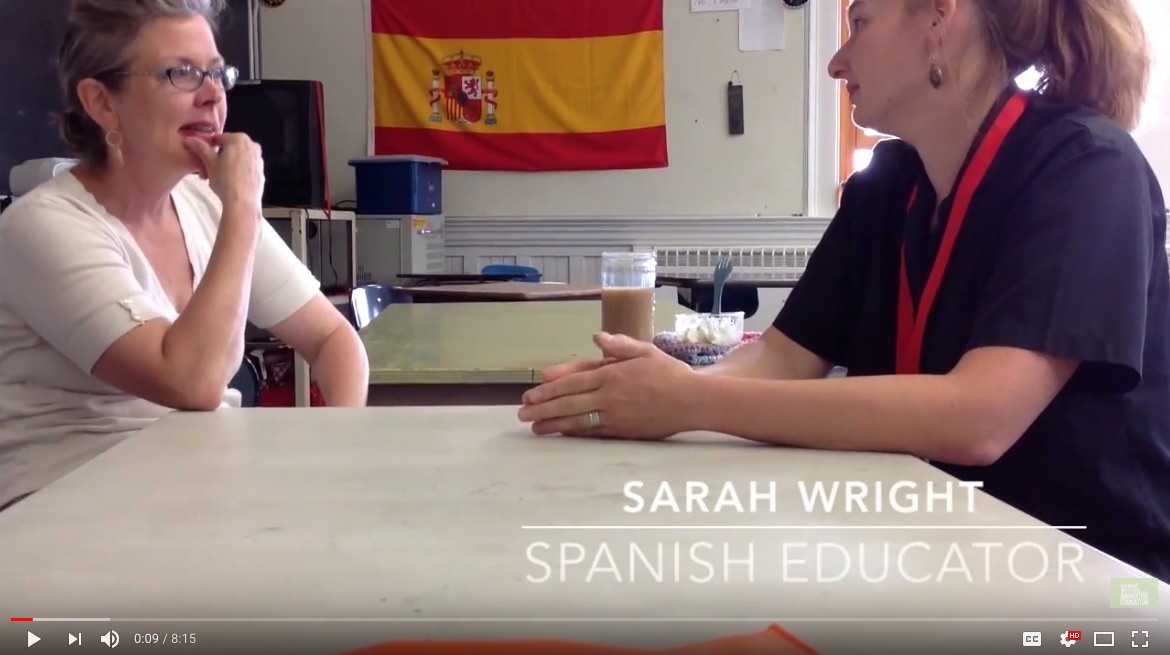
At Edmunds Middle School, in Burlington Vermont, Sarah Wright is rethinking assessment to create a self-paced Spanish class. Students can re-take exams as many times as possible, and work towards proficiency as it’s defined in the real world; the ability to communicate is what defines mastery of the subject. A stellar example of experimenting with schedule/assessment/instruction changes to meet proficiencies.
Welcome, Mill River Union! We are very curious as to what you guys are up to.
It’s Day 3 of the 2015 Middle Grades Institute, a gathering of more than 200 Vermont educators all passionately invested in technology-rich, student-centered educational change. And with the Act 77 deadline requiring a Personal Learning Plan for every student in Vermont grades 7-12 coming up in November, talk around personalizing learning and capturing evidence of personalized learning are at the forefront of everyone’s minds.
Let’s hear from four schools attending MGI about their engagement with the personalized learning process, as they spend their first week of summer planning for the coming year.
Go beyond back-channeling and unlock creative communication
This summer, look for ways to liven up your faculty meetings and delve a little deeper with technology. Try something new or take a new look at a tool you’re already using. Here are 3 ways of using collaborative digital tools for faculty meetings.
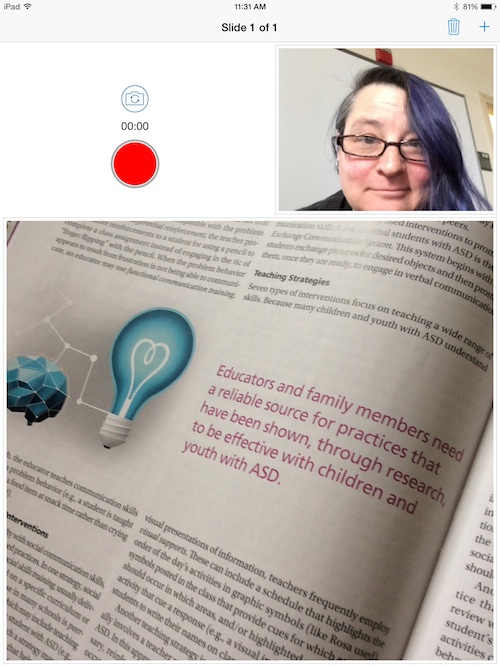
MoveNote lets you create screencasts where you appear alongside the material, making how to screencast a lot more dynamic for students and educators. Flipped classroom? Blended learning? Student presentations? Gallery walks? Support for students with disabilities?
Let’s look at some of the possibilities, features and how to get up and running with Movenote.
Students partner with local scientists in collecting, analyzing & disseminating water data
A group of 7th and 8th grade students took a trip through the full cycle of scientific study this past year. Edmunds Middle School students partnered with the UVM Watershed Alliance to study the Lake Champlain Direct and Grand Isles Basins, very specifically, the Potash Brook that runs close by the school.
At the conclusion of the project, they presented the outcome of their studies in a variety of different ways, leveraging online tools to maximize the impact of their dissemination.
A couple of weeks ago, Lucie deLaBruere of Learning with Lucie shared a post considering how we can embrace the emerging interest in Makerspace learning to move “Beyond Bling.” This post ignited my thinking about this type of learning in a number of different ways. I thought I’d take today to explore some of those thoughts in a commentary about the ideas in the post. If you haven’t read it yet, I encourage you to go back and check it out. Once you have done that, I think you might be interested in further considerations of complex problems, project-based learning, and constructionism as a learning philosophy. Continue reading “Making even more of “Beyond Bling””
Social media gives you a number of different ways to meet great innovative educators, willing to share what they’re doing in their classroom, but it can quickly eat up your valuable free time. Plus it’s just so shiny that you only ever mean to sit down and give it a quick look, then BAM! You rub your aching eyes and it’s ten o’clock on a Sunday night again.
So how do you make the most of social media for professional development without letting it eat your life? Here’s 4 ways to keep social media manageable.
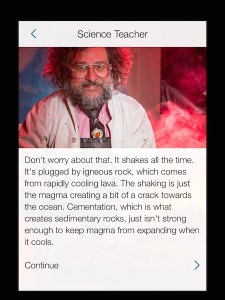
Lava flows down the halls of Main Street Middle School, in Montpelier, Vermont, and you must choose whether you’ll go with the flow or try to cool off somewhere and become an igneous rock. In another portion of the school, you’re the new kid, getting a tour from one of your peers when a volcano erupts, and you have only your geology wits (and a science teacher with fabulous hair) to save you.
These are middle schoolers building mobile, place-based games with ARIS, taking advantage of the game editor’s powerful new re-design and one science educator’s trust in letting his students demonstrate what and how they learn.
How do we move all new learners to the deep end of the pool?
Photo by Cecilia Denhard. CC 2.0
As I walked through an innovation showcase at SxSw 2015 (one of the the largest convergences of creative and critical thinkers last March) I was struck by the juxtaposition of two tables that were adjacent to each other.
As a long time advocate for initiatives that increase the confidence and skills of girls with technology, I appreciate that the “creative circuit kit” might provide a great opportunity to engage girls with technology, but I find myself concerned that it would be easy to gain a false sense of accomplishment if we don’t move beyond ‘bling’.
I find myself wondering what are the steps that connect the excitement from “blink blink” to the curiosity that leaves you wondering “what type of sensor do I need to create an experiment that I can test in space?”
 As the 2015 Middle Grades Institute draws to a close, we check in on some of the amazing work educators have been doing with their teams this week. And this time we’re focusing on the 1:1 planning they’ve been doing.