The pop-up video mechanism is great for videos that are longer than four minutes, such as presentations or student-led conferences, because it gives you the chance to provide additional context that’s not readily discernible from the video alone.
Here’s the basic recipe:
You make your pop-up resources in Keynote;
Add them to your video using the green screen utility;
Then add your opener, closer and chapter pop-ups.
Let’s unpack that process, step by step.
To make your life a little easier, we’ve prepared a package of resources files that you can download directly, referenced by filename in this tutorial.
The download should begin automatically. When it’s finished, expand the .zip file package on your machine. It’s a directory containing five files:
in-video pop-up creator.key (Keynote file)
Pop Up chapter creator.key (Keynote file)
Jaunty POP noise.wav (uncompressed audio file)
Pop Up eduvideo Intro.mp4 (compressed video file)
spare water footage.mp4 (compressed video file)
We created and are distributing these files as fair use for creating educational materials. The audio and the water footage are pieces in the public domain. But still: don’t be a weasel.
Let’s make your eduvideo pop up resources:
Chapter pop-ups
Chapter pop-ups are questions that take up the entire screen and are meant for the viewer to view *while the video itself is not playing*. Think of them as pre-test and post-test questions. In our example at the top of the post (video), chapter pop-ups appear at 4:36, 11:34, 14:01, 16:15, and 19:39. That’s a lot, but to be fair, this is a 20-minute video, and we really wanted viewers to stay focused (and not check their twitter).
Pop Up chapter creator.key is the file you’ll use to create all your chapter pop-ups. Open it up in Keynote, and here’s your default screen:
Doubleclick on the black text and you can edit it to customize your question. Boom: done.
Now, once you’ve edited your text, export your Keynote file to a movie. Go up to the top menus: File > Export to > Movie…
Change the resolution to 1080p and you’re good to go. This generates a .m4a movie file. Save your new chapter pop-up movie in a central directory for when we get to Add your resources. Make as many chapter segments as you feel makes sense.
In-video pop-ups
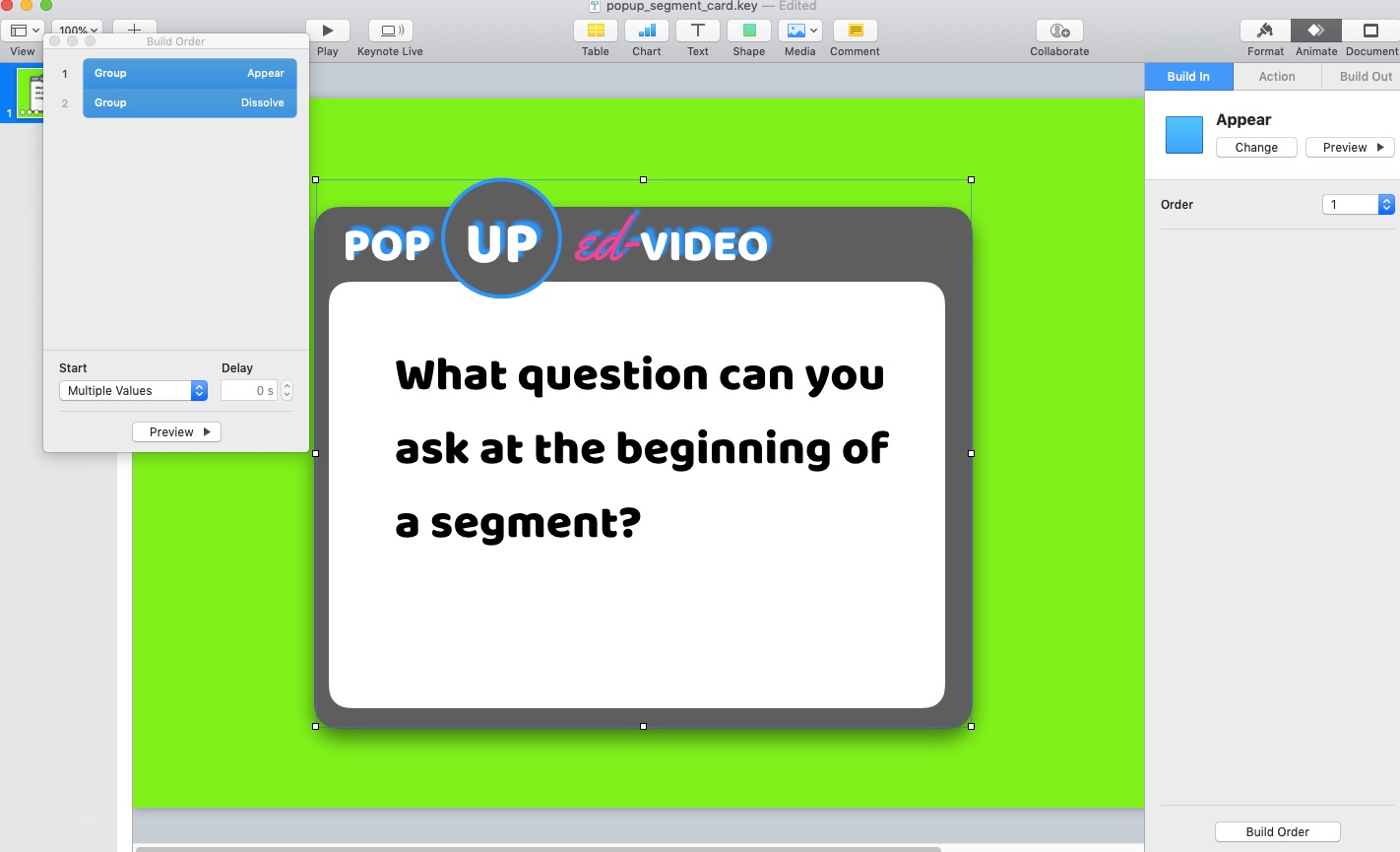
Open up your in-video Pop Up Creator.key file in Keynote. Here’s your default screen:
Edit the black text in the box by clicking on it.
Don’t add more than 12 words to any one pop-up. If you’ve got that much to say, it can be two screens. You want to keep your pop-ups informative but sparse. Remember: you’re asking the viewer to take their attention away from the content of the video to pay attention to the pop-up, so make it worth their while and respect their time.
After you’ve edited the text, choose an image to represent the main idea of the text.
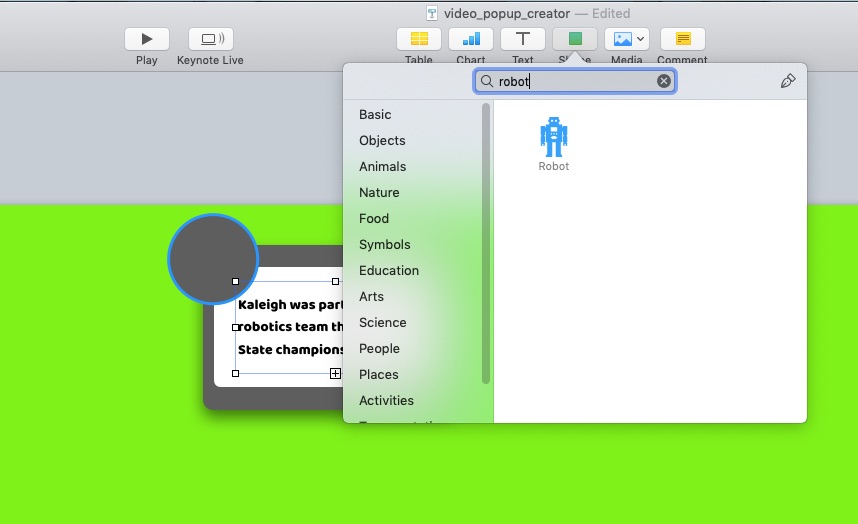
Keynote has a great on-board library of art. Say our text is: “Kayleigh was part of the robotics team that won State championships.” Click on the Shape button at the top of your Keynote screen. This opens up the Keynote images library. Start searching on “robot”, for example.
Click once on the icon you’d like to add, and Keynote will automatically add it to your screen. Move the icon to the center of your circle. Resize it as appropriate.
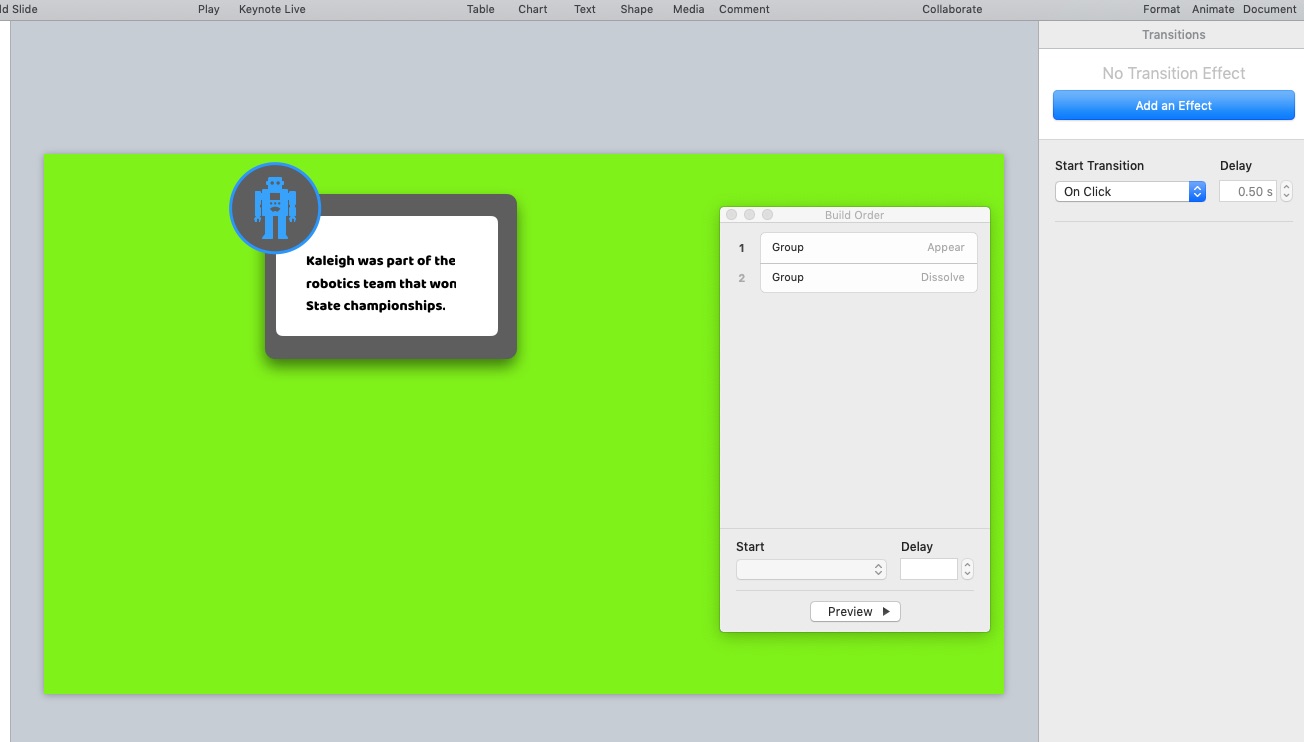
Next, select all the items in your pop-up. Then go up to your file menus at the top of your screen, to Arrange > Group. This will make Keynote treat your pop-up box as one discrete item and make your life simpler by a factor of ten, because now you add animation.
With your pop-up box highlighted, choose Animate from the righthand menu.
You need a Build In and a Build Out animation, and a duration.
Under “Build In”, choose Appear.
Under “Build Out”, choose Dissolve.
Then you’re going to determine your duration.
Click the Build Order button at the bottom of the righthand Animate mention. In your Build Order, you’re going to line them up, one on top of the other, then add a delay to the Build Out of at least 1.0 seconds.
Your Build In is linked up with your Build Out when they are touching (Appear is in light, Dissolve is in dark).
Click once on the Dissolve bar in your Build Order window. It brings up a dialogue for Start and Delay. Your Dissolve bar should have a Start of “After Build 1” and your Delay is at least 1.0 seconds.
Here’s a quick screencast of that process:
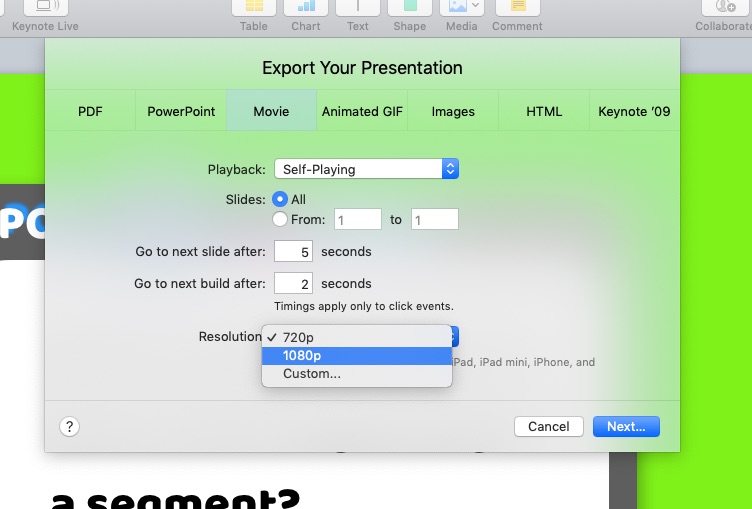
Save your file. Now you export it as a movie. File > Export to > Movie…
Change your resolution to 1080p and click Next…
Save your file. It will have a .m4a file ending. Now let’s put all this together in a video.
Add your resources
We’ll work in iMovie for this example but this works in whatever video editing program you’re using. Let’s add your pop-ups to the video itself.
Here’s the layout of a pop-up eduvideo:
Opener | Chapter Pop-up | Video — with in-video pop-ups | Closer
Opener:
We included a file in the downloads package for you: Pop Up eduvideo intro.mp4
Add it in the first slot on your timeline.
Chapter Pop-up:
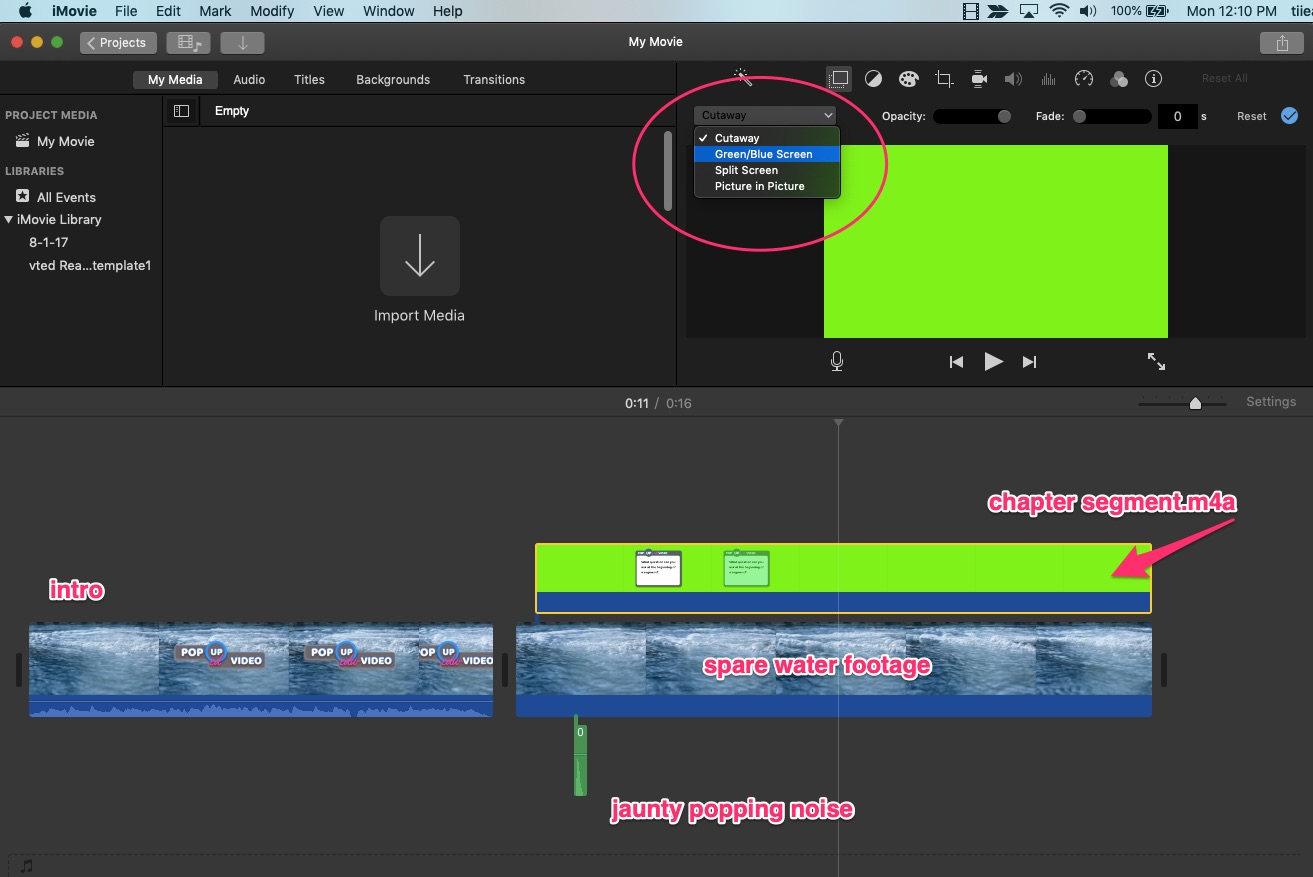
You’re going to add the .m4a file you created to a background of bubbles, add a pop noise, and boom, there’s your chapter segment. So! Take the file spare_water_footage.mp4 from your download package. Add it to your iMovie timeline, after the opener. Now add two things: the .m4a and a jaunty popping noise.
With the spare water footage highlighted in your timeline, add your chapter file *on top of it*.
Highlight this new giant green block, and change “Cutaway” to “Green/Blue Screen” from the menu on top of your viewer.
Then add the Jaunty Popping Noise *underneath* your timeline.
You’ll need to move it around to get the timing right, so that as your question appears, the pop happens, but have fun with it.
Adding in-video pop-ups
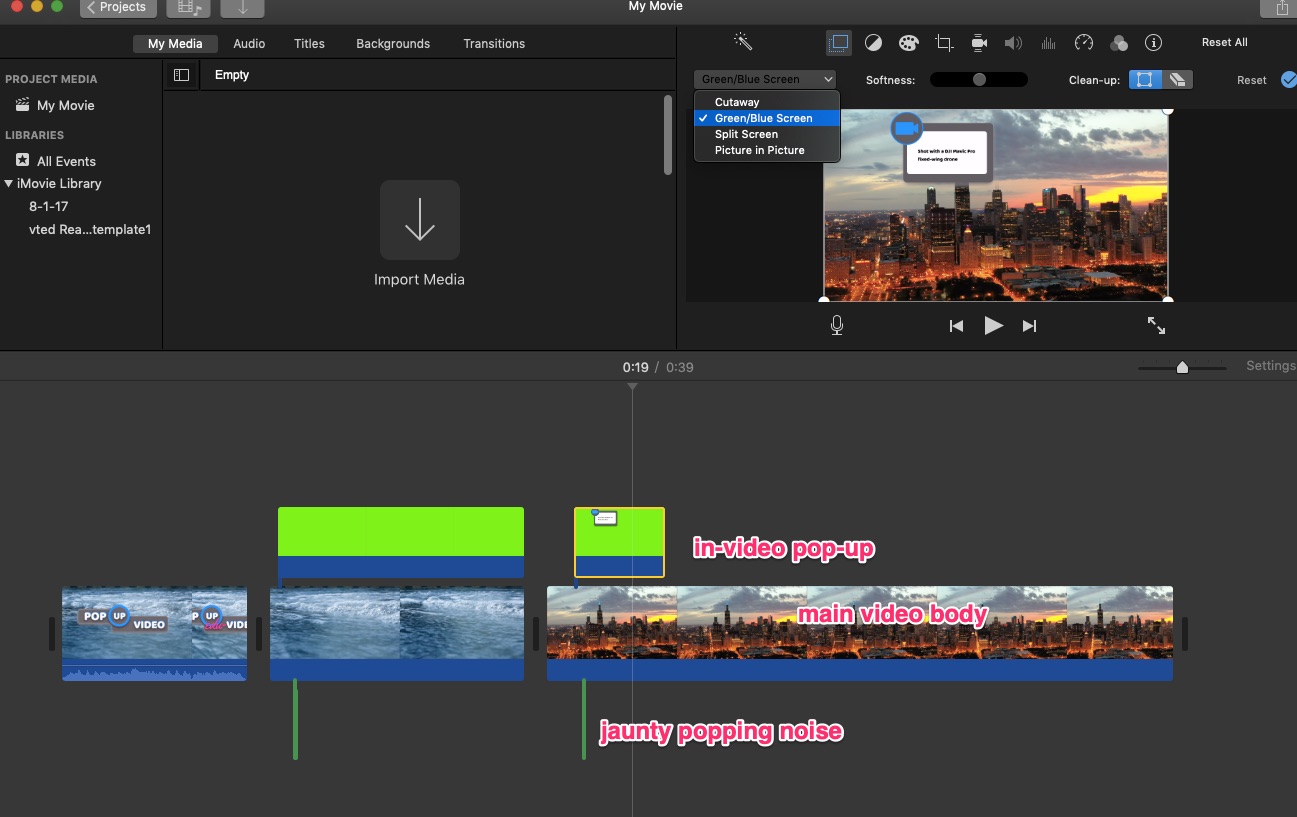
Next, choose the points at which you’d like to add a pop-up message during your video. You’ll use the same method you used for adding the chapter pop-up, but add your in-video pop-up directly to the footage.
Say we have some lovely drone footage of the Chicago skyline. And we’d like to add a notation about the make and model of the drone used.
Make your drone info pop-up in Keynote, and export the animation as a movie.
Import that movie into iMovie
Add it to your timeline above the skyline footage
Change the Cutaway effect to Green/Blue Screen
Add your Jaunty Pop sound to your timeline below the skyline footage
Adjust the timing of your pop-up notation and your pop noise.
BOOM.
Closer: …is totally up to you. We didn’t include a closer in our downloads package. Our example video ends with a chapter segment post-question that covers the whole video, but what you end your video with is entirely up to you. Have fun with it, reinforce your message — just go hog wild.
And let us know how this worked for you! We would love to see your pop-up eduvideos! Leave us a comment and share!
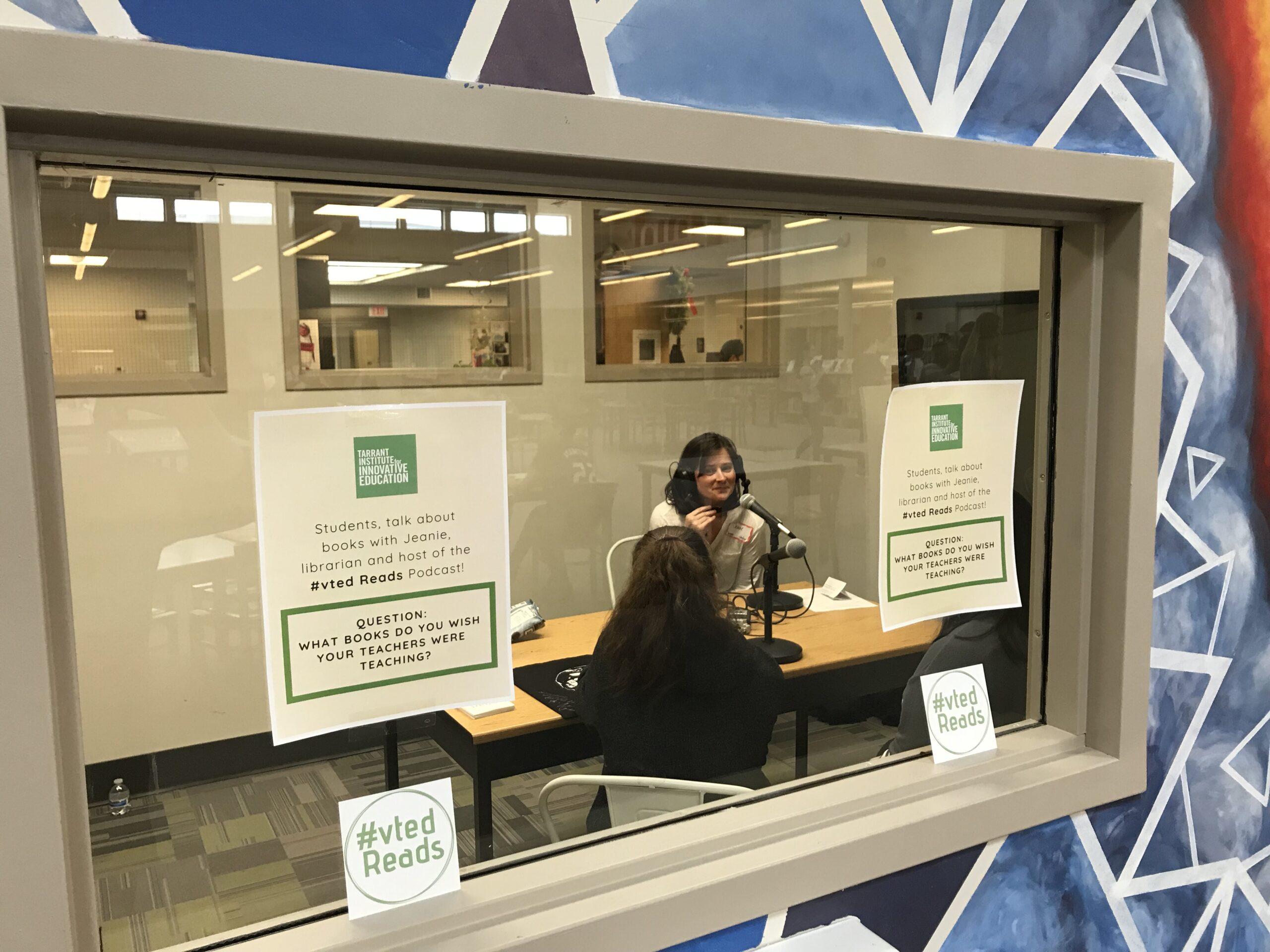
I’m Jeanie Phillips: welcome to #vted Reads, the podcast by for and with Vermont educators. And today, with Vermont students as well! We recorded this episode at last year’s Teen Lit Mob.
What’s Teen Lit Mob, you ask?
Teen Lit Mob is Vermont’s only book-related conference specifically for young adult readers. Students from all around the state converge in a big joyful mass and squee about what they’re reading. They meet authors and get free books and did we mention the squeeing? So. Much. Squeeing.
And Teen Lit Mob is super important. Here’s why.
Close your eyes. Close them! (Unless you’re listening to this while driving; safety first.) Now think back: what was your favorite book when you were in, say, 8th grade?
Did you have folks you could tell about it? Folks who’d grasp your hands and just bounce wildly up and down sharing the absolute JOY of finding and loving, that one perfect book?
So that’s Teen Lit Mob: squee! bouncing! friendship! books! a bedazzled megaphone! books and squee.
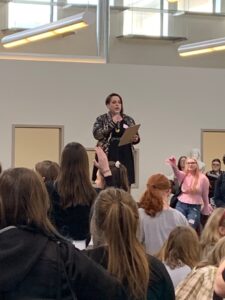
Teen Lit Mob organizer and Master of Ceremonies: librarian Lisa Buckton opens the conference via tabletop address.
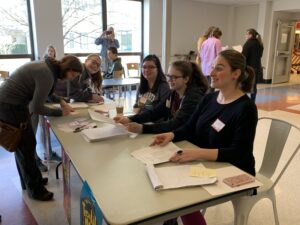
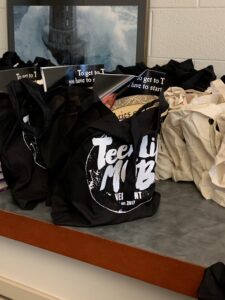
Welcome to Teen Lit Mob! Volunteers at the registration desk checked in attendees, handed out complimentary bags of books and helped with name tags.
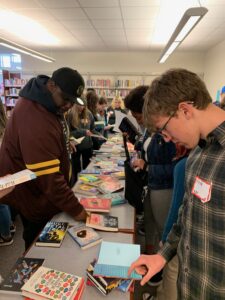
Teen Lit Mob features lots and lots and LOTS of free books. And with free books comes a book swap table!
Did we mention the free books at Teen Lit Mob?
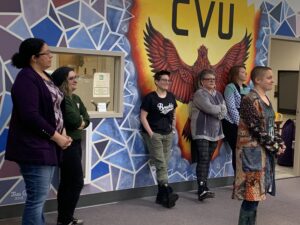
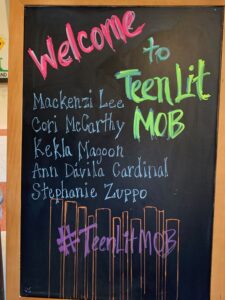
Guest authors at Teen Lit Mob 2019: (l to r) Kekla Magoon, Stephanie Zuppo, Cori McCarthy, Ann Davila Cardinal, Mackenzi Lee.
Thank you to every student who came by our booth to chat!
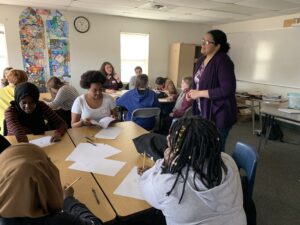
VT author Kekla Magoon hosted a writing workshop for attendees, discussing how to translate ideas to publication.
Thank you to the 2019 Teen Lit Mob crowd! An amazing party for students and authors.
*deep breath*
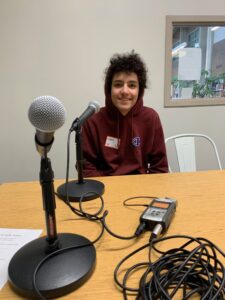
So *we* showed up at Teen Lit Mob last year, and asked some of the attendees one simple, VITAL question: What book do you wish was being taught in your school?
Warning: #vted Reads assumes no responsibility for how badly this episode messes up your To Be Read list.
*whisper* Let’s chat!
My name is Sloan and I go to CVU.
Jeanie: Sloan, thank you for talking to me. What book do you wish your teachers were teaching?
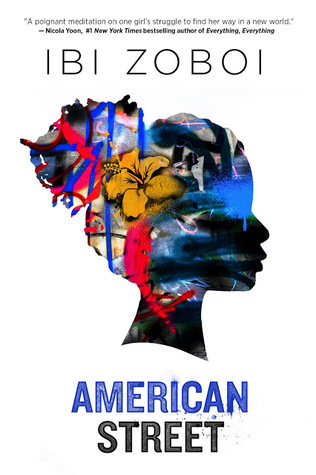
Sloan: I think it’s such a beautiful like, story, about somebody who goes to, like America. Somebody who’s really open-minded and really kind and really sweet. Everything is set up for her not to succeed and it shows how many people in this country, like, even if you come in with the best intentions, how the system is kind of setup against you. Like there’s more than one perspective of how you experience.
I’m Celia and I go to CVU.
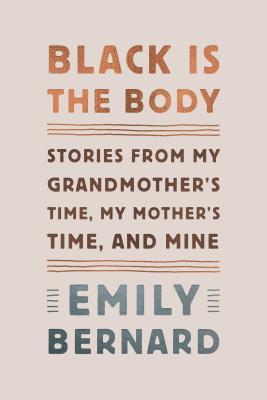
I wish that my teachers would teach the book Black is the Body by Emily Bernard. She’s a professor at UVM of English. And her book has a lot to do about Black identity, especially in Vermont. I can imagine those essays fitting in in a class that has anything to do with diversity and race — like a social studies class — but also, in English class. Because not only does Emily talk about her experiences in her books, she talks about teaching English classes and the relation to race. How her students learn about it and become uncomfortable intentionally. And I think that’s a really unique perspective we don’t hear a lot in Vermont. So, I think any student in Vermont would benefit from reading the book but I think especially in English or social studies class.
My name is Christine. I go to school at Peoples Academy.
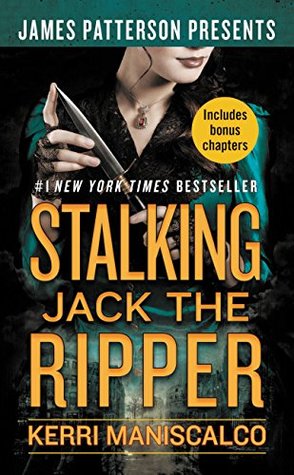
I wish that my teachers would teach Stalking Jack the Ripper, which is a new book that came out. It’s kind of like a fantasy while also historical. So I think it’s really interesting. At our school, we have a sci-fi and dystopia class? So, it would probably fit in there. But also, my English teacher does a lot of creative things. So, it’s not just the classics, like Great Gatsby, which we’re starting right now but it’s also some of the more interesting things.
Hi. My name is Isabel and I go to school at Peoples Academy High School.
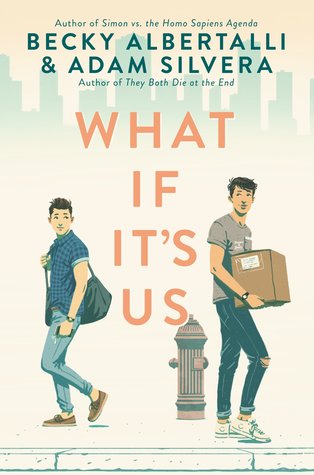
I think it would be What If It’s Us. I just really like the book, and because it’s by two different authors who write two different like, styles? And then it goes back and forth and it’s really good.
My name is Steven and I go to Peoples Academy in Morristown, Vermont.
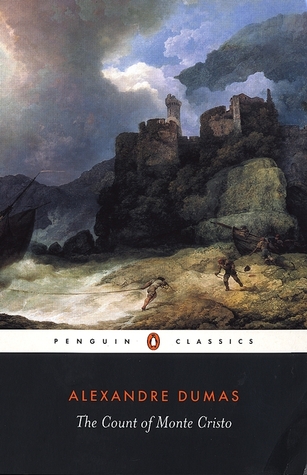
I really wish we were teaching The Count of Monte Cristo, one of my favorite books by Alexander Dumas.
I just love how the whole entire aspect of the book is created and like all the different characters, the main character gets to play as. It’s super exciting and I really think that a lot of people could learn from the book. It’s so good. It was one of the books I actually got into, like historical fiction. Which got me real excited about this Teen Lit Mob, which we’re actually doing today, so.
I am Noel. I go to CVU High School.
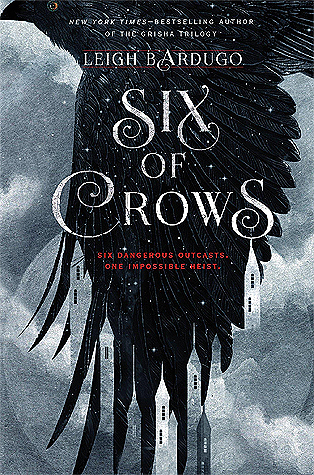
Well, a friend of mine recently introduced me to a wonderful book called Six of Crows. It’s extremely representational. It has several queer characters but it doesn’t shove it in your face the way some books do, which is, in my opinion, a very poor method of representation. Whereas Six of Crows, it’s just there. Just how it is in real life. And it is extremely well told and from multiple different perspectives. It shows multi-faceted characters; so many different very complex characters. It really lets you understand all of their motivations. And it’s just a tremendously related example of how one person can understand what’s going on in so many people’s heads.
I’m Ashka and I go to Mount Abe.
I’ve always been interested in graphic novels and they’re easier for me to read. Black Butler is a manga set. It’s like you read it back to front and left to right. Ask people like what their favorite book is and see if we like that, graphic novel.
Jeanie: Great ideas. Thank you so much, Ashka. Did I say that right?
Ashka: Yeah. Yeah.
Jeanie: Okay. Great. Thank you.
My name is Katrina. Most people know me as Artie, though. And I go to Burr & Burton Academy.
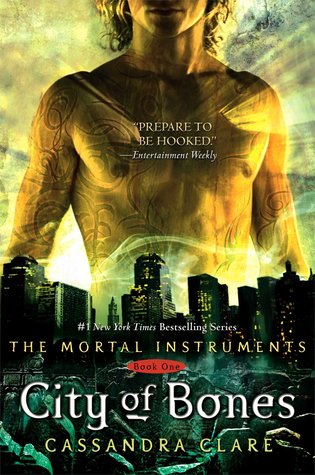
I wish my teachers taught more fantasy because I don’t see a lot of fantasy. And, so, I think I’d have to say a good place to start would be City of Bones by Cassandra Clare. She’s the newer version of the fantasy queen (versus J.K. Rowling).
City of Bones takes place in this mystical world that takes place just underneath human’s noses. Kind of like the Harry Potter world but there’s more diversity. It’s not just wizards. There’s warlocks, fairies, werewolves, vampires and demons. And the four factions that I named are all part demon. They have to be controlled by shaman hunters — which are demon hunters — in order to make sure they don’t hurt people. Generally, they can keep check on themselves because they’re half human ,so they do have some reason. But demons love hurting people because it’s what gives them life. And, so, the shaman hunters have to take care of these people.
Then there’s this girl Clary, who finds out she’s one of these people after thinking she’s been human for so long. And she’s just thrown into this chaotic world that her dad wants to screw up.
Jeanie: Ooh. You’ve convinced me! I want to read the book.
My name’s Maria. I go to Woodstock Union High School.
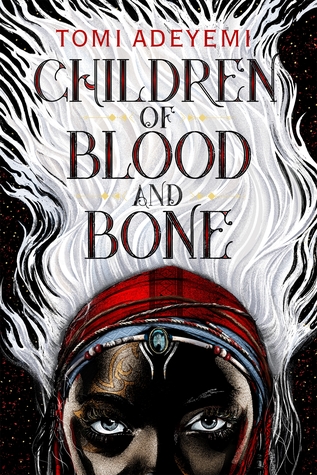
So, I wish my teachers were teaching Children of Blood and Bone, by Tomi Adeyemi. (I can’t pronounce her name; I’m very sorry!) But there’s just so much diversity. And like diversity in a fictional fantasy world,? It’s like, really hard to find. I like them so well. The gods and religion is shown there and these are really magical. And the writing is fantastic.
My name is Jade and I go to Peoples Academy.
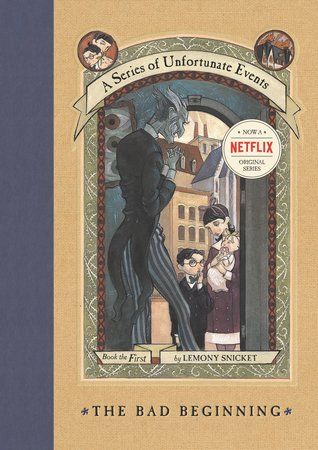
I would have to go with probably The Bad Beginning from A Series of Unfortunate Events. Because when I was younger, I really liked reading the series. So, if like they were to teach it, I’d be really happy.
Throne of Glass by Sarah J. Maas. That’s a very good book. It’s about a girl who is taken captive in like, a castle, and is trained to be a champion but was already trained as an assassin when she was little.
Jeanie: Wow. It’s fantasy?
Jade: Yeah.
Jeanie: It sounds thrilling!
Jade: It is.
Jeanie: Excellent.
I’m Carly. I go to school at CVU.
And I’m Emily and I also go to school at CVU.
Jeanie: What books do you wish your teachers were teaching?
Carly: I just think a lot more inclusive books. Books with people of color, books with queer community. It’s starting to be integrated into the academic thing. But it’s just not as…
Emily: Yeah. I mean that’s really important and I definitely agree with that. And I also think that maybe — like I don’t want to say more interesting books, but less like — more relevant kind of. I don’t know how to explain it, but like we do a lot of Shakespeare and Lord of the Flies. I feel like there are other books that can get those same messages across that are like more modern day, I guess.
My name is Ruby and I go to Champlain Valley Union High School.
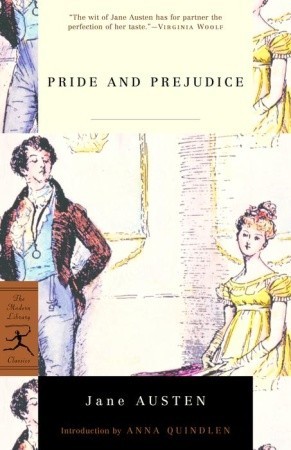
I really wish we did Jane Austen. Or just kind of any book… that doesn’t have… a really gross misogynistic male main character. Or if it does, that that’s a bad thing and not just a generally accepted character trait. Like, her work like doesn’t pass the reverse Bechdel Test. Like it’s just really fun to read. It’d be nice to have narratives in the classroom that are about women. I think it’s cool because Mr. Darcy is a flawed male character and kind of like… a bit toxically masculine. But he changes? And it’s just a thing that happens, and it’s good and it’s not a weakness or anything. It’s just him becoming a better person.
Jeanie: And, so, tell me — sorry, Ruby. I’m just so interested in this. Do you read many books written by or about women in class now?
Ruby: Well, I think part of it is just the curriculum and then what fits that. But you can find as many female authors for anything as you can male. But we read The Odyssey earlier this year. Which was interesting because I really like Greek mythology, but also, Odysseus is a pain. *laughs* Like, he is just really grossly misogynistic and stuff and it’s never addressed at all. Especially because we were reading the journey chapters. So, the whole thing is he’s telling it to this king, trying to impress him. So, it just shows how acceptable it was to be so grossly misogynistic and how it was even seen as a good thing. Because this is what he’s telling the king about on his journey to try and impress him.
Jeanie: And were you able to talk about that in class?
Ruby: Yeah, we were. I really like my humanities teachers. But it’s just the reading itself can be sometimes a bit much like we criticize it quite a bit for these reasons.
My name is Maeve and I go to U-32 High School.
So, the books we read in our class for ninth graders is comp and lit — or composition and literature. We read a few different books throughout the year. But none of them are really written currently in today’s culture, even if it’s not a current book. Just written by an author who’s part of today’s society, I think would be a really helpful and valuable. Something that could really help us benefit from the books more than reading. Something that’s still important and relevant but it’s not as necessarily as interesting.
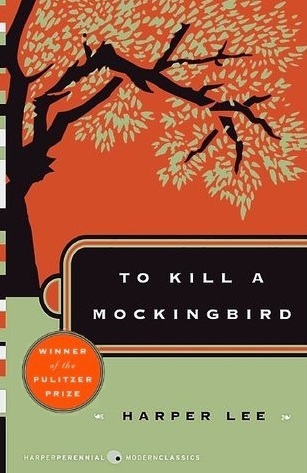
For example, we read To Kill a Mockingbird. And it’s like it’s a very good book. It speaks to some very important issues. But it’s also just, in my opinion, not a super interesting book. And it doesn’t necessarily teach, I think, some of the things that a current author would be able to do, especially with like today’s — all of today’s technology information.
Jeanie: Hi. Tell me your names and where you go to school?
Riley: My name is Riley.
Amelia: I’m Amelia.
Reuben: And I’m Reuben. And we all go to CVU.
Jeanie: Thanks for joining me. Tell me what books do you wish your teachers were teaching in the classroom?
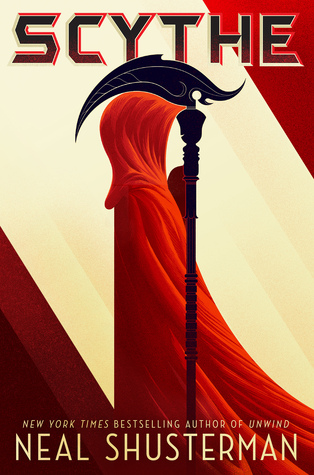
Riley: We had a bit of a discussion about this book called Scythe, which was written by–
Jeanie: Neal Shusterman?
Riley: Neal Shusterman, yep. And actually the third one of the trilogy was just announced. We all agreed that, that was one of the books that should be really taught in schools. Because a lot of times we now analyze different books, and talk about the metaphors and different meanings. And Scythe is really just thoughtful with them. There’s all sorts of inner meanings that you can read into it and it’s really interesting to see, kind of as a philosophical thought experiment.
If death is no longer possible really, how would people act? It’s fascinating. Like, in the book there’s a profession: your job is just to go and die, like for the entertainment of another [specific] person. In that universe, people can’t die except through very specific means. So it’sa legal profession. It’s just, it’s a really interesting philosophy that book takes.
Jeanie: I love that book. And I think you’re right, there’s so many interesting questions. There’s so much going on. That “The Thunderhead” has been compared to the internet and how much power it has. That is a really intriguing book. I think you’re right it would help us have really rich conversations about current social issues.
Other texts you might suggest to your teachers? Other books?
Reuben: I would suggest the book Children of Blood and Bone…
Jeanie: Oh yeah!
Reuben: The reason I found intriguing is because it gives us a lot of the topics you already have now, such as not segregation, but more discrimination towards specific groups? And the targeting of very specific attributes that make that group what they are? So with the Children of Blood and Bone series, it was mostly just targeting those who are able to form magic.
And what I find interesting about that is that although it is chemistry-based, it does tackle all the issues we have regarding the inner violence within some communities. How we don’t necessarily understand another community or ethnicity group, ethnicities, much more than that. And how we don’t understand other groups’ particular traditions, and what they value and so I feel like it be an excellent book to have students talk about. Mostly because it would encourage a lot of conversation regarding heavy topics such as that and it would give someone who’s going through some of these issues — maybe they might be able to relate — a way to be easier for them to talk about it.
Jeanie: Yeah, yeah. That is a really awesome book. I love the way it illuminates power: who has power, and who gets discriminated against just because they don’t have power, right? It’s a great book to talk about racism and Black Lives Matter and other powers, like (instead of going on for an hour today). It’s also really violent.
Riley: It’s so violent.
Jeanie: And gripping.
Amelia: Yeah.
Jeanie: Amelia, do you have a suggestion for us?
Amelia: I don’t really have a specific book suggestion, just more kind of a suggestion, for the kinds of themes that would be much appreciated, to kind of put a spot light on literacy. Particularly books having to do with relationships that are not male and female. Where you have people who are gay, lesbian or transgender. Just books that deal with that, and any kind of topic or situation, just because it will help normalize this idea that not everybody loves the opposite gender and that they can love freely. And that’ll really help encourage younger generations to kind of grow up with this idea that different is normal and not to be afraid.
Jeanie: Yes. Amelia, what you’re reminding me of is that many books in the canon, many other books that get taught? Don’t have diverse representation of any kind?
Amelia: Exactly.
Jeanie: It feels really important that we all be able to see ourselves in books.
Amelia: Right?
Jeanie: And then we all get to see people that are not like us in books, too. Some of us *only* get to see books about people that are not like us. And that kind of stinks. Yeah. Those are great answers! Any other suggestions for teachers, educators, out in the world around literature?
Riley: I just I think which is books that take that are written in modern times. Because a lot of, a lot of classes try to make parallels between like this book and modern issues, and I think a lot of our books do that very well. But, but I think that because it’s written in the past time, there’s a lot of just ideas that, that can be made parallel but don’t translate as easily? And I think it more important to talk about topics that are more relevant. Which is going to be founded books that are written more recently.
Jeanie: Yeah.
Reuben: I would say books that revolve more on focusing on the political climate of some locations?
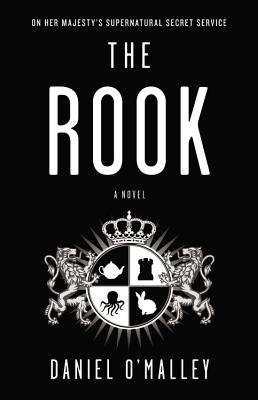
There was a book I read recently called The Rook which although it is, again, fantasy, and focuses on supernatural whereabouts in London. It touches heavily on how an action that we don’t necessarily think can have many multiple consequences. That each go in o a diplomatic scale, which can drastically effect how the climate of the work environment or healthy climate of the population is affected. I feel like there aren’t a lot of books that we do talk that are political and do relate to politics but most of the books and again as Riley mentioned, kind of aren’t set in the modern world. And so we don’t have any way of actually understanding how that politics relate to the ear it was written in.
Jeanie: That’s really thought provoking, thank you.
Last words, Amelia?
Amelia: I just really think that it’s important that teachers and school administrators really stress that importance in diversity but also how are all the same and we may look differently, we may act different but really we are all just human.
Jeanie: I think your librarian, Peter Langella, does a program about reading for empathy. Right? It talks about empathy books. And I think that too: reading characters that are different than me, allowing us to step in somebody else’s shoes, that feels really important. Is that what you’re saying to Amelia?
Amelia: Yeah. Being able to empathize with people you normally would not on the surface see as yourself? Allows you to broaden your worldscape. And kind of make it easier to just step into other people’s shoes in the real world.
Jeanie: Yes, I love that phrase, broaden your world scape. That’s my new goal in life: to broaden my worldscape through literature. Thank you all three so much for talking to me about books. You guys are amazing.
Riley: No problem.
Amelia: Thank you.
Reuben: Thank you.
This year’s Teen Lit Mob is coming up March 27th 2020 at U-32 in Montpelier. If you’re a young adult in Vermont, Teen Lit Mob registration is free and currently open, and we hope to see you there. Go to libraries dot vermont dot gov for more details. We will be at Teen Lit Mob again this year, with our mobile podcasting kit, and we will absolutely grasp your hands and bounce up and down sharing the sheer, umitigated JOY of a good book.
Until then…
#vted Reads is a podcast of the Tarrant Institute for Innovative Education at the University of Vermont.
Students and their families at Peoples Academy Middle Level have participated in student led conferences for a number of years now. What’s new this year? The opportunity for each 5th and 6th grader to tell the story of their learning through video evidence and reflection. It’s these “Learner Story” videos they share at their conferences.
Let’s examine how one middle school in Vermont invites their learners to create video evidence and reflection for their PLPs. Now let’s see how Peoples Academy Middle Level fosters and supports this process that then re-feeds the PLPs in question.
The setup
Many Vermont educators facilitate identity building work at the start of the school year. They do so through teacher advisory and as part of Personal Learning Plan (PLP) development. Students explore the questions “Who am I?” both as learners and as integral members of their school community. Knowing students well means we are better positioned to support them on their learning journeys.
Yet, often this identity work stops after this initial back-to-school and PLP prep ends.
Enter: the student-led conference
A teacher-generated video example launches the project. Students consider how to meet the requirements of sharing learning aligned to clear targets from their interdisciplinary project-based work:
Include at least 5-6 pieces of evidence from Expedition
Explain in writing or speaking:
What was the assignment?
What did you learn?
Did it meet a learning target?
Expeditionat Peoples Academy is an integrated studies course team taught by seven educators. Their driving question?
How Do Communities Thrive?
Students select evidence of learning to reflect on. And they *explicitly* link this evidence to clear learning targets. And they do it with video stories.
Izzy’s “Learner Story”
Spoiler: it’s a video.
Let’s jump right in to 6th grader Izzy’s Learner Story, below, then look at how the PAML educators support and guide students with the creation process.
Amazing, right? So good. So comprehensive and clear, and quite a few signposts guiding you through Izzy’s learning journey! (Btw, a big THANK YOU to Izzy and the PAML folx for sharing that video.)
Now let’s reverse-engineer it:
Check out the full slide deck PAML educators share with their students. It spells out how students should:
review the learning they are engaged in;
curate their evidence;
and tell compelling visual stories of how they met shared learning goals.
It provides a solid foundation of instruction for getting students to sit down and think concretely about what to include in their videos.
(Grab yourself a copy of this fabulous resource by going to File > Copy.)
The slide deck asks students the following questions:
What’s your story?
What have we done?
How are you feeling about your student-led conference?
What do you need to include in your Learner Story?
A link to your math and expo slideshow
5-6 pieces of evidence from Expedition (boom: examples!)
What you learned
Whether it met a learning target
What are you proud of? What didn’t go so well? (Rose and Thorn protocol) What could you do differently next time?
And finally:
What are you looking forward to next?
Format: keep it simple
Video evidence and reflection, as a term, can conjure up visions of 20-minute documentaries with a full cast and multiple dance numbers. And yet, PAML keeps it simple with screencasting.
Stop! Pedagogy time: focus on skills over tools
Sylvia Tolisano in her post 12 ideas for amplified forms of digital storytelling explains what she sees as a strategic choice to include video as a medium. In this way, digital “Learning Stories” amplify the learning because they tap into “previously unknown possibilities.”
“Documenting by capturing evidence of learning and sharing it in a strategic way allows for the development of a learning story. Take digital portfolios to the next level and go beyond the accumulation of disconnected artifacts to curate strategic evidence of learning. Create connections (chronological or non-linear) between them. Make reflections and metacognition (the thinking about your thinking) visible. Make your learning process and your growth visible. The learning story can become an inspiration for others, when you share and make your learning trials, obstacles and mistakes visible to others. The act of documenting and telling your learning story can become an integral part of the process of learning itself.”
Peoples Academy teachers value both the process and product.
Students revisit, reflect upon, and synthesize their learning as they create these Learner Stories. In this way, teacher advisors say they’ve learned so much about the students in their advisories simply by watching the videos as they help students prepare for conferences.
We’re not talking enough with students about climate change
At least, many of us are not.
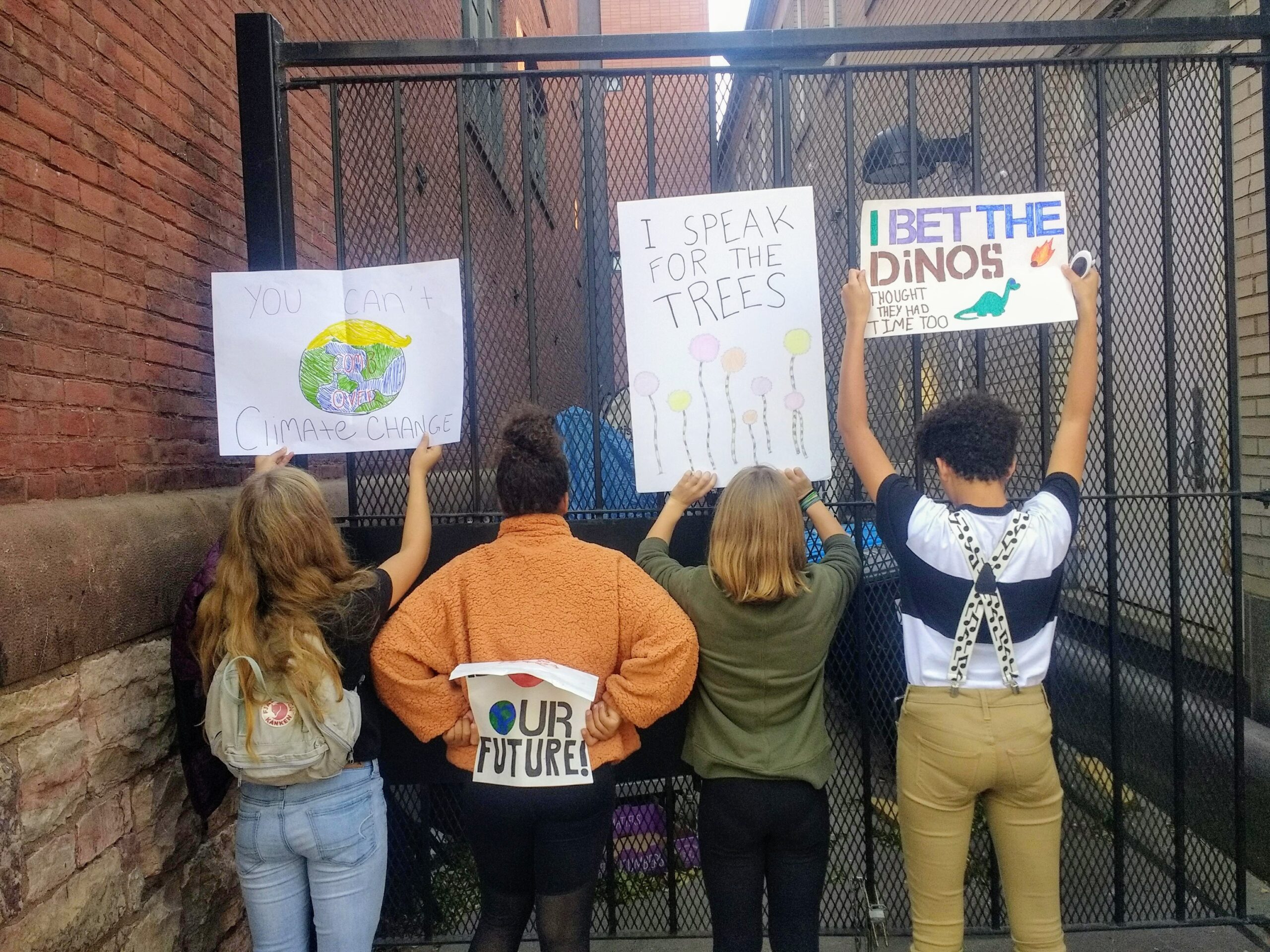
At the Global Youth Climate Strike last fall, I spoke with a lot of students who are really concerned about the future. Like, really concerned. Topping their list of worries is that not only are adults not doing enough to address climate change, but we’re also not talking with them (much) about it either. One student even characterized our inaction on climate as the ultimate homework procrastination.
Student activists at the Youth Climate Strike in September 2019.
But why?
I have a few hunches: first, despite being addressed in curriculum content standards, including the Next Generation Science Standards and the C3 Social Studies standards, climate change somehow feels like a political issue.
Newsflash: It’s not. It’s not a political issue. It’s science. And civics. It’s everything, really. And all too imminent. I mean sure, it has political implications, economic implications, social, ecological…it changes everything.
Yet wading into anything that feels like partisan waters can be anxiety-provoking for educators.
And speaking of anxiety, yeah, well, eco-anxiety made Oxford’s shortlist for words of the year 2019. Climate emergency won the top spot, and the whole list was related to climate change. Many of us are feeling the burn, so to speak. And for many of us, our strategy is to tamp that feeling down and focus on something else.
The problem is so very big and complicated, and we are so very small.
Or so it seems. It is very easy to feel powerless in the face of such a complex, global challenge.
And yet. The future is at stake. And as educators, just as we value our students, we value their future. Our job is to help prepare them for that future, however uncertain it may be. And we can’t get there by ignoring or minimizing the threat posed by climate change.
So what’s a teacher to do?
I don’t have all the answers, but I have a few ideas. These, plus a little courage will move us in the right direction.
Knowledge is power
Climate change is a trans-disciplinary concept. There is not a content area that isn’t connected to this issue. From math to art, relevant academic connections can be made. Our students are asking us to help them understand what’s happening, why, and what we can do about it.
It’s science:
To start, help students understand the facts of climate change in a developmentally appropriate way. Provide matter-of-fact explanations about the science of climate change. Help students understand what greenhouse gases are and how they function. Explore what happens when we upset the carbon balance in our atmosphere, and how scientists use models to try to predict and understand the impacts and outcomes of these changes in global chemistry.
Here are a few science resources to help you get started:
Climate Change Education from Stanford University’s Stanford Earth has a middle grades climate change unit ready to go!
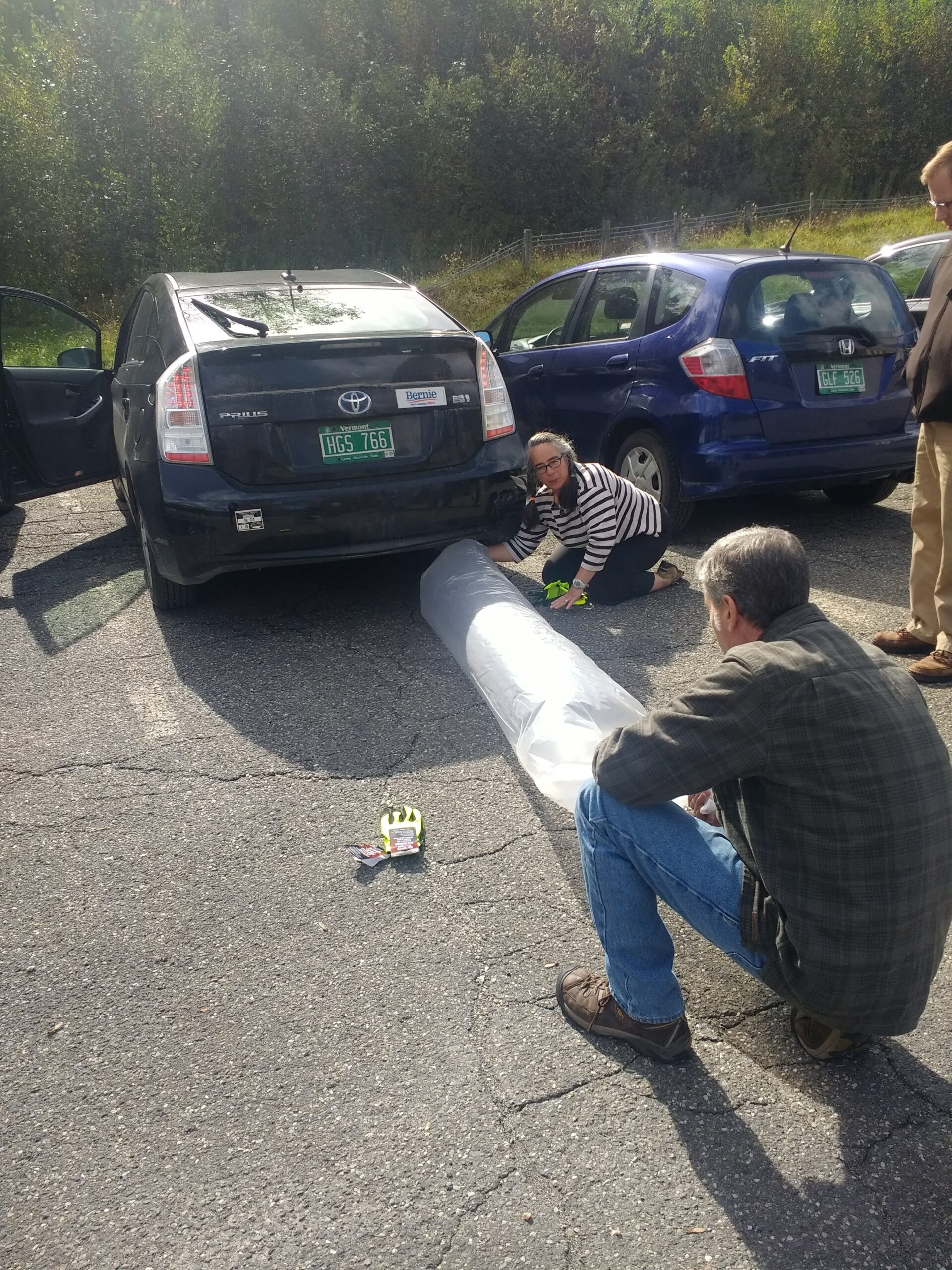
Teachers in VEEP’s Energy Action Project Institute learn to measure auto emissions.
It’s civics:
Help students discover how governments — from local and federal and beyond- work and how we can get involved. Explore international policy and global efforts to combat climate change.
Who is in charge, makes laws, benefits, and suffers? What happens when we don’t follow through? How does change happen?
Help students understand power and privilege. Who has benefited from the dominant global system? And who has suffered as a result? Who is predicted to suffer the most severe impacts of climate change first? What is our responsibility?
Civic Online Reasoning (again, from Stanford University) has great media literacy lessons that can be applied to climate change content
The Vermont Youth Lobby is an organization made up of middle and high school students from across Vermont who are getting civically engaged: this is powerful, check it out!
Middlebury Union High School students walk out of class to attend the Youth Climate Strike in September 2019.
And sometimes it’s both together:
Learn together about humans’ relationship with the earth and other living things. Discuss the concept of natural resources. Identify how we use earth’s resources and explore the mental models and perspectives on how those resources should be consumed (hint: contrasting a Western capitalist mind with an Indigenous mindset can be revealing).
It’s ok if you don’t have all the answers! Be the lead learner and model for students how we can seek answers to our questions.
There’s a great picture book collection called The Sunlight Series by Molly Bang and Penny Chisholm that explains energy concepts. I highly recommend these books, even for middle schoolers! ‘Buried Sunlight’ explains what fossil fuels are and how their use is warming our planet.
And it’s connected to everything.
Help students become systems-thinkers, who can flexibly understand the relationships and interconnectedness of systems, their parts, and issues. Teach them to look beyond the surface to the complexity of the interactions within and between ecological, economic, and social systems. (Hint: The Climate Change Playbook has a ton of great games that help students understand these concepts and more.)
Keep it developmentally appropriate
We need to be real, and we need to be mindful. Exposing kids, especially younger ones, to the horrors of starving polar bears or burned kangaroos may lead to what educator David Sobel termed ecophobia, which means a fear of the natural world. This fear can lead to a sense of powerlessness and withdrawal from nature (and activism).
Help them find answers to their questions, but avoid alarmism. It’s paralyzing; it invokes our flight, fright, or freeze response. Instead, be truthful while emphasizing the efforts focused on mitigating the problem. There is hope; we are the hope.
Developmentally speaking, our students are primed to seek opportunities to develop their competence and autonomy, to fight injustice, and to seek connection. Lead the way!
Cultivate agency and empowerment
Once we’ve kindled interest (and maybe a little righteous indignation) and our students’ passion for making a difference, it’s time to teach them that no one is too small to make a difference.
Think globally, act locally
Yeah, that catchphrase harkens back to the eighties, at least. But it holds.
Use your own community as a setting for getting students engaged in tackling global issues. Engaging in local service-learning projects will help students develop a sense of agency and empowerment. Through this work, they will discover their ability to make a difference right here, right now.
Help your students start a school-community garden, initiate a no-idling campaign in your school parking lot, or even establish a climate action club. Let them lead. They have great ideas! When we exercise our ability to make a difference, it buoys us.
Enter: service-learning
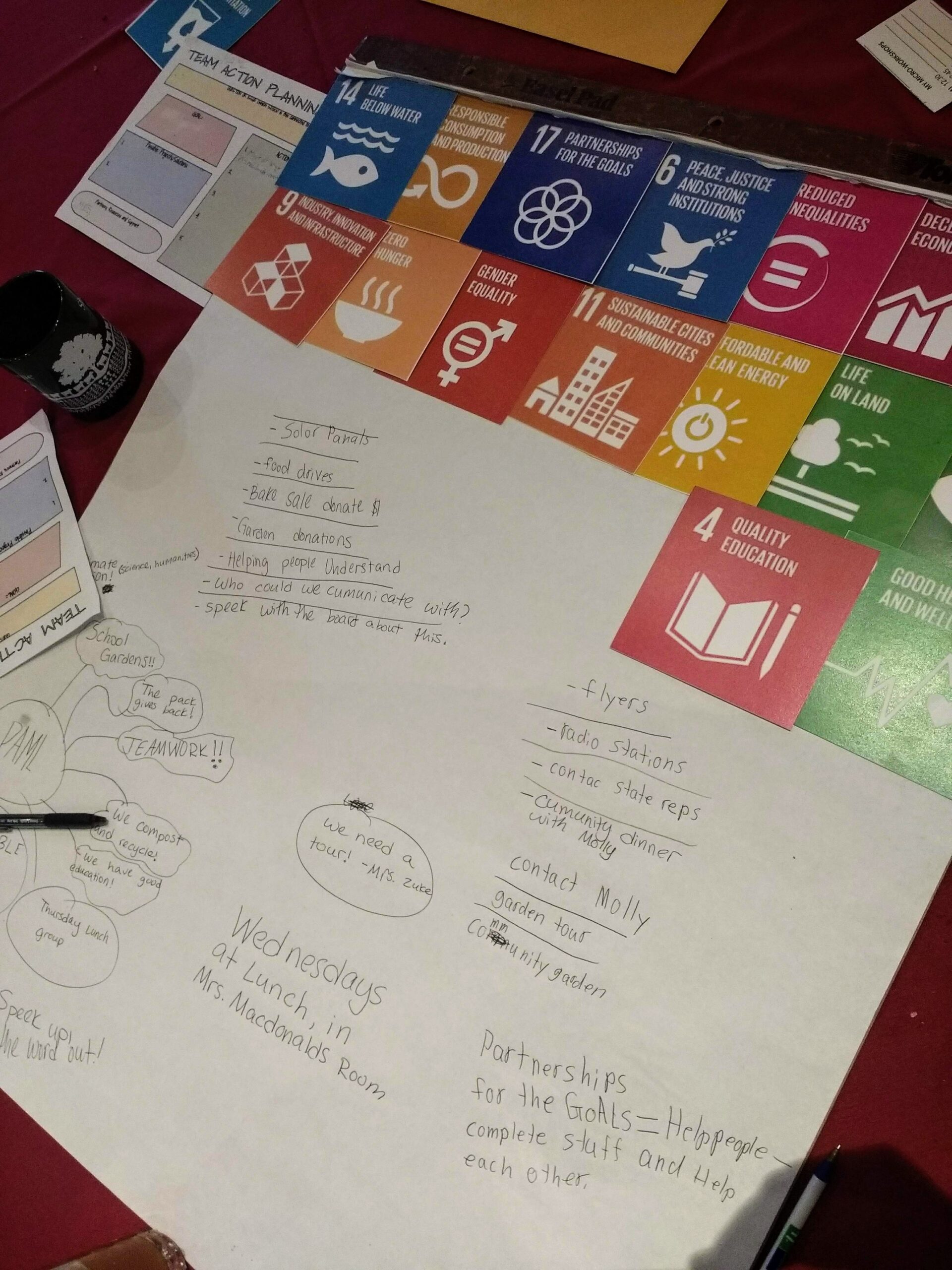
I am happy to report that this blog is packed full of great resources for service-learning, project-based learning, and using frameworks like the United Nations’ Goals for Sustainable Development, also known as the SDGs or Global Goals, which specify 17 goals that folks across the globe are working on together.
Students at Cultivating Pathways to Sustainability brainstorm local projects aligned to the Global Goals
Here are some of our best resources on service-learning:
Quick shout out to my brilliant colleagues Katy Farber and Jeanie Phillips, who wrote most of the posts on these lists (and Katy even wrote a great book on the topic!)
Finally, feel the feelings
Grappling with climate change is scary. The future may be uncertain, but the days ahead are likely to grow harder. It’s important that we acknowledge our feelings, not tamp them down. The grief we experience when we confront the impacts of climate change and the sixth mass extinction unfolding around us is real. It is also evidence of our deep connection to the earth and the other life we share this planet with.
Sarah Jaquette Ray’s Coming of Age at the End of the World guides educators to attend to both the affective and academic in the classroom. While her students are a bit older, her point remains valid. We have to welcome students’ fully human selves in the classroom. Which means we have to welcome our fully human selves, too.
In order to be able to make space for emotions that may arise for students, we need to be able to acknowledge and confront our own first. We do this emotional work so that we may move through the despair into hope and courage, and show them the way.
We are in this together. And remember, we are the hope.
When states around the country shifted towards standards-based, competency-based and proficiency-based learning and reporting, that involved separating the content-specific skills and knowledge from the learner-specific habits and behaviors.
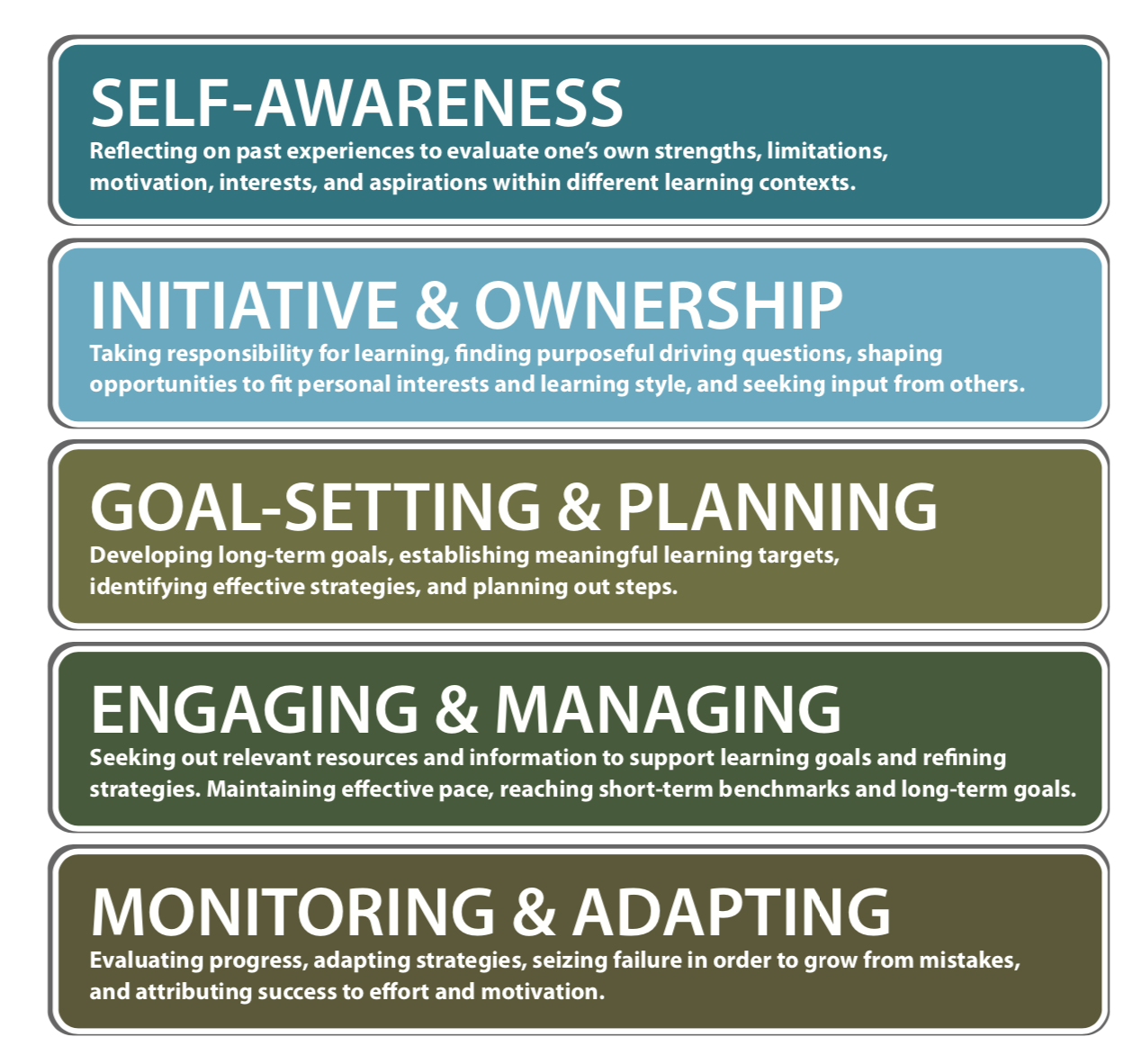
The particular set of learner habits and behaviors that districts and states chose to measure and report have varied. Similarly, some states adopted guiding structures such as the Essential Skills and Dispositions framework created in 2015. In Vermont, the AOE created a set of proficiencies called the Transferable Skills. These two frameworks differ in some ways, but both have in common a focus on self-direction for students.
(The 5 Components of Self-Direction from the Essential Skills and Dispositions framework)
Lench, S., Fukuda, E., & Anderson, R. (2015). Essential skills and dispositions: Developmental frameworks for collaboration, creativity, communication, and self-direction. Lexington, KY: Center for Innovation in Education at the University of Kentucky
A little Vermont context
The first time that I saw the Vermont Transferable Skills was in 2015. Many of the skills, such as Clear and Effective Communication, seemed, well, clear. But over the years I have been increasingly puzzled by the definition and conceptual framework behind learner self-direction.
Nearly every mission and vision statement coming out of schools these days aspires to produce self-directed learners. This has me insatiably curious. What is self-direction? What does it mean to be a self-directed learner? From where? And why did this skill suddenly appear in our vocabulary? That is to say, I feel a burning desire to better understand the concept. For the sake of teaching and learning young people.
Turns out, self-direction and self-directed learning are terribly complex concepts
Self-direction is a human trait that combines psychological, educational, emotional, and social behavior. Behind self-direction is the messy interaction of those needs and behaviors. Self-direction manifests into outcomes of our human behavior and decision-making. Instinctually, educators want to frame self-direction as purely positive and compliance-oriented behaviors. But that is a myth.
Any action, human decision and behavior is an act of self-direction: “good” and “bad”. If I’m in my evening class and I’m bored and feel like I need to move my body, I might get up and leave class to go to the bathroom. That is an act of self-direction.
Consequently, the instructor might think that I made a poor choice to leave class and miss the information and learning. But I examined myself and made the decision. I directed my “self” based on my needs, motivations, my context, and my previous experiences.
Similarly to self-direction, self-directed learning has become an umbrella term in education. It refers to a host of processes and outcomes. In short, it’s an educational experience (formal or informal) where the learner has some knowledge of their personal needs, sets goals, makes decisions, and finds the necessary resources. Then the learner conducts the actions necessary to meet their learning needs and goals. The concept of self-directed learning is being increasingly applied to K-12 educational settings. What’s interesting is that the roots of self-directed learning are in adult education.
Some salient self-directed literature
Certainly, one of the most influential texts is Malcolm S. Knowles’ 1975 book, Self-Directed Learning: A Guide for Learners and Teachers. He was a leading authority in the field of adult education. He defines self-directed learning as,
“A process in which individuals take initiative, with or without the help of others, in diagnosing their learning needs, formulating learning goals, identifying human and material resources for learning, choosing and implementing appropriate learning strategies, and evaluating learning outcomes”
Another adult learning researcher, D. Randy Garrison, contributed to development of the self-directed learning concept. In 1991, he published Self-Directed Learning: Towards a Comprehensive Model and created this visual to show the interaction of four dimensions of self-directed Learning.
Checking assumptions
In each of these adult learning models, there is an implicit assumption that the learner has some control and responsibility over their learning. These two models rely on opportunities for the learner to direct their own learning and determine learning goals. More current frameworks of self-directed learning, like the ES & D, also require that the learner has the opportunity and occasion to own and manage their learning.
Alas, I would argue that in many K-12 educational settings, learners do not regularly have these opportunities and this control. Which suggests an interesting problem. What are the behaviors that we are teaching and assessing when students do not have the opportunity to be self-directed learners?
Finally, we (as educators) need to ask ourselves:
If the origins of self-directed learning are rooted in adult education, how do we adjust frameworks and expectations when we apply it to children and adolescents?
What is a young person’s capacity and ability for self-direction and self-directed learning?
What does self-direction look like in a 6 year old? In a 12 year old? In a 16 year old?
How do our schools promote self-direction?
What structures in our schools impede self-directed learning?
These are questions that need answers. I’d love to hear your thoughts and ideas.
The middle school movement has been a powerful force for positive change. It’s rooted in progressive education, with special attention to the developmental needs of young adolescents.
In Vermont, we are ahead of most other states in implementing middle school systems and associated student-centered practices. That’s a good thing. Relative newcomers to this place, like me, should give big props to so many educators here who have championed innovative learning environments.
Yet there is a flaw at the heart of the middle school movement.
In the fervor to be maximally responsive to the developmental needs of young adolescents, it has downplayed the individual identities and complex contexts of our students.
For middle school educators who look to the movement for guidance, we may be missing the trees for the forest. And this is causing us to miss out on fully apprehending the strengths of our students. Or giving them them the guidance they need to meet challenges and to thrive. For middle school movement equity, we must strive to combine the developmental with the cultural to create an approach that is more authentically personal.
Engagement for whom?
While there is consensus that student engagement is paramount, we can’t truly put students at the center without being very specific about who they are.
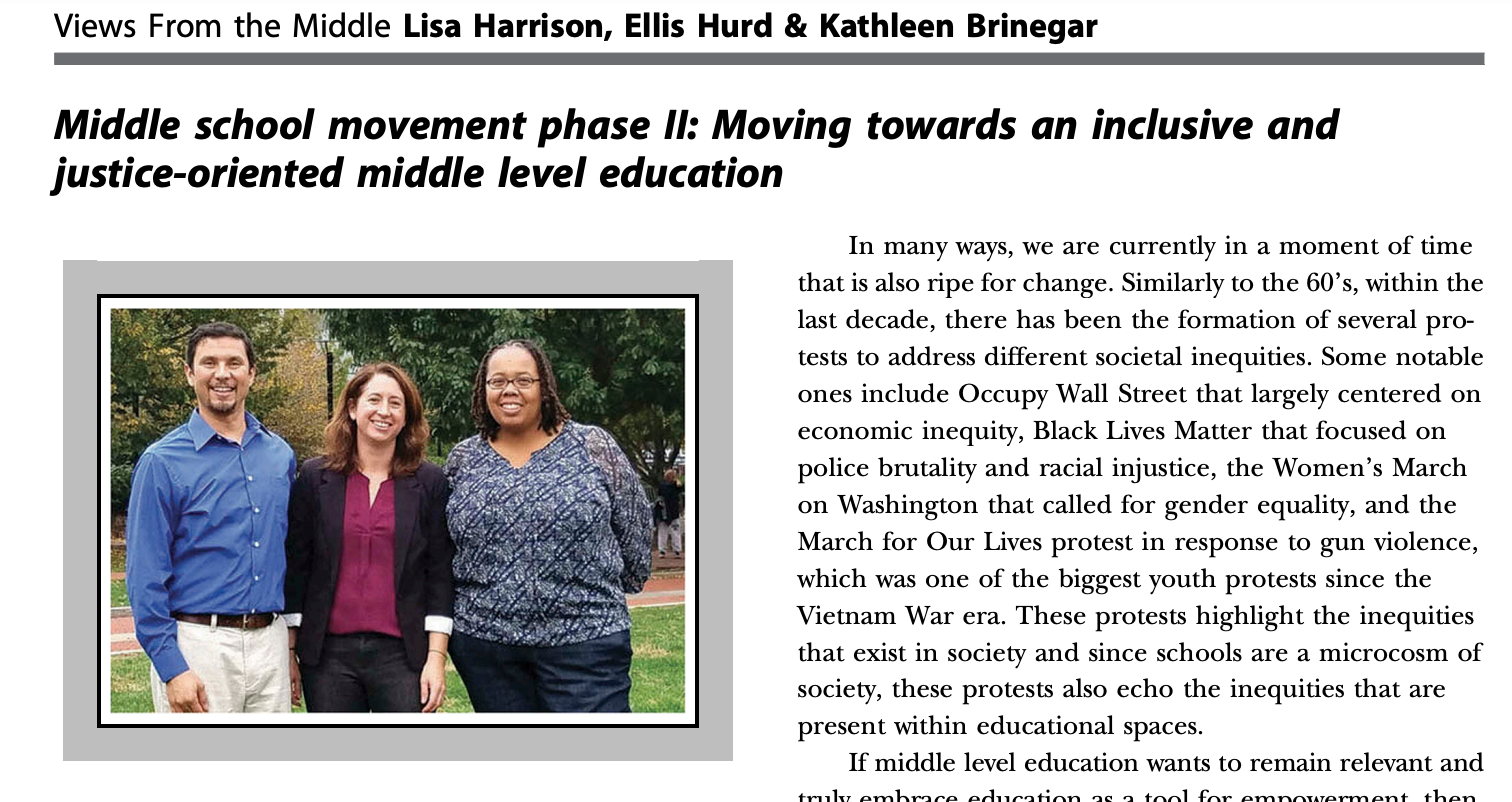
In an editorial titled “Engagement for Whom?” in AMLE’s Middle School Journal, Lisa Harrison, Ellis Hurd, and (Vermont’s own) Kathleen Brinegar posed this key question. As a team of editors, they asked us to support every young adolescent “by shifting the conversation from focusing on middle school organizational structures in general, to contextualizing them within broader social, cultural, and political contexts.”
The school-to-prison pipeline is flowing – Students with disabilities, Black students, and Native American students were suspended up to three times as often as their counterparts. They were also more likely to be referred to law enforcement by school staff.
Opportunity to learn gaps persist – The average standardized test score gaps are 18 percent by race and 25 percent by income. Schools graduate marginalized students on time at significantly lower rates.
Schools are not safe spaces for too many students – Students of color and students who identify as Lesbian, Gay, Bisexual, and Transgender (LGBTQ) are two to four times as likely to miss school because they don’t feel safe there.
In middle schools specifically, we continue to have too many students from marginalized backgrounds who are don’t feel valued or like they belong. This is despite the fact that structures such as advisory programs and teaming are fairly widespread.
We simply can’t assume that by changing school structures and improving instruction generally, we will achieve equity.
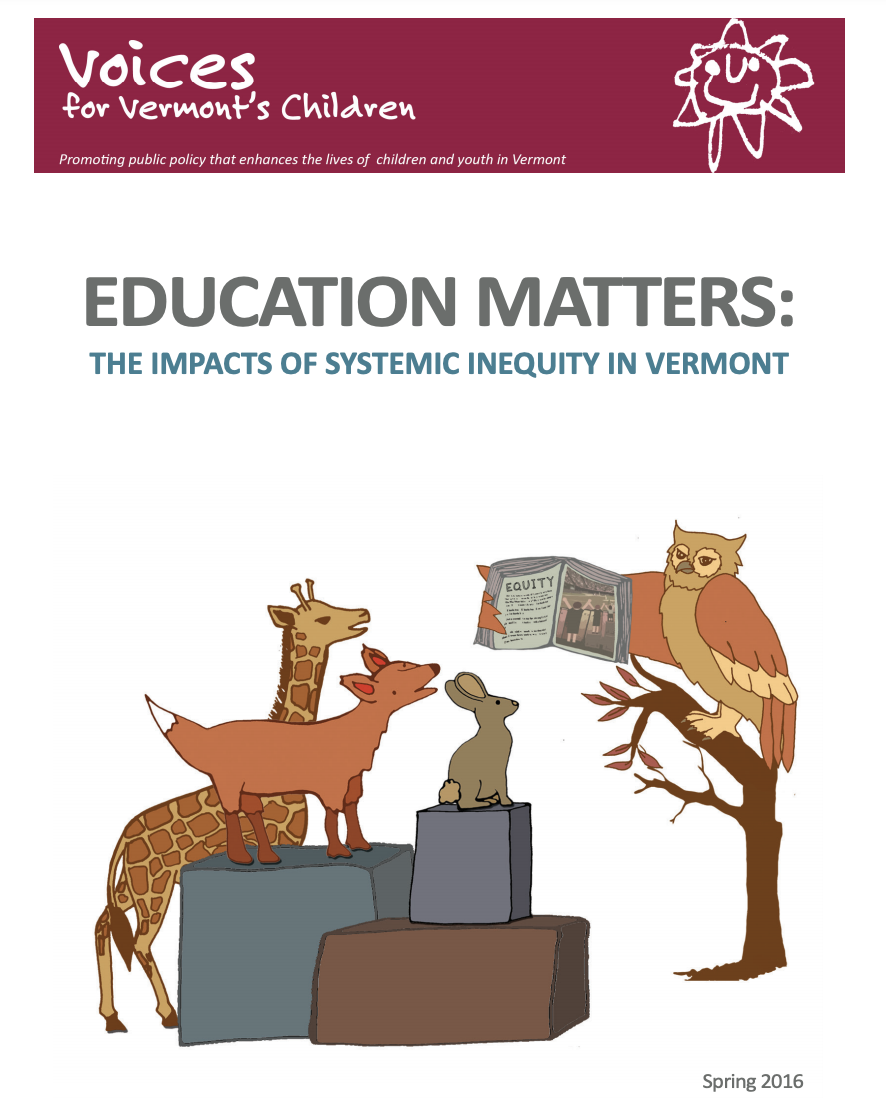
This report synthesizes baseline information on educational inequity in Vermont.
Beyond generic engagement
In the past I believed that if we could raise the overall quality of our systems and instruction, that equity would take care of itself. For example, take my blog post from 2016, Equity begins with engagement. I argued that educators could tackle systemic inequality by “lighting a spark” in every student. In effect I pointed to personalized learning as a panacea that could battle inequity in all its forms.
Now I recognize that personalized learning is limited if it doesn’t focus on dismantling oppression.
And that means we need to do the hard work of truly centering the identity of each of our students, in all their complexity and cultural depth.
Middle school movement equity at the moment isn’t as helpful as it should be in reorienting us to active anti-oppression. But there are a growing number of scholars and educators trying to change that.
“If middle level education wants to remain relevant and truly embrace education as a tool for empowerment, then we must focus on researching and sharing middle level practices that work to disrupt the status quo. This includes racism, classism, xenophobia, religious discrimination, heterosexism, ageism and other forms of oppressive structures within society.”
I interpreted this as a provocative challenge: if we are all about equity, then let’s fight for it directly. We don’t need to rely on entry points like engagement. Our middle school movement equity needs to actively promote equity both instructionally and institutionally.
Just as we must avoid over-relying on engagement as an entry point, we must come to terms with the limits of developmentalism. The middle school movement’s focus on early adolescence as a stage of life may have caused us to lose sight of knowing the individual students in front of us.
This is why the Middle School Journal editors call for a course correction. They argue that in Phase II of the movement:
“While we need to celebrate and be responsive to the unique characteristics of early adolescence, we cannot do so without recognizing and celebrating the unique identities and lived experiences of every young adolescent who enters our schools. When we do, we are recognizing that our job as middle grades educators is to empower each student to transform themselves. Such empowerment has the potential for youth to become critically conscious, which in turn supports their development as producers of knowledge and transformers of society.”
Let’s get radical
Critical consciousness is an ambitious goal.
In Critical consciousness: The key to student achievement, Aaliyah El-Amin and others describe critical consciousness as “the ability to recognize and analyze systems of inequality and the commitment to take action against these systems.”
Paulo Freire popularized critical consciousness 50 years ago. It is a key component of many asset-based pedagogies, including Culturally Relevant Teaching, developed by Gloria Ladson-Billings.
Yet some people may be alarmed by the idea that middle school education would seek to teach students to dismantle systemic oppression. This is why the push for Phase II is a big deal. It is unabashedly anti-oppressive. Though it is not partisan, it is political in the sense that it seeks to redistribute power to fully support students from marginalized communities.
Getting serious about middle school movement equity will indeed challenge the status quo. And that’s never an easy fight.
The Middle School Journal editors’ call to action: Ellis Hurd, Vermont’s own Kathleen Brinegar, and Lisa Harrison.
Revisiting our beliefs
The middle school movement intended to challenge the status quo from the beginning. When This We Believe dropped in 1982, it represented forceful advocacy for ideas that had been swirling around for at least a decade. The document challenged the junior high school model that was dominant at the time. What young adolescents needed were radically different and very much in line with the values of progressive education: lots of socialization, student choice and voice, and real world relevance.
I have personally found This We Believe incredibly helpful and have used aspects of it to drive professional learning numerous times. Yet recently I have become more acutely aware of flaws in this foundational document.
It’s time to talk about race
Let’s consider how race is addressed in This We Believe. And just as importantly, how race is not addressed.
Starting with a race-focused critical lens is important and instructive for many reasons. First, racism is arguably the primary oppressive force in this country. Second, studying the way racism operates and how to fight it informs all other anti-oppression efforts. And third, racism is really difficult to talk and think about. So if we don’t start with race then we are unlikely to go there naturally.
Using critical race theory, Christopher Busey systematically analyzed what is said and unsaid about race in This We Believe. He concluded that the text upholds two problematic narratives:
There is no story about race.
Racial difference as deficit.
For the most part, race is not an issue for young adolescents. But when it is, it’s a problem.
Ignoring race doesn’t make racism go away. Quite the opposite. Per Busey: “This We Believe’s colorblind ideology is complicit in constructing a racial reality of disproportionate discipline, culturally desynchronized curriculum, and hostile learning environments for early adolescent children of color.”
Color-evasiveness (often referred to as colorblindness) is problematic and has demonstrably racist impacts. Race impacts everyone, even if some white people don’t realize it or perceive impact in their own lives. When somebody says “I don’t see race,” they are not acknowledging the racial realities of people of color. When teaching students of color, color-evasiveness is a barrier to curricular connection and harmful to relationships.
Alternatively, a deeper understanding of how race operates allows us to be critical of the systems of inequity in which we participate. We may be able to start to understand how schools privilege certain ways of acting and learning that unnecessarily disadvantage many students. And we may be able to take steps to move from deficit- to asset-oriented mindsets that help middle schools become places where all students can thrive.
Busey offered three belief statements in opposition to This We Believe:
We believe race is central to identity development.
We believe smartness is a racialized construct; racial difference is not a cognitive deficiency.
We believe race matters in creating positive school environments and subsequently, socio-emotional and psychological development.
These crystal clear belief statements directly address racial equity. If we don’t say this stuff out loud and commit, equity won’t happen organically. Busey’s statements leave less room for accidentally perpetuating racial inequity.
It’s about impact, not intent
Racism and other oppressive systems do not require overtly bad intentions. Impact is what matters. The authors of This We Believe, while they were mostly white men, meant for the document to align with equity. But as Stephanie P. Jones put it in her recent article Ending Curriculum Violence,
“The notion that a curriculum writer’s or teacher’s intention matters misses the point: Intentionality is not a prerequisite for harmful teaching. Intentionality is also not a prerequisite for racism.”
In that spirit, I must recognize that my reliance on the ideas birthed in This We Believe has made me complicit with racism and oppression.
It hurts me to say this.
But once I’ve recognized this as a problem I need to put my energy into fixing it.
Beyond developmentalism
Seeing our students as young adolescents is not enough to be responsive to their needs. We must seek to understand race and other social forces that impact their lives and their learning.
“Let me be clear: I do not think White teachers enter the profession wanting to harm children of color, but they will hurt a child whose culture is viewed as an afterthought.”
We must center the aspects of identity that are most important to each student. In some cases that is race. In other cases and moments it may be gender, class, sexuality, and the intersections thereof.
Simply put:
“Middle level educators must realize that culture and identity often matter more than age in shaping the experience of young adolescents.”
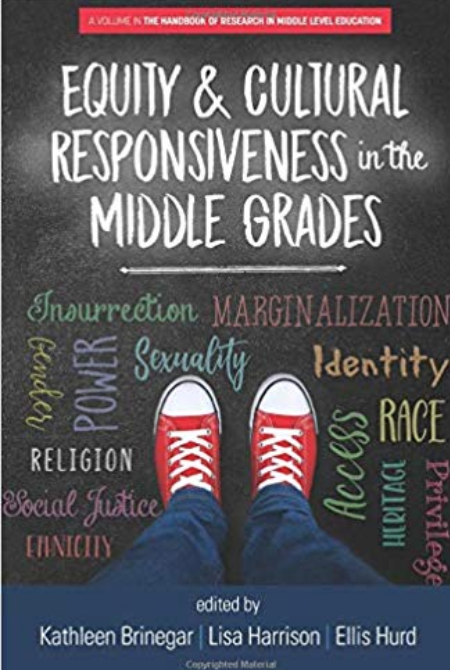
The above statement appears in Chapter 1 of a recently published book called Equity & Cultural Responsiveness in the Middle Grades (edited by Brinegar, Harrison, and Hurd). It compiles research from twenty some scholars delving into the themes of this blog post.
This straightforward statement represents a call for recalculating the weight of developmentalism in the middle school equation.
This recent Handbook compiles research to fuel the Middle School Movement Phase II.
Where does cultural responsiveness (or the lack thereof) play out in middle schools?
Consider how important considerations have been left out of the mainstream discussion of the three major areas of adolescent development.
Physical Development
Emphasizes traditional Eurocentric standards of beauty
Emphasizes heteronormative understandings of gender and sexuality
Minimizes the impact of food and housing insecurity on physical development
Cognitive Development
Lacks culturally responsive pedagogies
Fails to recognize the limitations of monolingualism and benefits of multilingualism
Overrepresents culturally diverse students in special education
Social-emotional Development
Downplays or ignores the influence of cultural identity on belonging
Uses predominantly color-evasive approaches, particularly by white teachers
Fails to pay attention to the importance of creating affirming spaces for students with historically devalued and marginalized identities
If we aren’t sufficiently aware of the social-historical forces operating on layers of identity, we are in danger of seeing differences as deficits.
We are more likely to see deviations as bad or abnormal when adolescent development is framed in general terms. We need to connect developmental and cultural responsiveness.
And the first best thing we can do is to broaden our understanding of identity. We need to deepen our understanding of students so that we see can clearly see their assets. The middle school movement helped shine a spotlight on the positive potential of young adolescence. Now we need to commit to being equally responsive to cultural and social aspects of identity.
The way forward
If we are willing to do the work, we can draw on any number of well established asset-based approaches. These are deep pedagogies that require attention to self and systems.
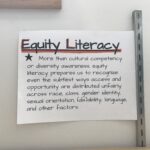
… engaging in social justice work requires the acknowledgement that equity frameworks such as culturally relevant pedagogy (Ladson-Billings, 1995; Ladson-Billings, 2014), cultural responsiveness (Gay, 2000), culturally sustaining pedagogy (Paris, 2012: Paris & Alim, 2017), equity literacy (Gorski, 2017) and reality pedagogy (Emdin, 2011, 2016) are not just lists of practices or strategies, but philosophies or ways of being and thinking. There is no list of silver-bullet strategies that make us equitable, transformative educators or that make our curriculum socially just (p. 1).
We can continue to celebrate and cater to the developmental characteristics of young adolescents. We also have the opportunity to more fully honor the assets that students bring with other aspects of their identities.
In practice, taking into account the complex array of characteristics for any given student boils down to seeing them as an individual. Not just in a “celebrating diversity” sort of way, but recognizing that each student’s individuality has a context. Each student carries an intersection of identities and many of those identities are culturally situated.
If we can create learning environments that validate, affirm, draw upon, and sustain those identities, our students, schools, and communities can thrive.
Always, always, start with ourselves
Lest our own blindspots and biases get in the way, it is incumbent on educators to constantly critically analyze our beliefs and practices. This is especially important for educators such as myself who carry privileged social identities. Whether looking at my internal blind spots, my external mistakes, or the impacts of systems and organizations in which I participate, I resolve to stay committed in the face of inevitable pushback.
I am also excited to work with others who are trying to bend existing and emerging systems to the equity task at hand.
Middle school structures such as advisories, curriculum integration, and teacher teams continue to have a lot of student-centered potential. And in Vermont there is much change afoot via promising personalized learning strategies like Personal Learning Plans, Flexible Pathways, and proficiency-based learning.
We need to make sure that anti-oppressive education is the driving force of systems change rather than an add-on or assumed byproduct. We need to build on the work of educators and scholars of color who model how to make equity our primary unapologetic orientation.
In essence, we need to develop our own critical consciousness so that we can (1) instill it in our students and (2) disrupt inequity in our systems.
So let’s get critical, get conscious, and get to work.
How will *you* contribute to middle school movement equity?
References
Brinegar, Kathleen, Lisa Harrison & Ellis Hurd (2018)Becoming transformative, equity-based educators,Middle School Journal,49:5,2-3,DOI: 10.1080/00940771.2018.1524253
Brinegar, Kathleen, Lisa Harrison & Ellis Hurd (Eds.). (2019) Equity and cultural responsiveness in the middle grades. Information Age Publishing.
Busey, C. (2017, April). Arrested development how This We Believe utilizes colorbind narratives to neglect the racial realities of early adolescent development and middle grades education. Paper presented at the meeting of the American Educational Research Association, San Antonio, TX.
El-Amin, Aaliyah, Scott Seider, Daren Graves, Jalene Tamerat, Shelby Clark, Madora Soutter, Jamie Johannsen, and Saira Malhotra (2017) Critical consciousness: A key to student achievement. Phi Delta Kappan 98 (5), 18-23. https://kappanonline.org/critical-consciousness-key-student-achievement/
Emdin, C. (2016). For White folks who teach in the hood… and the rest of Y’all too: Reality pedagogy in urban education. Boston, MA: Beacon Press.
Freire, P. (1970). Pedagogy of the oppressed. New York, NY: Herder & Herder.
Gay, G. (2000). Culturally responsive teaching: Theory, research, and practice. New York, NY: Teachers College Press.
Gorski, P. C. (2017). Reaching and teaching students in poverty: Strategies for erasing the opportunity gap. New York, NY: Teachers College Press.
Harrison, Lisa, Ellis Hurd & Kathleen Brinegar(2018)Middle school movement phase II: Moving towards an inclusive and justice-oriented middle level education,Middle School Journal,49:4,2-3,DOI: 10.1080/00940771.2018.1490569
Paris, D. (2012). Culturally sustaining pedagogy: A needed change in stance, terminology, and practice. Educational Researcher, 41(3), 93–97.
Paris, D., & Alim, H. S. (Eds.). (2017). Culturally sustaining pedagogies: Teaching and learning for justice in a changing world. New York, NY: Teachers College Press.
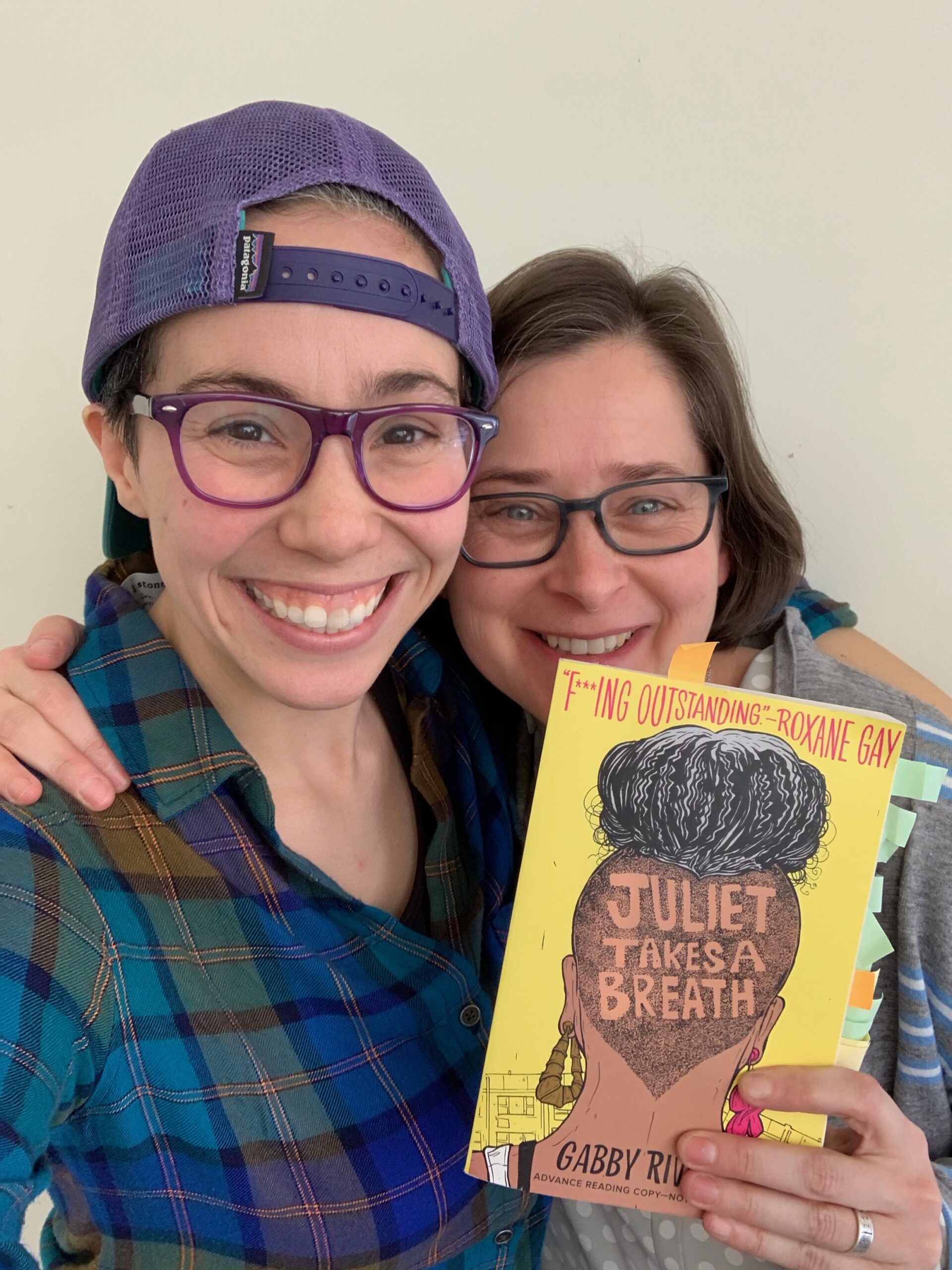
Welcome back to #vted Reads! The podcast for, with and by Vermont educators. I’m Jeanie Phillips and in this episode, we’re joined by Dolan, in talking about Juliet Takes a Breath, by Gabby Rivera. Along the way, we talk white fragility, preferred pronouns (and how your students can let you know what’s safe and appropriate for them in different settings), we learn about Gloria E Anzaldúa’s Borderlands, and answer the question: ‘What can adults do to support students in their activisim?’
Plus, I confess my shortcomings as a meditator.
It’s #vted Reads. Let’s chat!
Jeanie: Thank you for joining me, Dolan. Tell us a little bit about who you are, and what you do.
Dolan: My name is Dolan and I go by they/them pronouns. I currently live in Vermont, and I’m in a doctoral program with Jeanie, which is really lovely, in Educational Leadership and Policy Studies. Before that, I worked for six years coordinating and directing LGBTQ resources and services on college campuses. On different campuses across the country.
And most I recently moved here from California. Before that was Missouri, before that I was here in Vermont, doing my master’s program in the Higher Ed Student Affairs HESA program, just a really transformative experience for me.
I love reading, especially queer-trans, people of color or QTPOC Fiction. It’s really fun to get lost in a book, especially a book that pushes me, or resonates with me, or one maybe I feel seen in.
I am biracial. I’m white and Latinx. My mom was born in Cuba. And I definitely feel that I have a lot of white privilege and white-passing privilege. I am queer. I’m bisexual and I’m non-binary. Which is why I go by they/them pronouns, although some non-binary people go by different pronouns as well. And I’m excited to be on this podcast today.
Jeanie: Oh, I’m so excited to talk to you about this book. We talk about books all the time. One of the questions I asked my guest is what book are they reading now. And you are always reading a ton of books! As you walked in, you are like, I just now finished The Water Dancer — a book I adored. So, I wondered if you wanted to share any other highlights from your reading list?
Dolan: Yeah, I literally, as you said just finished The Water Dancer moments before this podcast recording. It was a beautiful read. Really beautiful POC fiction that I recommend to everyone. Also right now I’m finishing up Eloquent Rage: A Black Feminist Discovers Her Superpower. And also finishing Ibram X. Kendi’s, How to be an Antiracist?
And I have a few more that I’m about to read but I can’t remember the names of. I use the Libby app and love downloading audiobooks and listening that way. I’m supporting my local library.
This past winter break since I’m a student, I read a lot of really fun books and one that sticks out to me is Darius the Great Is Not Okay. I loved that young adult novel. So. Definitely recommend that one too.
Jeanie: That’s a great one. And yay, public libraries! Yay libraries. I also just want, for listeners who may not be familiar, could you talk to me a little bit about the shorthand you use? You just used “POC” and that stands for People of Color. Is there other shorthand you might use that we could spell out for listeners as they listen?
Dolan: Yeah! So like I said I sometimes say “QTPOC” for Queer and Trans People of Color. I found living on the East Coast people pronounce it “P.O.C.” for People of Color and living on the West Coast, I found people pronounce it “POC” [pawk] for People of Color. So…I don’t know. I’ve bounced back and forth because I’ve lived in both places. And I’m still readjusting to the East Coast lingo.
But when I say POC or P.O.C., I’m referring to People of Color. So, what I mean by that personally is non-white people. That can be people mixed with white like myself, or others who are not mixed with white, people who are mixed or not mixed in general.
So, usually that looks like Black Indigenous Latinx or Latino / Latina people. And Asian Pacific Islanders, Middle Eastern — other people who might identify. I also use the word “Latinx” instead of Latino or Latina, because while some people feel confused by Latinx because it’s less pronounceable in Spanish, it’s a word that was created by Latino / Latina / Latinx people to acknowledge the fact that our language, Spanish, is gendered. That all nouns and adjectives, almost all of them completely have gender. Which is very strange in my opinion. And a little bit constricting for people like myself and many, many others who identify outside of the gender binary, or just generally feel restricted by that binary.
So, a lot of times when words end in “o” and “a” in Spanish people put an “x” there, which again is a challenging pronunciation. But it’s more so to acknowledge that the binary isn’t really real. It’s a figment of our imagination. And that it can be really even violent towards folks. So, a lot of times I’ll say Latinx in this, especially talking about Juliet.
Jeanie: I so appreciate you breaking down those words for us. Words have so much power! And so, I’m trying in my life in general to be more intentional with the words that I use? And I just really appreciate you making that accessible to us.
So, let’s dig in to Juliet Takes a Breath by Gabby Rivera. I wondered if you could introduce us to the narrator of our story here, Juliet.
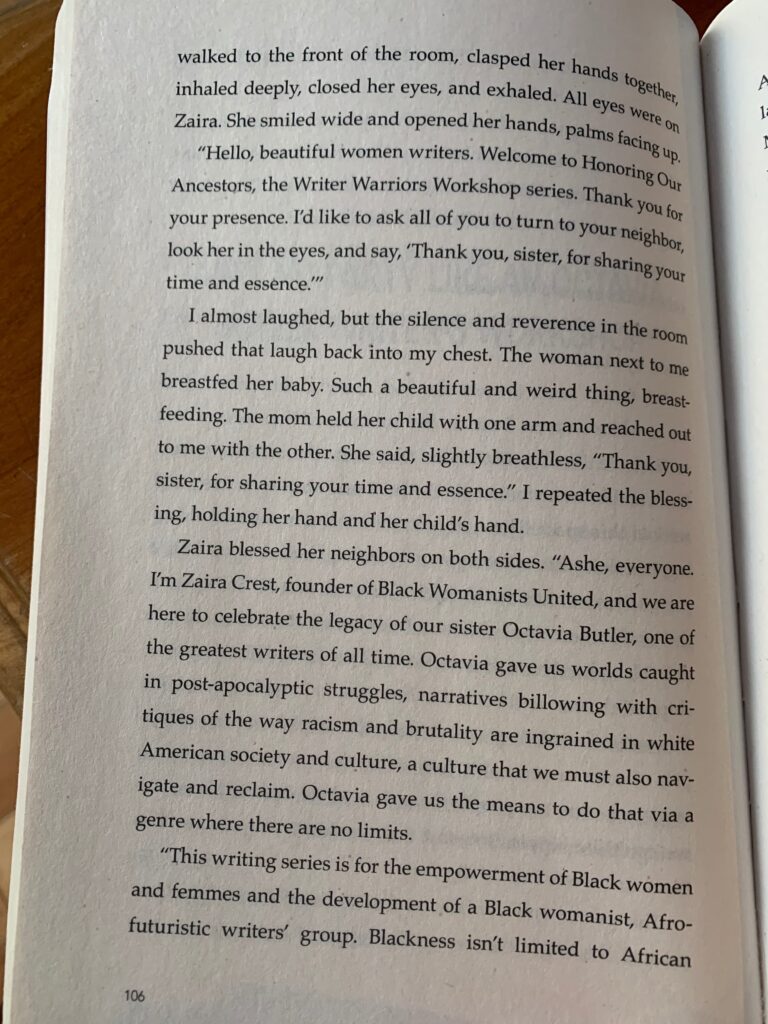
Dolan: Yeah. So, Juliet is growing up in the Bronx in the book, she identifies in some ways as gay, as queer or part of the LGBTQ community. She has a girlfriend. You find that out like, on page four. And she’s boricua. She’s Puerto Rican. That’s a word that a lot of Puerto Rican folks use to describe themselves.
She’s kind of coming into herself throughout the entire book. And learning to love all parts of herself, striving for authenticity in all areas of her life. She’s navigating sometimes the harsh terrain of Puerto Rican Catholicism, and Latinx familia. Figuring out what it looks like to be young, to be queer. To be closeted in the beginning of the book, and figuring out how to be authentic in that space. Where she’s really embraced in her culture.
And she’s kind of dodging those questions at home about a boyfriend or a husband in the future. She shines brightly with her girlfriend in the beginning of the book, too. And she’s still learning kind of the hard way that this white supremacist society teaches us that she lives at the intersections of a lot of marginalization. So, she’s still learning that being in her brown, Puerto Rican family, she’s hiding a part of herself for protection: her queerness. And she seems to be desperate for more queer-friendly spaces. To seek protection from homophobia and sexism and the harassment that she’s experiencing a lot. She talks in her first chapter about experiencing some street harassment.
At the same time, she’s expecting — and she has every right to expect — a non-racist queer space, which many of us know is hard to come by. She’s still reckoning with the fact that much of the violence she experiences isn’t just sexist, it’s racialized. And I think she’s learning that throughout the book: that men harass her because of her brown body, her curvy body. Her Latina body is very sexualized by society; not just her woman body.
And so, I think Juliet is still figuring herself out. She’s very open and honest and vulnerable about that, at least with the reader. Very humble in that way: grounded in that humility of “I want to learn about feminism, and queerness; I have this girlfriend, but I still have to pay homage to my, you know, my elders in the queer community.”
And I think she still is learning that she has a lot to give and a lot to teach.
Jeanie: Early on in that chapter, she is struggling with how to come out to her family. And I think especially her mother. And she’s already out to her little brother who is bloody adorable.
Dolan: Amazing.
Jeanie: And also, challenges notions of Latinx masculinity, right? He is a total sweetheart. But, she wants to come out to the rest of her family. And one of the things that I really loved about this book was the tenuous way Gabby Rivera sort of walks this fine line of like, “I need to be who I am and be honest about that” and “I really need to be connected to my family.” Juliet’s not willing just to reject them. And I wondered if that was also her experience as a person of color.
Dolan: I think so. A lot of times queer communities look very white. And part of that, then perpetuates this narrative that communities of color, and families of color are more homophobic or transphobic. Queerphobic. And it’s just not the case, a 100% just not the case.
I just think that it’s a much more complex narrative than reading this book and saying, “Oh yeah, Latinx people are homophobic.” Or, “Juliet’s mom is just, you know, really homophobic in the beginning.” It’s that Juliet’s mom is living in this world; she wants the best for her daughter. And while the best for her daughter is *not* for her to be as heterosexual as possible, that’s the way she’s thinking, right? So we have to hold space for that and hope some forgiveness for that and recognize that this was an act of protection and survival and not *because* brown people are more homophobic.
Jeanie: Yeah, I appreciate that because I think it also leads us along into the story, because Juliet, as a very young college student, is heading out for an internship. She has discovered this author that has been life changing for her: Harlow. Harlow’s written this sort of feminist treatise that really resonates for Juliet. And Juliet’s heading to Portland, Oregon which in the book it cracks me up that her family is always saying, “Right, you’re going to Iowa.” Portland feels so far away from them!
But she’s heading to Portland, Oregon, which is a really white space. So, you’ve set us up nicely to think about Juliet’s experience as a person of color heading to this very white space. She’s *really* excited because she’s also heading to this really queer space.
Dolan: And I think that Juliet doesn’t know to look for both of those things. She sees, “Oh wow, this is some queer haven where people are saying this. This writer is writing all these queer-friendly, queer-affirming things. That must be what I need, right? Because I’m held in my brownness at home, but I’m not necessarily being held in my queerness right now. So, I need to go be held in my queerness, right?”
And that’s where I think we need to be thinking intersectionally because I feel for Juliet, this is so real, so valid, that she would run towards that and not recognize that she, unfortunately won’t be held in her brownness in that space.
Jeanie: Right, and the intersection of the two. One of the people that lives in the house with Harlow, early on in the book, takes her out. I think it’s her second day in Portland, her first full day in Portland. And he takes her out to sort of get to know the town and he, you know, he’s having a rough time himself. He gets really adversarial with her. And he starts asking her about her preferred pronouns. She’s never heard this phrase before. So, for our listeners who maybe haven’t either, could you talk a little bit about what we mean when we say “preferred pronouns”?
Dolan: Yeah. So, pronouns are this very simple yet very complex thing. We use pronouns all the time in the English language to refer to people in the first, second and third person without using their names. And so, when we’re talking about pronouns, we’re talking about third person pronouns. Those look like “he” and “she”, right? In the singular, right? So, when we’re talking about people we’ll say, “Oh, I met up with him / I went to dinner with her / know her” whatever it might be, right? And we have to recognize the gendering that happens in those third person pronouns.
So queer folks, trans folks created this new way of talking about ourselves. Because a lot of folks have said, you know, we can’t be what we can’t see. We have to be able to create language to talk about ourselves because we’re creating new ways of being and living. And if we’re not able to talk about it, other folks won’t see us. We are paving paths for others to be able to see themselves in us.
And so, gender-inclusive pronouns are ways that we asked folks to refer to us that aren’t misgendering to us. Because not everyone identifies as a man with “he” pronouns or a woman with “she” pronouns. And so, gender-inclusive pronouns often look like using they/them pronouns, which, again is kind of a repurposed plural pronoun that we all know, if English is our language of use.
They’re ways of acknowledging people that we wouldn’t be able to acknowledge. And I have to say as a person who use they/them pronouns and is non-binary: when people misgender me, it hurts. Not just because, oh, they made a grammar mistake. It’s never about that, right? I fully recognize that it takes a lot of re-learning in order to use these newer words for folks or using old words like “they” in new ways.
When English is not our first language and we’re really having to think through each word, I’d recognize that’s really tricky, especially folks are translating in their heads as they’re speaking, it’s complicated.
So I think the most important thing and the most amazing thing that folks can do is recognize that we can’t know someone’s pronouns without asking? And to provide some space for folks to name their pronouns. So when you’re in a meeting or a class, in the beginning if people are introducing themselves asked folks to offer their pronouns as well, right? If you’re making name tags for a conference or for a one-day thing or for permanent name tags for people’s offices names and pronouns, right? If we couldn’t guess your name, we couldn’t guess your pronoun.
One more thing I’ll share is that they can change over time and in different contexts, right? Let’s say Juliet wanted to use they/them pronouns for themselves. But at home, maybe that wasn’t safe. So when we’re talking with Juliet’s mom, we’re using she/her, right? When we’re talking with Juliet in class, we’re using they/them. And so checking in with folks and saying, “Hey, I just want to be a support to you, let me know if it shifts for you or if there are ways that I can support you.”
And a lot of times if you have a young student, for example, I see this a lot in youth, where they’re [in the Gay-Straight Alliance] they’ll say,
“Oh, I want to use these pronouns. But when you’re meeting with my parent at the parent-teacher conference, use these [other] pronouns, right?”
And that’s a way of protecting someone and letting them play with their identity and their language a little to see what fits.
Jeanie: Yes, I’ve had that experience actually in schools of using one set of pronouns with the student and a different set of pronouns on the report card or with the family and it’s super important to keep LGBTQ folks safe.
Dolan: Absolutely.
Jeanie: I’m going to insert into the transcript to my yearly public service announcement, which is The LGBTQ Bill of Rights for Students (.pdf) which is an important document that I think should be at schools everywhere.
Now, is there a role for ally ship in this? If I’m with you and somebody misgenders you, what’s my role as your friend, as your ally?
Dolan: I think it’s tricky because you may be with a youth. Or you may be with someone in front of their family. Like I said, it can change based on the context. So a lot of times, I say one of the best first steps can be to check in with the person afterwards.
“Hey, I was in that room and I noticed that someone misgendered you. How can I support you?”
Right? And I think that’s huge because that non-binary person that trans person definitely noticed that they were misgendered. Very rarely I’m I like, “Oh, they did?”
I almost always know that: yes, you’re right. Thank you for noticing. I felt alone in that moment. I felt isolated and unseen and you saw me. And that is a big deal to feel seen even when others are kind of harassing you, right?
Jeanie: That is so helpful. I just so appreciate this conversation. And I think Juliet, in the book, could have really benefited from a friend like you to sort of help them navigate, like. because she sits there for a long time and struggles with like, what even is that?
Dolan: That’s a big undertone of that interaction that she has with this man! And there’s something to be said about her being consistently marginalized around even not being queer enough — which is a big narrative in our communities, unfortunately — for this space. And Juliet is not able to see herself reflected back in this community and feel like she can contribute and teach and be part of, you know, that spac. Because she doesn’t *know* enough. Which is not fair when we webinars our own work against each other, right?
Jeanie: This reminds me of a conversation I had last night with a friend of mine who works with a lot of ELL students, and this student who is Nepali, is taking a Spanish class. And the student said to my friend who’s working with her, “All of the white kids in the Spanish class are *so* good.”
And, my friend Jory says, “Well, do you think it’s because that this is your third language you’re learning? Do you think they would be as smart in Nepal?”
Dolan: Ooh.
Jeanie: I bring this back to Juliet because in a way what Juliet had seen is like, “Oh, is it because I’m brown that I don’t…?” Right? And she is really seeing this white perspective and feeling like she doesn’t know enough. Meanwhile, nobody in the whole place is acknowledging anything about her Puerto Rican background.
Dolan: Absolutely. Absolutely. And they don’t feel like they need to take responsibility for that learning. It’s a very complex pattern throughout the book.
Jeanie: It’s a double-standard, right?
Dolan: Absolutely.
Jeanie: You need to know all of these things to fit into the queer community, but we don’t need to know anything about your cultural background.
Dolan: Right, exactly. And we will punch your card when you’re ready, right? Your queer card. And that’s just nonsense, yes.
Jeanie: But not all the spaces Juliet experiences are like that. She gets taken to a Writer Warriors workshop. And I wonder maybe we could read a few pages of it. To introduce this space.
Dolan: So before I start reading, for those who you are following along at home, it’s on page 106. Juliet is in this space being hosted by Zaira. And Zaira is a Black queer woman.
Jeanie: Thank you for that. First before we go anywhere else, can we just express our mutual appreciation and love for Octavia Butler?
Dolan: Yes, she’s so amazing. I really want to just beg everyone to please read all of her books. Kindred is currently on my nightstand and I’ve only read her Earth series so far, Parable of the Sower and Parable of the Talents. But holy-moly, it’s just amazing dystopian fiction that will feel way realer than 1984.
Jeanie: So, we just needed to get that out of the way because we have talked about Octavia Butler a bunch. But let’s go back, because what ends up happening is and I’m going to read this part because it’s the white woman’s part. Okay.
So, on page 110, you know, they’re finishing up this workshop, where Juliet is like, she’s a writer, but she’s doubting that she’s a science fiction writer. And she’s rediscovering Octavia Butler’s brand of science fiction, which is a little bit different.
But as they’re leaving, Juliet overhears a conversation and here it is.
You’re cracking up over there!
Dolan: I am!
Jeanie: Tell me what you’re thinking.
Dolan: Just the, “I know reverse racism doesn’t exist, but…”
You know it’s never going to go in a good place after that. I just know that. And literally the line right after you stopped reading Juliet kind of says, as the narrator, “I didn’t really know what was wrong from what they said, but it felt weird.”
And I want to acknowledge that. It’s so valid. I love that she shares that with the reader.
And I think it also reminds me of the magic that we have, right? Our intuition, how Juliet maybe hasn’t read a book about privilege and whiteness and white supremacy, but she knew in her bones, in her gut, in her heart, her soul that what just happened wasn’t right, you know. She didn’t need that academic training on the topic to know it, right?
And just a few pages after that, Harlowe gets in the car, with Zaira and some others, and she had just talked to some white women who were fawning over her writing–
Jeanie: –and Harlowe is a white woman, a white writer.
Dolan: Exactly. And she sits in the car. I think she’s the only white woman in the car. Everyone else is a woman of color after this session and she’s just kind of like humphing. And Juliet talks about how she’s all pointy and all edges and very sharp, you know? She’s just making the stink, right? And how a lot of times white women, white feminists, white queer feminists can’t really acknowledge that racism still exists right now, still, in all of us day-to-day in our interactions we’re witnesses to it and we’re perpetrators of it, right?
Jeanie: Yes.
Dolan: And I say that as a person who’s half-white, half-Latinx, super white-passing, right?I’m totally part of the problem *and* experience it sometimes. And so, it’s a real thing. And I love the way that Gabby Rivera walks us through this because it’s so dally. *laughs* And the way that Juliet makes meaning of it? Because she doesn’t have all the words and all the jargon but she totally gets it in her gut. That what happened was wonky, right?
Jeanie: Right. And we’re so used to being centered in our histories, in the literature that we read in school and out of school, in the news, on television and movies. So suddenly when our experience isn’t centered or when we’re asked to, you know, stay a little quieter, make a little space — and I say that we as a white woman, me “we” — when we as white folks are asked to do that, it pinches. I think it takes a lot of self-awareness and practice to get used to being like, “Oh, other people experiences all the time and we don’t even ask it of them, it just happens.”
You’re making me think of something. I am a very novice meditator. I should meditate more, probably. But when, you know, when I’m learning meditation, when I’m focusing on meditation, one of the things is when your mind wanders –which it will — the work, the practice is really about coming back to the present moment, right? And so, what you’re making me think about is the practice here is about like, “Oh, there’s my fragility again.”
Dolan: Yes, it’s the noticing and naming, just like in meditation, right?
Jeanie: And that comes back to pronouns.
Dolan: Yes.
Jeanie: When we mess up, it’s the noticing and the naming. Oh, I so appreciate the way you’re reading this together for me.
So Juliet, besides going to Writers Workshops with cool people and other social events around. Portland also has a job to do and one of her tasks is to investigate this, like, weird collection of paper slips with the names of powerful women on them that Harlowe has collected. And one of the women she seeks out is Lolita Lebrón. She’s at the local library where there’s a bit of a love interest, that was really fun to read about! And she gets really angry because she didn’t know about Lolita Lebrón who is a Puerto Rican revolutionary. She gets like, ticked. She’s like, “How do my family never talk to me about this? My Puerto Rican family, where is this story? How did I never learn it?”
It reminded me, at the Middle Grades Conference, a teacher in the room asked some Edmunds Middle School students who were presenting on equity, “What could adults do to support them in their activism?”
And one of the students responded, “How come nobody ever teaches us about inequity? I wish adults would teach us about what is going on in the world.” And so, I’m just curious about how you reacted to the Lolita Lebrón’s section.
Dolan: Yes, it’s so real. We don’t realize how much we’re centering white people in our history and in our pedagogy until we read something else. And it’s like, “Oh, my God, how did I not know?”
For me, this makes me think immediately about learning about Gloria E. Anzaldúa for the first time, way too late in my life, when I was like 24 or 25 in grad school the first time. She talks about living in the Borderlands in her book Borderlands/La Frontera. And this book cracked me open and made me feel whole at the same time.
So, as a biracial, bisexual, non-binary person — also a Gemini — I feel Juliet’s words on a visceral level, this living between sometimes in different lands never truly belonging, perhaps only belonging in the liminal space of the border itself and not knowing who our people are.
It was powerful for me because… I had embodied so many experiences but didn’t know how to name it? And also felt so isolated. And so, it comes back to this: you can’t be what you can’t see, right? Or this way of when someone names and experience you feel seen and you feel less alone, right? Because I was like, “Wow, I’m not the only person who lives on some Borderlands, right? And so I read her book. I think I was assigned one chapter for something. But I read the whole thing. I just couldn’t put it down.
And it had so much Spanish and Spanglish in it that she just unapologetically wrote in both languages and a mixture of language and some words she made up and I just loved.
And I just cried.
I cried hearing the words of my people and reflecting on the colonization of language itself. This idea that Spanish had came from the conquistadores and is really not the indigenous language at all. And [Anzaldúa] identifies as Indigenous and queer–
It was *so much* for me, for her to analyze some and all of that in different passages and talk about queerness in those spaces. And even gender. It really helped me kind of split open and begin to heal?
And I realized how much I had been *thinking* I was self-protecting. By building this, you know, deep shell of protection: The Shield. But really, when I read someone else who had a similar experience? Again, I have a lot of privilege and I don’t want to pretend like my experience is the same as Gloria E. Anzaldúa’s, but she spoke to my soul.
Jeanie: What you’re making me think about is the importance of being seen? Being seen in literature, in history, in story. And what you talked about earlier about being seen for who you are and how your gendered. How your pronouns are used.
And as a librarian like for me, my mission was really to make sure that all of my students could be seen affirmatively, appreciatively, in my collection. So, that just like really touches me. And I think that Lolita Lebrón helps Juliet feel seen, in a way, for her heritage in this place where you’re talking about she wanted to be seen for her queerness. Now, she’s in this white queer space and now she gets to be seen for her Puerto Ricanness.
Dolan: And how even when Juliet probably learned about Puerto Rican people, it was probably on like a half-page in a multicultural section of our social studies book. And on top of that, it was probably this very whitewashed or normative narrative of someone assimilating to white culture and not Lebrón’s narrative, which is like attempting murder and, you know, assaulting the House of Representatives. And really, I mean, being incredible, right? In some ways. Like, fighting and not taking no for an answer for liberation, right? And how that is kind of taught to us as like not really worthy of true history. Or maybe it’s not as notable or, you know, as loving as a Rosa Parks story. Or the way that we sanitize people like Rosa Parks and Dr. Martin Luther King Jr., right?
There’s no real sanitization of Lolita Lebrón, right? And so, when she reads about this person, she’s just like,
“I’m allowed to be unapologetic?”
And there’s so much power and empowerment in that.
Jeanie: Yes. She stays in the library for, like, full days reading these books and she’s even distracted from the crush she has. She’s so interested in Lolita. So I’m going to move us along a little bit further. There’s a really interesting point in the book on page 182, that I want to ask you about because I need help thinking about it. And you sort of mentioned it before, about the ways we expect queer folks and people of color to sort of educate us all the time.
And so. At this point in the book, Harlowe is asking Juliet for her opinion about a racial issue. And here’s what Maxine, Harlowe’s partner says,
“Now, hold on just a minute,†Maxine said, ‘Are you going to write me and Juliet checks for an analysis on race? Because our labor isn’t free.'”
Dolan: *laughs* And it’s important to note that Maxine is also a woman of color, right?
Jeanie: Right.
Dolan: So, I think there’s this really interesting juxtaposition, for me, of Juliet learning about pronouns from this very, like, white normative lens of like, “How did you not read them the right books about pronouns? How are you not hip enough with this elitist academic knowledge?” And this white woman asking about a race issue, right? A racialized feminist issue. And expecting the folks of color, the women of color in her life to constantly just fill in those gaps.
Jeanie: To do all the work.
Dolan: And use it for myself. That’s the other piece. It’s a lot of times white folks learn things from folks of color. Not even from like taking the time to read a book and really situate themselves in some context, they’ll ask their friend a question, their friend will give an individual answer — as a person, right? As me — not as all brown people, right — I will tell you the answer to this question. And then that white person will then use it in all the spaces and be like, “Well, this one brown person told me that it’s totally okay to say this.”
Jeanie: “I have black friends.”
Dolan: Exactly. And they said I could do this and that or say this and that or show up this way or that way or that whatever. Wait a second!
Jeanie: “My black friend says I can use the N-word.”
Dolan: No!
Jeanie: You saw my sarcasm there, I hope.
Dolan: Oh yeah! And so: no, no, no. First of all, that’s co-opting some space and some power. That’s just violent, right? But also, it creates this weird monolith asking this brown or Black person to speak for all brown or Black people and that’s just garbage, right?
But I think there’s this, yes, this interesting thing around the unpaid labor. It’s just like: people of color as marginalized people are expected to know the norms of white culture and society, right? But white people are not expected to know their norms, right? Of communities of color.
So, folks of color are living in their own brown norms, their own cultural norms at home, with their communities, whatever that looks like. And then they’re also having to code-switch into white norms and white society, right? And then white people are like, “Oh, how do I act around brown people? Hey, brown person explain this to me.” Or: “Is it okay to do this as a white person? Why not?” Right? Not recognizing sometimes it’s really harmful to hear that stuff come out of a white person’s mouth. To sit there and go,
“I still need to tell you that? I need you to go write that in your journal instead.”
That’s what I like to tell people sometimes because it can be really harmful to hear that and feel objectified and tokenized.
Jeanie: “Go Google it.”
Dolan: Exactly! Yes. So it’s this tricky piece.
Jeanie: You’re making me think about, you’re making me think about how the extra emotional labor people of color do as educators, right? Because not only are they code-switching with norms and community, not only are they making sure the needs of their students of color are being met, but they’re also dealing with racism all day every day.
Dolan: Absolutely. And making the white people around them comfortable about it, right?
Jeanie: Yes. Well, speaking of tokenization, this stuff really goes down in this book. In fact when I got to Page 206, when I got to the end of page 206, I remember texting you like: “Oh my god Harlowe just did whaaaaaat?”
Dolan: Yup, uh-huh.
Jeanie: Because here we are, Harlowe is giving this big book event for Raging Flower, her feminist tome, and Juliet has helped set up this book event. And I’m just going to read a portion of it. Harlowe gets challenged by a person of color about the color-blindness within her feminism, is what I’ll say.
So, part of her answer is:
“‘Do I think that queer and trans women of color will read my work and feel like they see themselves in my words? Not necessarily, but some will and do. I mean, I know someone right now sitting in this room who is a testament to this, someone who isn’t white who grew up in a ghetto, someone who is a lesbian and Latina and fought for her whole life to make it out of the Bronx alive to get an education. She grew up in poverty and without any privilege–‘”
And– It goes *on*.
But oh, my goodness.
I felt this on so many layers and I’m not going to begin to compare my experience to Juliet. But I will say: the first time I brought some college friends home to my house in Pennsylvania, one of my friends said, “I didn’t know you live near the projects.” And I had no idea.
So I felt this word, “ghetto”, to my very core. Because Juliet doesn’t think of her home as a ghetto. None of these things are how Juliet would describe herself.
Dolan: Absolutely. And so it’s so many layers. It throws Juliet into this: is that all you see me as? It shows the reader this pattern of behavior from Harlowe of not just her white fragility, but the ways that she uses brown and Black bodies as tokens of her “wokeness” and the ways in which she’s able to say, “See, I’m not just for white people because I surround myself with brown and Black people. And I use them as pawns.”
Gabby Rivera is pointing to a group of people who have been acting this way for a long period of time. White queer feminists in general. Right?
Jeanie: My take on this which is totally different than yours because we, our identities are different, right? And so our experience of reading this book is different? Is that I think that there was this moment when I realized that I hadn’t picked up on the pattern at all.
Dolan: Yeah.
Jeanie: That the things that the slides and the transactional nature of Harlowe’s friendship with Juliet? …Wasn’t obvious to me until it was suddenly *so* obvious. And then I had to go back and really think about it. Like, you’ve really helped me think about all of the ways of the like, death by a thousand cuts. That all of these little itty bitty pieces throughout the book, lead to this. Because it wasn’t obvious to me. I’ll be honest.
Dolan: I don’t know if it was obvious to Juliet. Because Juliet is so gracious and humble, really came into this internship with: I have everything to learn from this hero / heroine (whatever) of mine. Like, “This feminist icon, she knows everything, I have everything to learn, nothing to teach.” And I think this moment helped her go:
“Holy moly, none of this is what I signed up for. I’m realizing now that not only do I hold others on a pedestal and not believe in myself enough because I have so much potential and capacity. But I gave this person too much benefit of the doubt. And every time that she disappointed me or rubbed me the wrong way and I couldn’t quite put my finger on it. I couldn’t quite figure out why my gut was telling me this was wonky.”
It’s connecting.
Jeanie: That helps me. I still think that I could fine tune my own capacity to see this.
Dolan: I hear you, but yeah, it’s a lot.
Jeanie: One of my favorite characters in this book is Juliet’s cousin, *sings* Avaaaaaaaa.
Dolan: Yes! She’s so rad.
Jeanie: My goodness. So, Juliet needs a break obviously, from Harlowe, after… *sighs* that epic fail at the bookstore. And so, she goes to visit her cousin, Ava, in Miami. And I got to say, when I was reading page 225, I wanted portions of it written in the sky in big, bold letters.
Dolan: Yes!
Jeanie: And so, Ava very graciously, is sort of educating Juliet about trans folks .And so here’s Juliet’s question. Could you read from page 225, there’s just this one part that I just want written in the sky in big bold letters?
Dolan: Cool. So,
I clasped my hands over my belly, mulling over what Ava had said. Before this summer, I’d never considered there was anything beyond he or she. Or that folks could experience a multitude of genders, within their person. Like: what? That sounded amazing. Beautiful. Wild, like the universe. ‘Why not just ask someone straight-up if they’re trans?’ I asked. “‘Girl, how rude do you plan to be in this life?’ She questioned, stretching out on her big-ass bed. ‘Your one job is to just accept what a person feels comfortable sharing about themselves. No one owes you info on their gender, body parts or sexuality.’ Mind blown.”
So, yeah, I love that part as well. I thought that was really beautiful.
Jeanie: I love, no one owes you. No one owes you.
Dolan: Yeah. I loved the way that Ava explained pronouns in such a real way, right? And juxtapose that with the way that Juliet was exposed to it in Oregon — which was very confusing and abrupt and condescending. The way Ava explains it in this like, come on, you know this already, kind of way. A very inviting way. But also a challenging way like, come on you got this, you’re better than this.
And then the way that she says like, what are you just going to ask somebody if they’re trans, are you rude? Come on, you know better than that, right? And doesn’t shame her. Just blows her mind. And I loved that.
But, we have to remember where we come from and I think that Ava teaches her this in such a beautiful way. It really helps Juliet see: you already know this in your bones. You just needed to be introduced to this. And not in a condescending, paternalistic, white supremacist way of “How did you not know what a pronoun is? How do you not know who Sylvia Rivera is?” But: “Hey, you don’t know your history because you don’t have access to this. I had to seek this out, let me teach you this.”
Jeanie: We are out of time. We have, listeners, Dolan and I have curated a ton of books because that’s who we are: readers and curators of books.
Dolan: Love books.
Jeanie: And we’re going to put a list up on the transcript of some queer and trans, people of color fiction, some non-fiction, some books that you might read on your own, some books that you might provide in your school or in your library, in your classroom. So many books, we’re going to put up some great lists for you on the transcript.But we’re out of time to talk about them even though we feel like we could talk for days about his book.
Dolan: We could.
Jeanie: It’s a great list. Dolan, I want to thank you so, so much for coming for talking about this book, for talking about your personal experience, your lived experience for sharing that with us and for answering all my questions.
Dolan: Thank you for having me. I adore this book and it’s not the most well-known book, which makes me sad because when it came out I remember feeling really excited. I was like, bought it immediately and thought that it would be a big book. And I’m surprised by how few libraries or other places have this book.
I really appreciate you going on your way to read it and loving it and talking about it with me because this book brings me a lot of joy and also peace.
Jeanie: I adore this book and I adore you. Thank you so much.
Do you have your own yearly cycle of internal seasons?
I think I’m realizing I do: spring is a time of anticipation, lengthening light, new growth, and inspiration.
Summer finds me kicking back, slowing down a bit (I’m not a hot weather person), sitting still in rivers as the water flows around me, and ruminating.
Fall is energizing time, getting back to routine, a time of new beginnings, my own personal New Year. (Maybe yours too, educator?)
And winter: winter both invigorates me and sees me draw inward a bit.
Sometimes at the same time; my happy place is alone on my skis in the woods. It’s also a time for connecting: long cold nights call for warm food and a kitchen full of friends. As part of my winter greetings, I am grateful to report that I’ve been able to do a good bit of all of that this season.
I’m especially invigorated by the workshop I went to last week on the Compassionate Systems Framework at MIT. This approach blends systems-awareness and systems-thinking with something called systems-sensing. That is, tending to the social-emotional aspect of people and relationships in our work to improve and transform (school) systems.
It was amazing, y’all! I mean, this kind of stuff is totally my jam (is it yours, too? Get in touch, I’d love to share what I learned!). We were introduced to systems-thinking tools to help us analyze events and get at root causes, we explored our own responses to events by looking at the Ladder of Inference, but what stood out to me most was the caring and connected way we developed as a community.
There we were, 70 strangers from around the world, and at the end of those three days, we were a community. We had created a generative social field — which was not only one of the core concepts of the workshop but an essential element of a healthy system. We had co-created a vibrant, connected culture. Through mindful and skilled facilitation we deeply listened to one another, held space, and connected. It was sublime.
This is what we’re aiming for in our own classrooms, too, right? And it doesn’t happen by accident there either. My greatest joy in the classroom was nurturing these relationships with and between my students. Teaching my students to listen and hold space for one another, seeing and being seen. The time we spent in Morning Meeting getting to know one another, laughing together, and playing games. These investments paid dividends and allowed us to work together like a well-oiled machine. Well, most of the time!
How do you build community in your classroom?
How might you deepen the relationships with and between the students you serve?
For my winter greetings, I invite you to reflect and reinvigorate your practice. LMK if you want a thinking partner.
What would it look like if your school plan was alive and represented in much of your day to day work? That would be a stark contrast to many of my teaching days. When the “plan” lived in a binder that came out once a year. I chuckle at the imagery of pulling out a dust covered book with cobwebs like finding a hidden treasure. But what if it was different? Well, at Charlotte Central School it is different. Here’s their moment of collective efficacy.
A plan worth doing!
One of the cornerstones of a Tarrant Institute partnership is having a school plan. A plan that represents teacher voice and above all else, is worth doing. It’s these plans that increase the moments of collective efficacy for faculty and staff. According to Hattie (2016) teacher collective efficacy has an effect size of 1.57. It’s safe to say that is significant. So what is teacher collective efficacy?
“When teachers believe that together, they are capable of developing students’ critical thinking skills, creativity, and mastery of complex content, it happens! Collective teacher efficacy (CTE) refers to a staff’s shared belief that through their collective action, they can positively influence student outcomes, including those who are disengaged and/or disadvantaged” Jenni Donohoo
In addition to wanting the plan to be alive and well, it should be focused and concise. Action plans are typically the worst offenders. Fifteen actions steps each with five components. Sound familiar? That’s not realistic. Even under the best circumstances. So what could it look like?
The faculty at Charlotte Central School have been working towards five central goals.
A plan worth doing, right?
Building the moment
Sometime in November, I asked the faculty to think about bringing some work to look at. Not a ton of direction but folks seemed to be nodding and indicating that my ask was okay. Then December happened and things got busy. Nothing out of the normal. In the background co-principal, Jennifer Roth, had been wondering how to better utilize the professional development space. Enter the Learning Wall.
Kudos to Jen as this is purely her idea. What would it look like to have our collective work and celebrations represented in the same space we gather and collaborate? Jen had typed of the school’s goals and laminated them on the wall. We crafted a simple email to the faculty to bring some piece of learning that connected to one of the goals. That’s it! Then the magic happened.
A simple email about the day’s faculty meeting
If you build it they will come.
I had set up in the same space where the faculty gathers and fired off the quick email above. Then it started! Faculty began popping in placing their artifacts under the goal it related to. One by one, throughout the day, people stopped to look at what others had bought while dropping off their work. As an observer, this is impressive. It was clear they had stuff to share.
Books, models, poster paper, assignments, student work and a big bag of snacks!!! Yes, snacks were an artifact with a powerful story. The evidence was everywhere. If I ever had a doubt (which I did not) that Charlotte had made tremendous steps toward their plan, the learning wall now told their story.
Then it happened!
Faculty meeting started as usual. Announcements, Bright Spots and Belly Flops. etc… Shout out to Learning Lab for that one.
We started with one simple question. Would anyone like to share?
The Moment had begun
With the usual awkwardness of deciding who was going to go first the stories began. The faculty shared powerful examples and stories focused on student success. They spoke with emotion highlighting what young adolescents are capable of. The moment of collective efficacy was underway.
We had simply planned on folks sharing. But it went far beyond that. Lightbulbs were going off left and right. Ideas generated, Praise given. Can I come to your classroom and see you do that? Can you share that with me? I’d like to use that in our…… Yup, it was a proud moment, for sure.
Have you ever not wanted a faculty meeting to end?
That’s how it felt. The wall now had evidence of everyone’s hard work. We could now see it in totality. A massive success. And we only asked folks to bring one artifact!
So, what’s next?
Enter students! The thinking is to share these goals with the students and ask them for evidence and feedback? Stayed tune folks!
Imagine your school plan was alive? Imagine what it could do?
Feedback is a key component of a successful, celebratory and growth-oriented student-centered conference. And your colleagues, your students and their families can all play vital roles in assessing student-led conferences.
Who should be giving and receiving assessments? There’s *lots* of room at this table. Remember: feedback is a gift.
(Resist the freakout: when we talk about “assessment”, we’re trying to get a sense of what went well, and what could be improved, with an eye towards supporting students and their families. It’s not a test, and it’s not pass-fail. Think of it as more of a cline: this assessment can be codified in Google Forms (or exit surveys) or simply take the form of unscripted reflection.)
Your students’ families
Down at Brattleboro Area Middle School (BAMS), in Brattleboro VT, families arrived for their first ever student-led conferences to be greeted at the door by the building principal, administrative staff, a table of baked goods — and a row of Chromebooks. (Yes, one of these things was waaaay more popular than the others).
BAMS educators designed a simple Google Form in which they asked families to provide a few key metrics about the new conference format.
92% of the 112 parents surveyed at BAMS responded that they felt “pretty good” or “fantastic” about the conference they attended. Parents contributed comments such as: “I think this is such a great opportunity for our students to showcase their talents and abilities. I appreciate the collaboration and the conversations that came of the student led conference process.”
Lamoille Union Middle School educator Katie Bryant and her team also used Google Forms to collect family feedback. The team gave their students a structure for the conferences that revolved around projecting their PLP from an iPad. Students walked their families through the pieces of their PLP they were most proud of. Afterwards, Bryant and her team sent out the Forms for family feedback. And when they looked at the data, they discovered that the student-led conferences helped families engage more with student PLPs.
Families want a bigger voice in their students’ education, and this is a perfect time to open that door.
Your students
An integral part of student voice is making sure your students get to assess their experiences in the classroom — including the student-led conference. Here are some sample prompts:
What’s one word you’d use to describe your experience with this conference?
What was the most satisfying thing about this conference?
What was the most challenging thing about this conference?
If you could change any one thing about this experience, what would you change?
Different strokes for different folks: let students answer a Google Form, free-write or even record a short video response. And yes, give students the opportunity to add those responses to the personal learning plans (PLPs). It’s all part of one big cohesive system.
Your colleagues
First, feel free to celebrate. You did it! You — yes *you* — are helping education move forward. You’re changing the dominant parent-teacher conference paradigm in favor of one that centers student voice. That is outstanding! Everybody have a cookie.
Then, keep it simple, you’re all exhausted. Throwing events takes a lot of work, and you have prepped your socks off for these particular conferences. So: how’d it go?
Take some time to decompress, then feel free to reach out to your fellow educators.
If you’re doing student-led conferences in pairs, you have someone who was there across the table, watching and hearing the same event. If you’re doing these conferences as a full team or a full middle school, before the conferences you can build in things to look for:
How was good (or challenging) news received by the family? Did this seem different from previous iterations?
What was the ratio of participants speaking? Did you hear more from the student? From the family?
And you can also just sit down with a colleague and ask them for a general reflection.
Longtime BAMS educator Joe Rivers provided some valuable thoughts on the whole general process during some downtime in the evening event. “I’ve enjoyed watching kids in this setting, talking with their parents. Their eyes light up, get bigger… Kids’ll talk about their lives here, and their lives out n’ about, in advisory, but now they’re talking about things they care about. That’s even deeper. It’s been eye-opening and enjoyable.”
Don’t forget you!
Yes, you absolutely deserve another cookie for this. And you deserve to know your own power as a very interested party. You know these kids. You’re with them every day. In thinking about their student-led conferences, Rachel Mark encourages us to consider the following indicators:
Do you see students eyes light up when speaking about a learning experience?
Are you blown away by students saying things like, “I used more tools to create the game and make it more complicated”?
Does your heart skip a beat when students connect eyes with a parent who tells them they are very proud of them?
Jotting some quick notes along these lines during conferences or directly after can provide valuable meta-data on the experience, and give you inspiration for doing it again next time!
Connecting deeply with students matters. Research tell us this. So does teacher experience. Educators spend a lot of time learning about student interests, their families and cultures, their identities and dreams. This is important work, and is often based on what they show us, or tell us.
But what if students are in the drivers seat of this exploration? And how could all teachers (not just classroom teachers) know students deeply and well, to connect first, develop relationships, then work toward learning goals?
I was at a teacher team meeting recently. One educator was noting a few students who she felt like were disengaged and breaking class norms and expectations. They were pulling back from class discussions and activities. The teachers decided to make a chart of all the students in grades 6-8 and list which teachers felt they had a personal connection with each student. After that, the team looked for themes and noticed that some of the same students who were disconnecting had fewer personal connections with educators.
How would we respond if this was a gap in literacy or math skills? With a plan. And this was a relationship gap. This is new language I picked up from this recent article about the impact of supportive relationships on boys’ learning. When there is a lack of strong relationships, boys can experience a gap, and suffer all sorts of educational and emotional consequences, leaving them open for isolation and invitations into harmful groups and organizations.
Looking at PLPs
And what if there were more ways to connect, for students to show us who they are, and share things with us about their out of school lives, and their learning lives that they might not want to share verbally? Of course nothing will or should take the place of one on one contact and in person relationship building. But Vermont educators have a tool at their disposal and it is ready for students to share with us who they are, how they learn, and what they need. The PLP.
One thing students and teachers are showing us about PLPs is that students need some structures to support developing this reflective and storytelling tool. Because schools have traditionally viewed learning as something that happens in schools only, of course students get that message, and might not share that they indeed got into ice skating finals this weekend, won an ice fishing derby, or made macrons successfully for the first time. They won’t know to record their excitement after video-conferencing with students in Kenya, or discovering that they could survive giving a Ted Talk style speech in front of their classmates.
Care and attention of students + PLPs
How how do we help them?
Like anything, the more attention you give something, the more it grows. Often, teachers launch PLPs with an identity activity, and then it lies dormant until student led conferences. What happened in between? If you are already working on PLPs with your students, when do you find time to look at them? Do the essential arts teachers have a way to look at them? Do families?
One way to get started with that is to set aside a time for looking at PLPs in your teacher team meetings, maybe once a week. Pick one or two PLPs to look at, possibly students who you know are struggling relationally first. Ponder:
What do you notice?
Look closely, what is it telling us?
Consider, what might be next steps?
And if you notice the PLPs are sparse, what might be a good plan for developing it more fully with students? Consider a few of these questions:
What are the structures to support kids creating meaningful and regular work in PLPs?
How can PLPs be used to help to reach/teach students?
How can PLPs be better used to strengthen student and teacher relationships?
Is anyone posting out of school learning? How can educators encourage this?
Developing supports
Based on the answers, your team might come up with a few action steps for looking at PLPs. One could be that in advisory each students will reflect on their growth in transferable skills each week (using art, photos, writing, video), or write a journal type email to caregivers. Or each student will post a highlight and a lowlight from their week in any way that suits them. Or it could be that each week students will post about out of school learning that had an impact on them. Each of these would provide a window for all teachers on the inner learning lives and personal interests of their students. This could be especially important for students who are introverted and might struggle to share things verbally in class.
Get student feedback
Then, ask a student! What do they need to make these meaningful to them and their families? This is their learning story and lived experiences, after all.
PLPs need care and feeding, and looking at PLPs on a regular basis does that. They will become like a binder on a shelf if students aren’t interacting with them in meaningful ways. And I don’t mean in a shallow compliance only sort of way, like show me how you followed the class rules today! A reflection about class norms is awesome, but if the PLP just becomes another instrument where teachers tell kids exactly what to do and how to be, it is another example of teacher-directed learning that undermines the purpose of the PLP.
Educators, how do you help students show their true selves in PLPs? And how do you use this tool to build relationships with students? We are all ears!